Полная версия
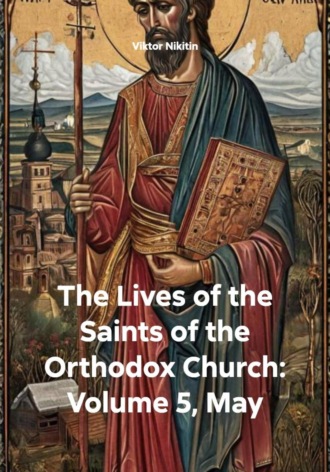
The Lives of the Saints of the Orthodox Church: Volume 5, May
* * *
Lives of the Saints Celebrated on May 7
Saint Cyril, Archbishop of Jerusalem (c. 386):
Saint Cyril was born into a devout Christian family and became bishop of Jerusalem during a turbulent period when pagan opposition and heretical movements threatened the Church. Known for his gentle yet firm leadership, Cyril defended the orthodox faith vigorously, especially against Arianism and paganism. His catechetical lectures, delivered to newly baptized Christians during the Paschal season, remain some of the earliest and richest examples of Christian instruction, illuminating the mysteries of the faith with clarity and warmth.
He played a significant role at the First Ecumenical Council of Nicaea (325), supporting the doctrine of the consubstantiality of the Son with the Father. Cyril’s episcopate was marked by the construction and consecration of many churches, including the Church of the Resurrection (later the Church of the Holy Sepulchre). He died peacefully around 386 A.D., leaving a legacy of faithfulness and learning.
Martyr Quadratus (Codratos) of Nicomedia and his companions (251–259):
Quadratus was a prominent Christian in Nicomedia during the fierce persecutions of Emperor Decius. As a bold defender of the faith, he publicly confessed Christ and encouraged fellow believers to remain steadfast. Arrested and tortured, Quadratus endured sufferings with patience and faith, ultimately dying a martyr’s death. His companions, inspired by his example, also bore witness to Christ with their lives, strengthening the early Church amid adversity.
Martyr Rufinus and Saturninus:
Rufinus and Saturninus lived in a period when Christians were often arrested for refusing to sacrifice to pagan gods. Both were young and zealous in their faith, enduring imprisonment and torture without renouncing Christ. Their martyrdom, though painful, served as a powerful witness to the strength of Christian conviction and inspired many to embrace the faith courageously.
Martyr Maximus:
Maximus was a soldier in the Roman army who, despite his military career, was a devoted Christian. When ordered to renounce Christ and participate in emperor worship, he refused and was brought to trial. He endured severe torture but remained unyielding. His martyrdom is remembered as a testament to faith triumphing over fear and worldly power.
Hieromartyr Flavius, and Martyrs Augustus and Augustinus (Asia Minor) (ca. 284-305):
Flavius was a priest serving in Asia Minor during the Diocletian persecution. Along with two laymen, Augustus and Augustinus, he was arrested for openly practicing Christianity. The three faced brutal tortures, refusing to sacrifice to the Roman gods. Their execution marked them as shining examples of priestly and lay martyrdom, inspiring the Christian communities of Asia Minor to remain faithful during harsh persecutions.
Martyr Acacius the Centurion at Byzantium (303):
Acacius was a Roman centurion stationed in Byzantium who embraced the Christian faith openly. When ordered to offer sacrifice to the emperor’s image, he refused, declaring his allegiance to Christ alone. Arrested and imprisoned, Acacius endured harsh treatment but remained steadfast until he was executed. His courage emboldened many Christians living under Roman rule, and his martyrdom is commemorated for his witness as both soldier and saint.
The Venerable Fathers of Georgia – Saint John of Zedazeni Monastery in Georgia, and his 12 disciples (6th c.):
In the 6th century, Saint John of Zedazeni, a holy ascetic from Palestine, led a group of twelve monks to Georgia with the mission of revitalizing Christian monasticism and spirituality. They settled on Mount Zedazeni and established a monastery that became the center of Georgian Orthodox monastic life.
Saint John of Zedazeni was known for his strict asceticism, humility, and ability to guide souls toward holiness. His twelve disciples became pillars of the Georgian Church:
Shio of Mgvime: Known for establishing monastic life in Georgia and for deep spirituality.
David of Gareji: Founded the famous Lavra of Gareji, known for miracles and teaching.
Anthony of Martqopi: A fiery preacher and example of ascetic discipline.
Thaddeus of Urbnisi (or Stepantsminda): Known for missionary work and monastic foundation.
Stephen of Khirsa: Renowned for piety and charity.
Isidore of Samtavisi: Monastic leader and miracle-worker.
Michael of Ulumbo: Model of humility and patient endurance.
Pyrrhus of Breta: Preached repentance and spiritual awakening.
Zeno of Iqalto: A scholarly monk who preserved sacred texts.
Jesse (Ise) of Tsilkani: Bishop and ascetic leader.
Joseph of Alaverdi: Established Alaverdi Monastery, a major spiritual center.
Abibus of Nekressi: Apostle of monasticism and spiritual father.
Together, they laid the foundations of Georgian monastic tradition, which flourished for centuries, shaping the spiritual and cultural identity of Georgia.
Saint Tarasius the Wonderworker of Lycaonia (8th c.):
Saint Tarasius was an ascetic monk and wonderworker who lived in Lycaonia (modern central Turkey). Known for his deep prayer, fasting, and miracles, he was a spiritual beacon to many. Accounts of his life describe healings, visions, and prophecies that inspired the faithful. He lived a life of humble obedience and love for all, and his relics became a source of blessing for generations.
Saint John the Confessor, of Psychaita, on the Bosphorus (ca. 825):
Saint John was a holy bishop and confessor who lived during the fierce Iconoclast controversy that threatened the Orthodox Church in the 8th and 9th centuries. Despite persecution, he upheld the veneration of holy icons, suffering imprisonment and torture for the truth. Known for his asceticism and unshakable faith, John became a symbol of steadfastness. He lived in the area of Psychaita, near the Bosphorus, and was revered for his spiritual wisdom and miracles.
Martyr Juvenal of Benevento (132 AD):
One of the earliest martyrs of the Church, Juvenal suffered under Emperor Hadrian’s persecution. Arrested for his faith, he endured imprisonment and execution rather than renounce Christ. His martyrdom was a testament to the early Church’s courage and fidelity amid hostile Roman authorities.
Saint Domitianus of Maastricht, Bishop (560):
Saint Domitianus was bishop of Maastricht in what is now the Netherlands. He was known for his pastoral care, building churches, and defending the faith from pagan influences. Domitianus worked tirelessly to spread Christianity among the Franks, bringing many to baptism and instructing them in the faith.
Saints Serenicus and Serenus:
Two brothers who abandoned worldly possessions to live as hermits near the River Sarthe in France during the 7th century. They led lives of asceticism and prayer, helping local Christians and performing miracles. Their holiness attracted many followers, and their relics became objects of veneration.
Saint Placid (Placidus, Plait), Benedictine Abbot of the basilica monastery of St Symphorian in Autun, France (675):
Saint Placid was a disciple of Saint Benedict and an influential monastic leader in France. As abbot of the monastery at Autun, he promoted monastic discipline, charity, and the spread of the Gospel. His leadership helped establish the Benedictine rule firmly in Gaul, nurturing monastic communities that became centers of learning and sanctity.
Venerable John of Beverley, Bishop of York (721):
John was a renowned English bishop, teacher, and miracle-worker. Educated in Ireland, he became bishop of York, where he established schools and defended Orthodoxy. His miracles during and after his life contributed to his widespread veneration, making him one of England’s most beloved saints.
Saint Peter of Pavia (735):
A holy bishop in Italy, Peter is remembered for his care of the poor, defense of Orthodoxy, and the promotion of Christian virtues among his flock. His episcopate was marked by peace and spiritual renewal.
Saint Nilus, Abbot and Wonderworker of Sora (1508):
Saint Nilus was a monastic founder near Rome who lived a life of prayer, fasting, and charity. He founded the monastery of Sora, guiding many monks and laypeople toward holiness. Known for miracles and deep wisdom, Nilus’ spiritual legacy endures in the monastic communities he inspired.
New Monkmartyr Pachomius of Mount Athos, of Usaki near Philadelphia (1730):
Pachomius was a monk on Mount Athos who suffered martyrdom during the Ottoman persecutions of Christians. His steadfast faith and courage in the face of torture inspired others to remain firm in Orthodoxy despite great adversity.
Saint Alexis Toth, Confessor and Defender of Orthodoxy in America (1909):
Born in the Austro-Hungarian Empire, Alexis Toth emigrated to the United States, where he encountered hostility from the Latin Catholic hierarchy. Undeterred, he led thousands of Eastern Catholics into the Orthodox Church, defending its teachings and establishing parishes across America. Known for his humility, pastoral zeal, and miracles, Alexis was canonized as a saint and is considered a founding father of Orthodoxy in America.
Other Commemorations:
Uncovering of the relics of St. Euthymius the Great (473):
St. Euthymius was a great ascetic and monastic founder in the Judaean desert. His relics were found incorrupt, reaffirming his sanctity and continuing to draw pilgrims to his monastery.
Uncovering of the relics (1815) of Saint Nilus the Myrrh-gusher of the Great Lavra on Mount Athos (1651):
The relics of Saint Nilus, known for the fragrant myrrh exuding from them, were uncovered, inspiring renewed devotion and confirming his holiness.
Repose of Schema Elder Boris (monk Nicholas) of Valaam and Pskov (1967):
A modern elder renowned for his spiritual wisdom, humility, and ascetic life, whose prayers and counsel blessed many.
Repose of Hieromonk Eulogius of Valaam (1969):
A beloved spiritual father of the Valaam Monastery, remembered for his dedication to prayer, pastoral care, and monastic renewal.
* * *
Lives of the Saints Celebrated on May 8
Holy Apostle and Evangelist John the Theologian, the "beloved disciple" of the Lord (ca. 101):
John, son of Zebedee and brother of James the Greater, was among the first disciples called by Christ. Known as the “beloved disciple,” John had a uniquely close relationship with Jesus, witnessing events such as the Transfiguration, the Last Supper, and standing near the Cross where Jesus entrusted him with the care of His mother, Mary.
After Pentecost, John became a pillar of the early Church, preaching primarily in Asia Minor. He was instrumental in combating early heresies like Gnosticism and Docetism, emphasizing the divinity of Christ in his writings. His Gospel is theological and mystical, highlighting Christ as the Word made flesh. John's three Epistles focus on love and truth, and his apocalyptic Book of Revelation offers hope through visions of Christ’s ultimate victory.
Unlike many apostles who died as martyrs, John was exiled to the island of Patmos but returned to Ephesus, where he died peacefully around 101 AD, becoming the last of the original apostles to depart this life.
The Holy Group of Soldier Martyrs:
This refers to various Christian soldiers who, during periods of Roman persecution, chose faithfulness to Christ over their military oaths to pagan emperors. These men often refused to participate in idol worship or sacrifices demanded by their commanders. Despite facing severe torture, imprisonment, and execution, they remained unwavering in their faith, becoming exemplars of courage and sanctity within the early Church. Their collective witness helped to demonstrate that faith in Christ transcends even the strictest earthly allegiances.
Saint Augustina the Martyr, in Byzantium:
Augustina was a noble Christian woman living in Byzantium during the time of intense persecutions under Emperor Diocletian. She dedicated herself to the service of the Church and secretly aided persecuted Christians. Arrested for her faith, she was subjected to cruel tortures designed to force her to renounce Christ. She endured beatings, imprisonment, and threats but remained steadfast. Her death by martyrdom inspired many believers in Byzantium to remain strong under persecution.
Saint Agathius (Acacius of Byzantium) (303):
Agathius was a soldier in the Roman army who lived during the time of the Diocletian persecution. Known for his courage and virtue, he openly professed Christianity despite the risks. When ordered to participate in pagan sacrifices, Agathius refused, which led to his arrest. He was subjected to severe torture, including flogging, beating, and the breaking of bones, but God gave him strength to endure. Finally, he was beheaded in Byzantium. His feast day is celebrated with great veneration by both Eastern and Western Christians as a model of faithfulness for soldiers and all believers.
Saint Emilia, mother of Saints Macrina, Basil the Great, Naucratius, Peter of Sebaste, and Gregory of Nyssa (375):
Emilia was a noblewoman from Cappadocia whose life was marked by piety, charity, and profound Christian faith. After the death of her husband, she dedicated herself to raising her children in the fear of God, instilling in them the virtues of humility, prayer, and service.
Her children became some of the greatest saints and theologians of the early Church: Macrina, a monastic founder and spiritual guide; Basil the Great, a Father of the Church and monastic reformer; Gregory of Nyssa, a profound theologian and mystic; and others who served as bishops and monks. Emilia herself led an ascetic life, living modestly and devoting herself to prayer and almsgiving.
Her influence extended beyond her family, shaping the spirituality of the Cappadocian Church and setting a standard for Christian motherhood.
Venerable Arsenius the Great of Scetis (448):
Born into a wealthy Roman family, Arsenius left a life of worldly privilege to pursue monasticism in Egypt. He joined the desert monks of Scetis, embracing a life of intense asceticism, prayer, and solitude. Arsenius is known for his profound humility, wisdom, and spiritual insight.
Though he spent much time in silence and contemplation, he served as a spiritual father to many. Stories of his life highlight his meekness, endurance in the face of temptation, and extraordinary gifts of discernment.
His teachings on the spiritual life, especially the struggle against passions, became foundational in Eastern Orthodox monasticism. Arsenius died in peace, leaving a legacy as one of the greatest desert fathers.
Saint Hierax (Ierakos) of Egypt (5th c.):
Hierax was a monk and ascetic who lived in the deserts of Egypt, following the monastic rule of St. Pachomius. He was known for his extreme fasting, prayer, and silence. Though little detailed history survives, his reputation among desert monks was one of holiness and wisdom.
He embodied the early monastic ideal of complete renunciation of the world and total dedication to God, inspiring future generations of monks.
Saint Milles the Melodist (hymnographer), monk:
Saint Milles was a monk whose gift for composing sacred hymns enriched the liturgical life of the Church. His compositions, filled with theological depth and poetic beauty, helped express the faith and spiritual experience of Orthodox Christians.
While historical details about his life are scarce, his hymns have been preserved in Church chant traditions, contributing to the worship and prayer of countless believers.
Hieromartyr Dionysius of Vienne (193):
Dionysius was a bishop in the city of Vienne in Gaul during the late 2nd century. He faithfully shepherded his flock in a time of growing pagan hostility. Arrested during the persecutions of Emperor Septimius Severus, Dionysius refused to renounce Christianity.
He endured imprisonment, torture, and eventual martyrdom. His courage inspired the Christian community and strengthened the faith of believers under persecution. His memory is honored for steadfastness and pastoral dedication.
Martyr Victor of Milan (Victor the Moor, Victor Maurus) (ca. 303):
Victor was a Christian soldier stationed in Milan during the Diocletian persecution. Known for his piety and bravery, he refused to participate in pagan sacrifices and openly declared his faith.
Subjected to harsh torture, including beating and imprisonment, Victor remained resolute. His name “the Moor” reflects his African heritage. Victor was ultimately beheaded, becoming a symbol of faith for Christians, especially soldiers.
Saint Helladius of Auxerre (387):
Helladius served as the bishop of Auxerre in Gaul during a time of doctrinal controversies and pagan resurgence. Known for his pastoral zeal, he defended orthodox Christian teaching and cared for the poor and sick.
His tenure strengthened the Church in a region that was still consolidating its Christian identity. Helladius’s sanctity was recognized soon after his death, and his feast day continues to be celebrated.
Saint Gybrian (Gobrian) of Ireland (509):
Gybrian was a monk and missionary of Irish origin who labored to spread Christianity both in Ireland and parts of continental Europe. He was known for his humility and ascetic practices.
His missionary activity contributed to the Christianization of Ireland and later Gaul, fostering the growth of monastic communities and Christian teaching in those areas.
Saint Desideratus, successor of St Arcadius as Bishop of Bourges, in France (550):
Desideratus followed St. Arcadius as bishop, leading the Church of Bourges with wisdom and holiness. He combated heresies, supported monasticism, and encouraged the faithful to live virtuous lives.
His episcopate was marked by care for both spiritual and temporal welfare of his flock, making him a revered local saint.
St. Iduberga, foundress of Nivelles (Nijvel) (652):
Iduberga was a noblewoman who devoted her life to Christ, founding the convent of Nivelles in present-day Belgium. She became the first abbess, leading by example in prayer, charity, and monastic discipline.
Her foundation became a center for spiritual life and education. She is remembered for her piety, leadership, and the promotion of Christian monasticism in the Frankish lands.
Saint Benedict II, Pope of Rome (685):
Benedict II served as pope during a period of political turmoil and theological challenges. He worked to maintain orthodox doctrine, supported missionary activities, and administered the Church with charity and firmness.
Despite a short papacy, his contributions to liturgical reform and Church governance were notable.
Hieromartyr Indract of Glastonbury, and his companions at Shapwick (ca. 7th-8th c.):
Indract was a missionary bishop who labored to spread Christianity in England, particularly around Glastonbury. He and his companions were martyred, likely by pagan opponents or political rivals, at Shapwick.
Their martyrdom became a symbol of the cost of evangelism and the triumph of faith over hostility. They are commemorated for their sacrifice and missionary zeal.
Missionary bishops Saints Wiro (Bishop of Utrecht) (710), and Plechelm (730), and Hierodeacon Otger (Odger) (8th c.), in the Maas Valley at Limburg:
Saint Wiro, a missionary bishop, arrived in the Maas valley (modern Netherlands) to convert the pagan Frisians and surrounding tribes. Joined by Plechelm and Otger, they established churches and monasteries, bringing the light of Christianity to a region steeped in paganism.
Their missions laid the foundation for Christian Europe’s northern expansion. They are honored for their missionary zeal, courage, and enduring influence on Christian culture.
Saint Macarius of Ghent, Archbishop (1012):
Macarius was Archbishop of Ghent in Belgium, known for his piety and leadership during a period of ecclesiastical reform. He fostered monastic revival, supported charitable works, and was attentive to the spiritual needs of his people.
His tenure contributed to the strengthening of the Church’s role in medieval Flanders.
Venerable Pimen the Ascetic of the Kiev Far Caves (ca. 1141):
Pimen was a monk of the Kiev Pechersk Lavra, noted for his ascetic life and spiritual struggles. Living in a solitary cell, he engaged in ceaseless prayer and fasting.
His life inspired many in the monastic community, embodying the ideals of humility, obedience, and the inner spiritual battle central to Orthodox monasticism.
Venerable Cassian, recluse and faster of the Kiev Caves (13-14th c.):
Cassian was a hermit who devoted himself to rigorous fasting, prayer, and contemplation in the Kiev caves. His intense spiritual discipline brought him close to God and earned him a reputation for holiness.
His example encouraged others to pursue deep prayer and asceticism.
Saint Arsenius the Lover of Labor, of the Kiev Caves (14th c.):
Arsenius was known for his tireless work ethic combined with deep spiritual life. As a monk, he labored both physically and spiritually, emphasizing that labor itself is a form of prayer and asceticism.
He helped establish a monastic culture valuing both work and worship.
Monks Zosima and Adrian of Volokolamsk, founders of the Sestrinsk monastery on the banks of the River Sestra (15-16th c.):
Zosima and Adrian were pioneering monastic founders in Russia. They established the Sestrinsk monastery, which became a major spiritual center.
Their leadership helped revive Orthodox monasticism and resist secular influences, nurturing a renewed zeal for prayer, community life, and asceticism.
Other Commemorations:
Apparition of the Archangel Michael on Mount Gargano near Manfredonia in southern Italy (ca. 490):
Archangel Michael appeared to Bishop Laurence and others, directing them to found a sanctuary on Mount Gargano. This event sparked widespread veneration and pilgrimage, with the Sanctuary of Monte Sant'Angelo becoming one of the oldest and most important shrines dedicated to Michael in Christendom.
Commemoration of the miraculous healing of blinded Stephen by the Theotokos of Cassiopia (1530):
Stephen, a devout Christian, was miraculously healed of blindness through the intercession of the Mother of God, appearing in the icon of Cassiopia. This miracle deepened devotion to the Theotokos and reaffirmed her role as protector and healer.
Translation of the relics (1785) of Saint Arsenius of Novgorod, Fool-for-Christ (1570):
Arsenius lived as a "holy fool," concealing his sanctity under eccentric behavior, bearing insults and poverty to conceal his spiritual gifts. His relics were translated to a place of honor, affirming the Orthodox reverence for humility and divine madness.
Repose of Blessed Basiliscus of Uglich (1863):
Basiliscus was a monk remembered for his asceticism and spiritual wisdom in Uglich, Russia. He guided many faithful and passed away peacefully, leaving a legacy of holiness.
Repose of Schema-hieromonk Michael of Valaam (1934):
Michael was a hieromonk who endured persecution for his faith during the Soviet era. Known for his prayerful life and courage, he is honored as a confessor who preserved the faith under oppression.
* * *
Lives of the Saints Celebrated on May 9
Prophet Isaiah (8th century B.C.):
Isaiah was one of the major prophets of the Old Testament, living and prophesying during a critical era of Judah’s history under Kings Uzziah, Jotham, Ahaz, and Hezekiah. Called by God in a vision (Isaiah 6), he was commissioned to speak God’s words to a people who were increasingly turning from God. His prophecies encompass both warnings of judgment against sin and vivid promises of future restoration and salvation. Isaiah foretold the coming of the Messiah—the “Immanuel,” the Suffering Servant who would bring redemption to humanity. His writings deeply influenced both Jewish and Christian traditions.
Isaiah’s life was marked by hardship and opposition. Tradition holds that he was martyred during the reign of King Manasseh, who violently persecuted the prophets. Some accounts say Isaiah was sawn in two with a wooden saw, a martyr’s death symbolizing his steadfastness in proclaiming God’s truth. His enduring legacy is his profound theology of God’s holiness, justice, and mercy, and his clear vision of the coming Kingdom of God.