Полная версия
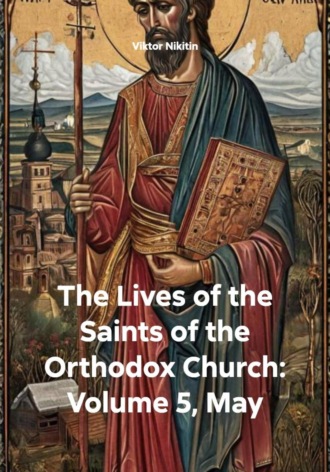
The Lives of the Saints of the Orthodox Church: Volume 5, May
Theodosia was a noblewoman who embraced monastic life after her husband’s death. Known for her humility, prayer, and charity, she raised her son Alexander, who would become a great Russian saint and defender of Orthodoxy. Her spiritual influence extended through her family and monastery.
Saint Nicephorus (the Solitary, the Hesychast) of Mount Athos, Teacher of St. Gregory Palamas (Before 1300):
Nicephorus was a renowned hesychast monk on Mount Athos, an ascetic devoted to the practice of inner stillness and prayer. As a teacher of St. Gregory Palamas, he played a pivotal role in the hesychast movement, which deeply influenced Orthodox spirituality. His life of prayer, fasting, and theological insight left a lasting spiritual legacy.
The Alfanov Brothers of Novgorod: Saints Nicetas, Cyril, Nicephorus, Clement, and Isaac of Novgorod (14th–15th c.), Founders of the Sokolnitzki Monastery (1389):
These five brothers were monks and missionaries who established the Sokolnitzki Monastery near Novgorod. They were known for their piety, charity, and efforts to spread Orthodoxy in northern Russia. Their joint sanctity and monastic zeal inspired generations of Russian monastics.
New Hieromartyr Dimitri, Archbishop of Gdov (1938):
Archbishop Dimitri led the Orthodox Church in Gdov during Soviet repression. Despite brutal persecution, imprisonment, and ultimately martyrdom, he remained steadfast in his faith, serving as a beacon of courage for the faithful under communism.
New Hieromartyr John, Priest (1942):
Father John was a priest who suffered martyrdom under Soviet anti-religious campaigns during World War II. His dedication to pastoral care and refusal to renounce his faith led to his death, making him a symbol of endurance and faithfulness.
New Hieromartyr Nicholas, Deacon (1943):
Deacon Nicholas ministered during the harsh years of Soviet oppression. His martyrdom reflects the tragic suffering of many clergy who refused to abandon their sacred duties.
New Hieromartyr Archpriest Vasily Martysz (1945):
Archpriest Vasily served in Poland and was executed by communist authorities. Known for his pastoral zeal and care for the faithful, his martyrdom is honored as a testimony to faith under totalitarian regimes.
Other Commemorations:
Translation of the relics of the Righteous Lazarus and Saint Mary Magdalene, Equal-to-the-Apostles:
This feast commemorates the moving of the holy relics of Lazarus, whom Christ raised from the dead, and Mary Magdalene, a foremost apostle to the apostles, from their original burial places to new resting places, honoring their pivotal roles in salvation history. The translation ceremonies inspired devotion and pilgrimage, keeping their memory alive in the Christian world.
* * *
Lives of the Saints Celebrated on May 5
Great-Martyr Irene of Thessaloniki (4th century):
Saint Irene was born into a noble family in the city of Thessaloniki during the early 4th century, a time when Christians faced brutal persecution under Emperor Diocletian. Known for her beauty and intelligence, she was yet more remarkable for her unwavering faith in Christ. When summoned before the governor to renounce her faith and offer sacrifice to the Roman gods, Irene boldly refused, choosing instead to endure imprisonment and torture. During her captivity, she encouraged fellow prisoners and converted several to Christianity through her words and example. She was subjected to cruel beatings, scourging, and attempts to break her spirit, but none could shake her resolve. Her martyrdom came by beheading, and numerous miracles were reported at her tomb, leading to her veneration as a wonderworker. Churches in Thessaloniki and beyond commemorate her as a shining example of courage, faith, and steadfastness in the face of persecution.
Martyrs Irenaeus, Pellegrinus, and Irene at Thessaloniki (284–305):
These three martyrs are remembered as part of the wave of Diocletian's persecution that ravaged Thessaloniki. Irenaeus and Pellegrinus were believed to be elders or clergy who faithfully shepherded the Christian community during this tumultuous time. Along with the virgin martyr Irene—distinct from the Great-Martyr Irene—they were arrested for refusing to renounce their faith. Despite suffering cruel tortures designed to force apostasy, they remained unyielding. Their martyrdom served as a beacon of faith to the Christians of Thessaloniki and inspired many to remain steadfast. Their shared feast day underscores the unity of those who suffered together for Christ.
Martyrs Neophytus, Gaius, and Gaianus:
Though details about Neophytus, Gaius, and Gaianus are scarce, these early Christian martyrs are honored for their witness during times of persecution. Likely lay Christians or minor clerics, they faced death rather than deny their faith. Their names have been preserved in regional martyrologies, reflecting the early Church's remembrance of countless unnamed heroes who laid down their lives quietly but heroically. They stand as representatives of the many faithful who suffered in anonymity.
Saint Eulogius the Confessor, Bishop of Edessa (ca. 386):
Saint Eulogius led the Christian community of Edessa during a time of theological conflict and external threats from both paganism and heresy. A man of great learning and pastoral zeal, he defended Orthodox Christian teaching against various heresies, including Manichaeism and Arianism, which threatened the Church’s unity in Mesopotamia. Eulogius was known for his compassion for the poor and his commitment to peace in a city marked by ethnic and religious diversity. Though he suffered for his faith and confession of Christ, he was not martyred but lived to see his flock strengthened and unified under his guidance. His legacy includes efforts to build bridges between communities and a reputation for holiness that inspired generations.
Saints Martin and Heraclius of Illyria (4th century):
Saints Martin and Heraclius are commemorated as early Christian missionaries and ascetics in the region of Illyria, which encompasses parts of the western Balkans. Living in a time when pagan beliefs were still dominant, they worked tirelessly to spread Christianity, establishing churches and nurturing new believers. Their lives were marked by austere asceticism, prayer, and charitable works. Though specific acts are lost to history, tradition honors them as foundational figures in the Christianization of the Balkans. Their commitment helped secure the faith in a challenging frontier.
Saint Euthymius the Wonderworker, Bishop of Madytos on the Hellespont (ca. 990):
Saint Euthymius was a Byzantine bishop renowned for his ascetic life and miraculous deeds. Serving in the city of Madytos, near the strategic Hellespont strait, he was deeply respected for his wisdom, humility, and pastoral care. Stories of his miracles include healings of the sick and protection of his city from invasions and natural disasters through prayer. His leadership combined monastic discipline with episcopal responsibility, making him a model bishop in a time when the Byzantine Empire faced both internal and external challenges. After his repose, many pilgrims visited his relics, seeking healing and spiritual strength.
Martyr Jovinian, the lector of St. Peregrine of Auxerre (ca. 304):
Jovinian served as a lector—a reader of Scripture—in the early Church of Auxerre in Gaul during the Diocletianic persecutions. As a lector, he was responsible for proclaiming the Word of God during liturgical services, a role of great honor and spiritual significance. When Christian leaders were arrested, Jovinian courageously supported them and refused to renounce Christ despite threats and torture. His martyrdom is a testament to the vital role of even minor church officers in sustaining the faith during times of trial.
Saint Brito (Britonius) (386):
Saint Brito was a bishop or prominent church leader in late 4th-century Gaul. Known for his pastoral zeal and tireless work to consolidate the Church’s influence, Brito promoted Christian teaching and care for the poor in his diocese. He worked to root out lingering pagan practices and heresies, strengthening the spiritual foundations of his flock. His leadership extended beyond ecclesiastical duties, including involvement in social welfare and education.
Saint Nectarius of Vienne, Bishop of Vienne (ca. 445):
As bishop of Vienne in southeastern Gaul, Saint Nectarius led the Church during a period marked by political instability and barbarian invasions. His episcopate was notable for efforts to protect the Christian population both spiritually and physically. He promoted orthodoxy against heretical influences and ensured that liturgical and pastoral life flourished despite external threats. Nectarius is remembered as a compassionate shepherd who bridged gaps between Roman and local communities.
Saint Nicetus of Vienne, fifteenth bishop of Vienne (ca. 449):
Following Saint Nectarius, Saint Nicetus continued the work of strengthening the Church in Vienne. He was a zealous defender of the faith, opposing heresies and fostering Christian education. Nicetus’ tenure was marked by his humility and care for the poor, which helped maintain the Church’s moral authority amid the decline of Roman influence.
Saint Hilarion, Archbishop of Arles (449):
Saint Hilarion was Archbishop of Arles during the mid-5th century, a key figure in preserving Orthodoxy in southern Gaul. He confronted theological controversies and maintained discipline among clergy. Known for his personal holiness and charity, Hilarion actively supported the poor and worked to heal divisions within the Church.
Saint Geruntius of Milan (470):
Serving as Bishop of Milan during the waning days of the Western Roman Empire, Saint Geruntius faced immense challenges. His leadership helped the local Church maintain continuity and care for a population unsettled by political upheaval. He is remembered for steadfast pastoral care and support of Christian communities through hardship.
Martyr Crescentiana of Rome (5th century):
Crescentiana was a young Roman virgin who dedicated her life to Christ. During continued sporadic persecutions, she refused to marry a pagan suitor and was imprisoned and tortured for her faith. Her purity and courage inspired Christian women and virgins, making her a model of Christian chastity and steadfastness.
Saint Hydrock (Hydroc) of Cornwall (5th century):
Hydrock was a Celtic missionary and hermit active in Cornwall, England. He founded churches and monastic communities, playing a vital role in establishing Christianity in this region. His holy life combined asceticism with compassionate pastoral care, fostering the faith among local Celtic peoples.
Saint Sacerdos of Saguntum (ca. 560):
Bishop Sacerdos ministered in Saguntum (modern-day Sagunto, Spain) during the early medieval period when Visigothic rule was consolidating. He combated paganism and encouraged Christian practice, solidifying the Church’s role in society. Known for his charity and zeal, Sacerdos left a legacy of spiritual renewal.
Saint Waldrada, first abbess of Saint-Pierre-aux-Nonnains in Metz, France (ca. 620):
Waldrada was the pioneering abbess of one of the earliest female monastic communities in Metz. Under her leadership, the monastery became a center of prayer, learning, and charitable work. She guided many women into monastic life and was revered for her wisdom and sanctity.
Saint Maurontius of Douai (Maurontus, Mauront) (701):
Originally a nobleman, Maurontius renounced worldly wealth to become a monk and later founded the monastery of Breuil-sur-Lys near Douai in northern France. This foundation became a spiritual center for the region and played a key role in spreading the Benedictine monastic tradition.
Saint Echa of Crayke (Etha) (767):
Echa was an Anglo-Saxon priest and hermit living near York, England. His austere lifestyle and holiness attracted disciples and helped sustain Christian witness in northern England during the early medieval era. He was noted for his prayerfulness and commitment to solitude and contemplation.
Saints Barlaam of Serpukhov and Gideon of Serpukhov (1377):
These brothers were monastic leaders who helped nurture spiritual life in Serpukhov, Russia. Known for humility, prayer, and asceticism, their influence strengthened monastic communities during a period of political uncertainty.
New Monk-martyr Ephraim of Nea Makri (1426):
Ephraim was a monk of the Nea Makri Monastery in Greece who was martyred under Ottoman persecution. Refusing to renounce his faith, he endured imprisonment and execution. His courage and miracles after death have inspired Orthodox Christians to this day.
Saint Adrian, Abbot of Monza Monastery (1619):
Adrian was a monastic leader in Italy who revitalized the spiritual life of his community through strict discipline, prayer, and guidance. His efforts strengthened monastic observance and pastoral care during a time of Catholic reform.
New Hieromartyr Nicholas, priest (1919):
Father Nicholas was a Russian Orthodox priest who remained faithful during the Bolshevik crackdown on the Church. Despite arrests, torture, and threats, he refused to renounce Christ and was ultimately executed, becoming a martyr for the faith in the 20th century.
New Hieromartyr Platon of Banja Luka (1941):
Bishop Platon led the Orthodox faithful in Banja Luka, Bosnia, during the violent upheaval of World War II. Arrested and brutally murdered by the Ustasha regime for his defense of his people and faith, he is honored as a martyr and witness to Christ’s love amid hatred.
Other Commemorations:
Translation of the relics (980) of Saint Aldhelm, Bishop of Sherborne (709): Saint Aldhelm was a renowned Anglo-Saxon scholar, poet, and bishop who greatly influenced early English Christianity. His relics were translated (moved) with great solemnity in 980, marking a significant moment of veneration and reaffirmation of his spiritual legacy.
Uncovering of the relics (1613) of Saint James of Zheleznoborov, abbot of Zhelezny Bor (1442): Saint James was a Russian monastic reformer and abbot known for his humility and sanctity. The uncovering of his relics in 1613 confirmed his sainthood and drew many pilgrims seeking spiritual blessings.
* * *
Lives of the Saints Celebrated on May 6
Righteous Job the Long-suffering:
Job is one of the most revered figures of the Old Testament, known for his extraordinary patience and faithfulness amidst great suffering. He lived in the land of Uz and was a wealthy man, blessed with a large family and possessions. However, he faced severe trials when Satan was permitted by God to test his faith. Job lost his children, wealth, and health, suffering painful sores and social isolation. Despite the encouragement of his wife to curse God, and the accusations of friends suggesting he was being punished for sin, Job steadfastly upheld his innocence and continued to trust God’s justice. His lamentations and dialogues form a profound theological reflection on suffering, divine justice, and human humility. In the end, God restored Job’s fortunes and granted him a long life. The Orthodox Church venerates him as a model of endurance, humility, and unwavering trust in God’s providence.
Martyrs Danax, Mesirus (Mesiurs), and Therin:
These martyrs lived during the period of severe persecution under the Roman Empire, though details about their lives are scarce. Danax, Mesirus, and Therin were Christians who refused to renounce their faith despite threats and tortures. Their steadfastness in the face of death exemplifies the courage of early Christians who chose martyrdom over apostasy. They are commemorated for their witness to Christ and for inspiring believers to remain faithful in adversity.
Martyrs Demetrius and Donatus:
Saints Demetrius and Donatus were companions who shared the bond of faith and martyrdom. Though the particulars of their lives are limited in historical records, their joint martyrdom emphasizes the strength derived from Christian fellowship and mutual support during persecution. Their example encourages believers to persevere together through trials.
Saints Mamas, Pachomius, and Hilarion, monks:
Saint Mamas: A young shepherd who lived during the 3rd century, Mamas embraced Christ in a pagan environment. Known for his holiness from childhood, he was arrested and suffered for his faith. Tradition tells of miraculous interventions during his trial, including the salvation of a lion from captivity, symbolizing his fearless witness.
Saint Pachomius: Born in Egypt around 292, Pachomius is regarded as the founder of organized cenobitic monasticism. After his military service and conversion, he gathered disciples to live a communal monastic life under a common rule, emphasizing prayer, work, and obedience. His monasteries became the model for Eastern monasticism.
Saint Hilarion: A disciple of Anthony the Great, Hilarion spread monasticism in Palestine. He embraced severe asceticism, living in solitude and prayer, becoming known for his holiness and miracles. His life inspired many to the eremitic and communal monastic ideals.
Martyrs Barbarus the Soldier (Barbaruldier), Bacchus, Callimachus, and Dionysius, in Morea (362):
During Emperor Julian the Apostate’s reign, these martyrs courageously opposed the pagan restoration and refused to sacrifice to idols. Barbarus, formerly a soldier, Bacchus, Callimachus, and Dionysius were arrested for their Christian faith. Enduring harsh tortures, they remained faithful until their martyrdom. Their courage reinforced the Christian presence in the Peloponnesus and serves as an example of spiritual valor.
Martyr Barbarus the former robber in Thessaly (9th c.):
Barbarus lived a sinful life as a notorious robber until a transformative encounter with Christ changed his heart. Renouncing his past, he became a monastic ascetic in Thessaly, devoting himself to prayer, fasting, and repentance. Ultimately, he suffered martyrdom, which underscored the radical power of repentance and divine grace to renew even the worst sinners.
Saint Lucius of Cyrene (1st c.):
Mentioned in the Acts of the Apostles (Acts 13:1), Lucius was a prophet and teacher in the early Christian community at Antioch, the first mission-oriented church. Tradition holds he became a bishop and missionary, spreading the Gospel in Libya and Cyprus. His witness helped establish the Church beyond Jewish circles, supporting the Gentile mission. Lucius is honored for his evangelistic zeal and leadership in the nascent Church.
Martyrs Heliodorus and Venustus and seventy-five others in Africa (284–305):
These martyrs suffered during the fierce persecutions of Diocletian, who sought to suppress Christianity throughout the Roman Empire. Heliodorus, Venustus, and a large group of seventy-five faithful refused to sacrifice to Roman gods and were arrested, tortured, and executed in Africa. Their collective martyrdom strengthened the resolve of the early African Church, which became a vital center of Christian thought and holiness.
Saint Benedicta, virgin, mystic and nun, in Rome (6th c.):
Saint Benedicta was a nun in Rome known for her mystical experiences and deep spirituality. She lived a life of asceticism, prayer, and seclusion, reportedly receiving visions and spiritual insights. Though little is recorded about her earthly deeds, her reputation for holiness and mystical gifts made her a revered figure in the Roman Church, encouraging devotion and contemplation.
Saint Edbert, Bishop of Lindisfarne (698):
Saint Edbert succeeded Saint Cuthbert as Bishop of Lindisfarne, a key center of Celtic Christianity in Northumbria. He continued the work of strengthening the faith, overseeing the community of monks, and spreading Christian teaching among the Anglo-Saxons. His episcopacy marked a period of peace and consolidation for the Church in northern England.
Saint Petronax of Monte Cassino (ca.747):
After the original Benedictine monastery at Monte Cassino was destroyed during the Lombard invasions, Petronax restored it in the 8th century. Known as the “Second Founder,” he rebuilt the monastic community, re-established the Benedictine Rule, and revived its spiritual and cultural influence. Petronax’s leadership ensured Monte Cassino’s survival as a beacon of monasticism and learning throughout the Middle Ages.
Saint Vladimir II Monomakh (Volodymyr Monomakh), Sovereign of Kievan Rus' (1125):
Grand Prince Vladimir II Monomakh was a renowned statesman, military leader, and devout Christian ruler of Kievan Rus’. He is celebrated for his just governance, support of the Orthodox Church, and writings that provide ethical guidance. His reign brought relative peace and unity, and he played a pivotal role in defending the Christian faith against pagan and foreign threats. Vladimir’s legacy endures as a model of righteous Christian rulership.
Venerable Micah (Micheas), disciple of Saint Sergius of Radonezh (1385):
Micah was a devoted disciple of Saint Sergius of Radonezh, one of the greatest spiritual fathers of medieval Russia. Known for his humility, obedience, and asceticism, Micah assisted in spreading the hesychast monastic tradition that emphasized inner prayer and contemplation. His life contributed to the spiritual revival of Russian monasticism during a critical period.
Venerable Sinaites of Serbia (from Ravanica) (14th c.):
This group of Serbian monastic saints brought the hesychastic tradition from Mount Athos to Serbia. Romilus of Ravanica, Romanus of Djunisa, Sisoes of Sinai and Sisojevac, Martyrius of Rukumije, Gregory of Gornjak, Zosimas of Tuman, and Gregory of Sinai dedicated their lives to prayer, fasting, and teaching the spiritual practice of stillness (hesychasm). They founded monasteries and spiritual centers, fostering Orthodox renewal in Serbia amid political turmoil.
Saint Seraphim of Dombu (Seraphim of Livadeia) (1602):
Saint Seraphim lived as an ascetic in central Greece and became known for his holiness and wonderworking. He healed the sick, gave spiritual counsel, and was deeply revered by the faithful. His life was marked by humility, charity, and intense prayer, which brought many to repentance and strengthened local Christian communities.
Saint Job of Pochaev, Abbot and Wonder-worker of Pochaev Lavra (1651):
Saint Job was a great ascetic and spiritual leader in Ukraine, serving as abbot of the Pochaev Lavra, one of Orthodoxy’s greatest monasteries. He guided the monastery through challenges including threats from Catholic and Protestant forces, defending the Orthodox faith. Known for miracles of healing and protection, his holy relics continue to be a source of grace. His life is an example of leadership rooted in prayer and humility.
Blessed Theophylact Lopatinsky, Archbishop of Tver, Defender of Orthodoxy (1741):
Archbishop Theophylact lived in a time when Orthodoxy faced internal and external challenges. He is remembered for his zeal in defending the faith, promoting education and moral renewal, and resisting Western religious influences. His pastoral care and theological clarity strengthened the Church in Russia during the 18th century.
Saint Sophia, the ascetic of Kleisoura (1974):
Saint Sophia lived a modern ascetic life in Greece, embracing prayer, fasting, and solitude. She became known for her spiritual wisdom, prophetic gifts, and deep humility. Many sought her guidance, and her life continues to inspire those pursuing holiness in contemporary times. She exemplifies the enduring power of monastic spirituality.
Other Commemorations:
Translation of the relics (1238) of Saint Sava, first Archbishop of Serbia (1235): Saint Sava is the founder of the Serbian Orthodox Church and a national saint. His relics were translated to the Mileševa Monastery, signifying the enduring honor and spiritual authority he holds among Serbian Christians.
Translation of the relics (1675) of Saint Pachomius of Nerekhta (1384): Saint Pachomius was a Russian monk noted for his asceticism and miracles. The translation of his relics reinforced veneration and pilgrimage to his shrine, fostering spiritual renewal.
Birthday of Royal Martyr Tsar Nicholas II: Nicholas II and his family were martyred for their faith and fidelity to Orthodoxy during the Russian Revolution. He is commemorated as a passion-bearer, symbolizing Christian forgiveness and sacrifice under persecution.