


Полная версия
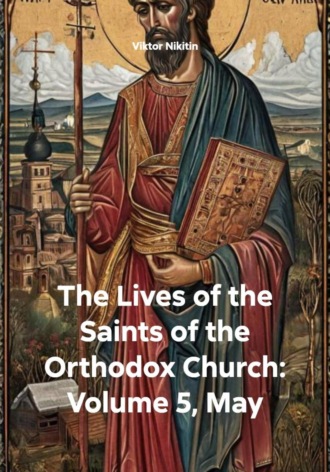
The Lives of the Saints of the Orthodox Church: Volume 5, May
Athanasius the Great, defender of Orthodoxy against Arianism, reposed in 373. His relics were transferred several times in subsequent centuries to protect them during periods of theological conflict and political instability. Each translation became an occasion of renewed devotion, for his presence symbolized steadfast commitment to the true faith.
Translation of the relics (1072 and 1115) of the holy passion-bearers Boris and Gleb (1015):
Boris and Gleb, the first canonized saints of Rus’, were martyred by their brother Sviatopolk. Their relics, exuding peace and healing, were solemnly transferred in 1072 to Vyshgorod, and again in 1115 during the grand reorganization of princely churches. These translations solidified their role as heavenly intercessors for the unity of the Russian land.
* * *
Lives of the Saints Celebrated on May 3
Martyrs Timothy the Reader and his wife Maura of Antinoe in Egypt (304):
Timothy served as a lector—a reader of Scriptures in the early Christian liturgy—in the city of Antinoe, Egypt. This role marked him as a respected member of the Christian community and a witness to the faith. During the Diocletian persecution, the most brutal campaign against Christians in the Roman Empire, both Timothy and his wife Maura were arrested for openly professing their faith. Despite facing imprisonment, torture, and cruel threats, neither renounced Christ. Their mutual support and shared courage as a married couple strengthened their witness. They endured suffering with humility and prayer until they were finally executed by beheading. Their martyrdom became a powerful example of marital unity in faith and unwavering devotion to Christ amid persecution.
Martyrs Diodoros and Rodopianos, at Aphrodisia in Anatolia (285–305):
Diodoros and Rodopianos were deacons serving in the Christian community of Aphrodisia during the turbulent years of the Diocletian persecution. As deacons, they assisted the bishops, ministered to the poor and sick, and helped lead the liturgy. Their service made them targets for imperial authorities determined to eradicate Christianity. Arrested for refusing to sacrifice to pagan gods, they endured severe imprisonment and torture. Their steadfastness in the face of suffering inspired other believers to hold firm. According to tradition, they were eventually martyred by beheading or other brutal means. Their story illustrates the courage of church servants who, though not always in the spotlight, played vital roles in the Church’s survival and growth.
Holy 27 Martyrs who died by fire:
This group of twenty-seven martyrs is commemorated collectively for their extraordinary witness. Likely persecuted under one of the Roman emperors hostile to Christianity, they were condemned to death by being burned alive. Though the details of their individual lives are lost, their communal martyrdom reflects the tragic reality of early Christian witness—where entire groups of believers sometimes suffered together. Their deaths by fire symbolize purification and the refining power of faith tested by trial. The commemoration of this group encourages the faithful to remember the cost of discipleship and to draw strength from the examples of those who bore the ultimate sacrifice together.
Great-martyr Xenia of Peloponnesus, the Wonderworker (318):
Xenia was born in the Peloponnesian region of Greece during the early 4th century, a time when Christianity was still outlawed in the Roman Empire. She devoted her life to asceticism and service to the poor, living in strict prayer and fasting. Renowned for her healing abilities and miracles, she became a beacon of hope and spiritual strength. When persecutions intensified, Xenia was arrested and subjected to harsh tortures designed to force her renunciation of faith. Despite brutal suffering, she remained resolute and unshaken. After her martyrdom, many miracles were reported at her tomb, cementing her reputation as a Wonderworker. Her life exemplifies the transformative power of faith and endurance in the face of adversity.
Saint Mamai the Katholikos of Georgia (744):
Saint Mamai held the high ecclesiastical office of Katholikos—head of the Georgian Orthodox Church—during a time of intense political upheaval, including Arab invasions and internal unrest. He was a staunch defender of Orthodox doctrine and worked tirelessly to preserve the faith and traditions of Georgia. Mamai supported monasticism and the translation of sacred texts into Georgian, helping to solidify a uniquely Georgian Christian identity. His leadership strengthened the church’s spiritual and social influence, ensuring continuity through turbulent times. Revered as a spiritual father, he is remembered for his wisdom, pastoral care, and efforts to unify and protect the Georgian Church.
Saint Michael of Ulompo, Georgia (9th c.):
Saint Michael was an ascetic and monastic figure who lived in the mountainous region of Ulompo. Known for his strict discipline, fervent prayer life, and miracles, Michael was a spiritual anchor for his monastic community and the faithful in surrounding regions. He worked to foster the Christian faith among the local populations, often facing hardships due to the harsh environment and political instability. Stories recount his healing of the sick and spiritual guidance to rulers and common folk alike. His life exemplifies the Georgian tradition of holy ascetics who shaped the nation’s religious culture.
Saint Arsenius of Georgia (9th c.):
A contemporary of Saint Michael of Ulompo, Arsenius was a revered monk and spiritual elder. He is remembered for his humility, wisdom, and ascetic rigor. As a monastic leader, he guided numerous disciples and helped develop monastic rules and practices that became foundational in Georgian Orthodoxy. His holiness and miraculous deeds strengthened the faith during a time of external threats and internal reforms. Arsenius’ legacy is reflected in the continued veneration of Georgian monastic saints who shaped the spiritual life of the nation.
Saint Peter the Wonderworker, Bishop of Argolis (925):
Saint Peter served as bishop in Argolis, Greece, during the 10th century. His episcopacy was marked by pastoral zeal, doctrinal orthodoxy, and numerous miracles attributed to his intercession. Peter’s care for the poor and sick and his ability to perform healings made him beloved by his flock. He was known to confront local pagan or heretical practices, reinforcing Christian faith and discipline. His wonderworking reputation spread, and he became a source of spiritual strength in the region. He is commemorated as a model bishop who combined charity, holiness, and courage.
Saint Ecumenius of Trikala, the Wonderworker (10th c.):
Bishop Ecumenius was renowned for his ascetic lifestyle, piety, and the gift of performing miracles. Serving the Church in Trikala (Thessaly), he provided wise pastoral leadership during a time of regional instability. Ecumenius is credited with healing the sick, casting out demons, and guiding souls toward salvation. His spiritual authority was recognized far beyond his diocese, and many sought his prayers and counsel. He helped maintain Christian faith and monastic discipline, leaving a lasting legacy of holiness and divine grace.
Saint Alexander I, the fifth Pope of Rome (ca. 106–115) (see also March 16):
Alexander I was the Bishop of Rome during the early 2nd century, a time when Christianity was illegal and often persecuted by the Roman authorities. Despite hardships, Alexander sought to consolidate Church discipline and liturgical practice, possibly contributing to the institution of certain Eucharistic prayers and the blessing of holy water. He courageously defended the Christian faith against pagan accusations and schisms. Tradition holds that he died a martyr’s death. His leadership helped establish the Church in Rome as a central authority in Christendom.
Martyrs Alexander, Eventius, and Theodulus (ca. 113–119):
These early Christian martyrs lived during the reign of Emperor Trajan. Alexander, Eventius, and Theodulus steadfastly refused to sacrifice to the Roman gods, enduring torture and imprisonment. Their courage inspired local Christians and contributed to the growing witness of the faith despite imperial opposition. They were ultimately executed for their refusal to deny Christ, sealing their testimony with their blood.
Saint Juvenal of Narni (ca. 369/377):
Juvenal was bishop of Narni in Italy during a period of transition from paganism to Christianity. Known for his pastoral care, preaching, and miracles, he helped consolidate the Church’s presence in the region. His leadership during barbarian invasions preserved Christian communities and traditions. He is remembered as a model bishop whose sanctity and dedication fostered faith among the people.
Saint Glywys of Cornwall (Gluvias) (5th c.):
Saint Glywys was a local British noble who embraced Christianity during the post-Roman period. He founded churches and promoted the faith in Cornwall, helping to establish Christianity in a region still transitioning from pagan beliefs. Revered as a holy man and missionary, he became the patron saint of Gluvias, remembered for his evangelistic zeal and dedication to the local people.
Saint Scannal of Cell-Coleraine in Ireland, a disciple of St Columba (563):
Scannal was a monk and disciple of St Columba, one of Ireland’s great evangelizers. He participated in the founding and spiritual formation of monastic communities in Ireland. Known for his humility and dedication to prayer, Scannal helped spread Christian monasticism and learning, influencing the spiritual landscape of early medieval Ireland.
Saint Adalsindis, sister of St Waldalenus, Abbess of a convent near Bèze (ca. 680):
Adalsindis came from a noble Frankish family and chose the religious life, becoming abbess of a convent near Bèze, France. She was known for her leadership, holiness, and charitable works. Her abbey became a center of spiritual formation and Christian education for women. Her example inspired many to seek holiness in monastic life.
Saint Æthelwine (Elwin, Ethelwin), Bishop of Lindsey (ca. 700):
Bishop Æthelwine shepherded the Christian faithful in the Kingdom of Lindsey during the early Middle Ages. He worked to establish ecclesiastical order and spread Christian teaching amid the remnants of paganism. Remembered for his pastoral zeal and wisdom, he helped build the foundations for the Church’s growth in Anglo-Saxon England.
Saint Philip of Worms (Philip of Zell) (770):
Philip was a monk and later abbot known for his ascetic lifestyle and reform efforts in monastic communities. Based in the Frankish Empire, he played a significant role in strengthening monastic discipline and spiritual renewal, emphasizing prayer, manual labor, and study.
Saint Ansfried, Bishop of Utrecht (1010):
Born a nobleman and knight, Ansfried experienced a profound conversion and entered monastic life. Eventually consecrated Bishop of Utrecht, he worked tirelessly to defend the Church’s interests in a politically volatile region. He founded monasteries and promoted Christian education. Ansfried is remembered for his humility, charity, and dedication to pastoral care.
Saint Theodosius, Abbot of the Kiev Caves Monastery and founder of cenobitic monasticism in Russia (1074):
Saint Theodosius was instrumental in organizing monastic life in Kievan Rus’, emphasizing communal living under a strict rule of obedience, prayer, and labor. This cenobitic model contrasted with earlier solitary hermit traditions and helped establish a flourishing monastic culture that shaped Russian Orthodoxy. He was known for holiness, miracles, and leadership, becoming a spiritual father to generations of monks.
St. Theophanes of Vatopedi, Metropolitan of Peritheorion (near Xanthi) (14th c.):
Theophanes was a monk of Vatopedi Monastery on Mount Athos before his elevation to metropolitan. Renowned for his deep asceticism and theological insight, he was a wise pastoral leader. He guided his flock through political and religious challenges, upholding Orthodox faith and monastic traditions with firmness and compassion.
Schema-abbess Juliana (1393) and Schema-nun Eupraxia (1394), of the Monastery of the Conception in Moscow:
Juliana and Eupraxia took the schema—the highest degree of monasticism marked by extreme asceticism and constant prayer. They led lives of humility, obedience, and self-denial, becoming spiritual examples and intercessors for their monastic community and beyond. Their lives are remembered for inspiring holiness and monastic renewal in Moscow.
Saint Gregory, Archbishop of Rostov, Yiaroslavl and White Lake (Abbot of Kamennoi Monastery) (1416):
Saint Gregory was a renowned Russian bishop and monastic leader. As Archbishop of several important cities, he promoted Orthodox faith, monastic revival, and the building of churches and monasteries. He was a spiritual guide and defender of the Church during political instability, remembered for his wisdom, charity, and miracles.
New-Martyr Ahmet the Calligrapher of Constantinople (1682):
Ahmet was a Muslim calligrapher who secretly converted to Christianity in the Ottoman Empire. When his conversion was discovered, he was arrested and tortured to renounce the faith. His refusal led to martyrdom, making him a symbol of courage, conviction, and the power of grace to transform lives under hostile conditions.
Martyr Paul of Vilnius, Lithuania (17th c.):
Paul was a devout Orthodox Christian living in Lithuania during a time of religious strife and political change. Though little is recorded about his life, he was martyred for his faith, bearing witness to the endurance of Orthodox Christianity in the Baltic region under pressures from Catholicism and paganism.
New Martyrs Anastasia and Christodoulos, at Achaea (1821):
During the Greek War of Independence against Ottoman rule, Anastasia and Christodoulos were arrested for their Christian faith and support of the Greek cause. They endured torture and were executed, becoming examples of courage and steadfastness, symbolizing the union of national and religious freedom.
Saint Irodion of Lainici, Abbot of Lainici Monastery in Romania (1900):
Saint Irodion was known for his ascetic life, humility, and pastoral care as abbot of the Romanian monastery of Lainici. He was a spiritual father who guided many monks and laypeople, helping to revive monasticism in Romania at the turn of the 20th century. His sanctity and miracles are widely venerated.
New Hieromartyr Nicholas (Benevolsky), priest of Alma-Ata (1941):
During the Soviet anti-religious campaigns, Father Nicholas was arrested for practicing and preaching Orthodox Christianity. Refusing to renounce his faith or collaborate with atheist authorities, he was imprisoned and executed. His martyrdom is commemorated as a witness to the endurance of faith under oppressive regimes.
Other Commemorations:
Translation of the relics of Saint Luke of Mount Stirion (953):
Saint Luke was a revered monk and ascetic known for his deep spirituality and miracles on Mount Stirion. The translation of his relics to a new shrine was a significant event, strengthening devotion and pilgrimage, and affirming his ongoing spiritual presence.
Translation of the relics of Martyr-King Olaf of Norway (+1030):
King Olaf II Haraldsson was the patron saint of Norway who played a central role in Christianizing the Scandinavian people. After dying in battle, his relics were moved to Trondheim, where they became objects of pilgrimage and veneration. Saint Olaf's legacy as a Christian warrior and national symbol endures.
* * *
Lives of the Saints Celebrated on May 4
Virgin-Martyr Pelagia of Tarsus in Asia Minor (287):
Pelagia was a young Christian virgin from Tarsus during the reign of Emperor Diocletian, a time of intense persecution of Christians. Known for her great beauty and unwavering faith, she was sought after by many pagan suitors but refused to renounce Christ or marry. When her steadfastness became known, she was arrested and subjected to severe tortures, including imprisonment and attempts to force her into idolatry. Through her endurance and courage, she inspired many to hold fast to their faith despite persecution. Pelagia’s martyrdom in 287 stands as a beacon of purity, courage, and uncompromising devotion to Christ in the face of worldly pressure.
Hieromartyr Albian (Olbian), Bishop of Anaea in Asia Minor, and His Disciples (284–303):
Bishop Albian shepherded the Christian flock in Anaea during the Diocletian persecution, one of the most brutal crackdowns on Christians in the Roman Empire. Known for his pastoral zeal and courage, he continued to minister secretly to the faithful even when imperial edicts forbade Christian worship. Many of his disciples were arrested alongside him. Refusing to deny Christ, Albian and his followers suffered imprisonment, torture, and martyrdom. Their witness fortified the early Church in Asia Minor and exemplifies the bishop’s role as both spiritual leader and martyr.
Martyrs Aphrodisius, Leontius, Anthony, Valerian, Macrobius, and 60 Others, Monks at Scythopolis of Palestine (Beginning of 4th c.):
This group of ascetic monks lived in the monastic communities near Scythopolis, a city in Roman Palestine. They dedicated themselves to prayer, fasting, and charity amidst growing hostility toward Christians. During the Diocletian persecution, these monks refused to abandon their monastic calling or betray their faith. Arrested en masse, they endured brutal tortures and were executed. Their martyrdom underscored the strength of monastic witness in the early Church and highlighted the monastic ideal of living wholly for God even unto death.
Hieromartyr Silvanus of Gaza, Bishop, and with Him 40 Martyrs (311):
Silvanus was the bishop of Gaza during the transition from the reign of Diocletian to that of Constantine. Despite a brief easing of persecutions, Silvanus and a group of about 40 faithful were arrested in 311 during the last waves of Diocletian’s anti-Christian policies. They were tortured and executed for refusing to offer sacrifice to the pagan gods. Bishop Silvanus’s steadfast leadership and the collective courage of the martyrs strengthened the Christian community in Gaza, helping it to survive and flourish in the new era.
Saint Hilary the Wonder-worker of the Desert:
Hilary was a revered ascetic who lived a life of solitude and prayer in the deserts of the East. Known for his miracles and spiritual wisdom, he attracted disciples seeking to imitate his holy lifestyle. His life exemplified the eremitic tradition of the desert fathers, combining rigorous asceticism with acts of charity and healing. His holiness was widely recognized, and stories of his miracles spread among monastic communities.
Saint Nicephorus of Medikion, Abbot and Founder of Medikion Monastery (813):
Nicephorus was a Byzantine monk who founded the Medikion Monastery in Bithynia, Asia Minor. Under his guidance, the monastery became a center of spiritual renewal, known for strict adherence to monastic discipline, prayer, and theological study. Nicephorus’s leadership helped to revive Byzantine monasticism during a period of iconoclastic conflict and doctrinal confusion. He is remembered for his asceticism and his role in fostering Orthodox spirituality in the 9th century.
Saint Athanasios of Corinth, Bishop (10th–11th c.):
As Bishop of Corinth, Athanasios led the Christian community through times of political and social change. He was known for his pastoral care, defending the faith against heresies and promoting charity among the faithful. His episcopacy was marked by efforts to revitalize the Church locally, strengthening liturgical life and ecclesiastical discipline.
Hieromartyr Porphyrius (250):
Porphyrius was a priest during the Decian persecution. His bold proclamation of the Christian faith and refusal to sacrifice to the Roman gods led to his arrest and martyrdom. His courage inspired many Christians who faced similar threats, and his memory is honored as an example of priestly fortitude.
Saint Curcodomus, a Deacon in Rome Sent to Help St Peregrinus (2nd c.):
Curcodomus was a deacon in the early Roman Church who assisted St. Peregrinus in his ministry. He was known for his faithful service in liturgical duties and charitable outreach. Though little else is known, his role as a deacon highlights the importance of this ministry in the early Church’s growth and stability.
Hieromartyr Erasmus, Bishop of Formia in Campania, and 20,000 Martyrs with Him (303):
Erasmus, also known as St. Elmo, was a bishop who suffered during Diocletian’s persecution. His enduring faith and miracles made him a beloved figure. Tradition holds that alongside him, many thousands of Christians were martyred, testifying to the severity of the persecution in Campania. Erasmus’s steadfastness inspired Christians in Italy and beyond, and he became a patron saint of sailors.
Martyrs Florian and 40 Companions, at Lorsch, Austria (304):
Florian was a Roman officer and Christian who refused to participate in pagan rituals. Arrested for his faith, he and 40 companions were executed in Austria. His leadership and sacrifice were highly regarded in the Christian communities of Central Europe, and he is venerated as a protector against fire and floods.
Saint Monica of Tagaste, the Mother of St. Augustine of Hippo (387):
Monica is celebrated for her enduring faith, patience, and prayers that led to the conversion of her son, St. Augustine, one of the Church’s greatest theologians. Living in North Africa, Monica endured many trials, including her husband’s paganism and Augustine’s early wayward life. Her example of maternal intercession and perseverance remains a model for Christian mothers and converts.
Saint Nepotianus, Nephew of St Heliodorus, Bishop of Altino near Venice in Italy (395):
Nepotianus followed in the footsteps of his uncle, St. Heliodorus, serving as Bishop of Altino. He was known for his pastoral care, commitment to orthodox doctrine, and efforts to strengthen the local Church amid late Roman challenges.
Saint Venerius of Milan, Second Bishop of Milan, a Loyal Supporter of St John Chrysostom (409):
Venerius led the Church in Milan during the early 5th century. He was a firm ally of St. John Chrysostom during the latter’s conflicts with imperial authorities. Venerius’s episcopacy was marked by defense of orthodox teaching and support of clergy persecuted for their faithfulness.
Saint Conleth, Maker of Sacred Vessels, First Bishop of Kildare (ca. 519):
Conleth was a skilled metalworker who became a monk and the first bishop of Kildare in Ireland. He combined artistry with piety, crafting sacred vessels used in liturgy. His ministry helped establish the Church in Ireland and fostered the early Irish monastic movement.
Saint Anthony du Rocher, Disciple of St Benedict and Companion of St Maurus in His Mission to France, Founder of the Monastery of Saint Julian in Tours (6th c.):
Anthony was a devoted follower of St. Benedict who helped spread Benedictine monasticism in Gaul. Alongside St. Maurus, he worked to establish monastic communities that became centers of learning, prayer, and evangelization, notably founding the monastery of Saint Julian in Tours.
St. Æthelred, King of Mercia and Monk (716):
Æthelred was king of Mercia who abdicated his throne to embrace monastic life. His transition from ruler to monk exemplifies humility and devotion, emphasizing the Christian ideal of renouncing worldly power for spiritual riches. He lived out his final years in prayer and service.
Saint Sacerdos of Limoges, Bishop of Limoges (720):
Sacerdos shepherded the diocese of Limoges during the early medieval period, promoting Christian teaching and pastoral care. He was known for his sanctity, charity, and efforts to organize the Church amid political upheaval.
Saint Gotthard of Hildesheim, Became Bishop of Hildesheim in 1022 and Did Much to Spread the Faith (1038):
Gotthard was a reforming bishop who promoted monastic renewal and Church reform in Germany. He fostered education, established monasteries, and worked tirelessly to combat simony and clerical abuses. His leadership helped strengthen the German Church during a crucial era.
Saint Theodosia (Fedosia), Princess of Vladimir, Wife of Jaroslav Vsevolodovich; Mother of St. Alexander Nevsky (1244):