 полная версия
The American Revolution
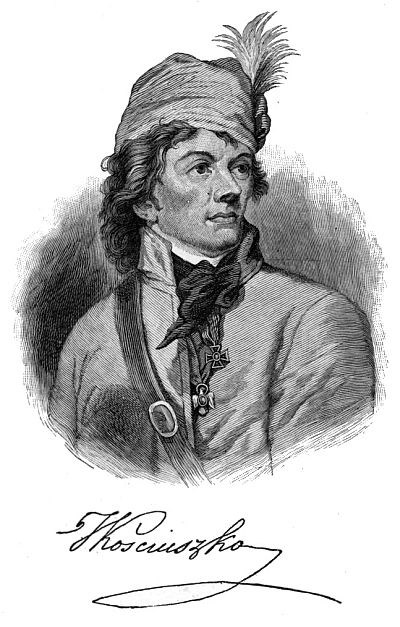
In the dispatches which he now sent to Congress, Gates took to himself all the credit of this affair, and did not even mention Arnold’s name. The army, however, rang with praise of the fighting general, until Gates, who never could bear to hear any one but himself well spoken of, waxed wroth and revengeful. Arnold, moreover, freely blamed Gates for not supporting him, and for refusing to renew the battle on the next morning, while the enemy were still disconcerted. Arnold’s warm friendship with Schuyler gave further offence to the commander; and three days after the battle he sought to wreak his spite by withdrawing Morgan’s riflemen and Dearborn’s light infantry from Arnold’s division. A fierce quarrel ensued, in the course of which Gates told Arnold that as soon as Lincoln should arrive he would have no further use for him, and he might go back to Washington’s camp as soon as he liked. Arnold, in a white rage, said he would go, and asked for a pass, which his enemy promptly gave him; but after receiving it, second thoughts prevented him from going. All the general officers except Lincoln – who seems to have refrained from unwillingness to give umbrage to a commander so high in the good graces of Massachusetts as Gates – united in signing a letter entreating Arnold to remain. He had been sent here by Washington to aid the northern army, and clearly it would be wrong to leave it now, on the eve of a decisive battle. So the proud, fiery soldier, smarting under an accumulation of injuries, made up his mind once more to swallow the affront, and wait for a chance to make himself useful. He stayed in his quarters, awaiting the day of battle, though it was not clear how far he was entitled, under the circumstances, to exercise command, and Gates took no more notice of him than if he had been a dog.
Burgoyne’s supplies cut offNothing more was done for eighteen days. Just before the crossing of the Hudson by the northern army, Sir Henry Clinton, acting “as circumstances may direct,” had planned an expedition up the river in aid of it; and Burgoyne, hearing of this the day after the battle at Freeman’s Farm, thought it best to wait a while before undertaking another assault upon the American lines. But things were swiftly coming to such a pass that it would not do to wait. On the 21st, news came to the British camp that a detachment of Lincoln’s troops had laid siege to Ticonderoga, and, while holding the garrison in check, had captured several ships and taken 300 prisoners. A day or two later came the news that these New Englanders had embarked on Lake George in the ships they had captured, and were cutting off the last sources of supply. And now, while even on shortest rations there was barely three weeks’ food for the army, Lincoln’s main force appeared in front, thus swelling the numbers of the American army to more than 16,000. The case had become as desperate as that of the Athenians at Syracuse before their last dreadful battle in the harbour. So, after eighteen weary days, no word yet coming from Clinton, the gallant Burgoyne attempted, by a furious effort, to break through the lines of an army that now outnumbered him more than three to one.
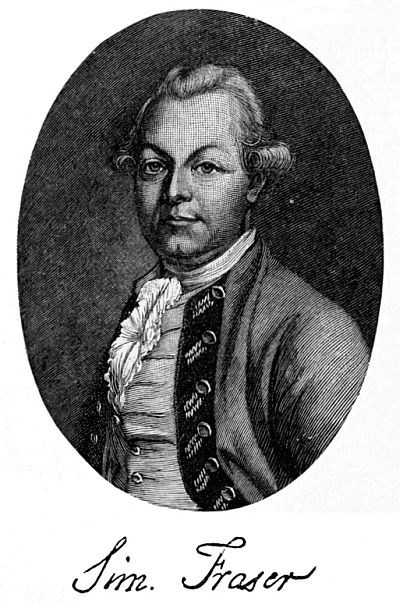
On the morning of October 7th, leaving the rest of his army in camp, Burgoyne advanced with 1,500 picked men to turn the American left. Small as the force was, its quality was superb, and with it were the best commanders, – Phillips, Riedesel, Fraser, Balcarras, and Ackland. Such a compact force, so ably led, might manœuvre quickly. If, on sounding the American position on the left, they should find it too strong to be forced, they might swiftly retreat. At all events, the movement would cover a foraging party which Burgoyne had sent out, – and this was no small matter. Arnold, too, the fighting general, it was reported, held no command; and Gates was known to be a sluggard. Such thoughts may have helped to shape the conduct of the British commander on this critical morning. But the scheme was swiftly overturned. As the British came on, their right was suddenly attacked by Morgan, while the New England regulars with 3,000 New York militia assailed them in front. After a short, sharp fight against overwhelming numbers, their whole line was broken, and Fraser sought to form a second line a little farther back, on the west border of Freeman’s Farm, though the ranks were badly disordered and all their cannon were lost. At this moment, Arnold, who had been watching from the heights, saw that a well-directed blow might not only ruin this retreating column, but also shatter the whole British army. Quick as thought he sprang upon his horse, and galloped to the scene of action. He was greeted with deafening hurrahs, and the men, leaping with exultation at sight of their beloved commander, rushed upon Fraser’s half-formed line. At the same moment, while Morgan was still pressing on the British right, one of his marksmen shot General Fraser, who fell, mortally wounded, just as Arnold charged with mad fury upon his line. The British, thus assailed in front and flank, were soon pushed off the field. Arnold next attacked Lord Balcarras, who had retired behind intrenchments at the north of Freeman’s Farm; but finding the resistance here too strong, he swept by, and charged upon the Canadian auxiliaries, who occupied a position just north of Balcarras, and covered the left wing of Breymann’s forces at the extreme right of the British camp. The Canadians soon fled, leaving Breymann uncovered; and Arnold forthwith rushed against Breymann on the left, just as Morgan, who had prolonged his flanking march, assailed him on the right. Breymann was slain and his force routed; the British right wing was crushed, and their whole position taken in reverse and made untenable. Just at this moment, a wounded German soldier, lying on the ground, took aim at Arnold, and slew his horse, while the ball passed through the general’s left leg, that had been wounded at Quebec, and fractured the bone a little above the knee. As Arnold fell, one of his men rushed up to bayonet the wounded soldier who had shot him, when the prostrate general cried, “For God’s sake, don’t hurt him; he’s a fine fellow!” The poor German was saved, and this was the hour when Benedict Arnold should have died. His fall and the gathering twilight stopped the progress of the battle, but the American victory was complete and decisive. Nothing was left for Burgoyne but to get the wreck of his army out of the way as quickly as possible, and the next day he did so, making a slow retreat upon Saratoga, in the course of which his soldiers burned General Schuyler’s princely country-house, with its barns and granaries.
As the British retreated, General Gates steadily closed in upon them with his overwhelming forces, which now numbered 20,000. Gates – to give him due credit – knew how to be active after the victory, although, when fighting was going on, he was a general of sedentary habits. When Arnold rushed down, at the critical moment, to complete the victory of Saratoga, Gates sent out Major Armstrong to stop him. “Call back that fellow,” said Gates, “or he will be doing something rash!” But the eager Arnold had out-galloped the messenger, and came back only when his leg was broken and the victory won. In the mean time Gates sat at his headquarters, forgetful of the battle that was raging below, while he argued the merits of the American Revolution with a wounded British officer, Sir Francis Clerke, who had been brought in and laid upon the commander’s bed to die. Losing his temper in the discussion, Gates called his adjutant, Wilkinson, out of the room, and asked him, “Did you ever hear so impudent a son of a b – h?” And this seems to have been all that the commanding general contributed to the crowning victory of Saratoga.
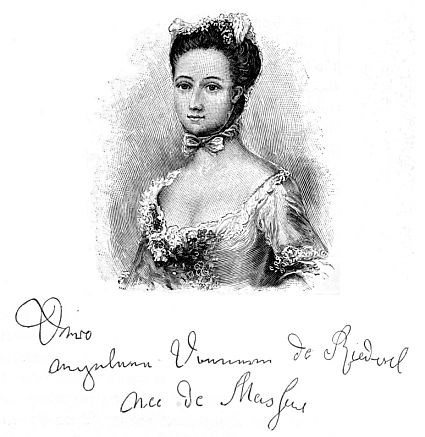
When Burgoyne reached the place where he had crossed the Hudson, he found a force of 3,000 Americans, with several batteries of cannon occupying the hills on the other side, so that it was now impossible to cross. A council of war decided to abandon all the artillery and baggage, push through the woods by night, and effect a crossing higher up, by Fort Edward, where the great river begins to be fordable. But no sooner had this plan been made than word was brought that the Americans were guarding all the fords, and had also planted detachments in a strong position to the northward, between Fort Edward and Fort George. The British army, in short, was surrounded. A brisk cannonade was opened upon it from the east and south, while Morgan’s sharpshooters kept up a galling fire in the rear. Some of the women and wounded men were sent for safety to a large house in the neighbourhood, where they took refuge in the cellar; and there the Baroness Riedesel tells us how she passed six dismal nights and days, crouching in a corner near the doorway, with her three little children clinging about her, while every now and then, with hideous crashing, a heavy cannon-ball passed through the room overhead. The cellar became crowded with crippled and dying men. But little food could be obtained, and the suffering from thirst was dreadful. It was only a few steps to the river, but every man who ventured out with a bucket was shot dead by Virginia rifles that never missed their aim. At last the brave wife of a British soldier volunteered to go; and thus the water was brought again and again, for the Americans would not fire at a woman.
Clinton comes up the Hudson, but it is too lateAnd now, while Burgoyne’s last ray of hope was dying, and while the veteran Phillips declared himself heartbroken at the misery which he could not relieve, where was Sir Henry Clinton? He had not thought it prudent to leave New York until after the arrival of 3,000 soldiers whom he expected from England. These men arrived on the 29th of September, but six days more elapsed before Sir Henry had taken them up the river and landed them near Putnam’s headquarters at Peekskill. In a campaign of three days he outwitted that general, carried two of the forts after obstinate resistance, and compelled the Americans to abandon the others; and thus laid open the river so that British ships might go up to Albany. On the 8th of October, Sir Henry wrote to Burgoyne from Fort Montgomery: “Nous y voici, and nothing between us and Gates. I sincerely hope this little success of ours will facilitate your operations.” This dispatch was written on a scrap of very thin paper, and encased in an oval silver bullet, which opened with a tiny screw in the middle. Sir Henry then sent General Vaughan, with several frigates and the greater part of his force, to make all haste for Albany. As they passed up the river, the next day, they could not resist the temptation to land and set fire to the pretty village of Kingston, then the seat of the state legislature. George Clinton, governor of the state, just retreating from his able defence of the captured forts, hastened to protect the village, but came up only in time to see it in flames from one end to the other. Just then Sir Henry’s messenger, as he skulked by the roadside, was caught and taken to the governor. He had been seen swallowing something, so they gave him an emetic, and obtained the silver bullet. The dispatch was read; the bearer was hanged to an apple-tree; and Burgoyne, weary with waiting for the news that never came, at last sent a flag of truce to General Gates, inquiring what terms of surrender would be accepted.
Burgoyne surrenders, Oct. 17Gates first demanded an unconditional surrender, but on Burgoyne’s indignant refusal he consented to make terms, and the more readily, no doubt, since he knew what had just happened in the Highlands, though his adversary did not. After three days of discussion the terms of surrender were agreed upon. Just as Burgoyne was about to sign the articles, a Tory made his way into camp with hearsay news that part of Clinton’s army was approaching Albany. The subject was then anxiously reconsidered by the British officers, and an interesting discussion ensued as to whether they had so far pledged their faith to the surrender that they could not in honour draw back. The majority of the council decided that their faith was irrevocably pledged, and Burgoyne yielded to this opinion, though he did not share it, for he did not feel quite clear that the rumoured advance of Clinton could now avail to save him in any case. In this he was undoubtedly right. The American army, with its daily accretions of militia, had now grown to more than 20,000, and armed yeomanry were still pouring in by the hundred. A diversion threatened by less than 3,000 men, who were still more than fifty miles distant, could hardly have averted the doom of the British army. The only effect which it did produce was, perhaps, to work upon the timid Gates, and induce him to offer easy terms in order to hasten the surrender. On the 17th of October, accordingly, the articles were signed, exchanged, and put in execution. It was agreed that the British army should march out of camp with the honours of war, and pile their arms at an appointed place; they should then march through Massachusetts to Boston, from which port they might sail for Europe, it being understood that none of them should serve again in America during the war; all the officers might retain their small arms, and no one’s private luggage should be searched or molested. At Burgoyne’s earnest solicitation the American general consented that these proceedings should be styled a “convention,” instead of a surrender, in imitation of the famous Convention of Kloster-Seven, by which the Duke of Cumberland, twenty years before, had sought to save his feelings while losing his army, beleaguered by the French in Hanover. The soothing phrase has been well remembered by British historians, who to this day continue to speak of Burgoyne’s surrender as the “Convention of Saratoga.”
In carrying out the terms of the convention, both Gates and his soldiers showed praiseworthy delicacy. As the British marched off to a meadow by the river side and laid down their arms, the Americans remained within their lines, refusing to add to the humiliation of a gallant enemy by standing and looking on. As the disarmed soldiers then passed by the American lines, says Lieutenant Anbury, one of the captured officers, “I did not observe the least disrespect or even a taunting look, but all was mute astonishment and pity.” Burgoyne stepped up and handed his sword to Gates, simply saying, “The fortune of war, General Gates, has made me your prisoner.” The American general instantly returned the sword, replying, “I shall always be ready to testify that it has not been through any fault of your excellency.” When Baron Riedesel had been presented to Gates and the other generals, he sent for his wife and children. Set free at last from the dreadful cellar, the baroness came with some trepidation into the enemy’s camp; but the only look she saw upon any face was one of sympathy. “As I approached the tents,” she says, “a noble-looking gentleman came toward me, and took the children out of the wagon; embraced and kissed them; and then, with tears in his eyes, helped me also to alight… Presently he said, ‘It may be embarrassing to you to dine with so many gentlemen. If you will come with your children to my tent, I will give you a frugal meal, but one that will at least be seasoned with good wishes.’ ‘Oh, sir,’ I cried, ‘you must surely be a husband and a father, since you show me so much kindness!’ I then learned that it was General Schuyler.”
Schuyler’s magnanimitySchuyler had indeed come, with unruffled soul, to look on while the fruit which he had sown, with the gallant aid of Stark and Herkimer, Arnold and Morgan, was plucked by an unworthy rival. He now met Burgoyne, who was naturally pained and embarrassed at the recollection of the beautiful house which his men had burned a few days before. In a speech in the House of Commons, some months later, Burgoyne told how Schuyler received him. “I expressed to General Schuyler,” says Burgoyne, “my regret at the event which had happened, and the reasons which had occasioned it. He desired me to think no more of it, saying that the occasion justified it, according to the rules of war… He did more: he sent an aide-de-camp to conduct me to Albany, in order, as he expressed it, to procure me better quarters than a stranger might be able to find. This gentleman conducted me to a very elegant house, and, to my great surprise, presented me to Mrs. Schuyler and her family; and in this general’s house I remained during my whole stay at Albany, with a table of more than twenty covers for me and my friends, and every other possible demonstration of hospitality.” Madame Riedesel was also invited to stay with the Schuylers; and when first she arrived in the house, one of her little girls exclaimed, “Oh, mamma! Is this the palace that papa was to have when he came to America?” As the Schuylers understood German, the baroness coloured, but all laughed pleasantly, and put her at ease.
Bad faith of CongressWith the generosity and delicacy shown alike by generals and soldiers, it is painful, though instructive, to contrast the coarseness and bad faith with which Congress proceeded to treat the captured army. The presence of the troops in and about Boston was felt to be a hardship, and General Heath, who commanded there, wrote to Washington, saying that if they were to stay till cold weather he hardly knew how to find shelter and fuel for them. Washington replied that they would not be likely to stay long, since it was clearly for Howe’s interest to send them back to England as soon as possible, in order that they might replace other soldiers who would be sent over to America for the spring campaign. Congress caught up this suggestion with avidity, and put it to uses quite remote from Washington’s meaning. When Sir William Howe proposed Newport as a point from which the soldiers might more speedily be shipped, Washington, for sound and obvious reasons, urged that there should be no departure from the strict letter of the convention. Congress forthwith not only acted upon this suggestion so far as to refuse Sir William Howe’s request, but it went on gratuitously and absurdly to charge the British general with bad faith. It was hinted that he secretly intended to bring the troops to New York for immediate service, in defiance of the convention, and Congress proceeded to make this imputed treachery the ground for really false dealing on its own part. When Lord Howe’s transports reached Boston, it was not only ordered that no troops should be allowed to embark until all the accounts for their subsistence should have been settled, but it was also required that these accounts should be liquidated in gold. In the instructions given to General Washington a year before, a refusal on the part of anybody to receive the Continental paper money was to be treated as a high misdemeanour. Now Congress refused to take its own money, which had depreciated till it was worth barely thirty cents on a dollar. The captured army was supplied with provisions and fuel that were paid for by General Heath with Continental paper, and now Congress insisted that General Burgoyne should make his repayment dollar for dollar in British gold, worth three times as much.

In fairness to the delegates, we may admit that in all probability they did not realize the baseness of this conduct. They were no doubt misled by one of those wonderful bits of financial sophistry by which the enacting mind of our countrymen has so often been hopelessly confused. In an amusing letter to Washington, honest General Heath naïvely exclaims, “What an opinion must General Burgoyne have of the authority of these states, to suppose that his money would be received at any higher rate than our own in public payment! Such payment would at once be depreciating our currency with a witness.” Washington was seriously annoyed and mortified by these vagaries, – the more so that he was at this very time endeavouring to arrange with Howe a general cartel for the exchange of prisoners; and he knew that the attempt to make thirty cents equal to a dollar would, as he said, “destroy the very idea of a cartel.”
While these discussions were going on, Congress, like the wicked king in the fairy tale, anxious to impose conditions unlikely to be fulfilled, demanded that General Burgoyne should make out a descriptive list of all the officers and soldiers in his army, in order that if any of them should thereafter be found serving against the United States they might be punished accordingly. As no such provision was contained in the convention, upon the faith of which Burgoyne had surrendered, he naturally regarded the demand as insulting, and at first refused to comply with it. He afterwards yielded the point, in his eagerness to liberate his soldiers; but meanwhile, in a letter to Gates, he had incautiously let fall the expression, “The publick faith is broke [sic];” and this remark, coming to the ears of Congress, was immediately laid hold of as a pretext for repudiating the convention altogether. It was argued that Burgoyne had charged the United States with bad faith, in order to have an excuse for repudiating the convention on his own part; and on the 8th of January, Congress accordingly resolved, “that the embarkation of Lieutenant-General Burgoyne and the troops under his command be suspended till a distinct and explicit ratification of the Convention of Saratoga shall be properly notified by the court of Great Britain to Congress.” Now as the British government could not give the required ratification without implicitly recognizing the independence of the United States, no further steps were taken in the matter, the “publick faith” was really broken, and the captured army was never sent home.
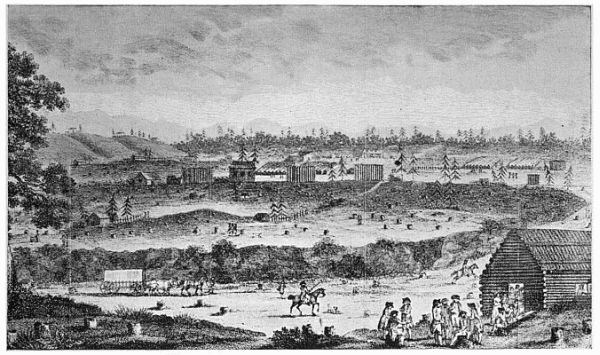
ENCAMPMENT OF THE CONVENTION TROOPS IN VIRGINIA
The behavior of Congress was simply inexcusable
In this wretched affair, Congress deliberately sacrificed principle to policy. It refused, on paltry pretexts, to carry out a solemn engagement which had been made by its accredited agent; and it did so simply through the fear that the British army might indirectly gain a possible reinforcement. Its conduct can be justified upon no grounds save such as would equally justify firing upon flags of truce. Nor can it be palliated even upon the lowest grounds of expediency, for, as it has been well said, “to a people struggling for political life the moral support derivable from the maintenance of honour and good faith was worth a dozen material victories." This sacrifice of principle to policy has served only to call down the condemnation of impartial historians, and to dim the lustre of the magnificent victory which the valour of our soldiers and the self-devotion of our people had won in the field. It was one out of many instances which show that, under any form of government, the moral sense of the governing body is likely to fall far below the highest moral standard recognized in the community.
What became of the captured armyThe captured army was never sent home. The officers were treated as prisoners of war, and from time to time were exchanged. Burgoyne was allowed to go to England in the spring, and while still a prisoner on parole he took his seat in Parliament, and became conspicuous among the defenders of the American cause. The troops were detained in the neighbourhood of Boston until the autumn of 1778, when they were all transferred to Charlottesville in Virginia. Here a rude village was built on the brow of a pleasant ridge of hills, and gardens were laid out and planted. Much kind assistance was rendered in all this work by Thomas Jefferson, who was then living close by, on his estate at Monticello, and did everything in his power to make things comfortable for soldiers and officers. Two years afterward, when Virginia became the seat of war, some of them were removed to Winchester in the Shenandoah valley, to Frederick in Maryland, and to Lancaster in Pennsylvania. Those who wished to return to Europe were exchanged or allowed to escape. The greater number, especially of the Germans, preferred to stay in this country and become American citizens. Before the end of 1783 they had dispersed in all directions.