


Полная версия
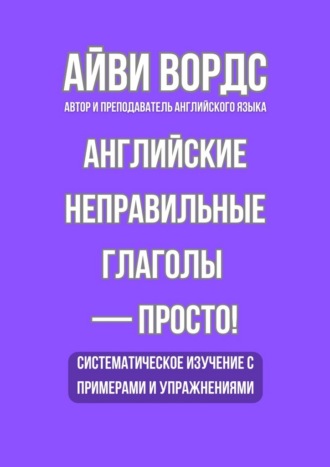
Английские неправильные глаголы – просто! Систематическое изучение с примерами и упражнениями

Английские неправильные глаголы – просто!
Систематическое изучение с примерами и упражнениями
Айви Вордс
© Айви Вордс, 2026
ISBN 978-5-0069-2253-2
Создано в интеллектуальной издательской системе Ridero
Предисловие
Эффективное изучение иностранного языка требует не только понимания грамматических правил, но и освоения практической лексики и глаголов, которые часто используются в повседневном общении. Неправильные глаголы в английском языке представляют собой особую сложность, так как их формы не подчиняются стандартным закономерностям. Поэтому запоминание и правильное использование этих глаголов является необходимым условием для уверенного владения языком.
Данная книга предназначена для системного изучения английских неправильных глаголов. Каждая глава посвящена определённой тематике, связанной с повседневной жизнью, эмоциями, общением, работой, путешествиями и важными событиями. В каждой главе представлен отобранный набор неправильных глаголов, их формы, объяснение использования, примеры предложений и практические упражнения для закрепления материала.
Упражнения построены таким образом, чтобы стимулировать активное вовлечение учащихся, сочетая письменную практику, личные размышления и применение глаголов в контексте. В книге также представлена полная справочная таблица всех неправильных глаголов, использованных в главах, что позволяет систематически повторять и закреплять знания.
Моя цель при написании этой книги – создать ясный, организованный и доступный ресурс, который поддержит изучающих в формировании уверенности и точности при использовании английских неправильных глаголов. Регулярное повторение и работа с практическими примерами помогут интегрировать эти глаголы в повседневное общение с большим удобством и точностью.
Я надеюсь, что эта книга станет для вас надёжным руководством и справочником, который поможет достичь заметного прогресса в изучении английского языка.
Starting the Day
Irregular Verbs Focus
Выбранные неправильные глаголы для утренних действий:
wake – woke – woken, get – got – got, eat – ate – eaten, drink – drank – drunk, take – took – taken, go – went – gone, see – saw – seen, make – made – made, come – came – come, have – had – had
wake – woke – woken
Используется для пробуждения.
Примеры:
I woke up at 7 a.m. today. – Я проснулся в 7 утра сегодня.
She has woken early every day this week. – Она просыпалась рано каждый день на этой неделе.
get – got – got
Используется для получения или достижения чего-либо, а также «get up» – вставать.
I got out of bed quickly. – Я быстро встал с кровати.
He has got a cup of coffee every morning. – Он берёт чашку кофе каждое утро.
eat – ate – eaten
Используется для еды.
I ate breakfast at 8 a.m. – Я позавтракал в 8 утра.
She has eaten all her cereal. – Она съела все свои хлопья.
drink – drank – drunk
Используется для питья.
I drank a glass of water after waking up. – Я выпил стакан воды после пробуждения.
They have drunk tea together. – Они вместе выпили чай.
take – took – taken
Используется для взятия чего-либо, «take a shower» – принимать душ.
I took a quick shower this morning. – Я принял быстрый душ этим утром.
She has taken her vitamins already. – Она уже приняла свои витамины.
go – went – gone
Используется для движения куда-либо.
He went to the kitchen for breakfast. – Он пошёл на кухню за завтраком.
I have gone to the park every morning. – Я ходил в парк каждое утро.
see – saw – seen
Используется для наблюдения или видения.
I saw the sunrise from my window. – Я видел рассвет из своего окна.
She has seen her friends before work. – Она видела своих друзей перед работой.
make – made – made
Используется для создания или приготовления чего-либо.
I made a cup of coffee. – Я приготовил чашку кофе.
He has made his bed already. – Он уже заправил кровать.
come – came – come
Используется для движения к говорящему или месту.
She came to the kitchen to eat breakfast. – Она пришла на кухню, чтобы позавтракать.
They have come early today. – Они пришли сегодня рано.
have – had – had
Используется для владения, еды, привычек.
I had a light breakfast. – У меня был лёгкий завтрак.
We have had a productive morning. – У нас было продуктивное утро.
Советы по запоминанию:
Группировать по утренним действиям: wake, get, take, eat, drink.
Использовать повторение с простыми предложениями: «I woke, I ate, I drank».
Придумывать короткие рифмы для сочетаний: wake—take, eat—drink.
Story
This morning, Sarah woke at 6:30 a.m. She got out of bed quickly because she wanted to make the most of the day. First, she took a shower and then went to the kitchen. She made a cup of coffee and ate a light breakfast. While she drank her coffee, she saw the sunrise from her window.
After breakfast, Sarah had a quick look at her emails. Some messages had come overnight, and she responded to a few immediately. She then took her notebook and went to the park for a short walk. She saw her neighbors walking their dogs and greeted them. The fresh air made her feel energized.
When she returned home, she had a shower again because she got a little sweaty. Then she made a smoothie and drank it slowly while thinking about the day ahead. She had planned to clean the house and finish some work. By 10 a.m., she had completed her morning routine and felt ready for the day. Everything she had done, from waking early to going for a walk, made her morning productive and enjoyable.
Useful Words and Expressions
Wake up – просыпаться
Get out of bed – вставать с кровати
Take a shower – принимать душ
Make coffee – приготовить кофе
Eat breakfast – завтракать
Drink coffee – пить кофе
See the sunrise – видеть рассвет
Check emails – проверять почту
Come overnight – приходить ночью (о письмах)
Go to the park – идти в парк
Greet neighbors – приветствовать соседей
Fresh air – свежий воздух
Energized – полон энергии
Sweaty – вспотевший
Smoothie – смузи
Morning routine – утренние дела
Productive morning – продуктивное утро
Enjoyable – приятный
Plan the day – планировать день
Exercises
Exercise 1: Fill in the blanks
Use the correct form of the verb (Infinitive / Past Simple / Past Participle).
I _____ (wake) at 7 a.m. yesterday.
She _____ (make) breakfast before going to work.
They have _____ (drink) all the juice.
He _____ (go) to the park this morning.
We have _____ (see) the sunrise from the balcony.
Exercise 2: Matching
Match the infinitive with the correct Past Simple and Past Participle:
Infinitive:
get
take
eat
have
come
Past Simple / Past Participle:
a) got – got
b) took – taken
c) ate – eaten
d) had – had
e) came – come
Exercise 3: Personal Questions
Answer in 2—3 sentences using at least one irregular verb from the chapter.
When do you usually wake up?
What did you eat for breakfast yesterday?
Have you ever seen a sunrise recently?
What do you usually drink in the morning?
Have you taken a morning walk this week?
Answer Key
Exercise 1
woke
made
drunk
went
seen
Exercise 2
1 – a
2 – b
3 – c
4 – d
5 – e
Exercise 3 Example Answers
I usually wake at 7 a.m. I have woken early this week to exercise.
Yesterday, I ate toast and eggs for breakfast. I have eaten cereal before too.
Yes, I saw the sunrise two days ago. I have seen it many times from my window.
I usually drink coffee in the morning. Today, I have drunk tea as well.
I took a morning walk yesterday. I have gone to the park three times this week.
At Home
Irregular Verbs Focus
Выбранные неправильные глаголы для бытовых действий:
clean – cleaned – cleaned (правильный), sweep – swept – swept, do – did – done, put – put – put, buy – bought – bought, read – read – read, bring – brought – brought, write – wrote – written, leave – left – left, find – found – found
clean – cleaned – cleaned
Используется для уборки.
I cleaned the kitchen yesterday. – Я убрал кухню вчера.
She has cleaned the bathroom already. – Она уже убрала ванную.
sweep – swept – swept
Используется для подметания.
He swept the floor this morning. – Он подмёл пол этим утром.
They have swept the porch. – Они подмели крыльцо.
do – did – done
Используется для выполнения действий или задач.
I did the laundry yesterday. – Я сделал стирку вчера.
She has done all her homework. – Она сделала всю домашнюю работу.
put – put – put
Используется для размещения чего-либо.
I put the keys on the table. – Я положил ключи на стол.
They have put the dishes away. – Они убрали посуду.
buy – bought – bought
Используется для покупки чего-либо.
I bought a new lamp yesterday. – Я купил новую лампу вчера.
She has bought groceries for the week. – Она купила продукты на неделю.
read – read – read
Используется для чтения (произносится как /red/ в прошедшем времени).
I read a book last night. – Я прочитал книгу вчера вечером.
He has read the instructions. – Он прочитал инструкции.
bring – brought – brought
Используется для принесения чего-либо.
I brought some snacks for the family. – Я принёс закуски для семьи.
She has brought her laptop to the living room. – Она принесла свой ноутбук в гостиную.
write – wrote – written
Используется для написания чего-либо.
I wrote a shopping list. – Я написал список покупок.
He has written an email to his friend. – Он написал письмо другу.
leave – left – left
Используется для ухода или оставления чего-либо.
I left the windows open. – Я оставил окна открытыми.
She has left the room already. – Она уже покинула комнату.
find – found – found
Используется для нахождения чего-либо.
I found my glasses under the sofa. – Я нашёл очки под диваном.
They have found the missing keys. – Они нашли потерянные ключи.
Советы по запоминанию:
Группировать по типу действий: уборка (clean, sweep), покупки (buy, bring), чтение/писание (read, write).
Повторять с короткими предложениями: «I cleaned, I bought, I read».
Связать с привычными действиями дома, чтобы легче вспоминать.
Story
Anna spent her Saturday at home. She woke up late and decided to clean the living room first. She swept the floor carefully and put the books back on the shelf. Then, she did the laundry and found some missing socks under the sofa.
After that, she wrote a note for her family and brought it to the kitchen. She bought some fruits and put them in the fridge. Later, she read a new book in the living room while drinking tea. Her cat jumped onto the table, and she left the window open for fresh air.
In the afternoon, Anna found her old photographs and wrote a small story about her childhood. She has done many chores already, and the house looked tidy and cozy. Before dinner, she swept the porch and put the chairs in order. Everything she had done made her feel satisfied and relaxed.
Useful Words and Expressions
Clean the room – убирать комнату
Sweep the floor – подметать пол
Do the laundry – стирать
Put the books away – убрать книги
Buy groceries – покупать продукты
Read a book – читать книгу
Write a note – написать записку
Bring something – принести что-то
Leave the window open – оставить окно открытым
Find something – найти что-то
Chores – домашние дела
Tidy – аккуратный
Cozy – уютный
Fridge – холодильник
Shelf – полка
Socks – носки
Table – стол
Tea – чай
Afternoon – после обеда
Family – семья
Exercises
Exercise 1: Fill in the blanks
Use the correct form of the verb (Infinitive / Past Simple / Past Participle).
I _____ (clean) the kitchen yesterday.
She has _____ (buy) new groceries.
He _____ (sweep) the floor this morning.
We have _____ (read) all the instructions.
They _____ (leave) the windows open.
Exercise 2: Matching (answers mixed)
Match the infinitive with the correct Past Simple and Past Participle:
Infinitive:
bring
write
find
do
put
Past Simple / Past Participle:
a) did – done
b) brought – brought
c) found – found
d) wrote – written
e) put – put
Exercise 3: Personal Questions
Answer in 2—3 sentences using at least one irregular verb from the chapter.
What chores did you do at home yesterday?
Have you ever found something surprising at home?
What did you read or write recently?
Have you bought something for your house this week?
Did you sweep or clean any room today?
Answer Key
Exercise 1
cleaned
bought
swept
read
left
Exercise 2
1 – b
2 – d
3 – c
4 – a
5 – e
Exercise 3 Example Answers
Yesterday, I cleaned the kitchen and did the laundry. I have done many chores this week.
Yes, I found an old photo under the sofa. I have found some interesting things recently.
I read a book last night. I have written a short story too.
I bought a new lamp yesterday. I have bought some decorations for my room.
Today, I swept the floor and cleaned my desk. I have cleaned the living room before too.
Cooking and Eating
Irregular Verbs Focus
Выбранные неправильные глаголы для готовки и еды:
eat – ate – eaten, drink – drank – drunk, make – made – made, take – took – taken, put – put – put, choose – chose – chosen, cut – cut – cut, fry – fried – fried (правильный), see – saw – seen, bring – brought – brought
eat – ate – eaten
Используется для еды.
I ate breakfast at 8 a.m. – Я позавтракал в 8 утра.
She has eaten all the vegetables. – Она съела все овощи.
drink – drank – drunk
Используется для питья.
I drank water before lunch. – Я выпил воду перед обедом.
They have drunk all the juice. – Они выпили весь сок.
make – made – made
Используется для приготовления еды.
I made a salad for dinner. – Я приготовил салат к ужину.
He has made a sandwich already. – Он уже сделал бутерброд.
take – took – taken
Используется для взятия чего-либо или участия в процессе.
I took a spoon and started eating. – Я взял ложку и начал есть.
She has taken some vegetables from the fridge. – Она взяла овощи из холодильника.
put – put – put
Используется для размещения еды или посуды.
I put the plates on the table. – Я поставил тарелки на стол.
They have put the leftovers in the fridge. – Они положили остатки еды в холодильник.
choose – chose – chosen
Используется для выбора ингредиентов или блюда.
I chose fresh tomatoes for the salad. – Я выбрал свежие помидоры для салата.
She has chosen a recipe for dinner. – Она выбрала рецепт на ужин.
cut – cut – cut
Используется для нарезки продуктов.
I cut the vegetables for the soup. – Я нарезал овощи для супа.
He has cut the bread already. – Он уже нарезал хлеб.
see – saw – seen
Используется для наблюдения за процессом приготовления.
I saw my friend cooking yesterday. – Я видел, как мой друг готовил вчера.
She has seen the chef prepare the meal. – Она видела, как шеф готовит еду.
bring – brought – brought
Используется для принесения еды.
I brought some fruits from the market. – Я принес фрукты с рынка.
They have brought snacks for the party. – Они принесли закуски на вечеринку.
Story
Tom loves cooking and eating. This morning, he woke early and chose fresh vegetables at the market. When he came home, he put them on the kitchen counter and cut them carefully for a salad. He made a sandwich while drinking orange juice.
His sister saw him cooking and brought some bread from the cupboard. Tom took a spoon and tasted the salad. He had already made coffee and put it next to the plates. Later, he ate his breakfast slowly while watching the morning news.
After finishing, he cleaned the kitchen. He had eaten and drunk everything he had prepared. Then he wrote a short note about the new recipe he had chosen for dinner. By noon, he had taken all the necessary ingredients from the fridge. Tom felt satisfied because he had cooked a delicious meal and enjoyed eating it with his family.
Useful Words and Expressions
Cook – готовить
Eat – есть
Drink – пить
Make a salad – приготовить салат
Take a spoon – взять ложку
Put on the table – поставить на стол
Choose fresh vegetables – выбрать свежие овощи
Cut vegetables – нарезать овощи
Bring bread – принести хлеб
Tasty – вкусный
Breakfast – завтрак
Lunch – обед
Dinner – ужин
Coffee – кофе
Juice – сок
Kitchen counter – кухонная стойка
Recipe – рецепт
Ingredients – ингредиенты
Clean the kitchen – убрать кухню
Family – семья
Exercises
Exercise 1: Fill in the blanks
Use the correct form of the verb (Infinitive / Past Simple / Past Participle).
I _____ (eat) a sandwich for breakfast.
She has _____ (choose) the ingredients for the soup.
He _____ (cut) the vegetables carefully.
They have _____ (drink) all the juice.
I _____ (put) the plates on the table.
Exercise 2: Matching (answers mixed)
Match the infinitive with the correct Past Simple and Past Participle:
Infinitive:
make
take
bring
see
choose
Past Simple / Past Participle:
a) brought – brought
b) took – taken
c) saw – seen
d) made – made
e) chose – chosen
Exercise 3: Personal Questions
Answer in 2—3 sentences using at least one irregular verb from the chapter.
What did you eat or drink this morning?
Have you ever made a meal for your family?
Did you cut vegetables or fruits recently?
Have you chosen a recipe for your next meal?
Who brought something for the meal in your household recently?
Answer Key
Exercise 1
ate
chosen
cut
drunk
put
Exercise 2
1 – d
2 – b
3 – a
4 – c
5 – e
Exercise 3 Example Answers
I ate eggs and drank coffee this morning. I have eaten breakfast early this week too.
Yes, I made pasta for my family yesterday. I have made salads before as well.
I cut some tomatoes for lunch. I have cut vegetables for a soup last week.
I have chosen a recipe for dinner tonight. I chose it because it is easy and tasty.
My brother brought bread from the bakery. He has brought snacks many times before.
Going to Work
Irregular Verbs Focus
Выбранные неправильные глаголы для работы и поездки:
go – went – gone, come – came – come, drive – drove – driven, take – took – taken, get – got – got, see – saw – seen, meet – met – met, write – wrote – written, begin – began – begun, find – found – found
go – went – gone
Используется для движения куда-либо.
I went to work by bus this morning. – Я поехал на работу на автобусе этим утром.
She has gone to the office already. – Она уже ушла в офис.
come – came – come
Используется для прихода к говорящему или месту.
He came to the meeting on time. – Он пришёл на встречу вовремя.
They have come early today. – Они пришли сегодня рано.
drive – drove – driven
Используется для вождения.
I drove to the office yesterday. – Я ездил в офис на машине вчера.
She has driven to work every day this week. – Она ездила на работу на машине всю неделю.
take – took – taken
Используется для взятия чего-либо, например транспорта.
I took the train this morning. – Я поехал на поезде этим утром.
He has taken a taxi to the meeting. – Он взял такси на встречу.
get – got – got
Используется для достижения места или получения чего-либо.
I got to work at 9 a.m. – Я добрался до работы в 9 утра.
She has got a new assignment. – Она получила новое задание.
see – saw – seen
Используется для наблюдения или встречи с кем-либо.
I saw my colleague in the hallway. – Я увидел коллегу в коридоре.
They have seen the new manager today. – Они видели нового менеджера сегодня.
meet – met – met
Используется для встречи с людьми.
I met the team at the office. – Я встретился с командой в офисе.
She has met all the new employees. – Она познакомилась со всеми новыми сотрудниками.
write – wrote – written
Используется для написания писем, отчетов и заметок.
I wrote an email to my boss. – Я написал письмо своему начальнику.
He has written the report already. – Он уже написал отчёт.
begin – began – begun
Используется для начала работы или проекта.
The meeting began at 10 a.m. – Встреча началась в 10 утра.
She has begun a new project. – Она начала новый проект.
find – found – found
Используется для нахождения документов или информации.
I found the files I needed. – Я нашёл нужные файлы.
They have found the solution to the problem. – Они нашли решение проблемы.
Советы по запоминанию:
Группировать по действиям: дорога на работу (go, come, drive, take, get), рабочие действия (see, meet, write, begin, find).
Повторять с простыми предложениями: «I went, I met, I wrote».
Использовать последовательность дня: приехал – встретился – начал работу – написал отчёт.
Story
John usually goes to work by bus. This morning, he got up early and drove his car to the station. He took a train and met his colleague at the office. The manager began the meeting at 9 a.m., and everyone found their seats quickly.
During the meeting, John wrote some notes and saw his teammates discussing a project. Afterward, he got an email from his supervisor and began a new assignment. He met the new employee in the hallway and helped her find the files she needed.