 полная версия
The American Revolution
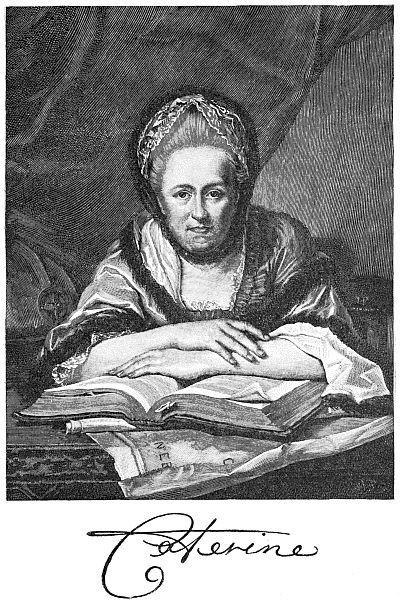
At the beginning of 1778, Sir James Harris, afterward Earl of Malmesbury, was sent as ambassador to St. Petersburg, with instructions to leave no stone unturned to secure an offensive and defensive alliance between Russia and Great Britain, in order to offset and neutralize the alliance between France and the United States. Negotiations to this end were kept up as long as the war lasted, but they proved fruitless. While Catherine coquetted and temporized, the Prussian ambassador had her ear, and his advice was unfavourable to such an alliance. For the England of Pitt the great Frederick felt sympathy and gratitude; for the England of George III. he had nothing but hatred, and his counsels went far to steady Catherine, if ever she showed signs of wavering. The weight of France was of course thrown into the same scale, and for four years the Russian court was the scene of brisk and multifarious intrigues. Harris said that his very valets were offered bribes by busybodies who wished to get a look at his papers; and when he went out, leaving his secretary writing, he used to lock him up, not through doubts of his fidelity, but lest he should thoughtlessly leave the door ajar. From Prince Potemkin, one of Catherine’s lovers whose favour Harris courted, he learned that nothing short of the cession of Minorca would induce the empress to enter into the desired alliance. Russia was already taking advantage of the situation to overrun and annex the Crimea, and the maritime outlook thus acquired made her eager to secure some naval station on the Mediterranean. Minorca was England’s to give. She had won it in the war of the Spanish Succession, and for seventy years it had been one of the brightest jewels in her imperial crown. Together with Gibraltar it had given her that firm grasp upon the Mediterranean which – strengthened in later times by the acquisition of Malta, Cyprus, and the isthmus of Suez – has gone far toward making that vast inland sea an English lake.
Importance of MinorcaSo great a value did England set upon Minorca, that when, in the Seven Years’ War, it was lost for a moment, through an error of judgment on the part of Admiral Byng, the British people were seized with a bloodthirsty frenzy, and one of the foulest judicial murders known to history was committed when that gallant commander was shot on his own quarter-deck. Yet even this island, by which England set such store, she was now ready to surrender in exchange for the help of Russia against her revolted colonies and the House of Bourbon. It was not, however, until 1781 that the offer of Minorca was made, and then Catherine had so far acceded to the general combination against England that she could not help refusing it. That such an offer should ever have been made shows how important an alliance with Russia seemed to England at the moment when France and Spain were leagued against her, and all the neutral powers looked on her with hostile eyes. We can thus the better appreciate the significance of the step which Russia was now to take with reference to the great question of maritime law that was beginning to agitate the civilized world.
France adopts the Prussian doctrineIn the summer of 1778, the French government, with intent to curb the depredations of British cruisers, issued a proclamation adopting the Prussian doctrine of 1752, that free ships make free goods, and Vergennes took occasion to suggest that Catherine should put herself at the head of a league of neutral powers for the purpose of protecting neutral commerce all over the world. For the moment no decided action was taken, but the idea was one of those broad ideas in which the empress delighted. Count Panin, her principal minister, who was strongly in sympathy with the King of Prussia, insisted upon the necessity of protecting the commerce of minor powers against England, which since 1763 had become the great naval bully of the world. England was doubtless acting in strict accordance with time-honoured custom, but circumstances had changed, and the law must be changed to meet them. The first great war since 1763 was now showing that England could destroy the commerce of all the rest of the world, without any fear of retaliation except through a universal war. During the summers of 1778 and 1779, Prussian, Swedish, Danish, and Dutch ships were continually overhauled by British cruisers, and robbed of cargoes which they were carrying to France. Such gross outrages upon private property, however sanctioned by laws of war that had grown up in a barbarous age, awakened general indignation throughout Europe; and from whatever quarter complaints poured in, Vergennes and Frederick took good care that they should be laid before the Empress of Russia, until presently she came to look upon herself as the champion of little states and oppressed tradesmen.
Affair of Fielding and BylandtThe British depredations were, moreover, apt to be characterized by an arrogance which, while it rendered them all the more exasperating, sometimes transcended the limits of aggression prescribed by the rude maritime law of that day. Upon Netherland commerce England was especially severe, for the Dutch had more merchant shipping than any other people on the Continent, with a weak navy to protect it. England forbade the Dutch to send timber to France, as it would probably be used in building ships of war. On the 30th of December, 1779, seventeen Dutch vessels, laden with tar and hemp, and other materials useful in shipyards, were sailing through the English Channel, escorted by five ships-of-the-line under Count Bylandt, when toward nightfall they were overtaken and hailed by a British squadron of sixteen ships-of-the-line under Admiral Fielding. A lively parley ensued. Bylandt swore that his ships should not be searched, and Fielding threatened violence. While this was going on, twelve of the Dutch ships got away under cover of darkness, and reached in safety the French ports to which they were bound. Early in the morning, Bylandt fired upon the boat which was bringing a party of British officers to search the merchantmen that remained. Upon this, three British ships instantly poured their broadsides into the Dutch flagship, which returned the compliment, and then hauled down its flag, as resistance was useless. Nobody was killed, but Fielding seized the five merchantmen, and took them in to Portsmouth. The States-General of the Netherlands complained of the outrage to Lord Stormont, the new foreign secretary, and demanded the restitution of the prizes. The matter was referred to the British court of admiralty, and the singular doctrine was there laid down that the Dutch vessels were virtually blockade-runners, and as such were lawfully captured! “Great Britain,” said the judge, “by her insular position, blocks naturally all the ports of Spain and France, and she has a right to avail herself of this position as a gift of Providence.” But the States-General did not accept this interpretation of the law and theology of the matter, and they appealed to the Empress of Russia.
Spanish cruisers capture Russian vesselsJust at this moment events occurred which compelled Catherine to take some decided stand on the question of neutral rights. Through fear of adding her to the list of their enemies, the British ministry had issued the most stringent orders that no Russian vessels should be searched or molested, under any circumstances. The Dutch and Danish flags might be insulted at pleasure, but that of Russia must be respected; and so well were these orders obeyed that Catherine had no grounds for complaint against England on this score. Spain, on the other hand, was less cautious. In the winter of 1779-80, her cruisers captured two Russian vessels laden with wheat, in the mistaken belief that their cargoes were destined for Gibraltar. The ships were taken into Cadiz, their cargoes were sold at auction, while their penniless crews were outrageously treated by the people, and came little short of starving. Hereupon Catherine without delay ordered out fifteen ships-of-the-line and five frigates for the protection of Russian commerce. For a moment war between Spain and Russia seemed imminent. But Panin moved with cautious shrewdness, and consulted the King of Prussia, who persuaded Florida Blanca to restore the captured ships, with compensation to the owners of the cargoes, and an ample apology for the blunder. The empress was satisfied, and Panin assured her that now the time had come for her to act with magnanimity and power, laying down an impartial code for the protection of maritime commerce, and thus establishing a claim to the gratitude of mankind through all future ages.
Catherine’s proclamation, March 8, 1780On the 8th of March, 1780, Catherine issued a proclamation, setting forth the principles of maritime law which she was henceforth resolved to defend by force, if necessary. Henceforth neutral ships were to sail unmolested from port to port, even on the coasts of countries at war. They were to be free to carry into such ports any goods or merchandise whatsoever, except arms and ammunition, and the right of search was to be tolerated as regarded such contraband articles, and for no other purpose. Hereafter no port was to be considered blockaded unless the enemy’s ships of war should be near enough to make it dangerous to enter.

These principles were immediately adopted by Spain, France, and the United States, the three powers actually at war with England. At the same time, Denmark and Sweden entered into an arrangement with Russia for the mutual protection of their commerce. It was announced that for every Danish, Swedish, or Russian ship searched or seized by the cruisers of any belligerent power, a strict retaliation would be made by the allied navies of these three countries. This covenant, known as the Armed Neutrality, was practically a threat aimed at England, and through her unwillingness to alienate Russia it proved a very effective threat. We can now understand the interest shown by Denmark and Russia in the victory of Paul Jones, and we can also appreciate the prodigious moral effect of that victory. So overwhelming was England’s naval superiority that the capture of a single one of her warships was a memorable event. To the lesser maritime powers it seemed to bring the United States at once into the front rank of belligerents. The British ministry was too well instructed to be brought under this spell; but in view of the great hostile combination now formed against it, for the moment it was at its wits’ end. “An ambiguous and trimming answer was given,” says Sir James Harris; “we seemed equally afraid to accept or dismiss the new-fangled doctrines. I was instructed secretly to oppose, but avowedly to acquiesce in them.” In England, the wrath and disgust extended to all parties. Shelburne and Camden joined with North and Thurlow in denouncing Catherine’s proclamation as an impudent attempt, on the part of an upstart power, hardly known on the sea till quite lately, to dictate maritime law to the greatest maritime power the world had ever seen. It was contended that the right to search neutral vessels and take an enemy’s goods from them was a cardinal principle of international law; and jurists, of course, found the whole body of precedents on the side of this opinion. But in spite of all protests these “new-fangled doctrines,” subversive of all precedent, were almost immediately adopted throughout Europe. In December, 1780, the Netherlands joined the Armed Neutrality, under circumstances presently to be related. In May, 1781, it was joined by Prussia; in October, 1781, by the Empire; in July, 1782, by Portugal; in September, 1782, by the Turk; in February, 1783, by the Kingdom of Naples. Though England’s maritime strength exceeded that of all the members of the league taken together, she could not afford to run the risk of war with all the world at once; and thus the doctrine that free ships make free goods acquired a firm foothold. In the chaos of the Napoleonic wars, indeed, paper blockades and illegal seizures abounded, and it fared ill with neutral commerce on the high seas. But the principles laid down by Catherine survived that terrible crisis, and at last they were formally adopted by England at the close of the Crimean War, in 1856.
Vast Importance of the principles laid down by CatherineThis successful assertion of the rights of neutrals was one of the greatest and most beneficent revolutions in the whole history of human warfare. It was the most emphatic declaration that had ever been made of the principle that the interests of peace are paramount and permanent, while those of war are subordinate and temporary. In the interest of commerce it put a mighty curb upon warfare, and announced that for the future the business of the producer is entitled to higher consideration than that of the destroyer. Few things have ever done so much to confine the area of warfare and limit its destructive power. If the old doctrine were in force at the present day, when commerce has expanded to such enormous dimensions, and every sea is populous with merchant ships, it would be well-nigh impossible for any two maritime powers to go to war without dragging all the rest of the world into the struggle. For the speedy accomplishment of this great reform we have chiefly to thank the Empress Catherine, whose action at the critical moment was so prompt and decisive. It is curious to consider that an act which so distinctly subordinated military to industrial interests should have emanated from that country of Europe which had least outgrown the militant stage of civilization, and should have been chiefly opposed by that country which had advanced the farthest into the industrial stage. It is a brilliant instance of what may be achieved by an enlightened despot when circumstances are entirely favourable. Among the many acts of Catherine which, in spite of her horrible vices, have won the admiration of mankind, this is doubtless the most memorable; and as time goes on we shall realize its importance more and more.
Relations between Great Britain and HollandThe immediate effect of the Armed Neutrality was to deprive England of one of her principal weapons of offence. To add to her embarrassment, there now came war with Holland. While there was strong sympathy between the British and Dutch governments, there was great jealousy between the peoples which had so long been rivals in the colonial world. Hence there were two parties in the Netherlands, – the party of the Stadtholder, which was subservient to the policy of the British government, and the popular party, which looked with favour upon the American cause. The popular party was far the more numerous, including all the merchants of the most mercantile of countries, and it was especially strong in the city of Amsterdam. A brisk trade – illicit from the British point of view – was carried on between Holland and the United States, chiefly through the little Dutch island of St. Eustatius, in the West Indies. An equally lively trade went on between Holland and France, and against this England felt that she had an especial right to make complaint. Her relations with Holland were regulated not simply by the ordinary law of nations, but by careful and elaborate treaties, made in the days when the two peoples were leagued in sympathy against the aggressive policy of Louis XIV. In 1678, it had been agreed that if either England or Holland should be attacked by France, both powers should make common cause against their common enemy; and in 1716 this agreement had been renewed in such wise as to include the contingency of an attack by Spain, since a younger branch of the House of Bourbon had succeeded to the Spanish throne. When, in 1779, Spain declared war against England, the latter power accordingly called upon the Netherlands for aid; but no aid was given, for the Dutch felt that they had an especial right to complain of the conduct of England. By that same treaty which in 1674 had finally given New York to the English, it had been provided that in case either England or Holland should ever go to war with any other country, the ordinary rules of maritime law should not be enforced as between these two friendly commercial powers. It was agreed that either power might freely trade with the enemies of the other; and such a treaty was at that time greatly to the credit of both nations. It was made in a moment when an honourable spirit of commercial equity prevailed. But it was one of the chief symptoms of the utter demoralization of the British government in 1778, after the untimely death of Lord Chatham, that these treaty obligations were completely ignored; and in the general plunder of merchant shipping which went on at that time, no nation suffered like the Dutch. George III. now felt that he had got everything into his own hands, and when the Dutch complained he gave them to understand that, treaty or no treaty, he should do as he pleased. Under such circumstances, it was rather cool for England to ask aid against Spain, and the Dutch quite naturally turned a deaf ear to the demand.
It was thus a very pretty quarrel as it stood at the end of 1779, when Fielding fired upon the flagship of Count Bylandt, and Paul Jones was allowed to stay with his prizes ten weeks in a Dutch harbour. Each party was thus furnished with an “outrage.” The righteous anger of the Dutch over the high-handed conduct of Fielding was matched by the British chagrin over the victory of Jones. The Stadtholder’s weak efforts to keep the peace were quite overwhelmed in the storm of wrath that arose. After much altercation, England notified Holland that all treaties between the two countries must be considered as abrogated, owing to the faithless behaviour of the Dutch in refusing aid against Spain, in trading with France and America, in resisting the right of search, and in sheltering Paul Jones. Having thus got rid of the treaties, England proceeded to act as if there were no such thing as international law where Dutchmen were concerned. During the summer of 1780, the wholesale robbery on the high seas grew worse than ever, and, with a baseness that seems almost incredible, the British ambassador at the Hague was instructed to act as a spy, and gather information concerning the voyages of Dutch merchants, so that British cruisers might know just where to pounce upon the richest prizes. Thus goaded beyond human endurance, Holland at last joined the Armed Neutrality, hoping thereby to enlist in her behalf the formidable power of Russia.
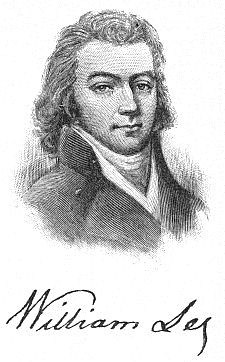
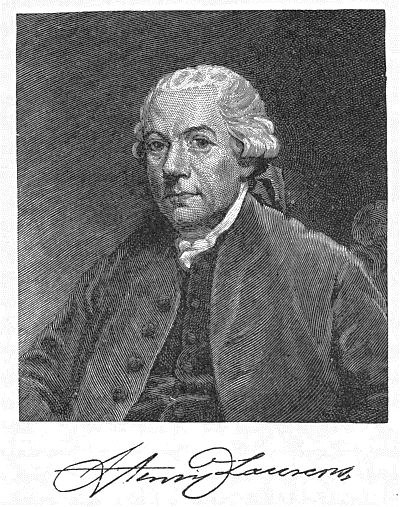
But the policy of England, though bold in the extreme, was so far well considered as to have provided against such an emergency. She was determined to make war on Holland, to punish her for joining the Armed Neutrality; but if she were to avow this reason, it would at once entail war with Russia also, so that it was necessary to find some other reason. The requisite bone of contention was furnished by a curiously opportune accident. In October, 1780, an American packet was captured off the banks of Newfoundland, and among the prisoners was Henry Laurens, lately president of Congress, now on his way to the Hague to negotiate a loan. He threw his papers overboard, but a quick-witted tar jumped after them, and caught them in the water. Among them was found a project for a future treaty of commerce between the Netherlands and the United States which had been secretly concerted two years before between Jean de Neufville, an Amsterdam merchant, and William Lee, an American commissioner to Berlin. It was signed also by Van Berckel, the chief magistrate of Amsterdam; but as it had been neither authorized nor sanctioned by the States-General or by Congress, it had no validity whatever. Quite naturally, however, the discovery of such a document caused much irritation in England, and it furnished just the sort of excuse for going to war which the ministry wanted. To impose upon the imagination of the common people, Laurens was escorted through the streets of London by a regiment of soldiers, and shut up in the Tower, where he was denied pen and paper, and no one was allowed to enter his room. A demand was made upon Holland to disavow the act of Van Berckel, and to inflict condign punishment upon him and his accomplices, “as disturbers of the public peace and violators of the rights of nations.” In making this demand, it was foreseen that the States-General would disavow the act of Van Berckel, but would nevertheless decline to regard him as a fit subject for punishment.
Great Britain declares war against Holland, Dec. 20, 1780The message was sent to the British ambassador at the Hague on the 3d of November. It was then known in England that Holland contemplated joining the Northern league, but the decisive step had not yet been actually taken by the States-General. The ambassador was secretly instructed by Lord Stormont not to present the demand for the disavowal and punishment of Van Berckel unless it should become absolutely certain that Holland had joined the league. At their meeting in November, the States-General voted to join the league, and the demand was accordingly presented. Everything happened according to the programme. The States-General freely condemned and disavowed the Amsterdam affair, and offered to make reparation; but with regard to the punishment of Van Berckel, they decided that an inquiry must first be made as to the precise nature of his offence and the court most fit for trying him. England replied by a peremptory demand for the immediate punishment of Van Berckel, and, without waiting for an answer, proceeded to declare war against Holland on the 20th of December. Four days before this, the swiftest ship that could be found was sent to Admiral Rodney, who was then at Barbadoes, ordering him to seize upon St. Eustatius without a moment’s delay.
Catherine decides not to interfereWhatever other qualities may have been lacking in the British ministry at this time, they certainly were not wanting in pluck. England had now to fight single-handed against four nations, three of which were, after herself, the chief naval powers of the world. According to the Malmesbury Diaries, “this bold conduct made a great and useful impression upon the Empress” of Russia. It was partly with a view to this moral effect that the ministry were so ready to declare war. It was just at this time that they were proposing, by the offer of Minorca, to tempt Catherine into an alliance with England; and they did not wish to have her interpret their eagerness to secure her aid as a confession of weakness or discouragement. By making war on Holland, they sought to show themselves as full of the spirit of fight as ever. To strengthen the impression, Harris blustered and bragged. The Dutch, said he, “are ungrateful, dirty, senseless boors, and, since they will be ruined, must submit to their fate.” But in all this the British government was sailing very near the wind. Prince Galitzin, the Russian ambassador at the Hague, correctly reported that the accession of Holland to the Armed Neutrality was the real cause of the war, and that the Amsterdam affair was only a pretext. Upon this ground, the Dutch requested armed assistance from Catherine, as chief of the league. The empress hesitated; she knew the true state of the case as well as any one, but it was open to her to accept the British story or not, as might seem best. Dispatches from Berlin announced that Frederick was very angry. When he first heard the news, he exclaimed, “Well! since the English want a war with the whole world, they shall have it.” Catherine then sat down and wrote with her own hand a secret letter to Frederick, asking him if he would join her in making war upon England. On second thoughts, the King of Prussia concluded there was no good reason for taking part in the affair, and he advised Catherine also to keep her hands free. This decided the empress. She did not care to make war upon England, except with such overwhelming force as to be sure of extorting some important concessions. She accordingly chose to believe the British story, and she refused to aid the Dutch, on the ground that their quarrel with England grew out of a matter with which the Armed Neutrality had nothing to do. At the same time, after dallying for a while with the offer of Minorca, she refused that also, and decided to preserve to the end the impartial attitude which she had maintained from the beginning.