



Полная версия
* * *
“Alright. I guess that’s it for today,” Lis said when the first heavy drops began drumming on the balcony railing. We carried the painting back into the room carefully.
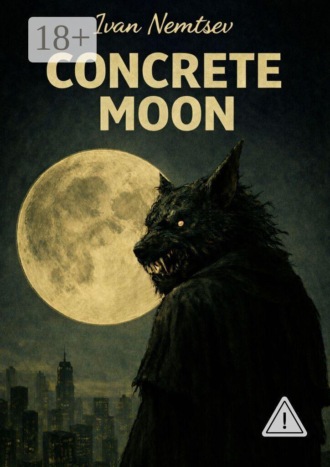
“Concrete Moon,” she said softly, her gaze lingering on the canvas. “That’s what I’ll call it.”
“Because of that gray smudge in the corner?” I nodded at the barely noticeable brushstroke.
“It’s not a smudge. It’s the point.” She smiled faintly. “Look — everything in the city is flooded with sunlight. It feels alive… and above it is the moon. Not a bright yellow night disk, but a gray one — concrete — like it’s forced to pretend it’s just as artificial as everything down below. But the truth is, the moon is the only real thing in the whole picture. A piece of nature in a man-made world. It reminds you that even in the most chaotic, imperfect place you can still find something beautiful. You just have to want to see it… and keep it.”
I stared at the painting, letting it pull me in.
“And to me,” I said slowly, “that moon is a silent sentry. Frozen above your shining city, watching us — warning us. Warning about the threat. About the evil pulsing in the real Rosenberg, always ready to break through and destroy the fragile ideal you’re guarding with your brush.”
Lis gave a sad little smile.
“You and I look at the same thing and see different things. You see a threat. I see hope…” Her eyes slid away from mine. “Take me home,” she asked quietly.
“That’s it? You came all the way here just for this? Just to… draw?” The word came out sharper than I meant, and I instantly regretted it.
“Paint, Klos,” she corrected, not looking at me. “You paint pictures.”
Outside, the sky finally gave in. A hard downpour slammed into the village. We got into the car and drove toward Donnertal. The wipers lazily shoved sheets of water aside, but the world beyond the glass still looked blurred — as if someone had painted it in watercolor. Rain hammered on the roof, filling the heavy silence between us.
I kept stealing glances at Lis. She sat staring at the rain-smeared window, and every so often her lips moved like she wanted to say something — then closed again, locking the words inside.
What’s wrong with her? What is she thinking?
We stopped by an eight-story brick building. In a second-floor window, Laura Klein’s silhouette flickered past.
“Take care,” I said, breaking the silence.
“Bye,” Lis answered dully.
She stepped out, shoved her hands into the pockets of her red jacket, and walked toward the entrance without looking back. She moved through the pouring rain, eyes fixed on the asphalt. I watched her go, something inside me tightening into a painful knot.
When her figure vanished into the darkness of the stairwell — when she climbed and appeared in the window, blurred by raindrops — she looked at me.
Just for a second.
Our eyes met. That look — packed with unspoken pain, with longing, with something I couldn’t name — hit me like a lightning strike. My heart jumped, like it might split in two.
I lifted my hand and pressed my fingers to the cold car window, reaching for her without meaning to. Lis turned away and kept going, still sad, still lost in thought…
Like a stranger in an imperfect world. Nothing like the perfect reality she could build on canvas.
* * *
The rest of the day burned down into the madness of longing. The rooms needed cleaning — and I gave my evening to them without holding anything back. Sometimes I hired a cleaning service, but I preferred doing it myself. For me it was a kind of meditation: time to talk to myself, to put not only the house but my thoughts in order.
When I finished, I set my alarm for the morning and climbed onto the wide windowsill. Outside stretched a black autumn sky — deep, bottomless, sprinkled with stars.
It’s strange, watching a world gone mad carry you from one reality to another. You remember your life… how simple everything used to seem… how you thought it would stay that way forever. You sit by the window, warming your hands on a cup of tea, and you think: years will pass, and you’ll still be right here — in this same place. Just older.
Space and time… You never know who you’ll become, or what the world around you will look like. Spacetime worms have punched so many holes in this place that you can’t look at a single object without a memory catching underfoot — and hurting.
A sip of tea. A gaze sinking into the night…
You watch the stars and all kinds of thoughts crawl in. The future. The past. The vastness of the universe. God. Everything that seems close, and yet humanity is held at arm’s length by some invisible hand. Thoughts like that don’t visit often — but when they do, I feel free. Free, and at the same time unbearably sad. You want to reach. You want to know. But it feels out of range.
And sometimes you want nothing at all — when her face starts to show itself in the outlines of the constellations. My beloved. My dear. The only mystery I still can’t solve. Like a missing piece in the mosaic of my life…
November was creeping closer, bringing more cold and more questions. But for now, sitting here on the sill with a cup of tea and stars above my head, it was enough simply to know: somewhere out there, under the same sky, she was breathing.
* * *
Friday, October 7I woke up a little before the alarm. Raindrops tapped a steady rhythm on the window — the nagging sound hauled me fully out of sleep. I opened my eyes, got up slowly, told the voice assistant to boil water, and stepped onto the balcony.
“Well, this is shit…” The weather matched my mood perfectly. I used to love rain — its sound, its smell, the way it could wash everything clean. But with age I understood there’s nothing better than a warm, sunny day.
The city was waking up. Not a city — a beast with a billion fiery eyes. Little cars crawled through traffic. Work, home, supermarket on the way — day after day, year after year. Life on repeat…
Boredom.
The rain didn’t let up. Time slipped by. It felt like I’d just opened my eyes, and it was already time for work.
Then the evening silence was ripped apart by my phone. The Commissioner. Calls from him never meant anything good. My body moved on autopilot — straight to the office to change into a suit.
“Klos! Get moving. Now. This is urgent!” Engel’s voice thundered in my ear.
“What — » My insides tightened into ice.
“Gross is dead,” Engel cut in. “They’re cleaning up, the bastards…”
“How?!” I blurted.
“Not now. Heinz is already there — he’ll tell you everything.”
“Where do I go?”
“Karbon. Wilhelmstraße, forty-four.”
“Got it. I’m on my way.”
He hung up.
Well… looks like my boring day just ended.
I didn’t waste a second. I jumped into the car and headed for Karbon. Rain whipped the windshield; the wipers barely kept up.
The neighborhood greeted me with a maze of narrow streets, stretched like a web. Roads jammed with parked cars twisted between old buildings and tight little courtyards. Traffic, puddles, flashing headlights — all of it blended into a chaotic, jittery dance. I nearly got lost searching for number 44 until I finally spotted a familiar silhouette under a streetlamp: Heinrich.
In the middle of the road, right on the wet asphalt, a body lay sprawled. Puddles reflected camera flashes and the pulsing lights of emergency vehicles. The air felt drawn tight, like a wire. The quiet was broken only by hushed voices and the dry click of a shutter. A patrol officer was taking a statement from a pale, shaken woman.
I went to Heinz. He noticed me, clicked off his flashlight, let his camera drop against his chest, and gave a small nod.
“Hey, buddy,” he said — but today his voice didn’t have its usual lightness.
“Hey. What’ve we got?”
“Korbl Gross.” He glanced at the body flattened in a pool of blood. “Dead. Found half an hour ago. That woman was coming home, saw a man lying there. Went closer to check on him and saw the blood…”
Heinz pulled on a glove, crouched, and pointed to three red tears in the fabric of the coat.
“Three stab wounds. Clean, deep — whoever did it knew where to go. Vital organs hit. Korbl was wanted. Looks like they just… removed him.”
He stood, stared off into the distance for a moment, then lifted his index finger like he’d remembered something.
“Evidence.”
He walked to the car and came back with a clear bag. Inside was a knife — long, narrow. Dark blood clung to the blade, already drying at the edges.
“Ta-da,” he muttered without a smile, like he was presenting a trophy.
I stared at the bag.
“Seriously? They just left it here?”
“Yep.”
“That confident?”
“Or in a hurry.” Heinz turned the bag in his hands. “We’ll pull prints. See what we get.”
“You think there’ll be anything?”
“Of course not,” he said, smirking. “But we have to check. Can’t hand the Commissioner an empty report.”
The rain intensified. The patrol officers hurried to the shelter of their cars. Heinrich and I opened our umbrellas and went back to the body.
Detective Gross’s corpse lay on the wet asphalt. Water diluted the blood into thin red streams. How did they kill him? Who did it — and why?
We started building the picture of the crime — drop by drop, smear by smear, chasing every stubborn trace the rain hadn’t yet erased.
* * *
A Few Hours EarlierThe night in Karbon was thick as ink spilled across the sky. The rain had just stopped, leaving puddles that mirrored dull streetlights and a few lonely stars. Korbl — tall and bony — hurried along a narrow street. His scarf was pulled tight over the lower half of his face, leaving only a long, sharp nose exposed, like a raven’s beak. The wind tugged at the tails of his coat as if trying to hold him back, but Korbl didn’t slow.
He was almost running. His heart hammered up in his throat, drowning out everything else. Ahead, the entrance to his building appeared like a promise of safety — but something made him slow.
Korbl snapped around, scanning the dark cut-throughs.
Nothing.
He tried to swallow the lump in his throat, tried to draw a deep breath, but anxiety — like poison — was already in his blood, spreading through his veins.
A sinister shadow flickered to his right, peeling away from a parked car. Korbl lunged forward, gasping. His footsteps rang too loud in the empty street. The entrance was so close…
But the shadow caught him halfway.
A knife — cold, merciless — drove into Korbl’s back. Once. Twice. Three times. He didn’t even have time to scream. Didn’t even have time to understand he was dying.
A wet rasp.
The knife clattered against the cobblestones, and the shadow vanished around the corner. Korbl collapsed onto the slick asphalt and lay still.
Warm blood mixed with rainwater and spread through the puddles, drawing a dark, cruel pattern.
* * *
The rain washed away the last traces of blood. The medics loaded the body bag onto a stretcher and took it to the medical examiner’s office. Heinz and I split up in grim silence, got into our cars, and raced back to the station, where Maurice was already waiting.
Headlights carved only puddles and the occasional hurried figure out of the raw, damp dark — people rushing to get out of the weather.
Inside, the station was its usual chaos, soaked in the smell of coffee and cigarette smoke. The moment we stepped in, Engel pounced on us.
“Everything you’ve got. In the report. Print it. Bring it to me. Now.” He barked it while covering the receiver with his hand.
We did it without a word. The Commissioner — grim, tight-jawed — had taken Hank’s desk again (Hank was missing, as usual) and was flipping through papers, muttering curses under his breath. By the window, Maurice had his phone pinned to his shoulder while he wrestled with an ancient coffee machine. The smell of burnt coffee was already seeping into the room.
I went back to my computer. Heinz headed for the lab to lift prints from the bloody knife.
As soon as he left, Hank Bauer finally showed up — rumpled and half-asleep. Seeing the Commissioner at his desk, he slid quietly into Heinz’s seat instead, then flicked a cautious look around the room. When he realized nobody was about to chew him out, he launched Chess on his computer.
Smoke from Engel’s cigarette thickened the air.
“Hank, move.” Maurice ended the call. “Docks. Workers found a woman’s body. Dead. Hands cut off.”
Hank didn’t show a flicker. He closed the game, stood, and went to the locker where he’d just hung his jacket.
“What the hell…” I muttered as their silhouettes dissolved down the corridor.
“Mmm?” Engel grunted without looking up.
“How long is this supposed to go on?” My fists clenched; anger climbed into my throat.
Hands… cut off…
The picture formed by itself — bright, unavoidable.
A narrow alley. Wind howling loud enough to swallow every sound but my breathing. I’m chasing the killer… The first shot takes out the kneecap — dull crack — he goes down, clawing at a trash bin with his fingers.
I hate—
“Those animals…” My voice shook. “They’re not afraid of Eisengitter Prison, not afraid of court, not afraid of the police… not even of the Devil himself. For them it’s like justice doesn’t exist.”
“And what do you propose?” Engel finally looked up, and something tired flickered in his eyes. “You can’t do anything about it. We’ve already been over this.”
The second shot punches straight through his calf. Now he can’t run. He crawls in the dirt, wheezing, folding in on himself, begging for mercy. And I just stand over him… and listen.
Enjoying it.
In the dim light of a streetlamp, a blade flashes.
“We need different measures,” I snapped, unable to stop the anger.
“Like what?” His voice hardened.
I’m a surgeon, cutting out a cancer. The knife goes right into the armpit, slicing tendons and muscle. He screams. I pull it free and drive it in lower — under the ribs, into the belly. I pin this piece of shit’s head to the wet asphalt, stare into two bottomless wells of terror… and drag the blade across his throat.
Justice.
“Capital punishment,” I said, meeting his eyes.
Engel didn’t say anything for a few seconds. He studied me, then gave a short nod.
“Come with me. My office.”
He snatched up a folder, walked out, and vanished behind the heavy door at the end of the corridor. I hurried after him.
The Commissioner’s office was a little smaller than ours. A massive oak desk sat in the center, buried under papers and crowded with ashtrays. A few chairs. Cabinets packed with files. An old ceiling-fan chandelier lazily pushing cigarette smoke around the room.
Engel pulled a cigar from a drawer, clipped the tip without rushing, and lit it. The sharp smoke joined the haze, making it thicker.
“You’ve stirred up some memories with your talk,” he said, staring past me as if into the past. “I’m curious where your thinking is going to lead you…”
I kept going, unable to stop myself.
“Even the Bible talks about capital punishment. Stoning, hanging, burning…” I hesitated, then — seeing interest in his eyes — pushed on. “You can’t fix people like that, Engel. You have to eliminate them. Wipe them off the face of the earth. That’s the only way to build a healthy society. Only the fear of death can stop chaos.
“Why doesn’t the average person just snatch a phone off a display stand? What stops him — morals? upbringing? Most of the time it’s fear. Everyone knows there are cameras, security… you get caught, you get punished. But imagine there is no punishment. How many people would still resist the temptation? That fear has to be the foundation of order — at least right now, while society is poisoned with crime.”
Engel drew slowly on the cigar. Smoke slid out of his mouth like a ghost of thought. He watched me for a long time, and there was something new in his eyes — something between respect and warning.
“Klos,” he said at last, squinting, “have you ever thought about what the death penalty was really for?”
“Huh?”
“From ancient times to today, society has carried a hunger for public sacrifice in its blood. Witch hunts, burnings, brutal executions, gladiator fights… it all served one purpose: to legalize and ritualize our innate craving for violence.” He tapped ash. “And it’s chemistry. We get certain… reactions when we witness something extreme — blood, dismemberment, that kind of thing — while staying safe ourselves.
“Simple example: you want to feel fear, you watch a horror movie. You get your shot of adrenaline and you walk away intact. A vaccine. Against the real nightmare.”
He paused and took another drag. I opened my mouth to argue, but he rolled right over me.
“You walk down the street, you see a fire. You stand with a crowd watching firefighters climb into a burning building, and deep down you’re waiting for it — injury, death, catastrophe. Don’t you dare argue, Klos!” he snapped, raising his voice. “That’s our nature, and there’s no outrunning it, no matter how hard we play at civilization. We clap for the rescuers, and inside we’re a little disappointed it ended well.”
He leaned forward.
“If that weren’t true, why the hell do people go to rallies, motocross, rodeos? Why do they watch a lethal show with their hearts in their throats — just to cheer because the riders made it through cleanly, politely even, without taking each other out? Or roar when a bull gets played with a red rag? Remember this, Klos: the crowd usually roots for the bull. Bread and circuses. That’s how it was, that’s how it is, and that’s how it’ll be. Even if nobody admits it. Even to themselves.”
“But — ”
“Hold it, Klos. The death penalty is a bad solution. You’ll get more spectacle, and whether it solves anything — or creates something worse — is a big question.”
“Herr Becker — ”
“Don’t interrupt!” he barked. “Let me finish.”
I clenched my jaw and shut up.
“Years ago we chopped heads here — traditional execution. Arsonists were burned. Traitors were quartered… In the GDR they didn’t abolish executions until the late eighties; in the FRG it happened earlier. Believe me, there were reasons.” He jabbed the cigar in the air. “In this world, very little happens for no reason. We’re trying to beat back our primitive instincts, build a humane society — damn it all. The death penalty never removed the roots of the problems you’re talking about.”
Конец ознакомительного фрагмента.
Текст предоставлен ООО «Литрес».
Прочитайте эту книгу целиком, купив полную легальную версию на Литрес.
Безопасно оплатить книгу можно банковской картой Visa, MasterCard, Maestro, со счета мобильного телефона, с платежного терминала, в салоне МТС или Связной, через PayPal, WebMoney, Яндекс.Деньги, QIWI Кошелек, бонусными картами или другим удобным Вам способом.
Примечания
1
Truth is, there’s no such thing as black — only the absence of light. Which only confirms we’re somewhere impossibly strange — far from the stars themselves, far from everything…
2
Police precincts are run by so-called Oracles — representatives of the System of the New Law: bureaucrats with an almost religious faith in procedure.
3
The currency of the Transatlantic Union of Nations (TAUN).
4
It was a reference to Parkinson’s laws — the set of principles empirically formulated by the historian C. Northcote Parkinson.
5
The national anthem of the Bundesrepublik Deutschland — the third stanza of “The Song of the Germans” (1952—2047).
[3]