


Полная версия
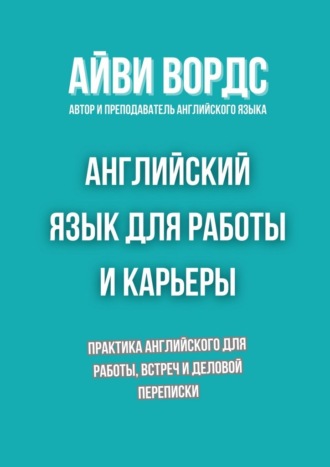
Английский язык для работы и карьеры. Практика английского для работы, встреч и деловой переписки

Английский язык для работы и карьеры
Практика английского для работы, встреч и деловой переписки
Айви Вордс
© Айви Вордс, 2026
ISBN 978-5-0069-3411-5
Создано в интеллектуальной издательской системе Ridero
Предисловие
Изучение английского языка для профессиональной деятельности требует системного подхода, сочетающего теоретические знания и практические навыки. Эта книга разработана с целью помочь читателю закрепить грамматику и расширить словарный запас, применяя их в контексте реальных рабочих ситуаций. Каждая глава ориентирована на повседневные профессиональные сценарии, включая деловую переписку, телефонные разговоры, корпоративные мероприятия и командировки.
Особое внимание уделено повторению и закреплению ранее изученного материала: грамматические конструкции сопровождаются объяснениями на русском языке, иллюстрируются примерами на английском и закрепляются через упражнения. Использование коротких историй и практических заданий способствует формированию устойчивых языковых навыков и развитию способности уверенно использовать язык в рабочей среде.
Применяемые методы направлены на постепенное повышение уровня владения английским, а подбор лексики и грамматики обеспечивает соответствие требованиям уровня B1. Книга может быть использована как для самостоятельного изучения, так и в учебных курсах, ориентированных на деловой английский.
Цель издания – дать читателю инструменты для эффективной коммуникации, развития профессиональной компетентности и уверенного использования языка в реальных ситуациях.
Starting the Workday
Grammar Focus: Present Simple for Job Duties
Present Simple используется для описания регулярных действий, обязанностей и рутинной работы. Также его используют, когда говорим о графике и расписании.
Примеры:
I start work at 9 a.m. – Я начинаю работу в 9 утра.
She answers emails every morning. – Она отвечает на письма каждое утро.
They attend the team meeting on Mondays. – Они посещают командное совещание по понедельникам.
Правила и советы:
Для he/she/it добавляйте -s/-es к глаголу: He checks the schedule.
В отрицательных предложениях используйте do/does not: I do not drink coffee at work.
Вопросы формируются с помощью Do/Does: Do you start work at 9 a.m.?
Типичная ошибка: забывают -s в 3-м лице.
Story: A Typical Morning at the Office
John is an office worker. He usually starts work at 9 a.m. Every morning, he checks his emails and plans his day. He makes a cup of coffee and talks with his colleagues for a few minutes. At 9:30, he attends the team meeting. During the meeting, everyone shares their tasks and discusses the schedule.
After the meeting, John answers emails and prepares documents for a project. He calls a client to discuss some details. At 12 p.m., he takes a short break and has lunch. In the afternoon, he continues working on reports and organizes files on the computer. Before leaving, John checks the schedule for tomorrow and makes notes about tasks he needs to finish.
John likes his job because every day he learns something new. Even though work can be busy, he enjoys his responsibilities and feels satisfied when tasks are complete.
Useful Words and Expressions
start work – начинать работу
check emails – проверять почту
plan the day – планировать день
make a cup of coffee – приготовить кофе
talk with colleagues – разговаривать с коллегами
attend a meeting – посещать совещание
share tasks – распределять задачи
discuss the schedule – обсуждать расписание
answer emails – отвечать на письма
prepare documents – готовить документы
call a client – звонить клиенту
take a break – делать перерыв
have lunch – обедать
continue working – продолжать работу
organize files – организовывать файлы
make notes – делать заметки
learn something new – узнавать что-то новое
enjoy responsibilities – получать удовольствие от обязанностей
feel satisfied – чувствовать удовлетворение
be busy – быть занятым
Exercises
Exercise 1: Fill in the blanks (Present Simple)
John ___ (start) work at 9 a.m.
She ___ (check) emails every morning.
They ___ (attend) the team meeting on Mondays.
I ___ (not drink) coffee at work.
___ you ___ (plan) your day before meetings?
Exercise 2: Multiple Choice
Choose the correct option:
John usually:
a) starts work at 9 a.m.
b) start work at 9 a.m.
c) starting work at 9 a.m.
She ___ emails every morning.
a) check
b) checks
c) checked
They do not ___ documents in the afternoon.
a) prepares
b) prepare
c) preparing
Exercise 3: Questions about the story
What time does John start work?
What does he do after the team meeting?
Does John enjoy his job? Why?
What does John do before leaving the office?
Who does John talk to in the morning?
Answer Key
Exercise 1:
starts
checks
attend
do not drink
Do / plan
Exercise 2:
a
b
b
Exercise 3:
John starts work at 9 a.m.
After the team meeting, he answers emails and prepares documents for a project.
Yes, John enjoys his job because he learns something new and feels satisfied when tasks are complete.
Before leaving, he checks the schedule for tomorrow and makes notes about tasks he needs to finish.
He talks with his colleagues in the morning.
Mini-Tips
Чтобы быстрее запоминать Present Simple, повторяйте 3-е лицо единственного числа с разными глаголами каждый день.
Связывайте лексику с конкретными действиями в офисе: «make coffee», «check emails», «attend meeting».
Читайте короткие истории о работе и делайте упражнения на заполнение пропусков – это укрепляет автоматическую реакцию на грамматику и слова.
Talking with Colleagues
Grammar Focus: Questions and Tag Questions
В деловом общении важно уметь задавать вопросы и использовать tag questions, чтобы уточнять информацию или поддерживать разговор.
Общие вопросы (General Questions): начинаются с do / does / is / are / will.
Tag Questions: короткие вопросы в конце предложения, чтобы подтвердить или уточнить информацию.
Примеры:
Do you have a meeting today? – У тебя сегодня встреча?
She is working on the report, isn’t she? – Она работает над отчётом, не так ли?
They don’t check emails in the evening, do they? – Они не проверяют почту вечером, правда?
Правила и советы:
Если основное предложение положительное, тег будет отрицательным, и наоборот.
Для I am используйте тег aren’t I?
Tag questions помогают поддерживать small talk и показывают вежливость.
Типичная ошибка: неправильно согласовать отрицание с основным предложением.
Story: A Morning Conversation at the Office
It is 9:15 a.m., and Sarah arrives at the office. She greets her colleague Tom.
«Good morning, Tom! Did you have breakfast?» she asks.
«Yes, I did. Didn’t you have breakfast?» Tom replies.
They walk to their desks together. Sarah asks, «Do you have time for a quick chat before the meeting?»
Tom nods. «Sure, I’m free. You aren’t busy, are you?»
They talk about small things. Sarah says, «The weather is nice today, isn’t it?»
«Yes, it is. And your project is going well, isn’t it?» Tom adds.
During the conversation, they share information about tasks. Sarah asks, «Do we have any emails from the client?»
Tom checks and replies, «No, we don’t. We have the meeting in ten minutes, don’t we?»
After the chat, they smile and go to the team meeting, feeling ready for the day. Small talk helps them start work positively and strengthens their professional relationship.
Useful Words and Expressions
greet a colleague – приветствовать коллегу
good morning – доброе утро
have breakfast – завтракать
quick chat – короткий разговор
are you busy? – ты занят?
small talk – короткая беседа
isn’t it? – не так ли?
aren’t you? – не так ли?
did you? – ты?
don’t you? – не так ли?
share information – делиться информацией
nod – кивать
smile – улыбаться
walk to the desk – идти к рабочему месту
project – проект
client – клиент
meeting – встреча
time for a chat – время для разговора
ready for the day – готов к работе
strengthen relationship – укреплять отношения
Exercises
Exercise 1: Fill in the blanks (Questions / Tag Questions)
She ___ (work) on the report, isn’t she?
___ you have time for a chat?
They ___ (not check) emails in the evening, do they?
Tom ___ (arrive) at 9 a.m., didn’t he?
The weather ___ nice today, isn’t it?
Exercise 2: Multiple Choice
Choose the correct tag:
She is free for a meeting, ___?
a) isn’t she
b) doesn’t she
c) isn’t it
Choose the correct question:
___ you start work at 9 a.m.?
a) Do
b) Does
c) Did
Fill the blank:
Tom didn’t finish the task, ___?
a) does he
b) didn’t he
c) did he
Exercise 3: Questions about the story
What time does Sarah arrive at the office?
Who does she greet first?
What do Sarah and Tom talk about before the meeting?
How does small talk help them at work?
Does Sarah ask about emails from the client?
Answer Key
Exercise 1:
is working
Do
do not check
arrived
is
Exercise 2:
a
a
c
Exercise 3:
Sarah arrives at 9:15 a.m.
She greets her colleague Tom.
They talk about breakfast, the weather, their project, and tasks.
Small talk helps them start the day positively and strengthens professional relationships.
Yes, she asks if there are any emails from the client.
Mini-Tips
Чтобы быстро запоминать tag questions, практикуйтесь с разными предложениями: «He is busy, isn’t he? / You don’t like coffee, do you?»
Используйте small talk каждый день: короткие вопросы о погоде, проектах, задачах – это укрепляет общение на работе.
Привязывайте вопросы к реальной рабочей ситуации, чтобы они легче вспоминались.
Office Responsibilities
Grammar Focus: Modals (Can / Must) for Permission and Obligation
Модальные глаголы can и must часто используются на работе:
Can – выражает разрешение или возможность.
Must – выражает обязанность или необходимость.
Примеры:
You can take a short break at 11 a.m. – Ты можешь сделать короткий перерыв в 11 утра.
Employees must submit reports on time. – Сотрудники должны сдавать отчёты вовремя.
Can I call the client now? – Могу ли я позвонить клиенту сейчас?
You must check your emails before the meeting. – Ты должен проверить почту перед встречей.
Правила и советы:
Can / Can’t – разрешение/запрет: You can leave early. / You can’t enter without a badge.
Must / Mustn’t – обязанность/запрет: You must wear a uniform. / You mustn’t forget the deadline.
В вопросах Can / Must ставятся перед подлежащим: Can I…? Must we…?
Типичные ошибки: путать must (обязанность) и have to (внешняя необходимость).
Story: A Busy Day at the Office
Anna works in an office. Every day, she has many tasks. She must check her emails in the morning. Today, she can take a short coffee break after finishing the urgent reports.
Her manager says, «All employees must submit their weekly reports by 12 p.m.» Anna checks her tasks and realizes she can finish them before lunch. She must organize files and must call a client for confirmation.
Later, Anna’s colleague Peter asks, «Can I use your computer for a few minutes?» Anna nods and says, «Yes, you can, but you must save your work carefully.»
Anna feels busy but satisfied. She must attend the team meeting at 3 p.m. and can discuss her ideas there. Before leaving, she checks her schedule for tomorrow and must plan her tasks.
Using can and must every day helps Anna manage her responsibilities efficiently and communicate clearly with her colleagues.
Useful Words and Expressions
check emails – проверять почту
submit reports – сдавать отчёты
take a break – сделать перерыв
organize files – организовать файлы
call a client – звонить клиенту
attend a meeting – посещать встречу
discuss ideas – обсуждать идеи
tasks – задачи
urgent reports – срочные отчёты
schedule – расписание
plan tasks – планировать задачи
must – должен, обязан
mustn’t – нельзя
can – можно, способен
can’t – нельзя
manager – менеджер
colleague – коллега
save work – сохранять работу
feel busy – быть занятым
satisfied – довольный
Exercises
Exercise 1: Fill in the blanks (Can / Must)
You ___ submit the report by 5 p.m.
Employees ___ take coffee breaks whenever they want.
Peter ___ use Anna’s computer.
You ___ forget to check your emails.
I ___ attend the team meeting today.
Exercise 2: Multiple Choice
Choose the correct modal:
All staff ___ wear ID badges.
a) can
b) must
c) might
Choose the correct sentence:
a) You mustn’t leave your desk before finishing tasks.
b) You can’t submit reports on time.
c) Must you take a break now?
Fill the blank:
Anna ___ organize files and call clients.
a) can
b) must
c) might
Exercise 3: Questions about the story
What must Anna do in the morning?
Can Anna take a coffee break? When?
What does Anna tell Peter about using her computer?
Why does Anna feel satisfied at the end of the day?
What must Anna plan before leaving the office?
Answer Key
Exercise 1:
must
can
can
must
must
Exercise 2:
b
a
b
Exercise 3:
She must check her emails in the morning.
Yes, she can take a short coffee break after finishing urgent reports.
She says, «Yes, you can, but you must save your work carefully.»
Anna feels satisfied because she completes her tasks and manages her responsibilities efficiently.
She must plan her tasks for tomorrow.
Mini-Tips
Используйте can для разрешений и возможностей, must – для обязанностей.
Практикуйте диалоги с коллегами: спрашивайте разрешение и напоминайте об обязанностях.
Создавайте списки ежедневных задач с модальными глаголами для закрепления.
Organizing Meetings
Grammar Focus: Future (Will / Be Going To) for Planning
Для описания будущих действий на работе используют два основных способа:
Will – решения в момент речи, обещания, прогнозы, предложения помощи.
Be going to – планы и намерения, уже принятые решения.
Примеры:
I will send the meeting agenda tomorrow. – Я отправлю повестку встречи завтра.
We are going to meet the client at 2 p.m. – Мы собираемся встретиться с клиентом в 14:00.
Will you join the video call? – Ты присоединишься к видеозвонку?
The team is going to discuss the new project next week. – Команда обсудит новый проект на следующей неделе.
Правила и советы:
Will часто используется для спонтанных решений: I will call the client now.
Be going to используется для заранее запланированных действий: We are going to prepare the report tomorrow.
В вопросах и отрицаниях:
Will: Will you attend the meeting? / I will not…
Be going to: Are you going to join? / They are not going to…
Типичные ошибки: смешивание will и going to для планов, которые уже решены заранее.
Story: Planning the Weekly Meeting
It is Monday morning, and Emma is in the office. She is going to organize the weekly team meeting. First, she checks the schedule. «We are going to discuss the new project and the client’s feedback,» she thinks.
Emma sends an email: «The team will meet at 10 a.m. in the conference room. Please confirm your attendance.» She decides to prepare the agenda before the meeting. «I will write the main points and send them to everyone,» she says.
Her colleague, Jack, asks, «Are you going to discuss the budget, too?» Emma nods. «Yes, we are going to talk about it after the project updates.»
Later, Emma calls another team member. «Will you bring the presentation slides?» she asks. «Yes, I will,» the colleague replies.
During the meeting, Emma uses her notes and ensures everyone shares their ideas. By planning in advance and communicating clearly, the team feels ready and confident. Emma knows that using will and be going to helps the team organize work efficiently.
Useful Words and Expressions
organize a meeting – организовать встречу
schedule – расписание
weekly meeting – еженедельная встреча
agenda – повестка дня
confirm attendance – подтвердить участие
discuss a project – обсуждать проект
client feedback – отзывы клиента
prepare notes – подготовить заметки
call a colleague – позвонить коллеге
presentation slides – слайды презентации
main points – основные моменты
share ideas – делиться идеями
feel ready – чувствовать готовность
write an email – написать письмо
send an email – отправить письмо
join a meeting – присоединиться к встрече
talk about – говорить о
decide – решать, планировать
plan in advance – планировать заранее
communicate clearly – ясно общаться
Exercises
Exercise 1: Fill in the blanks (Will / Be Going To)
We ___ meet the client at 3 p.m.
I ___ send the agenda tomorrow.
Are you ___ join the meeting?
She ___ prepare the slides before the meeting.
They ___ discuss the new project next week.
Exercise 2: Multiple Choice
Choose the correct sentence:
a) I am going to call the client now.
b) I will call the client now.
c) I calling the client now.
Fill the blank:
We ___ talk about the budget after the project updates.
a) will
b) are going to
c) do
Choose the question form:
___ you prepare the agenda?
a) Will
b) Are going to
c) Do
Exercise 3: Questions about the story
What is Emma going to organize?
What does she decide to do before the meeting?
Who asks about the budget?
Will a team member bring the presentation slides?
How does planning in advance help the team?
Answer Key
Exercise 1:
are going to
will
going to
will
are going to
Exercise 2:
b
b
a
Exercise 3:
Emma is going to organize the weekly team meeting.
She decides to prepare the agenda and write the main points.
Jack asks about the budget.
Yes, a team member will bring the presentation slides.
Planning in advance helps the team feel ready and confident for the meeting.
Mini-Tips
Используйте be going to для заранее запланированных действий и will для спонтанных решений.
Перед встречей пишите заметки и составьте agenda – так проще использовать модальные формы будущего.
Практикуйте диалоги: спрашивайте коллег о планах и соглашайтесь с ними, используя will / be going to.
Greetings and Introductions
Grammar Focus: Present Simple for Everyday Phrases
Present Simple используется для описания регулярных действий, привычек, а также для повседневных фраз и приветствий на работе. Это основной способ говорить о себе, о коллегах и о том, что происходит обычно.
Примеры:
Hello! My name is Anna. – Привет! Меня зовут Анна.
I work in the marketing department. – Я работаю в отделе маркетинга.
Where do you work? – Где вы работаете?
How are you today? – Как у вас дела сегодня?
Правила и советы:
Для he / she / it добавляйте -s/-es к глаголу: He works in sales.
В вопросах используйте do/does: Do you like your job?
В отрицаниях: I do not work on weekends.
Типичная ошибка: забывают -s в 3-м лице или используют Present Continuous вместо Present Simple для регулярных действий.
Story: Meeting New Colleagues
It is Emma’s first day in the office. She arrives at 9 a.m. and meets her new colleagues. «Hello! My name is Emma,» she says. «I work in the marketing team.»
Her colleague Tom smiles. «Hi, Emma! I am Tom. I work in sales. Welcome to the company!»
Emma shakes hands with other team members. She asks, «Where do you work?» and they reply, «I work in finance,» or «I work in human resources.»
During the morning, Emma learns everyone’s names and asks simple questions. «How are you today?» she says. People answer, «I am fine, thank you. And you?»
Emma feels happy and comfortable. She enjoys meeting new colleagues and practices Present Simple phrases to introduce herself and ask about others. By the end of the morning, Emma knows the names and departments of all her team members.
Useful Words and Expressions
hello – привет
hi – привет
good morning – доброе утро
my name is… – меня зовут…
I work in… – я работаю в…
Where do you work? – Где вы работаете?
I am … – я…
welcome – добро пожаловать
colleague – коллега
shake hands – пожимать руки
how are you? – как дела?
I am fine, thank you – у меня всё хорошо, спасибо
and you? – а у вас?
meet – встречать, знакомиться
first day – первый день
department – отдел
practice phrases – практиковать фразы
learn names – узнавать имена
feel comfortable – чувствовать себя комфортно
enjoy meeting people – получать удовольствие от знакомства с людьми
Exercises
Exercise 1: Fill in the blanks (Present Simple)
Hello! My name ___ Emma.
I ___ in the marketing team.
Where ___ you ___?
He ___ in sales.
They ___ their new colleague in the office.
Exercise 2: Multiple Choice
Choose the correct sentence:
a) I am work in finance.
b) I work in finance.
c) I works in finance.
Fill the blank:
___ you work in the HR department?
a) Do
b) Are
c) Does
Choose the correct greeting:
a) Good morning! How are you?
b) Good morning! How you are?
c) Hello! Are you fine?
Exercise 3: Questions about the story
Who is Emma?
Where does she work?
How does she greet her colleagues?
What questions does Emma ask to get to know people?