Полная версия
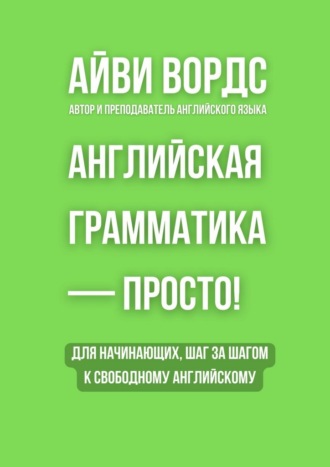
Английская грамматика – просто! Для начинающих, шаг за шагом к свободному английскому
Для отрицания используем do not (don’t) или does not (doesn’t):
I don’t drink coffee in the morning.
He doesn’t watch TV at night.
Вопросительные предложения
Для вопросов используем Do / Does + подлежащее + глагол:
Do you play football?
Does she like music?
Наречия частоты
Наречия, которые часто используют с Present Simple:
always – всегда
usually – обычно
often – часто
sometimes – иногда
never – никогда
Пример:
She usually wakes up at 6 o’clock.
I never eat breakfast at 8 a.m.
Story
Tom is a student. He has a simple daily routine. Every day, he wakes up at 7 o’clock. First, he brushes his teeth and washes his face. Then he has breakfast. He usually drinks tea and eats bread with butter.
After breakfast, Tom goes to school by bus. He studies from 8 a.m. to 2 p.m. After school, he often goes to the park with his friends. In the evening, he does his homework and reads a book.
Tom always has dinner at 7 p.m. He usually watches TV for one hour before going to bed. He sleeps at 10 o’clock. Tom likes his routine because it is simple and comfortable.
Useful Words and Expressions
daily routine – распорядок дня
wake up – просыпаться
brush teeth – чистить зубы
wash face – умываться
have breakfast – завтракать
drink – пить
eat – есть
go to school – идти в школу
study – учиться
homework – домашнее задание
read – читать
dinner – ужин
watch TV – смотреть телевизор
sleep – спать
usually – обычно
often – часто
sometimes – иногда
always – всегда
never – никогда
Exercises
Exercise 1. Complete the sentences with the correct form of the verb
I ___ (wake up) at 7 a.m. every day.
He ___ (go) to school by bus.
She ___ (eat) breakfast at 8 a.m.
We ___ (do) homework in the evening.
Tom ___ (watch) TV before bed.
Exercise 2. Make negative sentences
I / not / drink coffee in the morning
She / not / go to school on Sundays
They / not / play football after school
He / not / read books in the morning
We / not / eat lunch at 10 a.m.
Exercise 3. Answer the questions
What time does Tom wake up?
How does he go to school?
What does he do after school?
When does he have dinner?
Why does Tom like his routine?
Answer Key
Exercise 1
wake up
goes
eats
do
watches
Exercise 2
I don’t drink coffee in the morning.
She doesn’t go to school on Sundays.
They don’t play football after school.
He doesn’t read books in the morning.
We don’t eat lunch at 10 a.m.
Exercise 3
Tom wakes up at 7 o’clock every day.
He goes to school by bus.
After school, he often goes to the park with his friends.
He has dinner at 7 p.m.
Tom likes his routine because it is simple and comfortable.
Mini Tips
Present Simple – для регулярных действий и привычек.
Для he, she, it добавляйте -s / -es к глаголу.
Используйте do / does для отрицаний и вопросов.
Наречия частоты помогают точно описать распорядок дня.
Present Simple: Likes, Habits, and Facts
Grammar Focus
Present Simple используется не только для распорядка дня, но и для выражения:
Likes and dislikes – что нравится или не нравится
Habits – привычки
Facts – факты или общие истины
Likes and Dislikes
Чтобы говорить о том, что кто-то любит или не любит, используем like / love / enjoy / don’t like / hates:
I like apples. – Мне нравятся яблоки.
She loves music. – Она любит музыку.
We enjoy reading books. – Нам нравится читать книги.
He doesn’t like coffee. – Ему не нравится кофе.
They hate cleaning. – Они ненавидят уборку.
Для he, she, it добавляем -s / -es:
She likes apples.
He enjoys swimming.
Habits
Present Simple описывает привычки – действия, которые мы делаем регулярно:
I brush my teeth twice a day.
He goes to the gym every Monday.
We read books before bed.
Facts
Используем Present Simple для общих истин:
The sun rises in the east.
Water boils at 100 degrees Celsius.
Cats like milk.
Story
Lisa is a teacher. She likes her job and enjoys helping students. She loves reading books and listening to music in her free time.
Every morning, she wakes up at 6 a.m. and drinks a cup of coffee. She brushes her teeth and prepares breakfast. She goes to school by bus and teaches her students until 2 p.m.
In the evening, Lisa reads books and sometimes watches TV. She likes quiet evenings and enjoys cooking. Lisa is happy because she loves her routine.
Some facts about Lisa: she speaks three languages, she drinks tea every day, and she walks in the park twice a week.
Useful Words and Expressions
like – нравиться
love – любить
enjoy – получать удовольствие
dislike / don’t like – не нравится
hate – ненавидеть
habit – привычка
fact – факт
wake up – просыпаться
brush teeth – чистить зубы
prepare breakfast – готовить завтрак
teach – преподавать
read – читать
watch TV – смотреть телевизор
speak – говорить (на языке)
drink – пить
walk – гулять
quiet – спокойный
free time – свободное время
Exercises
Exercise 1. Complete the sentences
She ___ (like) apples.
I ___ (enjoy) reading books.
He ___ (hate) cleaning.
Lisa ___ (drink) coffee every morning.
Cats ___ (like) milk.
Exercise 2. Make negative sentences
I / not / like coffee
He / not / watch TV in the morning
They / not / enjoy running
She / not / speak German
We / not / hate school
Exercise 3. Answer the questions
What does Lisa like?
What does she do every morning?
How does Lisa go to school?
How many languages does Lisa speak?
Why is Lisa happy?
Answer Key
Exercise 1
likes
enjoy
hates
drinks
like
Exercise 2
I don’t like coffee.
He doesn’t watch TV in the morning.
They don’t enjoy running.
She doesn’t speak German.
We don’t hate school.
Exercise 3
Lisa likes reading books, listening to music, and quiet evenings.
Every morning she wakes up, drinks coffee, brushes her teeth, and prepares breakfast.
She goes to school by bus.
Lisa speaks three languages.
She is happy because she loves her routine and enjoys her work.
Mini Tips
Для he, she, it всегда добавляйте -s / -es к глаголу в Present Simple.
Используйте like / love / enjoy для положительных эмоций и don’t like / hate для отрицательных.
Present Simple подходит для привычек, регулярных действий и общих фактов.
Adverbs of Frequency
Grammar Focus
Adverbs of frequency (наречия частоты) показывают, как часто происходит действие. Они используются с Present Simple и помогают точнее описать привычки и регулярные действия.
Основные наречия частоты
always – всегда
usually – обычно
often / frequently – часто
sometimes – иногда
rarely / seldom – редко
never – никогда
Порядок слов
В утвердительных предложениях наречие частоты обычно ставится перед основным глаголом, но после глагола to be.
Примеры:
I always drink coffee in the morning.
She usually reads books before bed.
They often go to the park.
He is always happy.
We are usually tired after school.
Story
Mark is a student. He has a daily routine. He always wakes up at 7 a.m. and usually eats breakfast with his family. After breakfast, he often goes to school by bike.
Mark sometimes forgets his homework, but he rarely misses a lesson. He never drinks soda in the morning.
In the evening, Mark usually studies for one hour. He sometimes watches TV, but he always reads a book before going to bed.
His parents are happy because Mark is responsible. He is usually polite and always helpful at home. Mark likes his routine because it is balanced and healthy.
Useful Words and Expressions
always – всегда
usually – обычно
often – часто
sometimes – иногда
rarely – редко
seldom – редко
never – никогда
wake up – просыпаться
eat breakfast – завтракать
go to school – идти в школу
forget – забывать
miss – пропускать
drink – пить
study – учиться
watch TV – смотреть телевизор
read – читать
polite – вежливый
responsible – ответственный
helpful – полезный, готовый помочь
Exercises
Exercise 1. Choose the correct adverb
I ___ drink coffee in the morning.
a) always
b) never
c) sometimes
She ___ forgets her homework.
a) always
b) sometimes
c) rarely
We ___ go to the park on Sundays.
a) often
b) never
c) seldom
He is ___ happy.
a) rarely
b) always
c) sometimes
They ___ eat fast food.
a) never
b) usually
c) always
Exercise 2. Complete the sentences
I ___ wake up at 7 a.m.
She ___ drinks tea in the evening.
We ___ go to the cinema on weekends.
He ___ forgets to do his homework.
They ___ read books before bed.
Exercise 3. Answer the questions
What time does Mark wake up?
How often does he go to school by bike?
Does Mark ever drink soda in the morning?
What does he do in the evening?
Why are his parents happy?
Answer Key
Exercise 1
a) always
b) sometimes
a) often
b) always
a) never
Exercise 2
always
usually
often
sometimes
always
Exercise 3
Mark wakes up at 7 a.m.
He often goes to school by bike.
No, he never drinks soda in the morning.
In the evening, he usually studies, sometimes watches TV, and always reads a book.
His parents are happy because Mark is responsible, polite, and always helpful at home.
Mini Tips
Наречия частоты помогают показать регулярность действия.
Порядок: перед основным глаголом (I always eat) и после глагола to be (He is usually tired).
Используй разные наречия, чтобы сделать речь более разнообразной.
Questions and Negatives in Present Simple
Grammar Focus
В Present Simple для образования вопросов и отрицаний используются вспомогательные глаголы do / does.
Negative Sentences (Отрицания)
Чтобы сказать, что что-то не происходит или не является правдой, используем:
do not (don’t) – для I, You, We, They
does not (doesn’t) – для He, She, It
Примеры:
I don’t like coffee. – Я не люблю кофе.
She doesn’t watch TV in the morning. – Она не смотрит телевизор утром.
They don’t go to school on Sundays. – Они не ходят в школу по воскресеньям.
Questions (Вопросы)
Для вопросов используем Do / Does + подлежащее + глагол.
Примеры:
Do you like apples? – Тебе нравятся яблоки?
Does he play football? – Он играет в футбол?
Do they go to the park every Sunday? – Они ходят в парк каждое воскресенье?
Ответы на вопросы обычно короткие:
Yes, I do. / No, I don’t.
Yes, he does. / No, he doesn’t.
Story
Emma is a student. She likes reading and listening to music. She doesn’t play football because she prefers quiet activities.
Every morning, Emma wakes up at 7 a.m. and brushes her teeth. She doesn’t eat breakfast at home; she usually eats at school.
Her friend Anna asks her questions. «Do you like music?» Emma answers, «Yes, I do.» «Do you play football?» Emma answers, «No, I don’t.»
In the evening, Emma studies and doesn’t watch TV. She does her homework and sometimes reads a book. Emma likes her routine because it is simple and healthy.
Useful Words and Expressions
do / does – вспомогательный глагол
don’t / doesn’t – отрицание
like – нравиться
prefer – предпочитать
play – играть
read – читать
listen to music – слушать музыку
watch TV – смотреть телевизор
study – учиться
wake up – просыпаться
brush teeth – чистить зубы
eat breakfast – завтракать
homework – домашнее задание
question – вопрос
answer – ответ
morning – утро
evening – вечер
friend – друг
Exercises
Exercise 1. Make negative sentences
I / not / play football
She / not / watch TV in the morning
They / not / go to school on Saturday
He / not / like coffee
We / not / read books at night
Exercise 2. Make questions
you / like / apples?
he / play / tennis?
they / go / to the park every Sunday?
she / study / English every day?
it / rain / often in winter?
Exercise 3. Answer the questions
What does Emma do in the morning?
Does she eat breakfast at home?
Does Emma play football?
What does she do in the evening?
Why does Emma like her routine?
Answer Key
Exercise 1
I don’t play football.
She doesn’t watch TV in the morning.
They don’t go to school on Saturday.
He doesn’t like coffee.
We don’t read books at night.
Exercise 2
Do you like apples?
Does he play tennis?
Do they go to the park every Sunday?
Does she study English every day?
Does it rain often in winter?
Exercise 3
In the morning, Emma wakes up and brushes her teeth.
No, she doesn’t eat breakfast at home; she usually eats at school.
No, Emma doesn’t play football.
In the evening, she studies, does her homework, and sometimes reads a book.
Emma likes her routine because it is simple and healthy.
Mini Tips
Для he, she, it в отрицаниях используйте doesn’t, а в вопросах – Does.
Для I, you, we, they используйте don’t и Do.
Вопросы начинаются с Do / Does, после чего идёт подлежащее и глагол.
Короткие ответы: Yes / No + do / does.
Present Continuous: Actions Now
Grammar Focus
Present Continuous используется, чтобы говорить о действиях, которые происходят прямо сейчас, в момент речи.
Формирование Present Continuous
Present Continuous образуется с помощью to be (am / is / are) + глагол с окончанием -ing:
I am reading a book.
She is drinking tea.
They are playing football.
Отрицательные предложения
Чтобы сказать, что действие не происходит прямо сейчас, используем not:
I am not watching TV.
He isn’t eating breakfast.
We aren’t going to school now.
Вопросительные предложения
Для вопросов меняем порядок: Am / Is / Are + подлежащее + глагол-ing:
Am you reading a book?
Is she listening to music?
Are they playing football?
Ответы на вопросы обычно короткие:
Yes, I am. / No, I’m not.
Yes, he is. / No, he isn’t.
Yes, they are. / No, they aren’t.
Story
It is Monday morning. Anna is at home. She is drinking coffee and reading the newspaper. Her brother, Tom, is playing computer games in the living room.
Their mother is cooking breakfast in the kitchen. She is cutting vegetables and is making sandwiches. The cat is sleeping on the sofa.
Anna’s father is working in his study. He is talking on the phone and is writing emails. Outside, the children’s neighbor is riding a bicycle.
Anna is smiling because everyone in the house is doing something interesting. She is enjoying the morning and is thinking about her plans for the day.
Useful Words and Expressions
am / is / are – формы глагола to be
– ing – окончание для глагола в Present Continuous
reading – читать
drinking – пить
playing – играть
cooking – готовить
cutting – резать
making – делать, готовить
sleeping – спать
working – работать
talking – говорить
writing – писать
riding – кататься
smiling – улыбаться
enjoying – наслаждаться
thinking – думать
newspaper – газета
coffee – кофе
kitchen – кухня
sofa – диван
Exercises
Exercise 1. Complete the sentences with the correct form of Present Continuous
I ___ (read) a book now.
She ___ (drink) tea at the moment.
They ___ (play) football in the garden.
He ___ (write) an email.
We ___ (cook) breakfast together.
Exercise 2. Make negative sentences
I / not / watch TV
She / not / play tennis
They / not / eat lunch now
He / not / sleep on the sofa
We / not / ride a bicycle
Exercise 3. Make questions
you / read / a newspaper?
he / drink / coffee?
they / play / computer games?
she / cook / dinner?
it / sleep / on the sofa?
Exercise 4. Answer the questions
What is Anna doing in the morning?
What is Tom doing?
What is the mother doing in the kitchen?
What is the cat doing?
Why is Anna smiling?
Answer Key
Exercise 1
am reading
is drinking
are playing
is writing
are cooking
Exercise 2
I am not watching TV.
She isn’t playing tennis.
They aren’t eating lunch now.
He isn’t sleeping on the sofa.
We aren’t riding a bicycle.
Exercise 3
Are you reading a newspaper?
Is he drinking coffee?
Are they playing computer games?
Is she cooking dinner?
Is it sleeping on the sofa?
Exercise 4
Anna is drinking coffee and reading the newspaper.
Tom is playing computer games.
The mother is cooking breakfast, cutting vegetables, and making sandwiches.
The cat is sleeping on the sofa.
Anna is smiling because everyone in the house is doing something interesting.
Mini Tips
Present Continuous – для действий в данный момент.
Используйте am / is / are + -ing.
В вопросах и отрицаниях изменяйте порядок: Am I…? / Is she…? / Are they…?
В отличие от Present Simple, Present Continuous не используется для привычек или фактов.
Present Continuous: Temporary Situations
Grammar Focus
Present Continuous используется не только для действий прямо сейчас, но и для временных, текущих ситуаций, которые происходят в течение определённого периода времени, даже если не прямо в момент речи.
Основное правило
Конец ознакомительного фрагмента.
Текст предоставлен ООО «Литрес».
Прочитайте эту книгу целиком, купив полную легальную версию на Литрес.
Безопасно оплатить книгу можно банковской картой Visa, MasterCard, Maestro, со счета мобильного телефона, с платежного терминала, в салоне МТС или Связной, через PayPal, WebMoney, Яндекс.Деньги, QIWI Кошелек, бонусными картами или другим удобным Вам способом.