Полная версия
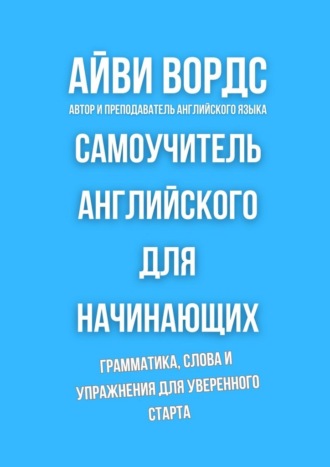
Самоучитель английского для начинающих. Грамматика, слова и упражнения для уверенного старта
Объяснение:
В английском языке существительные делятся на исчисляемые и неисчисляемые.
Исчисляемые существительные – можно посчитать:
an apple – одно яблоко
two sandwiches – два бутерброда
Неисчисляемые существительные – нельзя посчитать напрямую:
water – вода
bread – хлеб
milk – молоко
Some / Any:
some используется в утверждениях и вежливых вопросах
I have some bread. – У меня есть немного хлеба.
any используется в отрицаниях и вопросах
Do you have any juice? – У тебя есть сок?
I do not have any milk. – У меня нет молока.
Советы и типичные ошибки:
Не используйте a/an с неисчисляемыми существительными.
Для количества используйте: some water, a glass of milk.
Частая ошибка: two breads → правильно two pieces of bread.
Story: Meals During the Day
Food and drinks are an important part of daily life. In the morning, I usually have breakfast at home. I drink tea or coffee and eat some bread with butter. Sometimes I eat fruit.
At lunchtime, I have a simple meal. I often eat soup or rice with vegetables. I drink water or juice. I do not eat sweets every day.
In the evening, I have dinner with other people or alone. There is usually some meat or fish on the plate. I also eat salad. After dinner, I sometimes drink tea.
I like healthy food, but I also enjoy simple meals. I try to eat at the same time every day. Good food helps me feel active and comfortable.
Useful Words and Expressions
Food – еда
Drink – напиток
Breakfast – завтрак
Lunch – обед
Dinner – ужин
Bread – хлеб
Butter – масло
Fruit – фрукты
Soup – суп
Rice – рис
Vegetables – овощи
Meat – мясо
Fish – рыба
Salad – салат
Water – вода
Tea – чай
Coffee – кофе
Juice – сок
Some – немного
Any – какой-нибудь / никакой
Exercises
Exercise 1: Fill in the blanks
I drink ______ water every day.
There is ______ bread on the table.
I do not have ______ milk.
We eat ______ vegetables for dinner.
Exercise 2: Multiple choice
«Milk is ______.»
a) countable
b) uncountable
c) plural
«Do you have ______ juice?»
a) some
b) many
c) any
Exercise 3: Questions about the story
What does the person eat for breakfast?
What does the person usually eat at lunchtime?
What drinks does the person have during the day?
What food is eaten for dinner?
Why is food important for the person?
Answer Key
Exercise 1:
some
some
any
some
Exercise 2:
b) uncountable
c) any
Exercise 3:
The person eats bread with butter and sometimes fruit for breakfast.
At lunchtime, the person usually eats soup or rice with vegetables.
The person drinks tea, coffee, water, or juice during the day.
For dinner, the person eats meat or fish with salad.
Food is important because it helps the person feel active and comfortable.
Mini Tips
Учите существительные сразу с пометкой: countable или uncountable.
Используйте some и any в простых предложениях каждый день.
Повторяйте фразы: some water, any juice, a piece of bread.
School / Work
Grammar Focus: Present Simple (affirmative and negative), Subject Pronouns
Объяснение:
Present Simple используется, чтобы говорить о регулярных действиях в школе или на работе.
Также важно правильно использовать подлежащие (subject pronouns):
I – я
You – ты / вы
He – он
She – она
It – оно
We – мы
They – они
Утверждения:
I study English. – Я изучаю английский.
She works in an office. – Она работает в офисе.
Отрицания:
I do not (don’t) study on Sunday.
He does not (doesn’t) work at home.
Советы и типичные ошибки:
После does not используйте глагол без -s.
Не используйте he work → правильно he works.
Используйте Present Simple для расписаний и обязанностей.
Story: A Typical School or Work Day
Many people spend a large part of the day at school or at work. In the morning, I go to school or to my workplace. I usually arrive on time and start my tasks.
At school, I study different subjects. I listen to the teacher, read texts, and write notes. At work, I complete tasks, read emails, and talk to other people.
During the day, I take short breaks. I do not work all the time. At lunchtime, I eat a simple meal and rest.
In the afternoon, I finish my lessons or work. I feel tired but satisfied. School and work help people learn new skills and stay active.
Useful Words and Expressions
School – школа
Work – работа
Study – учиться
Workplace – рабочее место
Office – офис
Lesson – урок
Subject – предмет
Teacher – учитель
Task – задание
Break – перерыв
Lunchtime – время обеда
Finish – заканчивать
Learn – учиться, узнавать
Skill – навык
Read – читать
Write – писать
Listen – слушать
Email – электронное письмо
Time – время
Satisfied – довольный
Exercises
Exercise 1: Fill in the blanks
I ______ English at school.
She ______ in an office.
We do not ______ on Sunday.
He ______ his work in the afternoon.
Exercise 2: Multiple choice
«She ______ emails every day.»
a) read
b) reads
c) reading
«They do not ______ at home.»
a) works
b) working
c) work
Exercise 3: Questions about the story
Where does the person go in the morning?
What activities are done at school?
What activities are done at work?
Why are breaks important during the day?
How does the person feel at the end of the day?
Answer Key
Exercise 1:
study
works
work
finishes
Exercise 2:
b) reads
c) work
Exercise 3:
The person goes to school or to the workplace in the morning.
At school, the person studies subjects, listens to the teacher, reads, and writes notes.
At work, the person completes tasks, reads emails, and talks to other people.
Breaks are important because they help the person rest during the day.
At the end of the day, the person feels tired but satisfied.
Mini Tips
Используйте Present Simple, чтобы говорить о занятиях каждый день.
Повторяйте глаголы действий: study, work, read, write.
Составляйте простые предложения о своём дне в школе или на работе.
Hobbies
Grammar Focus: Like / Love / Enjoy + Verb-ing
Объяснение:
Чтобы говорить о хобби и интересах, в английском языке часто используются глаголы
like, love, enjoy. После них глагол ставится в форме -ing.
Форма:
like + verb-ing
love + verb-ing
enjoy + verb-ing
Примеры:
I like reading books. – Я люблю читать книги.
She enjoys listening to music. – Ей нравится слушать музыку.
They love playing games. – Они любят играть в игры.
Отрицания:
I do not like watching TV every day.
He does not enjoy running.
Типичные ошибки и советы:
Не используйте инфинитив после like: like read → like reading.
После does not глагол остаётся в базовой форме.
Используйте эти конструкции для описания регулярных интересов.
Story: Free Time Activities
People have different hobbies. In their free time, they like doing activities that help them relax and learn new things. I like reading books and listening to music. These activities help me rest after a long day.
Some people enjoy playing sports. They go outside and stay active. Others like drawing or taking photos. Creative hobbies are popular because they allow people to express ideas.
In the evening, I often spend time at home. I enjoy watching simple programs or reading short articles. On weekends, I sometimes meet friends. We enjoy talking and walking together.
Hobbies are important for people of all ages. They help improve skills and bring positive emotions. Everyone can find a hobby that fits their interests and daily routine.
Useful Words and Expressions
Hobby – хобби
Free time – свободное время
Like – нравиться
Love – любить
Enjoy – получать удовольствие
Reading – чтение
Music – музыка
Sport – спорт
Drawing – рисование
Photography – фотография
Activity – занятие
Relax – отдыхать
Learn – учиться
Evening – вечер
Weekend – выходные
Meet friends – встречаться с друзьями
Talk – разговаривать
Walk – гулять
Skill – навык
Interest – интерес
Exercises
Exercise 1: Fill in the blanks
I like ______ books.
She enjoys ______ to music.
They love ______ sports.
He does not like ______ TV every day.
Exercise 2: Multiple choice
«I enjoy ______ photos.»
a) take
b) taking
c) to take
«She ______ reading in the evening.»
a) like
b) likes
c) liking
Exercise 3: Questions about the story
What hobbies does the narrator have?
What hobbies do some people enjoy outdoors?
What creative hobbies are mentioned?
What does the narrator do on weekends?
Why are hobbies important?
Answer Key
Exercise 1:
reading
listening
playing
watching
Exercise 2:
b) taking
b) likes
Exercise 3:
The narrator likes reading books and listening to music.
Some people enjoy playing sports outdoors.
Drawing and photography are mentioned as creative hobbies.
On weekends, the narrator sometimes meets friends and enjoys walking and talking.
Hobbies are important because they help people relax, improve skills, and feel positive emotions.
Mini Tips
Запоминайте конструкцию like + verb-ing как одно целое.
Говорите о своих интересах простыми предложениями.
Используйте новые слова в коротких описаниях своего свободного времени.
Places in Town
Grammar Focus: Prepositions of Place and Movement (in, near, next to, on, to)
Объяснение:
Чтобы говорить о местах в городе и передвижении между ними, используются предлоги места и направления.
Предлоги места:
in – в
in the park – в парке
near – рядом
near the school – рядом со школой
next to – рядом с
next to the bank – рядом с банком
on – на
on the street – на улице
Предлог направления:
to – к, в (направление движения)
go to the shop – идти в магазин
Примеры:
There is a café near the park. – Рядом с парком есть кафе.
I go to the library after work. – Я иду в библиотеку после работы.
Советы и типичные ошибки:
Не используйте to с here и there: go to there → go there.
После go всегда проверяйте, нужен ли предлог направления.
Предлоги места часто используются с there is / there are.
Story: Around the Town
My town is not very big, but it has many useful places. There is a park in the center of the town. People like to walk there and relax. Near the park, there is a café and a small shop.
There is a library next to the school. I often go to the library to read or study. On the main street, there is a bank, a post office, and a supermarket. These places are important for daily life.
In the afternoon, I sometimes go to the gym or to the market. The market is near my home. I buy food and talk to people.
I like my town because everything is easy to find. The streets are clean, and the places are close to each other. Living in this town is comfortable and simple.
Useful Words and Expressions
Town – город
Street – улица
Park – парк
Shop – магазин
Café – кафе
Library – библиотека
School – школа
Bank – банк
Post office – почта
Supermarket – супермаркет
Market – рынок
Gym – спортивный зал
Center – центр
Near – рядом
Next to – рядом с
In – в
On – на
Go to – идти в
Useful – полезный
Easy to find – легко найти
Exercises
Exercise 1: Fill in the blanks
There is a park ______ the center of the town.
The café is ______ the park.
I go ______ the library after school.
The bank is ______ the main street.
Exercise 2: Multiple choice
«The library is ______ the school.»
a) to
b) next to
c) go
«I ______ the market in the afternoon.»
a) go
b) go to
c) goes
Exercise 3: Questions about the story
Where is the park in the town?
What places are near the park?
Where is the library?
What places are on the main street?
Why does the narrator like the town?
Answer Key
Exercise 1:
in
near
to
on
Exercise 2:
b) next to
b) go to
Exercise 3:
The park is in the center of the town.
A café and a small shop are near the park.
The library is next to the school.
There is a bank, a post office, and a supermarket on the main street.
The narrator likes the town because it is comfortable and easy to live in.
Mini Tips
Описывайте город, используя there is / there are.
Учите предлоги места с примерами, а не по отдельности.
Попробуйте мысленно описать свой город простыми предложениями.
Shopping
Grammar Focus: This / That / These / Those
Объяснение:
Мы используем this, that, these, those, чтобы указать на предметы и показать, находятся ли они близко или далеко, и в единственном или множественном числе.
this – этот (близко, ед. число)
that – тот (далеко, ед. число)
these – эти (близко, мн. число)
those – те (далеко, мн. число)
Примеры:
This apple is fresh. – Это яблоко свежее.
That shop is big. – Тот магазин большой.
These bags are new. – Эти сумки новые.
Those shoes are expensive. – Те туфли дорогие.
Советы и типичные ошибки:
Используйте this/that только с единственным числом.
These/those используются только с множественным числом.
Частая ошибка: this shoes → правильно these shoes.
Story: A Visit to the Shop
Shopping is a common activity in daily life. People go to shops to buy food, clothes, and other useful things. I usually go shopping once or twice a week.
There is a small shop near my home. This shop is clean and quiet. I often buy bread, fruit, and milk there. These products are fresh and simple.
Sometimes I go to a bigger store. That store has many different items. I can find clothes, bags, and household things. Those items are not always cheap, but they are good quality.
When I finish shopping, I go home. Shopping helps me prepare for the week and feel organized.
Useful Words and Expressions
Shopping – покупки
Shop – магазин
Store – магазин
Buy – покупать
Bread – хлеб
Fruit – фрукты
Milk – молоко
Clothes – одежда
Bag – сумка
Shoes – обувь
Item – товар
Product – продукт
Fresh – свежий
Cheap – дешёвый
Expensive – дорогой
Quality – качество
Near – рядом
Once a week – раз в неделю
Twice a week – два раза в неделю
Go home – идти домой
Exercises
Exercise 1: Fill in the blanks
______ apple is fresh.
______ shoes are new.
______ shop near my home is clean.
______ bags over there are expensive.
Exercise 2: Multiple choice
«______ products are fresh.»
a) This
b) These
c) That
«______ store is far from here.»
a) This
b) These
c) That
Exercise 3: Questions about the story
How often does the person go shopping?
What does the person buy in the small shop?
What can be found in the bigger store?
How are the items in the bigger store described?
Why is shopping important for the person?
Answer Key
Exercise 1:
This
These
This
Those
Exercise 2:
b) These
c) That
Exercise 3:
The person goes shopping once or twice a week.
The person buys bread, fruit, and milk in the small shop.
Clothes, bags, and household items can be found in the bigger store.
The items are not always cheap, but they are good quality.
Shopping is important because it helps the person prepare for the week and feel organized.
Mini Tips
Связывайте this/that/these/those с жестами или расстоянием.
Повторяйте примеры вслух: this apple, those shoes.
Используйте указательные слова при покупках и описании предметов.
Clothes
Grammar Focus: Adjectives, Order of Adjectives (basic)
Объяснение:
Прилагательные (adjectives) используются, чтобы описывать одежду: цвет, размер, состояние.
В английском языке прилагательные не изменяются и обычно стоят перед существительным.
Базовый порядок прилагательных:
Size – размер
Color – цвет
Примеры:
a big jacket – большая куртка
a blue shirt – синяя рубашка
a small black bag – маленькая чёрная сумка
Советы и типичные ошибки:
Не добавляйте -s к прилагательным: blues shoes → blue shoes.
Если два прилагательных, сначала размер, потом цвет.
Не используйте артикль a/an с множественным числом.
Story: Choosing Clothes
Clothes are an important part of daily life. People choose clothes for comfort, weather, and activities. In the morning, I look at my clothes and decide what to wear.
On warm days, I wear a light shirt and comfortable trousers. On cold days, I choose a warm jacket and a scarf. My clothes are simple and practical.
I like clean and neat clothes. I usually wear dark colors at work or school. In my free time, I wear casual clothes.
When I go shopping, I look at the size and color. A good jacket or pair of shoes can last a long time. Comfortable clothes help me feel confident during the day.
Useful Words and Expressions
Clothes – одежда
Jacket – куртка
Shirt – рубашка
T-shirt – футболка
Trousers – брюки
Shoes – обувь
Dress – платье
Skirt – юбка
Scarf – шарф
Coat – пальто
Size – размер
Color – цвет
Big – большой
Small – маленький
Light – лёгкий
Warm – тёплый
Clean – чистый
Casual – повседневный
Wear – носить
Choose – выбирать
Exercises
Exercise 1: Fill in the blanks
I wear a ______ jacket on cold days.
She chooses a ______ dress.
They buy ______ shoes.
He wears a ______ shirt to work.
Exercise 2: Multiple choice
«She wears a ______ bag.»
Конец ознакомительного фрагмента.
Текст предоставлен ООО «Литрес».
Прочитайте эту книгу целиком, купив полную легальную версию на Литрес.
Безопасно оплатить книгу можно банковской картой Visa, MasterCard, Maestro, со счета мобильного телефона, с платежного терминала, в салоне МТС или Связной, через PayPal, WebMoney, Яндекс.Деньги, QIWI Кошелек, бонусными картами или другим удобным Вам способом.