


Полная версия
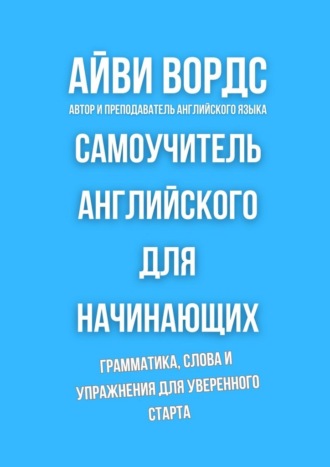
Самоучитель английского для начинающих. Грамматика, слова и упражнения для уверенного старта

Самоучитель английского для начинающих
Грамматика, слова и упражнения для уверенного старта
Айви Вордс
© Айви Вордс, 2026
ISBN 978-5-0069-1346-2
Создано в интеллектуальной издательской системе Ridero
Предисловие
Дорогие читатели,
Я рада приветствовать вас на страницах этой книги – самоучителя английского языка для начинающих.
Каждая глава этой книги построена как самостоятельный урок. Она включает грамматический блок с понятными объяснениями на русском языке, подборку ключевой лексики и выражений, короткую историю на английском, упражнения на закрепление материала и практические задания для говорения и письма. Вы можете проходить книгу от начала до конца или использовать любую главу отдельно – каждая из них позволит вам усвоить новую тему, попрактиковаться и почувствовать уверенность в своих силах.
Вы будете постепенно знакомиться с основными временами, модальными глаголами, артиклями, местоимениями, сравнениями, а также с повседневной лексикой, коллокациями и выражениями, которые пригодятся в жизни.
Я надеюсь, что эта книга станет вашим надежным помощником и источником мотивации. Она создана для того, чтобы вы могли учить английский шаг за шагом, практиковать язык ежедневно и видеть реальные результаты уже на первых страницах. Помните: даже маленький шаг каждый день – это движение к уверенности и свободному владению английским языком.
Желаю успехов!
Greetings and Introductions
Grammar Focus: Present Simple – To be (affirmative, negative, questions)
Объяснение:
Глагол to be используется для описания человека, его состояния или принадлежности. В настоящем времени формы:
I am (I’m) – я есть
You are (You’re) – ты/вы есть
He/She/It is (He’s/She’s/It’s) – он/она/оно есть
We/They are (We’re/They’re) – мы/они есть
Примеры:
I am Anna. – Я Анна.
He is my friend. – Он мой друг.
We are students. – Мы студенты.
She is not at home. – Она не дома.
Вопросы:
Are you a teacher? – Ты учитель?
Is he your brother? – Он твой брат?
Советы:
В отрицаниях добавляем not: I am not, He is not (He isn’t).
В вопросах форма меняется местами: Am I…? Are you…? Is she…?
Частая ошибка: забывать «is» или «are» в предложениях.
Story: First Day at School
My name is Anna. I am a student. Today is my first day at school. I am a little nervous, but I am also excited. I meet my new friends in the classroom.
Hello! My name is John. He is very friendly. We are in the same class. My teacher is Mrs. Smith. She is kind and helpful.
We talk about our hobbies. I like reading books. John likes playing football. We are happy to meet each other. After the first lesson, we are ready to learn new things.
At lunchtime, we eat sandwiches and drink juice. The school is big and clean. Everyone is polite. I am glad to start school. Today is a good day.
Useful Words and Expressions
Hello – Привет
Hi – Привет
Good morning – Доброе утро
Good afternoon – Добрый день
Good evening – Добрый вечер
Goodbye – До свидания
My name is… – Меня зовут…
I am – Я есть
You are – Ты есть / Вы есть
He is – Он есть
She is – Она есть
We are – Мы есть
They are – Они есть
Friend – Друг
Class – Класс
Teacher – Учитель
Student – Ученик
Hobby – Хобби
To meet – Встречать
Excited – Взволнованный
Exercises
Exercise 1: Fill in the blanks
I ______ Anna.
He ______ my friend.
We ______ students.
She ______ not at home.
Exercise 2: Multiple choice
«Hello! ______ your name?»
a) Am
b) Are
c) Is
«He ______ a teacher.»
a) is
b) are
c) am
Exercise 3: Questions about the story
What is Anna’s name?
Who is her teacher?
Who is Anna’s new friend?
What hobbies do Anna and John have?
How does Anna feel on her first day at school?
Answer Key
Exercise 1:
am
is
are
is
Exercise 2:
b) Are
a) is
Exercise 3:
Her name is Anna. She is a student.
Her teacher is Mrs. Smith. She is kind and helpful.
Anna’s new friend is John. He is friendly.
Anna likes reading books. John likes playing football.
Anna feels nervous but excited. She is glad to start school.
Mini Tips
Используйте Present Simple с to be, чтобы представляться.
Практикуйтесь говорить: «Hello, my name is…”, «I am…”, «He/She is…».
Попробуйте использовать новые слова из списка каждый день.
Numbers and Colors
Grammar Focus: There is / There are, Numbers
Объяснение:
Мы используем there is и there are, чтобы говорить о наличии чего-либо:
There is + существительное в ед. числе – есть что-то одно
There is a red apple. – Есть красное яблоко.
There are + существительное во мн. числе – есть несколько предметов
There are three blue pencils. – Есть три синих карандаша.
Правила:
В отрицаниях добавляем not:
There is not a book.
There are not many chairs.
В вопросах меняем порядок слов:
Is there a pen on the table?
Are there two apples in the basket?
Совет:
Используйте числа 1—20 для повседневных ситуаций.
Запоминайте цвета вместе с существительными: red apple, green pen.
Частая ошибка: забывать are для множественного числа.
Story: In the Classroom
There is a big classroom. There are many students. There is a teacher at the front of the room. She is kind and friendly.
I see a red book on the table. There are two blue pencils and three green pens. There is one yellow notebook. The students are happy. They like learning English.
There is a map on the wall. It is colorful. There are some chairs and desks. Everyone has a pencil and a notebook. I count the students: there are twenty.
After the lesson, we go outside. There is a playground. There are swings, a slide, and a small bench. The sun is bright, and the sky is blue. Today is a nice day.
Useful Words and Expressions
One – один
Two – два
Three – три
Four – четыре
Five – пять
Six – шесть
Seven – семь
Eight – восемь
Nine – девять
Ten – десять
Red – красный
Blue – синий
Green – зеленый
Yellow – желтый
Black – черный
White – белый
Classroom – класс
Book – книга
Pencil – карандаш
Desk – партa
Exercises
Exercise 1: Fill in the blanks
There ______ a red book on the table.
There ______ two blue pencils.
There ______ a yellow notebook.
There ______ twenty students in the classroom.
Exercise 2: Multiple choice
«______ there a map on the wall?»
a) Are
b) Is
c) Am
«There ______ three green pens.»
a) is
b) are
c) be
Exercise 3: Questions about the story
How many students are in the classroom?
What colors are the pencils?
What is on the wall?
What do the students have?
What is outside after the lesson?
Answer Key
Exercise 1:
is
are
is
are
Exercise 2:
b) Is
b) are
Exercise 3:
There are twenty students in the classroom.
The pencils are blue and green.
There is a map on the wall. It is colorful.
The students have pencils and notebooks.
Outside there is a playground with swings, a slide, and a small bench.
Mini Tips
Считайте предметы вокруг себя: pencils, books, chairs.
Используйте цвета вместе с существительными: red book, blue pen.
Практикуйтесь с «there is / there are», чтобы описывать предметы в комнате.
Family
Grammar Focus: Possessive ’s, To be
Объяснение:
Чтобы показать принадлежность, мы используем ’s:
[Person] + ’s + [object] – чей-то предмет или родственник
This is my mother’s bag. – Это сумка моей мамы.
Peter’s father is a teacher. – Отец Питера – учитель.
Глагол to be помогает описывать семью:
I am a son. – Я сын.
She is my sister. – Она моя сестра.
They are my grandparents. – Они мои бабушка и дедушка.
Вопросы и отрицания:
Is this your brother? – Это твой брат?
No, he is not my brother. – Нет, он не мой брат.
Советы:
Запоминайте слова о семье: mother, father, sister, brother, grandparents.
Частая ошибка: забывать ’s при указании принадлежности.
Вопросы о семье формулируются через to be: Who is…? Is he/she…?
Story: My Family
I have a small family. My father’s name is John. He is a doctor. My mother’s name is Anna. She is a teacher. I have one sister. Her name is Lisa. She is ten years old.
My grandparents live near us. My grandmother’s house is big and beautiful. My grandfather is kind. He likes gardening.
I love my family. We often eat breakfast together. On weekends, we go to the park. My sister and I play games. My parents read books or watch TV.
Sometimes we have guests. We talk, eat food, and laugh. Everyone in my family is polite and friendly. I am happy with my family. Family is very important.
Useful Words and Expressions
Family – семья
Father – отец
Mother – мать
Parents – родители
Sister – сестра
Brother – брат
Grandparents – бабушка и дедушка
Grandmother – бабушка
Grandfather – дедушка
Son – сын
Daughter – дочь
Uncle – дядя
Aunt – тетя
Cousin – кузен / кузина
House – дом
Breakfast – завтрак
Weekend – выходные
Park – парк
Play – играть
Guest – гость
Exercises
Exercise 1: Fill in the blanks
My father’s name ______ John.
She ______ my sister.
They ______ my grandparents.
My grandmother’s house ______ big and beautiful.
Exercise 2: Multiple choice
«Who is this?» – «This is my ______.»
a) mother
b) friends
c) school
«He is not my brother. He is my ______.»
a) cousin
b) father
c) uncle
Exercise 3: Questions about the story
Who is Anna?
How many siblings does the narrator have?
Where do the grandparents live?
What do the narrator and sister do on weekends?
How is the narrator’s family described?
Answer Key
Exercise 1:
is
is
are
is
Exercise 2:
a) mother
a) cousin
Exercise 3:
Anna is the narrator’s mother. She is a teacher.
The narrator has one sister.
The grandparents live near the narrator.
On weekends, the narrator and sister play games in the park.
The narrator’s family is polite, friendly, and important.
Mini Tips
Используйте ’s, чтобы говорить о принадлежности: father’s, mother’s.
Повторяйте слова о семье вслух, чтобы запомнить.
Составляйте простые предложения: «My brother is ten years old.»
My Home
Grammar Focus: There is / There are + Prepositions of Place
Объяснение:
Мы используем there is и there are, чтобы говорить о том, что находится в доме или комнате.
Также используются предлоги места, чтобы показать расположение предметов.
Основные предлоги места:
in – в
on – на
under – под
next to – рядом
near – возле
behind – за
Примеры:
There is a table in the kitchen. – В кухне есть стол.
There are two chairs next to the table. – Рядом со столом есть два стула.
The book is on the desk. – Книга на столе.
Правила и советы:
Используйте there is с единственным числом и there are с множественным.
Предлог всегда стоит перед существительным.
Типичная ошибка: использовать there is с множественным числом.
Story: My Home
My home is small but comfortable. There is a living room, a kitchen, a bedroom, and a bathroom. The living room is bright. There is a sofa near the window and a table in the center of the room. There are two chairs next to the table.
The kitchen is clean and simple. There is a fridge near the door. There are cups and plates on the shelf. I usually have breakfast in the kitchen.
My bedroom is quiet. There is a bed next to the wall. A small lamp is on the desk. There are books on the shelf and a bag under the desk.
I like my home. It is a good place to relax. Everything is in the right place, and I feel comfortable here every day.
Useful Words and Expressions
Home – дом
Room – комната
Living room – гостиная
Kitchen – кухня
Bedroom – спальня
Bathroom – ванная
Table – стол
Chair – стул
Sofa – диван
Bed – кровать
Shelf – полка
Window – окно
Door – дверь
Lamp – лампа
Desk – письменный стол
Fridge – холодильник
Near – рядом
On – на
Under – под
Next to – рядом с
Exercises
Exercise 1: Fill in the blanks
There ______ a sofa in the living room.
There ______ two chairs next to the table.
The lamp is ______ the desk.
The bag is ______ the desk.
Exercise 2: Multiple choice
«There ______ books on the shelf.»
a) is
b) are
c) am
«The fridge is ______ the door.»
a) under
b) near
c) on
Exercise 3: Questions about the story
What rooms are in the home?
Where is the table in the living room?
What is in the kitchen?
Where is the bed in the bedroom?
How does the narrator feel at home?
Answer Key
Exercise 1:
is
are
on
under
Exercise 2:
b) are
b) near
Exercise 3:
The home has a living room, a kitchen, a bedroom, and a bathroom.
The table is in the center of the living room.
There is a fridge, cups, and plates in the kitchen.
The bed is next to the wall.
The narrator feels comfortable and relaxed at home.
Mini Tips
Описывайте комнаты, используя there is / there are.
Запоминайте предлоги вместе с примерами: on the table, under the desk.
Практикуйтесь, описывая свою комнату простыми предложениями.
Daily Routine
Grammar Focus: Present Simple (affirmative, negative, adverbs of frequency)
Объяснение:
Present Simple используется, чтобы говорить о регулярных действиях, привычках и распорядке дня.
Форма:
I / You / We / They + verb
He / She / It + verb + s/es
Примеры:
I wake up at 7 a.m. – Я просыпаюсь в 7 утра.
She works during the day. – Она работает днём.
They eat dinner at home. – Они ужинают дома.
Отрицания:
I do not (don’t) work on Sunday.
He does not (doesn’t) wake up early.
Наречия частоты:
always – всегда
usually – обычно
often – часто
sometimes – иногда
never – никогда
Они обычно стоят перед основным глаголом, но после глагола to be.
Типичные ошибки и советы:
Не забывайте -s в he/she/it.
После does not глагол используется без -s.
Используйте Present Simple для ежедневных действий, а не для того, что происходит сейчас.
Story: A Typical Day
I usually wake up at seven o’clock. I get up and wash my face. After that, I have breakfast. I often eat bread and fruit, and I drink tea or water.
In the morning, I go to school or work. I usually start at nine o’clock. I work during the day and take short breaks. At lunchtime, I eat with other people or have a simple meal.
In the afternoon, I finish my work and go home. I sometimes walk and sometimes use public transport. In the evening, I relax. I read books, watch TV, or listen to music.
I always have dinner at home. Before bed, I prepare things for the next day. I usually go to sleep at ten or eleven o’clock. This routine helps me feel calm and organized.
Useful Words and Expressions
Wake up – просыпаться
Get up – вставать
Wash – умываться
Breakfast – завтрак
Morning – утро
Work – работать
Start – начинать
Lunchtime – время обеда
Finish – заканчивать
Go home – идти домой
Evening – вечер
Relax – отдыхать
Read – читать
Watch TV – смотреть телевизор
Listen to music – слушать музыку
Dinner – ужин
Before bed – перед сном
Always – всегда
Usually – обычно
Sometimes – иногда
Exercises
Exercise 1: Fill in the blanks
I usually ______ up at seven o’clock.
She ______ breakfast in the morning.
They ______ work at nine o’clock.
He does not ______ TV in the morning.
Exercise 2: Multiple choice
«He ______ to work every day.»
a) go
b) goes
c) going
«I ______ have dinner at home.»
a) always
b) always am
c) am always
Exercise 3: Questions about the story
What time does the person usually wake up?
What does the person do in the morning?
What happens at lunchtime?
What does the person do in the evening?
Why is the daily routine important for the person?
Answer Key
Exercise 1:
wake
has
start
watch
Exercise 2:
b) goes
a) always
Exercise 3:
The person usually wakes up at seven o’clock.
In the morning, the person washes, has breakfast, and goes to school or work.
At lunchtime, the person eats a simple meal with other people or alone.
In the evening, the person relaxes, reads, watches TV, or listens to music.
The routine is important because it helps the person feel calm and organized.
Mini Tips
Описывайте свой день, используя Present Simple.
Добавляйте наречия частоты, чтобы речь была точнее.
Повторяйте глаголы действия каждый день вслух.
Time and Days
Grammar Focus: Telling the Time, Days of the Week, Prepositions of Time (at, on, in)
Объяснение:
Чтобы говорить о времени и днях, в английском языке используются специальные конструкции и предлоги.
Время:
What time is it? – Который час?
It is seven o’clock. – Семь часов.
It is half past eight. – Полдевятого.
It is a quarter to nine. – Без четверти девять.
Дни недели:
Monday, Tuesday, Wednesday, Thursday, Friday, Saturday, Sunday
Предлоги времени:
at – с точным временем
at 7 o’clock
on – с днями и датами
on Monday
in – с частями дня, месяцами, годами
in the morning, in June
Типичные ошибки и советы:
Не используйте on с часами: правильно at 6 o’clock.
После in the morning / evening не ставится артикль a.
Дни недели всегда пишутся с заглавной буквы.
Story: A Weekly Schedule
My week is usually well planned. On Monday, I start work early. I wake up at six o’clock and leave home at seven. In the morning, I focus on important tasks.
On Tuesday and Wednesday, my schedule is similar. I work during the day and finish at five o’clock. In the evening, I have free time. I read books or spend time at home.
On Thursday, I sometimes meet friends after work. We usually meet at six o’clock. On Friday, I feel relaxed because the weekend is near.
On Saturday, I wake up later. In the morning, I clean the house. In the afternoon, I go for a walk. On Sunday, I rest. I stay at home and prepare for the new week.
Useful Words and Expressions
Time – время
Day – день
Week – неделя
Morning – утро
Afternoon – день
Evening – вечер
Night – ночь
Monday – понедельник
Tuesday – вторник
Wednesday – среда
Thursday – четверг
Friday – пятница
Saturday – суббота
Sunday – воскресенье
O’clock – ровно (о времени)
Half past – половина (после)
Quarter to – без четверти
At – в (о времени)
On – в (о дне)
In – в (о части дня)
Exercises
Exercise 1: Fill in the blanks
I wake up ______ six o’clock.
We work ______ Monday.
I read books ______ the evening.
They meet ______ five o’clock.
Exercise 2: Multiple choice
«We rest ______ Sunday.»
a) at
b) in
c) on
«I work ______ the morning.»
a) at
b) on
c) in
Exercise 3: Questions about the story
What time does the person wake up on workdays?
What does the person do in the evening?
When does the person meet friends?
What does the person do on Saturday morning?
How does the person spend Sunday?
Answer Key
Exercise 1:
at
on
in
at
Exercise 2:
c) on
c) in
Exercise 3:
The person wakes up at six o’clock on workdays.
In the evening, the person reads books or stays at home.
The person meets friends on Thursday at six o’clock.
On Saturday morning, the person cleans the house.
On Sunday, the person rests, stays at home, and prepares for the new week.
Mini Tips
Учите предлоги времени вместе с примерами: at 7, on Monday, in the evening.
Повторяйте дни недели по порядку каждый день.
Практикуйтесь говорить время вслух, глядя на часы.
Food and Drinks
Grammar Focus: Countable and Uncountable Nouns, Some / Any