Полная версия
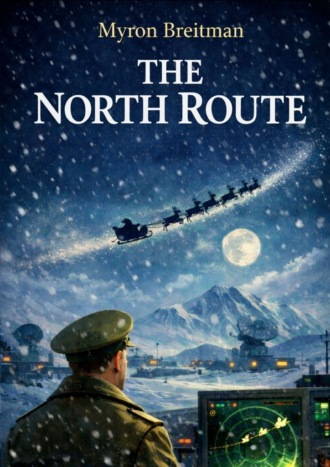
The North Route. A Novella of Hope in the Cold War Sky
And he realized: what he was doing now was vital.
It was a way of saying to them: You are seen. You are remembered. You matter.
Even if you live far away.
Even if you are small.
Even if the world seems too vast to notice a single flickering candle.
The telephone rang again before he could finish the thought.
Caldwell reached for it.
«Continental Air Defense Command, Colonel Caldwell speaking.»
«Good evening,» the voice was adult. A woman. A mother, likely. «I’m sorry to trouble you. My son is desperate to speak with you. He’s four, and he’s so restless. May he?»
«Of course,» Caldwell said. «Put him on.»
A rustle. A whisper. Then – a voice brimming with wonder:
«Hello?»
«Hello there,» Caldwell said. «What’s your name?»
«Tommy.»
«Tommy, listen. I have good news for you. Santa has already departed the North Pole. Right now, he’s flying over Japan. He’ll be in America soon.»
«Does… does he know I’m waiting?»
«He certainly does. He knows every child who is keeping watch.»
«What if I don’t fall asleep? Won’t he come?»
Caldwell smiled. «Then you must try your very best. Close your eyes. Think of something wonderful. Sleep will find you. And when you wake – you’ll see that Santa was there.»
«Okay. I’ll try. Thank you!»
«Goodnight, Tommy.»
The receiver went back to the mother.
«Thank you,» she said, and her voice held a gratitude that was raw and deep. «You have no idea how much this means to him. To us. Thank you for taking the time.»
«It’s my job, ma’am,» Caldwell said. «Have a pleasant evening.»
«And you.»
Click.
Caldwell hung up and felt a glow move through him. That woman’s gratitude was real. It wasn’t formal or merely polite. It was genuine. She was thanking him for something profoundly simple – for an answer. For finding the right words to anchor a child’s dream.
And Caldwell suddenly thought: Perhaps this is the true purpose of our vigil. Not just to watch the sky, but to answer those who look up into that sky with hope.
He checked the clock. 1:00 a.m. Half the shift was gone. But time was behaving strangely – now dragging, now sprinting, as if the gears of the night had slipped their rhythm.
Sergeant Thomas approached with a fresh thermos of coffee.
«Colonel, you’ve been on the line for an hour without a break,» he said. «Shall I take over? Or Lieutenant Harris?»
Caldwell shook his head.
«Thank you, Sergeant, but I’ll see it through. This…» He searched for the words. "…this must be done just right. They need to hear the certainty in the voice. So they don’t doubt.»
«You’re doing a fine job, sir,» Thomas said. «I can hear you speaking to them. You have the touch.»
Caldwell nodded.
Thomas poured the coffee and returned to his post.
Caldwell took a sip. It was hot, scalding, but good. It warmed him from within, sharpening the edges of his mind.
The telephone was silent.
A temporary lull. Perhaps the children were finally drifting off. Perhaps parents had decided enough was enough. Or perhaps it was simply a pause – natural and inevitable, like the silence between two breaths.
Caldwell leaned back and looked at the map on the wall. The red line of the route was now cluttered with annotations. Sergeant Thomas and Lieutenant Harris had added city names, arrival times, even little marginalia: «Five-minute stop here,» «Clouds, visibility limited.»
It looked professional.
Almost like a genuine operational plan.
And in a sense, it was. An operation. A special one. One they didn’t teach at the Academy. One not found in the field manuals.
The Operation to Preserve What Matters.
Corporal Miller turned from his radar.
«Colonel,» he said, «what if the brass walks in? What if they see the map and ask what it is?»
«You tell them the truth, Corporal,» Caldwell replied. «It is the trajectory of an unconventional object being tracked at the discretion of the Duty Officer.»
«And if they ask why?»
«Tell them: for the maintenance of public relations. A Christmas initiative.»
Miller smirked. «A Christmas initiative. I like that, sir.»
A soft laugh echoed from a corner of the room. Warm. Kind.
Caldwell knew his men didn’t think he was being eccentric. They understood. They felt the same pulse. That tonight was a singular night. That tonight, the standing orders could be bent. That tonight, kindness was the only regulation that mattered.
Because sometimes, the kind thing is the right thing.
The telephone rang.
Caldwell picked it up, already smiling.
«Continental Air Defense Command, Colonel Caldwell speaking.»
«Hello,» the voice was boyish, serious. A teenager, perhaps. Thirteen or fourteen. «I’m calling for my little brother. He’s six. He’s really worried. Mom told me to call and find out… about Santa.»
Caldwell heard something familiar in that voice. The desire to protect a younger one. The need to ensure the world remained magical for him a little longer.
«I understand,» Caldwell said. «What is your brother’s name?»
«Danny.»
«Tell Danny this: Santa is over the Pacific right now. Flying toward the States. In three hours, he’ll be in your state. Tell him to go to sleep and not to worry. Everything is going to be alright.»
«Thanks,» the teenager said. Then, after a pause: «It’s… it’s good that you’re doing this. Answering. It matters.»
«Thank you,» Caldwell said. «And you’re a good brother. Take care of him.»
«I will. Goodnight.»
«Goodnight.»
Caldwell hung up and stared at the black plastic for a long time.
That call was different. The boy hadn’t called for himself. He had called for Danny. He wanted his brother to find peace. To sleep without shadows.
And there was something profoundly right in that.
The elders watching over the young. Passing on the light they had once received.
Caldwell stood and walked to the map. He stood before the red line that encircled the globe.
A route.
A path someone treads every Christmas.
It didn’t matter who, exactly.
What mattered was that the path existed. That someone was walking it. That someone was carrying kindness from house to house, from child to child.
And perhaps everyone who did something kind this night – every mother, every father, every older brother, every soldier in a windowless room answering a telephone – they were all part of that path.
They were all Santa.
Caldwell returned to his desk.
The telephone rang again.
And again.
And again.
The calls were a flood. Children from every corner of the nation. From the sprawling cities and the hollowed-out towns. They all wanted the same thing: Where is he? When will he arrive?
And Caldwell answered. Every one.
His voice grew husky with the effort, but he pressed on. Because every call was a soul. Every child deserved an answer.
Somewhere around 2:00 a.m., the words began to flow of their own accord. He looked at the map, saw the red thread of the route, and spoke. Naturally. Easily. As if he had been doing this for an eternity.
«Santa is over California.»
«Santa is approaching Texas.»
«Santa saw your house; he’ll be there for sure.»
The words became a stream. Time flowed. The clock ticked.
Sergeant Thomas stood by the map, updating the markers. Lieutenant Harris helped him, checking the watches. Corporal Miller would occasionally turn and smile, listening to the fragments of the conversations.
They were all part of something larger now.
A collective effort.
The telephone rang again.
Caldwell lifted it.
«Continental Air Defense Command, Colonel Caldwell speaking.»
«Hello,» the voice was sleepy. A very small girl. «Is Santa close now?»
«Very close,» Caldwell said softly. «He’ll be at your window before you know it. Go to sleep, little one. When you wake – you’ll see.»
«Okay,» a yawn. «Goodnight.»
«Goodnight.»
Click.
Caldwell smiled.
The night went on.
Warm.
Alive.
Filled with voices.
Filled with hope.
And somewhere in the dark, beyond the steel walls of the Headquarters, over the snow-dusted cities and the empty fields, flew the one millions of children waited for.
Traveling his route.
The North Route.
And Caldwell, sitting in his room without windows, helped him fly.
With words.
With faith.
With care.
Chapter 5. The Voice of a Child
Children do not speak as adults do.
Adults speak in words. Many words. They explain, they clarify, they garnish the truth with details. They build sentences as men build houses – brick by brick, layer upon layer, until they have constructed something sturdy and plain.
Children speak differently.
They speak through what lies between the words. Through the silences. The inflections. The very rhythm of their breath. You can understand everything without hearing a single word – simply by listening to how they sound.
Caldwell understood this somewhere around the third call.
No, even earlier. From the very first. When that first child had asked about Santa, and there had been so much hope in the voice that one could almost touch it, like something material – warm and pulsing and alive.
Now, answering yet another call, Caldwell did not listen to the words. He listened to the voice. And the voice told him everything he needed to know.
«Hello?» It was a girl. Quite small. Three years old, perhaps four. A voice like the silver chime of a bell.
«Hello there,» Caldwell said gently. «What is your name?»
«Lily.»
«Lily. That’s a beautiful name. Did you want to ask me something?»
A pause. A soft intake of air. Then:
«Is Santa coming?»
Three words. Only three. But in them lay an entire universe. The question wasn’t about where Santa was. It wasn’t about when he would arrive. It was about – would he come at all? Would there be a miracle? Or was the world a cold place where miracles do not happen?
«He is coming, without fail,» Caldwell said, and there wasn’t a shadow of a doubt in his tone. «He is already on his way. Flying toward you. He’ll be there soon.»
«Really?»
«Really, Lily. I promise.»
An exhale. Relief. Joy.
«Thank you.»
Click.
Caldwell hung up and closed his eyes for a second.
I promise.
He had said the word without thinking. It had escaped on its own. And now he realized: it was vital. Not just a «yes» or an «of course.» But specifically, «I promise.»
Because a promise is not information. It is a covenant. It is something to lean on. Something you can believe in when the night grows dark.
And Lily had believed.
The telephone rang again.
«Continental Air Defense Command, Colonel Caldwell speaking.»
«Hello,» a boy. Older. Seven, perhaps. «I’m Ben. I need to know the exact arrival time for Santa in New York.»
Caldwell smiled. The exact time. As if they were discussing a train or a transcontinental flight.
«Ben, let me check,» he glanced at the map, at the red thread of the route. Sergeant Thomas stood nearby, pencil in hand, ready to update the data. «Santa is over the Pacific. To New York, it’s approximately… three hours and fifteen minutes. But that’s an estimate. He might be a bit early if the tailwinds stay with him.»
«Understood. I’ll write that down. Thanks.»
«Always a pleasure, Ben.»
Click.
Sergeant Thomas smirked. «Businesslike kid.»
«Yes,» Caldwell agreed. «He wants the facts. Probably planning to stay awake and intercept him.»
«Will he?»
Caldwell looked at the sergeant. «No. He won’t make it. He’ll fall asleep first. They all fall asleep. It’s the way of things.»
Thomas nodded and returned to the map.
Caldwell sipped his lukewarm coffee and thought about those voices. How different they were. How each one carried its own unique resonance.
There were the timid voices – those who feared they were bothering him, afraid to ask a foolish question. Caldwell spoke to them with particular softness and patience, until the shyness ebbed away and the voice grew steady.
There were the jubilant voices – those ringing with delight, laughing, shouting the words. Caldwell laughed with them, for their joy was as infectious as sudden sunlight.
There were the serious voices – those who asked deliberate questions, demanded details, wanted to know the mechanics of the world. Caldwell answered them just as seriously, without oversimplifying, never speaking down to them.
There were the drowsy voices – those calling from the very edge of sleep, barely holding on, yet desperate to know. Caldwell spoke to them in a whisper, the way one speaks at the bedside of a slumbering child.
And there was one voice that Caldwell remembered above all.
The telephone rang around 2:00 a.m.
«Continental Air Defense Command, Colonel Caldwell speaking.»
Silence. Long and deep. Caldwell began to think the line had gone dead.
Then – a voice. Barely audible.
«Hello?»
«Yes, I’m listening,» Caldwell said. «Go ahead, don’t be afraid.»
«Is it… is it okay to ask about Santa?»
«Of course. Ask anything you like.»
A pause. A ragged breath, as if the child had recently been crying.
«What if… what if you were bad? Will Santa still come?»
Caldwell froze.
The question was so quiet, so cautious, as if the child were terrified of the answer. And Caldwell knew instantly: this wasn’t an abstract inquiry. This was personal. The boy believed he had been bad. He thought Santa would bypass his house. And he was terrified to hear it confirmed.
«What is your name?» Caldwell asked.
«Michael.»
Caldwell winced. Michael. The same name as his own son.
«Michael,» he said slowly, choosing his words with the precision of a watchmaker, «listen to me very carefully. No one is perfect. Everyone makes mistakes sometimes. Even grown-ups. Even me. But Santa knows that. He knows that children are learning. That sometimes they do the wrong thing, but that doesn’t mean they are bad people. Do you understand?»
«I think so,» the voice was uncertain.
«Santa doesn’t look at the mistakes. He looks at how hard you try. He looks to see if you are trying to be better. And if you are trying – he will come, Michael. He will absolutely come.»
A long silence followed.
«I am trying,» Michael said softly. «I really am.»
«Then everything is alright,» Caldwell said, and felt a sudden tightness in his throat. «Santa will come. Without fail. Go to bed now. You’ll see in the morning.»
«Thank you,» the voice sounded lighter. «Thank you so much.»
Click.
Caldwell hung up and sat still for a long time.
Michael.
His own son was Michael. And his Michael, too, sometimes thought he wasn’t good enough. Caldwell had seen it in his eyes when the boy brought home a poor grade from school. Or when he forgot a chore. He had seen how the boy blamed himself, how he tried to be better, how he strove.
And Caldwell had never said to him the words he had just given to a stranger over the telephone.
He had never said: I see how hard you’re trying.
He had never said: It’s okay to make mistakes.
He had never said: You are good, even when you feel like you aren’t.
Why?
Why was it easier to say this to a voice in the dark than to his own flesh and blood?
Caldwell didn’t have the answer. Or perhaps he did, but he didn’t want to look it in the face.
Maybe because he wanted to be firm with his son. He wanted to raise him strong, responsible, ready for the world. He feared that if he were too soft, the boy would grow up brittle.
But now, at 2:00 a.m., in a room without windows, Caldwell suddenly understood: firmness is not the absence of care. You can be firm and still tell a child he is good. That he is valued. That his effort is seen.
You must say it.
Otherwise, a child will think, like that Michael on the telephone: I am bad. Santa won’t come.
Caldwell pulled a notepad from his pocket. He wrote: «Talk to Michael. Tell him I’m proud of him.»
Then he tucked the notepad away.
The telephone rang.
«Continental Air Defense Command, Colonel Caldwell speaking.»
«Hello!» the voice was brisk, full of life. «It’s Emma! I’m six! Is Santa over America yet?»
Caldwell smiled.
«Hello, Emma. Yes, he’s over America now. Over the West Coast. Flying east.»
«Wow! Can I wave to him? If I go outside?»
«You could try,» Caldwell said. «But he’s flying very high. Very high indeed. He might not see. You’d do better to leave him something tasty. Cookies, perhaps. And milk. Santa loves milk.»
«We have cookies! Mommy baked them! I’ll put them on the table!»
«Excellent idea, Emma.»
«Thank you! Bye-bye!»
Click.
Caldwell set the receiver down and looked at Sergeant Thomas.
«Sergeant, Santa is over the West Coast.»
«Understood, sir,» Thomas updated the map. «Moving east. Estimated speed – three thousand miles per hour.»
«Correct.»
Lieutenant Harris approached with a fresh cup of coffee. «Colonel, I brought you some. Hot.»
«Thank you, Lieutenant.»
Caldwell took the cup. The coffee was indeed hot, scalding his lips. But it felt good. It anchored him to the present.
He checked the clock. 2:30 a.m.
The night had passed its meridian. The darkest hour. The time when it feels as though morning will never break. That the night will stretch on into eternity.
But Caldwell knew: the morning always comes.
Always.
You simply have to wait it out.
The telephone rang again.
«Continental Air Defense Command, Colonel Caldwell speaking.»
«Hello,» the voice was quiet. Not a child’s. A teenager’s. A girl of perhaps fourteen. «I’m sorry, I’m probably too old for this. But my little sister can’t sleep. She’s worried. Can I ask for her?»
«Of course,» Caldwell said. «Ask.»
«She wants to know… if Santa has already visited other children. If you’ve seen it on the radars.»
Caldwell thought for a moment.
«Yes,» he said. «We’ve seen him stop. In Europe. In Asia. Everywhere children live. He visits everyone. He doesn’t miss a single soul.»
«Good. I’ll tell her. Thank you.»
«You’re very welcome. And you’re a good sister.»
A pause. «Thank you,» the voice grew warmer. «Goodnight.»
«Goodnight.»
Caldwell hung up.
He thought of how good it was – when the elders looked after the young. When they called not for themselves, but for those who were smaller, who still believed, who were anxious.
This, too, was part of the miracle. Not the magic itself, but the way it was passed from hand to hand. How it was cherished. How it was protected.
Corporal Miller turned from his radar. «Colonel, I was just thinking. What if one of the kids asks what Santa looks like on the radar? What should I say?»
Caldwell considered. «Tell them: like a bright dot. Very bright. Because Rudolph’s nose is glowing. It creates a powerful signal.»
Miller nodded. «Rudolph’s nose. Makes sense.»
Technician Johnson laughed. «If someone had told me a year ago that I’d be tracking a glowing reindeer nose on a radar, I’d have said they were crazy.»
«And now?» Caldwell asked.
Johnson smiled. «Now it seems like the most normal thing in the world.»
True, Caldwell thought. An hour ago, it had seemed strange. Absurd. Wrong.
Now – it was normal.
Because they were doing it together. Because it was important. Because out there, beyond the steel of the Headquarters, children were falling asleep in peace, knowing Santa was flying toward them.
And that made it worth it.
The telephone continued to ring.
The voices followed one another in a parade. Boys, girls. Small, large. Timid, bold. Each with a question. Each with a hope.
And Caldwell answered.
Again and again.
Because every voice was vital.
Every child deserved an answer.
And somewhere out there, in the sky, along the red line on the map, flew the one they were all asking about.
Flying through the night.
Through oceans and continents.
Through time itself.
Flying, because he was expected.
And Caldwell, holding the telephone receiver, helped him fly.
Word by word.
Answer by answer.
With a voice that said: Everything will be alright.
Believe.
Chapter 6. The Pause
There are singular moments in a life.
Not the grand ones. Not the loud ones. Not the ones you recount to grandchildren or etch into memoirs.
Small moments.
Pauses between events.
Instants when time seems to lose its footing and stand still, allowing you to see yourself from the outside – who you are, where you are, and what you are doing.
Caldwell sat at his desk in the windowless room, the telephone receiver still warm in his hand, and suddenly understood: this was one of those moments.
The telephone was silent.
It was strange. For the last two hours, it had rung almost without reprieve – the moment Caldwell set the receiver down, a fresh ring would pierce the air. Children had called in a relentless tide, an endless succession of voices, questions, and yearnings.
And now – silence.
Caldwell returned the receiver to its cradle and leaned back. He looked at the clock. 2:53 a.m. Nearly three in the morning. The deepest, darkest hollow of the night.
The hour when all the world sleeps.
And the children were sleeping too.
At last.
He closed his eyes and allowed himself to uncoil. His shoulders ached – he hadn’t noticed how he’d been tensing during the conversations, leaning forward, gripping the plastic too hard. His neck was stiff. His throat felt raw from the hours of talking.
But it was a good ache. The ache of work finished.
«Sir?» Sergeant Thomas called out softly.
Caldwell opened his eyes. «Yes, Sergeant?»
«Doesn’t it seem… quiet to you?»
«It does,» Caldwell agreed. «The children are falling away. It’s late. Even for the most stubborn of them.»
Thomas nodded. He stood there for a moment, then asked, «Did you think there would be so many calls?»
Caldwell shook his head. «No. I thought there might be five, maybe ten. But it turned out… how many was it?»
«I kept a tally,» Lieutenant Harris chimed in. «Forty-seven. Forty-seven calls in two and a half hours.»
«Forty-seven,» Caldwell repeated. «Forty-seven children.»
He imagined them all at once – Susie, Tommy, Annie, Ben, Lily, Michael, Emma, and all the others whose names had blurred into a tapestry of memory. Forty-seven voices. Forty-seven fragile hopes that he had held in his hands like delicate glass, passing them back carefully, unbroken, whole.
«You know what’s strange, sir?» Corporal Miller said, his eyes never leaving the radar sweep. «I thought this would be… I don’t know, funny. Or silly. But it felt… right. You know?»
«I know,» Caldwell said.
And he truly did. At first, it had seemed like a game. An improvisation. Something not to be taken with gravity.
And then, it had become grave. On its own. Without a command. At some point, he had realized: This is not play. This is real. What I am doing now is vital. Perhaps more vital than much of the rest.
Caldwell stood up. He walked to the map on the wall. The red line of the route was nearly a closed circle now. Santa, by their reckoning, was over the Eastern seaboard. The final leg. The last cities. The last houses.
He traced the line with his finger. From the North Pole through Europe, Asia, the Pacific, and America. The whole world in a single night. An impossible journey.
But the children believed it was possible.
And as long as they believed – it was.
«That’s a fine map we made,» Sergeant Thomas said, coming up behind him. «Shame to take it down in the morning.»
«Who said we’re taking it down?» Caldwell looked at him.
Thomas blinked. «But… sir, it’s just…»
«It’s an operational map, Sergeant. A successful operation. It must be preserved. For the record.»
«For the record,» Thomas repeated with a grin. «Understood, sir.»