

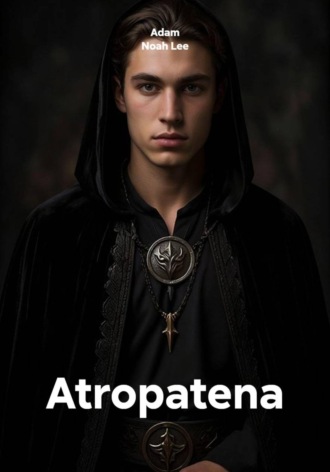
Полная версия
Atropatena

Adam Noah Lee
Atropatena
Глава 1
ATROPATENA
Part One — ALBANER
Vahid Mammadli
CHAPTER I
The crown had never felt heavy until the morning King Vache learned that dragons were coming for his kingdom.
At dawn a rider reached the palace from Derbent, his horse lathered white and bleeding beneath the saddle. Artaban of Qazaka was gathering dragons beyond the frontier, he said. He had seen the fires in the mountains himself. Vache ordered the man given water, then asked him to describe the sky. The messenger stared at the floor. “Black at noon, Majesty.”
The last king, Vachagan, had tried to turn Albania toward the Christian faith. His murder had left a throne to claim and a son no one could find. Vache had taken the crown, but not the certainty that it belonged to him. Now dragons were coming, and a dead king’s shadow seemed a small thing to fear.
He sent for Shamon, commander of the nakharars, before the messenger had been given water.
By noon every torch in the throne hall was burning, though daylight filled the high windows. Vache had ordered the flames lit himself. He knew they would not stop a dragon. He wanted them burning anyway.
A servant climbed a ladder to replace a guttering torch. Hot wax ran across his wrist; he swallowed a cry and kept working. Vache watched him struggle to steady the flame. A single torch could burn a man. What would a sky full of dragons do to a city?
Shamon entered in traveling clothes, melted snow darkening the fur at his collar. He had commanded the nakharars through three border campaigns. Vache trusted his courage; it was Shamon’s ambition he had never learned to measure.
“How long?” Vache asked.
“If they take wing at first light, they could reach Derbent before nightfall.”
“And after Derbent?”
Shamon did not answer.
Vache rose. Through rebellions and winters of hunger, he had scarcely noticed the crown on his head. Now its rim pressed painfully against his brow. Beyond the windows, merchants still argued over the price of bread and mothers called children home. No one in the city knew what was coming.
“Then every village and every soul between the frontier and this palace will learn what burning is,” he said. “I can send every knight in Albania against them. I can put a weapon in every hand strong enough to hold one. But no kingdom has yet defeated the dragons of Qazaka.”
Shamon lowered his head.
Shamon was asking him to choose which part of Albania would burn first. Vache looked at the commander and saw that he had already made his choice.
“Then we need help stronger than steel,” Shamon said.
Vache looked at him. “A miracle?”
“Perhaps.”
“You know I do not build a kingdom on miracles.”
“No, Majesty. You have never trusted magi, astrologers, or sorcerers. Other rulers keep them at their side. You have kept them beyond your gates.”
“Was I wrong?”
“Today,” Shamon said, “Albania may not survive the luxury of being right.”
Shamon let the silence stretch. He had brought the king to the one door Vache had sworn never to open.
“Before Artaban’s dragons cross the frontier, summon Nadovar. An Assyrian by birth, he commands the Order of the Dark Night. If anyone can set a force stronger than steel against those creatures, it is he.”
Vache’s face tightened. “I am told Yelisey has power too. White magic. He heals the sick in his village without payment.”
“Yelisey is a good man,” Shamon said. “A generous man. But kindness will not frighten Qazaka’s dragons. We need a sorcerer hard enough to destroy them.”
Vache studied the flames. He had driven sorcerers from his court because he feared what they might do with power. Now Shamon was asking him to invite one inside—and to trust that the man would use his power against dragons rather than against the throne. The king sat slowly.
“Very well. Bring Nadovar to the palace. We shall see whether his magic can turn Artaban’s dragons from Albania. But when the time comes, I shall summon Yelisey myself.”
Shamon bowed. “Nadovar will serve you so faithfully, Majesty, that you may never wish to see Yelisey near this palace.”
“We shall see.” Vache dismissed him, lifted the crown from his head, and set it beside the throne. The red groove across his brow remained long after Shamon had gone.
“We shall see.” Vache dismissed him. Only when the doors closed did he lift the crown from his head. Its gold had left a red groove across his brow.
His wife, Ifrite, walked beside him, followed by two other magicians and black-clad knights of the Dark Night. Nadovar wore black from throat to heel. He lowered his hood without bowing, as though the hall were a place he had come to inspect rather than a king’s court.
Ifrite stood at his right hand.
Her green eyes were steady. One courtier held her gaze a moment too long and looked away, suddenly ashamed of a fear he could not name.
Vache received Nadovar without rising. “Shamon tells me you are the strongest sorcerer alive. I have no proof of that. I do, however, trust his judgment as a commander. You are here because he asked me to hear you.”
Nadovar did not reply.
The nobles, the queen, and the guards watched him. As his silence lengthened, Vache’s voice hardened.
“Shamon has surely told you what is demanded. Qazaka’s dragons must die at the frontier, before they enter this country. If they do not, you will lose your head. Now show me the strength of your magic.”
Only then did Nadovar turn to Ifrite.
She studied the court one face at a time, then fixed her eyes on her husband.
At first, a faint light trembled in the green of her eyes. Then it grew. It filled her pupils and spilled across her cheeks. It shone so fiercely that those nearest her recoiled.
Nadovar reached toward her face. In the torrent of light, his fingers moved too quickly to follow. He withdrew his right hand from her left eye as if placing a small object in his other palm. Then he reached into the brilliance again and repeated the motion.
Nadovar closed his fingers around the brilliance, as though he had caught something solid. Across the hall, someone gasped.
For one impossible instant, Vache believed the sorcerer had plucked out his wife’s eyes. He gripped the throne until his knuckles ached.
When he drew back, Ifrite turned her head toward the king.
Only blank white hollows remained where her eyes had been.
The queen caught the arm of her throne. A courtier stumbled backward. No one moved to help him.
Ifrite faced Vache with her sightless sockets. Her lips parted.
Then she laughed.
Her laughter filled the hall. Torches died one after another; candles hissed and vanished. In the darkness Vache heard the scrape of a sword leaving its sheath, then the sharp command to put it away.
Vache’s voice tore through it. “What is happening here?”
Before anyone could answer, two great emerald lights opened in the dark.
Each was the size of a human eye. They rose from Nadovar’s open palm and floated toward the king, guided by an unseen hand. Slowly they crossed the hall and fixed themselves to Vache’s crown.
Sparks burst from the gold and scattered like grains of fire.
“Light the torches!” Vache shouted.
Knights ran for the walls.
“Hurry!” the king cried again. “I will not remain in darkness. Nadovar, you go too far.”
At that instant the candles flared back to life.
The court stood frozen. Two enormous emeralds now burned above Vache’s plain gold crown.
Nadovar had not moved. Ifrite’s eyes were once more in their places—green, deep, and quiet.
Vache removed his crown with both hands and stared at the stones. Then he faced Nadovar. “I cannot deny what I have seen, and I do not doubt these gems are beyond price. But I did not summon you to decorate my crown. I summoned you to save Albania from Qazaka’s dragons.”
Nadovar bowed. “Give me leave to act, Majesty. I answer for my own magic. If I fail, I will place my head on the executioner’s block myself.”
Vache rose. “Give Nadovar and his knights rooms in the palace. Treat him with the honor due one of my own nobles.”
Nadovar and Ifrite withdrew, followed by the knights of the Dark Night. Shamon went with his men to settle them. When the last courtier had left, the queen touched the new emeralds and rested her cheek against her husband’s face.
“My king,” she whispered, “if Nadovar can turn Ifrite’s eyes into jewels and restore them, perhaps he can give us what we have prayed for all these years.”
Vache looked at her.
“A child,” she said. “An heir.”
Vache could name the dead from a lost battle. He could order graves dug and walls rebuilt. For the child they had never conceived, there was nothing to command, nothing to repair. He reached for the queen’s hand and found it cold.
That evening the queen summoned Ifrite. She did not wish to speak to her as Albania’s first lady to a sorcerer’s wife. She wished to speak as one woman to another.
The queen knew the sound of pity: a conversation stopping when she entered, an attendant too quick to offer comfort when another noblewoman gave birth. Ifrite did none of these things. She stood before the queen with steady hands and the calm of a woman who already knew what answer she would give.
“Give me a child, and I will cover you in jewels,” the queen said.
Ifrite took in the queen’s brocaded gown, the diamonds at her throat, the earrings trembling beside her cheeks. Every treasure in Albania could be bought with the king’s gold. The one thing the queen wanted could not.
She lowered her eyes, allowing the silence to deepen until the queen could bear it no longer.
“Majesty,” Ifrite said, “to give you what you ask would be no harder for me than drinking water.”
The queen seized Ifrite’s hands. She forgot her jewels and the attendants outside the door. For a heartbeat she was only a woman who had been told that the thing she wanted most was possible.
Ifrite let the queen hold her hands. She said nothing of the price, and the queen did not ask.
When the door closed, Ifrite examined the pale crescents the queen’s rings had pressed into her skin. She rubbed at them until they vanished. The queen had offered jewels. She had never thought to ask what the gift might cost.
CHAPTER II
Nadovar rode toward Derbent beneath the black standard of the Dark Night. Shamon followed with the Albanian horsemen, keeping enough distance to watch the sorcerer without appearing to distrust him. Vache had been promised that the dragons would die before they crossed the border. If the promise failed, Shamon knew exactly whom the king would blame—and how little a king’s anger would matter once the dragons came.
They halted across from Derbent after a hard march. Though the city belonged to Albania, Prince Aytugan governed it as he pleased, and his relations with Vache had grown bitter. Nadovar rode alone to a rise. He dismounted, spread his hands and began to move them in sharp, elaborate figures. His feet scraped circles in the dust. The knights fell silent. From the direction of Mount Khachen came a beating like distant thunder. A shadow crossed the ground; the horses screamed and pulled at their bridles. An enormous raven descended, its wings wide enough to darken the men beneath them. Shamon stood motionless as the bird settled before its master.
“Falkona,” Nadovar said, watching the vast black bird settle beyond the tents. “She will swallow Qazaka’s dragons alive.”
All day the army waited near the frontier. To keep Falkona from taking flight, Shamon’s knights drove sheep and cattle into camp. The raven swallowed them whole. By afternoon the soldiers were watching the sky for her shadow as anxiously as they watched for dragons.
A cook abandoned his fire when Falkona’s shadow crossed it. No one laughed at him. The bird had eaten enough livestock to provision a siege, yet she still turned her beak toward every movement in the camp.
Derbent’s lights glimmered beyond the frontier. Aytugan, its prince, had never trusted Vache; an army at his walls would look like a threat, no matter what Shamon called it. Shamon sent no reassurance. He waited for the prince to make the first move.
Shamon, lying awake in his tent, ordered the rider brought in.
The middle-aged border guard bowed. “Commander Shamon, our chief is disturbed to see your knights gathered at the frontier. If you mean to attack Derbent, say so. If not, perhaps we can help.”
“You have my knight’s word that we do not intend war on Derbent,” Shamon said. “We are trying to stop a disaster that will cover the country.”
When he explained that Artaban meant to send his dragons first over Derbent and then into Albania, the envoy widened his eyes.
“Then perhaps there is no cause for fear,” he said. “While Kesira lives, no dragon crosses Derbent safely.”
“Kesira?”
“She was the daughter of Aytugan’s chief minister until the Dervish turned her into a serpent-woman. Since then, not one dragon has passed over Derbent unchallenged. She flew to their nests and ate their eggs before the hatchlings could emerge. But Kesira vanished a year or two ago.”
Shamon thanked the envoy and sent for Nadovar. The sorcerer knew Kesira’s story already. Once the guards had withdrawn, he leaned across the table.
“I did not leave my order to become Vache’s servant,” Nadovar said. He waited until the footsteps outside the tent had passed. “I mean to give Albania a new king. You.”
Shamon clapped a hand over his mouth. “Quiet. Do you want Vache to execute us both?”
“Vache’s reign is ending,” Nadovar whispered. “Whether the dragons end it or I do, that much is certain. The only question is whether you intend to survive him as a commander—or replace him.”
Shamon paced the tent. He feared that one of the guards might have heard; worse, he had already pictured himself on Vache’s throne. Nadovar had given his ambition a shape, and Shamon could not make himself forget it.
When Nadovar left, Shamon sat alone with the lamp burning low. He tried to picture the throne without Vache upon it. What surprised him was not that he could. It was how naturally he saw himself there.
He doubled the night guard. He told himself the order was meant to protect the camp from Qazaka.
At dawn Nadovar returned with news he claimed to have drawn from his magic. Four years had passed since Qazaka’s dragons last attacked Derbent. Kesira and her flying serpents had destroyed them. The creatures laid their eggs every fourth year upon the heights of Savalan, and Artaban was waiting for a new brood before unleashing it. Nadovar spread a map on the ground and pressed one long finger to the mountain. “We need not wait for the dragons to come to us,” he said. “We can reach their eggs first.” Shamon stared at the distance between Derbent and Savalan. “On horseback?” he asked. Nadovar looked up toward the immense raven feeding beyond the tents.
Nadovar began to laugh. He spoke of Falkona’s appetite for crocodile eggs in the marsh lake beyond Mount Khachen, of the sound she made swallowing them whole. Shamon, unnerved by the laughter, demanded to know what crocodiles had to do with dragons.
“Dragon eggs are larger,” Nadovar said, suddenly serious. “And tastier.”
If the plan worked, Albania and the neighboring lands might have four years free from Qazaka’s terror. Shamon softened toward him.
“How will you feed the eggs to Falkona?”
“When darkness falls, I will fly to Qazaka. Come if you wish.”
Shamon’s throat tightened. He had faced men with swords all his life, but the thought of sitting upon Falkona and crossing into Qazaka turned his stomach. He glanced toward the tents where his aide, Iglasion, was inspecting the horses. “Iglasion will accompany you,” he said. “He is loyal. He will report what happens.” Nadovar followed his glance. Iglasion came at the summons, bowed and listened as Shamon gave the order. For a moment the aide’s knees seemed to buckle. “As you command,” he managed. He walked back to his tent with the careful steps of a man who feared that running would betray him.
“You?” Shamon asked, hoping he had misheard. “You mean to ride that creature into Qazaka tonight?”
“Unless you would prefer to wait until the eggs hatch.” Nadovar rose, the dark hem of his robe sweeping across the rugs. “I have offered you a place beside me.”
Shamon thought of the chasm beneath Falkona’s wings, of the fire rising from the mountain and of the men who would be left behind if the bird failed to return. He had faced spears without flinching; this was a different sort of courage. “We shall decide before nightfall,” he said, careful not to meet the sorcerer’s eyes.
Outside, Shamon found Iglasion checking a saddle strap. “Nadovar requires a companion for the flight,” he said. Iglasion looked up. “My lord?” “You will go in my place.” The strap slipped from the aide’s fingers. Shamon bent to retrieve it, buying himself a moment in which he did not have to meet the younger man’s eyes.
Later Shamon saw that Falkona was gone. He hurried into Nadovar’s black tent. Nadovar sat before a thick black book and said the bird had likely gone hunting in a village. Shamon struck the ground with his fist. Nadovar merely traced an arc in the air and told him to be calm. The command entered Shamon’s blood; his anger slackened beneath the sorcerer’s gaze.
Falkona had indeed found a village. The pasture lay beside a dark stand of trees, where cattle grazed beneath the late sun. The first warning was not a cry but the sudden movement of the herd: heads lifted together, then the animals scattered. A vast shadow swept across the grass. Falkona descended with her claws open. A cow bellowed as the talons closed around its back. Villagers dropped their tools and ran toward the fences. In the wood, Yelisey straightened from the branches he had been gathering. “Albaner!” he called. No answer came. He dropped the firewood and ran.
She circled over the grazing fields at the edge of the forest and plunged toward the cattle. The herd scattered. Villagers shouted. Yelisey, gathering fallen wood in the trees, called for his young companion Albaner and found him gone. He ran toward the pasture.
Falkona had seized one of the cows in her talons. Albaner stood between her and the herd with a dagger raised, driving at the great bird whenever it came near. Fearing for him, Yelisey drew his own blade and ran.
Falkona landed, snapping her beak as she tried to swallow Albaner. He backed toward the trees, slashing at the air. At a tall fir he sprang up the trunk with a tiger’s speed. Unable to force her great body into the dense forest, Falkona searched among the branches. Albaner climbed to a thick high limb above her head and struck at her reaching beak with his dagger.
The raven pushed deeper between the trees, trying to come closer. When she stood beneath Albaner’s branch, he dropped onto her back, stepped forward to the base of her neck, and locked his legs over her shoulders. The point of his dagger touched her head.
“Be still,” he said. “You are in my hands now.”
Falkona burst from the forest, spread her wings, and tried to throw him. Yelisey heard hoofbeats, found his horse, and rode after them. The raven wheeled high in the sky, attempting to seize Albaner in her beak and cast him down, but he struck her beak each time with the dagger.
“Fool,” he called. “I would not please your taste. You feed on carrion and cattle.”
At last Falkona understood that she could not dislodge him. She flew back toward the frontier, hoping Nadovar would save her from the boy.
Nadovar ran from his tent when he heard she had returned. Seeing the young man on her back, he quickened his pace. Shamon followed and saw Yelisey riding hard from the villages.
“Who are you,” Shamon demanded of Albaner, drawing his dagger, “to sit on our raven?”
“Stop,” Yelisey called. “Lower that blade.”
Shamon and Nadovar turned. They knew the master of white magic well. Nadovar said nothing to the enemy standing before him.
“You cannot harm Albaner,” Yelisey said.
Shamon sheathed his dagger. “Who is he?”
Yelisey drew a breath. “His name is Albaner. His father was King Vachagan.” The wind moved through the grass. Shamon’s dagger remained in his hand, but its point had fallen. Vachagan’s son was alive. The boy he had thought buried with his father was standing before him on the back of Nadovar’s raven.
Shamon waited below the hill until Albaner came down. The young man approached with the unguarded stride of someone who had never learned to fear a court. Shamon turned to Yelisey. “You will not use your arts to put him on the throne.” The healer met his gaze. “I heal the sick. Whatever power I have was given to preserve life, not to serve your Black Angel.” Nadovar gave a contemptuous laugh, but Shamon raised a hand. Albaner was close enough to hear them now.
“Albania needs men who can face what is coming,” Shamon told Albaner. “Fly against Qazaka’s dragons. Return alive, and I will ask Vache to make you a knight.” Nadovar smiled. “It takes an uncommon rider to master Falkona.” Then, while Albaner glanced toward the bird, the sorcerer murmured to Shamon, “Do not let Yelisey take him home. We have found a better companion for the flight than Iglasion.”
Shamon understood. He faced the healer. “The dragons will not stop at Derbent. Your village will burn with the rest.” Yelisey’s expression tightened. “Then ask Albaner,” he said. “It is his life.”
Albaner looked toward Falkona, crouched on the hill with her black wings folded. He remembered the wind beneath those wings, the fields and rivers falling away under him. Beyond the wonder lay dragon nests, and beyond those, villages where children slept without knowing what approached. “I’ll go,” he said, before he could think of reasons not to.
Yelisey embraced him longer than Albaner expected. “Come back as yourself,” the old man whispered. Albaner nodded, although he did not understand the warning. Nadovar watched the healer ride away until horse and rider disappeared into the dusk.
As darkness gathered, Nadovar brought Albaner to his tent. “Strength alone will not destroy Qazaka’s dragons,” he told him. “You will need the secrets of magic.”
At the frontier hill, Falkona unfolded her wings. Nadovar let Albaner climb onto her back first. Qazaka’s dragons had to be stopped; on that much he and the young man agreed. But Nadovar had another purpose. Vachagan’s son would fly beside a master of the Dark Night, far from Yelisey’s counsel. Whether the boy returned a hero or a corpse, he would not return unchanged.
CHAPTER III
Falkona crouched among the frontier stones, her feathers lifting in the wind like scales of black armor. Albaner climbed onto her back. Beneath his palm the creature’s muscles shifted, strong enough to carry him into Qazaka—and just as strong enough to cast him off. Nadovar settled behind him without asking whether he was afraid.
“Hold fast,” Nadovar said. “If you fall, no spell of mine will gather your bones.” Albaner caught a ridge of feathers in both hands. Falkona spread her wings, and the tents flattened beneath a rush of wind.
Falkona launched herself into the dark. The tents shrank to pale scratches in the earth; the campfires became embers. Albaner felt the night wind strip the breath from his mouth. For the first time, he understood why men mistook flight for freedom.
“You must admit it,” Nadovar called above the wind. “The world is lovelier in darkness. By day you would never see those stars.”
Albaner looked down at the rivers glinting between the hills. 'I would rather see the green of the fields,' he said. 'Or the blue of a lake. Stars are beautiful, but they give us neither bread nor warmth.'
Nadovar pointed toward the full moon. 'And what of her? Does she not make a man think of peace—and love?'
“She borrows her light,” Albaner answered. “The sun gives its own.” Nadovar said nothing. Below them the last pale roofs of Albania disappeared, and ahead the mountains of Qazaka glowed red.
Beyond the last roofs of Derbent, the mountains glowed red. Volcanoes threw sparks into the clouds. Even at this height, Albaner could smell sulfur. Nadovar leaned forward as though he had come home.