


Полная версия
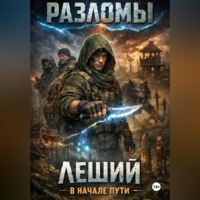
Leshy. The Beginning of the Path

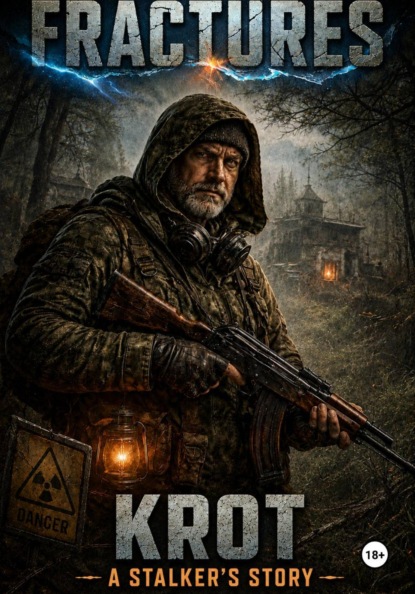
He woke before everyone else.
Not to a sound — to a sensation. It was here, in the basement, it had filled the air while they slept. Not a smell, not a sound — something with no name, that sat in every cell of his body like an alarm signal. Borland lay with his eyes closed for ten seconds, listening inward. Then opened them.
The basement looked the same. People were sleeping. The detector at his belt was silent.
But something was wrong. Stronger than yesterday. Much stronger.
Krot woke next — sat up, rubbed his face, looked at Borland with the expression of a man trying to determine: is this a head pounding from the flask, or is the unease real.
"Is that just me," he said quietly, "or..."
"Not just you," said Borland.
Krot was quiet for a moment.
"That's bad."
* * *
They ate in silence.
Borland hadn't given an order to be quiet — it just happened. Even the assistant wasn't asking questions. She sat with her mug, looking at the wall, and there was just enough anxiety in her eyes to understand: she felt it too. Something undefined, unnamed — but she felt it.
That was the worst part.
One thing when the anxiety is felt by those who have walked the zone for years. They know this background, they can read it, they can separate signal from noise. Another thing when it's felt by people who've been in the zone for two days. Those who haven't yet learned to hear its language.
That meant the signal was loud. Very.
"Let's move," he said when everyone had finished.
* * *
He didn't want to go up.
Borland caught that feeling and was surprised by it — not fear, no. Something more animal, instinctive. His body knew something his head hadn't formulated yet. He climbed the ladder, pushed the door.
Came out.
Looked around.
Came back down. Sat on a rung. Was quiet.
The group looked at him. All of them — even the soldiers, even Vint.
"Leshy," said Krot carefully. "What's out there?"
Borland didn't answer immediately. He was trying to put what he had seen into words, because it didn't fit in his head.
"Anomalies," he said at last. "Everywhere."
"What do you mean — everywhere?" Krot frowned.
"I mean — the whole settlement." A pause. "After the rain. Like mushrooms after a storm. Where it was clear yesterday."
Silence.
"That's impossible," said the second scientist. "Anomalies don't form that quickly. For an anomalous structure to develop, you need—"
"I know what you need," said Borland. "And yet."
Krot stood, climbed two rungs, looked through the doorway. Came back. His face had the look of a man whose reality has diverged from what he thought was possible.
"The detector is silent," he said.
"Silent."
"Then how are you—"
"I feel it."
Krot looked at him. Then nodded — slowly, accepting this as given. After three years of outings with scientists, he had seen enough not to argue with what couldn't be explained but worked.
Kolesnikov raised his hand — the gesture of a man accustomed to meetings.
"What does this mean practically? Are we trapped?"
"For now — yes."
"And how long?"
Borland didn't answer immediately. He was thinking. Trying to remember — something from Khimik's stories, from those rare evenings when Khimik had talked about things he'd seen in other worlds.
"Saw a field once that moved. Not anomalies — the field itself. It followed a group, like a shadow. I told myself I was imagining it."
Khimik never said he was imagining things.
"Krot," said Borland. "Have you ever heard of an anomalous field that moves?"
Krot slowly turned to face him.
"Heard of it. A theory. Considered unconfirmed."
"Was considered."
Krot looked at him for a moment. Then sat back down on the crate and said quietly, without flourish:
"Well, I'll be damned."
Beyond the basement walls, the village was silent. The anomalies didn't glow in daylight — but Borland knew they were there. Waiting.
They needed to get out. The question was only how.
Chapter 7. Field of Wonders
"Krot. Vint. With me."
Krot stood immediately. Vint — a moment later, without questions, simply rose and approached. Borland spread the map on the crate.
"I need an exact schematic of the settlement. Every house, every opening, distances between buildings. As well as you remember."
Krot began drawing — confidently, from memory, with the habit of a man who knows how to put space into lines. Borland watched, correcting where he knew better.
Vint was silent for a minute. Then took a pencil and began adding details.
Borland watched how he worked — fast, precise, without hesitation. The fence at the north house — three sections, the middle one fallen. The well — further right than it seemed. Distance from the porch to the corner — ten steps, no more. The mercenary's eye worked like an instrument. In rain, in darkness, in passing — he had clocked everything.
A serious past. A very serious one.
The map came out dense. It took an hour.
"Wait here," said Borland, taking the sheets.
"I'll go with you," said Krot.
"No. I need you here." Borland looked at him. "If I don't return in four hours — lead the group out yourself. If we both die out there, it will end badly for the group."
Krot didn't argue. Nodded.
* * *
Outside it was grey and damp. The rain had turned to fine mist — not drops, just humid air settling on skin and clothing.
Borland stepped onto the street and stopped.
The settlement looked normal. Empty houses, wet grass, washed-out ruts. The detector was silent. A person without instinct would walk right through and notice nothing — until they stepped into the first anomaly.
Borland stood and listened to the space.
They were everywhere. He felt them like temperature spots — not heat and not cold, something else, with no analogue in ordinary sensation. Here, here, there — dense, dangerous. Over there — weaker, but also present. Between the houses — a corridor, nearly clear, but with pressure from the edges.
He took out a pencil and began marking crosses.
* * *
For three hours he walked the settlement.
Slowly, with stops. A step, a stop, listen. Step right — better. Another step — worse, there's something spinning over there, don't go. He talked with the field in silence — not with words, with instinct, with that very instrument the elder had called a gift and Khimik had described practically: "Your advantage. Don't waste it."
Several Flares were blocking the passageway. He discharged them — methodically, with the extraction tool, deflecting the energy to the side where there were no other anomalies. Two Vortexes blocked the only comfortable exit — he spent half an hour on them, found a way to drain one through the other, clearing the corridor.
By noon the route was ready.
Borland stood at the exit from the settlement and looked at it — forty meters that they had walked in a minute yesterday. Now the same stretch would take forty minutes. Maybe more. Every step exactly in the right place, no stopping in the middle, no hesitation where he would indicate move fast. Timing — everything. Anomalies after discharge are unstable, there's a window, and the window doesn't wait.
Forty minutes. We'll manage.
He turned and walked back.
* * *
He noticed it almost immediately — and stopped.
Somewhere in the middle of the settlement the air was behaving differently. Not an anomaly — he would have felt that. Something else. Borland looked straight — nothing. Shifted his gaze slightly to the side, caught it peripherally.
There.
Several layers of the same space, overlaid on one another with displacement. As if someone had taken the same landscape, broken it into pieces, and reassembled it — almost right, almost, but not quite. Formless fragments hanging in the air without support, without logic, in three dimensions at once.
Look straight — gone. Only peripheral vision caught it.
Borland made a detour.
Approached carefully, reading the space underfoot. Ten meters out, his fingers tingled. Familiar — like with the Blot, but stronger. The Cutter warmed on his hip. Then began to vibrate — barely perceptibly, in time with something Borland couldn't hear but felt.
He stopped.
A tear. Right here, in the center of the anomalous field. The space was parting along an invisible seam — not open, not dangerous yet, but there. Waiting.
Borland stood looking at it — or rather, past it, with peripheral vision, because you couldn't see it head-on. Thinking.
The group's final destination — an hour and a half, maybe two. Krot knew the way, he'd manage. The soldiers would cover them. They'd reach the stalker base without him.
And here — a tear. Possibly the very type that would take him where he needed to go. Or not there. The zone gives no guarantees.
He made his decision.
First — get the group out. Then come back.
* * *
He felt eyes on the back of his neck.
Borland turned slowly, without rushing.
Vint stood about twenty meters away — at the corner of a house, in shadow, nearly indistinguishable. Looking at him. At the Cutter, which was still vibrating slightly. At the spot where the tear hung.
All this time. While Borland was walking the field, mapping the route, standing at the tear — Vint had been here. Watching. Carefully, professionally, not coming within unnecessary range.
And Borland had only felt it now.
They looked at each other for a moment. Two moments. Vint didn't move. Borland didn't either.
Then he turned and walked back to the house.
* * *
In the basement he spread the map on the crate and let everyone approach.
The assistant leaned over the sheet — and froze. She studied the web of lines, crosses, arrows, and time marks. Borland saw how she read the map — quickly, professionally, with the expression one uses for reading not text but a language. Then she took out her notebook and began copying — quickly, barely glancing at the pencil.
Borland watched her for a moment. A map like this normally cost money — good money. Stalkers don't hand out zone information for free.
But he was leaving this world. What use did he have for the money.
Let her. Maybe she'll write a dissertation. Study moving fields, become a famous scientist. A good fate for a map.
"Listen carefully," he said, and the talking died down. "I've walked the route. Forty minutes, maybe more. My pace. Where I say stop — you stop. Where I say run — you run without questions and you don't stop." He scanned the group. "Anomalies after discharge are unstable. The window is small. Anyone who hesitates drags everyone down."
Silence. Nods.
"Krot, soldiers — up front. Not as cannon fodder." He caught Krot's eye. "I'll be at the rear, I'll see the whole route. If something shifts — I'll correct it."
"Understood," said Krot.
"Move out."
* * *
The first twenty minutes went well.
Borland led the group by voice — brief, without explanation: step left, stop, three steps forward, right, fast. People obeyed — even the scientists, even the assistant, who at any other time would certainly have asked why. Fear makes people compliant. Sometimes that saves lives.
The settlement spread around them — the same houses, the same twenty meters they had walked through casually yesterday. Now each one was a separate decision, a separate step, a separate exhale.
They were all sweating — Borland saw it in their backs. Not from exertion, from tension. That's how fear works when you keep it inside and don't let it out.
Ten meters to the exit remained.
* * *
The second scientist's pack clipped the Vortex at the edge — Borland saw it before he felt it.
"Stop!"
But a fraction of a second too late.
The Vortex grabbed the pack and pulled — not sharply, smoothly, like a current catching something. The scientist lurched, lost his balance. One of the soldiers reacted instantly — grabbed the straps, braced, pulled. The second soldier came in from the side, steadied him. Together they yanked — the scientist flew forward, found his footing.
The Vortex was left without its prey.
And began to spin up.
Borland felt this before he saw it — building pressure in the air, like before a storm, only faster. The Vortex was accelerating. In a few seconds it would hit the neighboring anomalies — and from there it would go chain reaction, one after another, and the whole maze would become one large minefield detonating without pause.
Krot froze. Stared at the Vortex.
"Krot!" shouted Borland. "Run! Everyone — run! The exit is right there!"
And turned himself.
Chapter 8. The Tear
Krot ran without looking back.
Borland watched him check the map on the move — one glance, a second — and go along the route confidently, without hesitation. The soldiers behind, step for step, as in training. The scientists after them — worse, you could see the body wasn't cooperating as well as desired, but they weren't veering to the sides, holding the line.
Borland was already turning toward the Vortex when he caught — the assistant wasn't moving.
She stood in the middle of the corridor between anomalies, staring at the spinning Vortex. Face white. Legs giving way — he saw it in how she had slightly sunk, as if her knees had decided that was enough.
Nerves had given out. Body had switched off.
The thought of stopping the chain went with the wind.
Borland turned and was beside her in three steps. Grabbed her by the collar — not roughly, but without ceremony — and dragged her along the corridor. She didn't resist, just dragged along, legs working on autopilot.
Behind, something popped. First anomaly in the chain.
Faster.
The corridor was narrowing — two anomalies had shifted where the scientists had just been. Further dragging her wouldn't work. Borland stopped, looked around — a second, no more.
A Trampoline.
Young, small, nearly invisible in the grass. He felt it slightly before he saw it — a light upward push in the air, impatient, like a compressed spring. Small — meaning it wouldn't kill. A slight girl without heavy equipment — it would toss her. If the angle was right, she'd fly in an arc. If she had time to tuck — she'd land.
She had to have time.
Borland took her by the collar — the way you hold a bowling ball, a swing — and threw her into the center of the anomaly with force, calculating the angle on the go, not thinking, just feeling where to let go.
The Trampoline smacked — satisfyingly, contentedly.
The assistant went into an arc.
She yelped — high, distinct.
Good. Consciousness is back. She'll tuck in time.
* * *
Behind him it was already really thundering.
He turned — one quick look, fix the picture. Anomalies detonating in a chain, one after another, the settlement turning into a jumble of overlays, pops, light flashes and sound that wasn't sound but pressure on the ears. Beautiful and terrible, as everything in the zone.
And there, in the middle of it — the tear.
The chain reaction hadn't reached it yet. The space there was still trembling to its own rhythm, not a foreign one. The window was there. Small, and narrowing with every second.
Borland ran.
He ran straight, not by route — the route no longer existed, the field was collapsing. He read the space underfoot in real time: here, jump, left, straight, don't stop. Once he felt the edge of his boot catch a Vortex — pushed off hard, went sideways, didn't fall.
The tear was ahead.
The Cutter came to his hand on its own — he didn't remember reaching for the sheath. It was simply already in his palm, warm, pulsing — not with anxiety, but almost joyfully, with the feeling of the right tool at the right moment. The space around the tear trembled larger, faster.
Borland didn't stop.
One stroke — the blade entered the air gently, like into water. The space parted. Not flung open — exactly parted, like fabric along a seam, quiet and inevitable.
Something boomed close behind — very close.
He dove into the tear.
* * *
Krot was the first out of the field.
He stopped. Turned.
Soldiers — here. Scientists — here. Kolesnikov gasping, bent over, hands on knees. The second scientist standing straight, looking at the field with the expression of someone in whose head something is happening that can't find words.
The field was detonating. Looking that way was like watching several realities simultaneously — anomalies overlaying each other, space mixing, losing form. Nothing could be seen through that wall.
Two people were missing.
Krot was counting — automatically, the way you always count after a battle, from a habit you can't break. Seven minus two. Leshy. And Vint — that one had disappeared somewhere between the basement and the exit, Krot hadn't noticed when.
A little to one side something whistled through split air, and on the grass about twenty meters away the assistant landed.
She landed not badly — covered her head, shoulder took the main impact, she rolled. Krot was already running toward her.
"Alive?"
She raised her head. Looked at him. Her eyes held that particular emptiness that comes after the body has been somewhere the mind didn't quite get to.
"Alive," she said. And started to cry.
* * *
They sat on the grass about fifty meters from the field's edge.
The field was still detonating — more slowly now, winding down, but no one stopped watching it. In the soldiers' eyes was the anger that comes to professionals when a situation slips out of control and someone gets left inside. Kolesnikov was silent, looking at the ground. The second scientist was smoking.
The assistant sat beside Kolesnikov, face in his load-bearing vest. Shoulders shaking. Then she calmed, raised her head, wiped her face and started talking — quickly, disconnectedly, the way you talk when you need to release what's pushing from inside.
She described how she'd frozen. How Leshy had appeared from nowhere and dragged her along a corridor she couldn't see but he could. How he'd thrown her into an anomaly — she thought it was the end, but it turned out to be salvation. How in mid-flight she understood she needed to tuck, and managed it.
"He saved me, but he cut himself off from every way out," she said. "He died because of me."
No one answered.
Krot was smoking, looking at the field. Something was lying inside him that he had no name for — heavy and uncomfortable, like a stone in a pocket. He was angry at Leshy — for sending him forward, like a fodder. Trust me, go ahead, I'll be behind. And stayed himself.
But the anger wasn't working well.
Because Krot knew why Leshy had stayed at the back. Not for tactics — to see everyone. So if someone stumbled, he could react. He stayed at the back for them. And when the girl froze — he made it.
Not for nothing they called him Leshy. This stalker went where a wandering bear was afraid to go. Krot had seen such people — rarely, but he had. Those who had the zone in their blood, who walked it like their own yard, felt every centimeter. Borland was one of those. Young — hell, how young, Krot only now truly realized — and walked as if he'd been born in the zone.
Maybe that's exactly what happened.
He threw away his cigarette, slapped his knees, and stood.
"Time to move."
Everyone looked at him.
"Leshy and Vint won't come out." He said this evenly, without inflection. "Not from here and not now." A pause. "If by some miracle they managed to survive — we'll meet them at the final point. Leshy knew the route better than any of us. If there's even one way out — he'll find it."
He wasn't certain of this. But what the group needed now wasn't certainty — it needed movement.
"Up. Let's move."
Kolesnikov was first to stand. The soldiers followed. The assistant wiped her face one more time, put away her notebook, and got up.
Krot looked one last time at the field.
The detonation was dying down. The settlement sank into silence and overlays that hadn't yet dispersed.
Somewhere in there — a tear that Leshy had found. And Leshy, who had dived into it.
Survive, Leshy. You still owe me an explanation of what a moving anomalous field is. In plain language, without your "I feel it."
He turned and walked.
Chapter 9. A New World
Borland tumbled from the tear sideways, rolled twice, and was already on one knee with his rifle up.
Silence.
He quickly read the space before him: low hilly terrain, sparse shrubs, pale sky with heavy clouds. Smell — damp, with a tinge of something unfamiliar, not dangerous. The detector beeped and quieted — there was a background, but weak, ambient. Not a zone, just a world.
A living world.
Borland turned.
Where the tear had been — nothing. No trace, no glow, no hint of that barely perceptible trembling in the air he could only see peripherally. The anomalous collapse in the field had shut everything — the fabric of the world had closed, the old boundaries of the tear had vanished, as if they'd never been. Clean.
On the spot where the tear had just been stood Vint.
Surprised — yes. Lost — no. The same composed gaze, the same slight tension in the shoulders that in him, it seemed, never went away. While Borland had been reading the space before him, Vint had been watching what remained behind. They were covering different directions — automatically, without agreeing to.
Borland stared at him.
Only now — here, in the silence of a new world, with the adrenaline starting to recede — did the picture come together. The whole path through the anomalous field. The moment at the tear. The gaze from the corner of the house. And what he hadn't noticed then, in the stress, in the movement — Vint had been following all along. Quietly, precisely, dissolving into the space when he didn't want to be noticed, and materializing again when he decided it was appropriate. Not like a mercenary covering a group. Like a shadow with its own agenda.
Vint looked back. Then looked away — not evasively, just took in the surroundings, getting used to the new environment. Rolled his shoulders. Then nodded somewhere to the side — there, about ten meters away, two old stumps stood side by side.
Borland nodded.
They sat.
* * *
Silence hung for a minute. Borland looked at the horizon, Vint at his hands. Somewhere far away a bird cried out, unfamiliar, with a low guttural sound. The world breathed calmly.
"I can't get you back," said Borland at last. "The tear is closed permanently. Finding another point of contact between these same worlds is problematic. Not impossible, but you shouldn't count on it."
Vint listened without interrupting.
"On the subject of tears — it can't be explained in two words." Borland paused, choosing his words. "I'm not from that world and not from this one. Khimik and Prigorshnya — I assume you've heard of them — took me as a child. In my world I was facing death, they gave me a different way out. After that we spent a long time moving between worlds, until we settled in the one we just came from."
He took the Cutter from his hip and laid it on his knee — not threateningly, just showing it.
"In my home world there was an artifact called 'Soul' — with it, Khimik and Prigorshnya traveled between worlds, between the spatial bubbles. The elder of my tribe reworked it. Turned it into this. The Cutter cuts space where the matter of different worlds lies close together. You saw it all yourself — I think the explanations are few."
He put the knife back.
Vint was silent for a few more seconds. Looking somewhere toward the hill. Then he spoke.
* * *
"Actually, I'm not from that world either."
He said it evenly, without particular inflection — the way you speak of a fact you've long since accepted, but which still carries weight.
"After what you've said, the picture in my head becomes clearer." A pause. "About six months ago I ended up in the world we just came from. By accident. During an anomalous experiment by our scientists — not Kolesnikov's group, others. From my world."
Borland listened in silence.