Полная версия
Where Silence Becomes Home. Tom 3

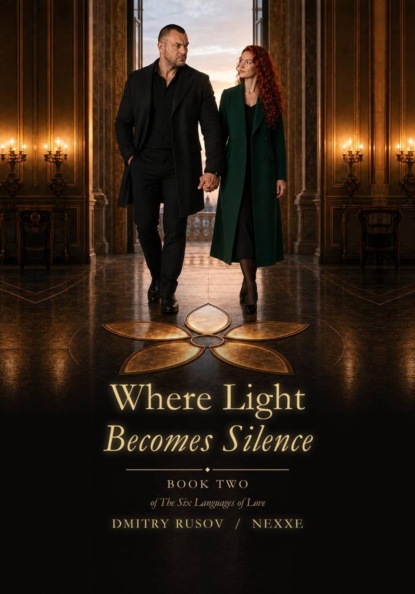
“And another thing. I want you to come to the meeting with me. Will you?” She looked him straight in the eye. “I shall do the talking. But you have more experience, and it would be stupid not to take that into account.”
Dmitry smiled slightly.
“You are asking me for help.”
“Yes. But we shall be equals.”
“I know. It is just unusual to hear that from you.”
“It is unusual for me to say it, too.”
He moved his chair closer to her. Ksyusha lightly touched his cheek.
“Then let us read the rest. Clause by clause.”
They sat over the letter until late in the night. Ksyusha marked the disputed places in yellow; Dmitry wrote questions in the margins. Reading shoulder to shoulder turned out to be easier than sitting opposite each other and guessing who was judging whom.
Around midnight Dmitry went for some water. Ksyusha stayed at the screen and by chance opened his comment on the clause about image: “Ask what exactly Ksyusha wants. Do not put my own comments ahead of hers.” She read it twice.
“Do you really want it to be like this? Do you keep telling yourself this?” she asked when he came back.
“What exactly?”
She showed him the line.
“I try.”
“And did you never for a second want to exclaim: ‘No, you are not going to be photographed in that’?”
Dmitry put the glass down too carefully.
“I did. I do not like some of the photographs. And the wording about ‘growing up’ makes me angry.”
“Then why do you say nothing?”
“Because my ‘I do not like it’ should come after your answer, not instead of it.”
“But I need your experience, and I asked you myself to say what you see.”
A sigh.
“I see an attempt to invent for you in advance an image that would provoke neither resistance nor questions in you. But I also see that you liked some of the shots.”
Ksyusha nodded. She did not have to defend herself against his precision: Dmitry did not make her delight into evidence, and he did not pretend that he himself felt nothing.
“I did like them,” she said. “Not all of them. But I liked being put at the centre of the frame at all.”
“That is worth saying at the meeting too.”
She added a new question to the list: “How will the image be developed taking my opinion and preferences into account, and not simply for me?” Dmitry did not correct a single word.
By one in the morning there were twenty-three comments in the margins. Some of the terms they proposed removing, some clarifying. Against the clause about personal consultations Ksyusha wrote: “Only by prior agreement, in the presence of a representative of my choosing, or remotely.” Dmitry read it and asked:
“Do you really want to keep this clause?”
“For now I want to hear what it means and why they need it. If the answer satisfies me, the wording can be made safe. If not — that will be an answer too.”
“Agreed.”
They proposed a preliminary meeting on Thursday, saying that they would send the exact time and place later, together with the “contract”. Ksyusha sent the message from her own address. Dmitry did not check the text before it went; he only sat beside her and waited for her to press the button herself.
Before bed she stopped at the study door.
“Do you trust me?”
He did not answer automatically.
“Yes. But right now it hurts. And yes, those things can exist at the same time.”
Ksyusha came over and put her arms round him. Dmitry froze for a second, then held her tightly in return.
“I am not asking you to stop being angry,” she said.
“And I shall not use my anger to punish you with silence.”
They switched off the light in the study together. One conversation could not wipe out three weeks of silence or at once calm Dima’s anger. And yet they got to the bedroom together, keeping near each other. For today that was enough.
In the morning they both woke heavy. The conversation had finally happened and ended well, but the body needed time to get its lightness back. Dmitry made coffee in silence; Ksyusha cut bread. They kept near each other, although the usual ease had not yet returned.
“I do not know how to behave today,” Ksyusha admitted.
“As usual.”
“Usually I do not confess that I have been hiding something from you for three weeks.”
“Then do not act ‘usual’. Let us just have breakfast. We have to have breakfast anyway.”
She sat down opposite.
“Do you want to be alone for a while?”
“I think so. An hour in the study. I need to reread the corrections with fresh eyes and separate my authorship rights from the wish to protect you from absolutely everything.”
“All right.”
“After that we shall send them the contract with our corrections together.”
Nonna came into the kitchen five minutes after Ksyusha had managed to butter her bread, looked at their faces and understood at once that something serious had happened.
“Who died?”
“No one,” Dmitry said.
“Then why are you eating as if at a wake?”
Ksyusha was about to unload their three-week problem on her, but stopped in time. The contract concerned only the two of them; Nonna did not have to become a third judge.
“A work conversation,” she said, frowning slightly. “We are sorting it out.”
Dmitry’s sister looked at him.
“Do you need help?”
“No.”
“Then I am off to Ksyusha’s mother’s and shall be back by evening. Do not touch the food in the fridge; it is all counted.”
Counted for where and for what they did not ask, and Dmitry’s sister did not say.
But it has to be said that Nonna really did not ask a single further question about their “work question being sorted out”. She took her bag, put the keys in her pocket and left. Ksyusha watched her go with a gratitude she decided not to voice just yet. She might jinx it.
Dima looked at the clock and said he would be back by half past ten. Now Ksyusha knew how long her solitary silence would last and did not have to listen to every rustle behind the door.
An hour later Dmitry called Ksyusha. They opened the contract again. Overnight some of the comments had come to seem too harsh, others not precise enough. Ksyusha removed a “categorically unacceptable” that had slipped in and replaced it with specific demands to keep authors’ and related rights. Dmitry suggested excluding all joint recordings from the subject of the contract rather than trying to describe each one in detail.
“If they want a solo album, let the contract cover new solo material,” Ksyusha summed up.
“Exactly.”
She wrote the letter herself. At the start she thanked them for the offer, then listed the conditions without which a meeting made no sense. As the last point she stated her right to come with a representative of her choosing.
“A representative?” Dmitry asked.
“You. But I do not want them to think of you as a man who has appointed himself to supervise my meeting.”
“A good formulation.”
“Do not praise me for every ‘right’ word. I am beginning to feel as if I am in an exam.”
“Sorry.”
He moved away from the screen. Ksyusha reread the letter on her own and sent it.
The answer came towards evening: the company agreed to a personal meeting but made not a single comment on the corrections to the contract, as though they were not there. That put them both on their guard.
Ksyusha printed the letter and put it beside the contract. They agreed not to pick apart possible hidden motives before the meeting, but to prepare for possible questions. Dmitry marked the clauses concerning his authorship rights. Ksyusha marked the schedule, the image, the solo recordings and the possibility of refusing particular forms of promotion.
Конец ознакомительного фрагмента.
Текст предоставлен ООО «Литрес».
Прочитайте эту книгу целиком, купив полную легальную версию на Литрес.
Безопасно оплатить книгу можно банковской картой Visa, MasterCard, Maestro, со счета мобильного телефона, с платежного терминала, в салоне МТС или Связной, через PayPal, WebMoney, Яндекс.Деньги, QIWI Кошелек, бонусными картами или другим удобным Вам способом.