Полная версия
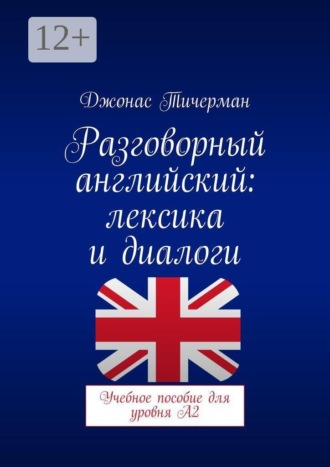
Разговорный английский: Лексика и диалоги. Учебное пособие для уровня A2

Разговорный английский: Лексика и диалоги
Учебное пособие для уровня A2
Джонас Тичерман
© Джонас Тичерман, 2026
ISBN 978-5-0070-4256-7
Создано в интеллектуальной издательской системе Ridero
Введение
Данное учебное пособие предназначено для изучающих английский язык на уровне A2 в соответствии с Общеевропейской шкалой языковой компетенции (CEFR). Его цель заключается в формировании базовых коммуникативных навыков, развитии способности понимать и использовать наиболее распространённые языковые конструкции, а также в расширении активного словарного запаса.
Основу пособия составляют диалоги, отражающие типичные ситуации повседневного общения. Такой формат позволяет изучающим язык видеть лексику и грамматические структуры в естественном контексте, что способствует более эффективному усвоению материала. Каждый раздел построен по единому принципу и включает диалоги, перевод на русский язык, тематический словарь, набор устойчивых выражений и систему практических заданий.
Особое внимание уделяется функциональной лексике и речевым моделям, которые наиболее часто используются в устной коммуникации. Отбор языкового материала основан на принципах частотности, практической применимости и соответствия уровню A2. Включённые выражения направлены на развитие навыков повседневного общения в различных жизненных ситуациях, включая бытовые, социальные и учебные контексты.
Постепенное усложнение заданий обеспечивает последовательное развитие речевых умений. Задания на ответы и самостоятельное построение высказываний способствуют активизации изученного материала и формированию навыков продуктивной речи.
Пособие может использоваться как для самостоятельного изучения, так и в рамках организованного учебного процесса. Оно ориентировано на учащихся, стремящихся развить уверенность в использовании английского языка в повседневных ситуациях и заложить основу для дальнейшего изучения языка на более высоких уровнях.
Meeting New People
Dialogue 1
Anna: Hi, is this seat free?
Mark: Yes, it is. Please sit down.
Anna: Thanks. My name is Anna.
Mark: Nice to meet you, Anna. I’m Mark.
Anna: Nice to meet you too. Are you new here?
Mark: Yes, it’s my first day at the office.
Anna: Welcome! Where are you from?
Mark: I’m from Poland. And you?
Anna: I’m from Spain, but I live here now.
Mark: That’s interesting. Do you like it here?
Anna: Yes, I do. The people are very friendly.
Translation
Анна: Привет, это место свободно?
Марк: Да. Пожалуйста, садитесь.
Анна: Спасибо. Меня зовут Анна.
Марк: Приятно познакомиться, Анна. Я Марк.
Анна: Мне тоже приятно. Вы здесь новенький?
Марк: Да, это мой первый день в офисе.
Анна: Добро пожаловать! Откуда вы?
Марк: Я из Польши. А вы?
Анна: Я из Испании, но сейчас живу здесь.
Марк: Интересно. Вам здесь нравится?
Анна: Да. Люди здесь очень дружелюбные.
Dialogue 2
Tom: Excuse me, are you in this class?
Lina: Yes, I am. Are you new?
Tom: Yes, today is my first lesson.
Lina: Welcome! I’m Lina.
Tom: Hi Lina, I’m Tom.
Lina: Where are you from, Tom?
Tom: I’m from Italy.
Lina: Oh, nice! Do you speak English every day?
Tom: Not really, but I want to practice more.
Translation
Том: Извините, вы в этом классе?
Лина: Да. Вы новенький?
Том: Да, сегодня мой первый урок.
Лина: Добро пожаловать! Я Лина.
Том: Привет, Лина, я Том.
Лина: Откуда ты, Том?
Том: Я из Италии.
Лина: О, здорово! Ты говоришь по-английски каждый день?
Том: Не совсем, но я хочу больше практиковаться.
Key Vocabulary and Expressions
is this seat free — это место свободно
please sit down — пожалуйста, садитесь
nice to meet you — приятно познакомиться
nice to meet you too — мне тоже приятно
are you new here — вы здесь новенький
first day — первый день
welcome — добро пожаловать
where are you from — откуда вы
I’m from — я из
I live here now — я сейчас живу здесь
do you like it here — вам здесь нравится
people are friendly — люди дружелюбные
excuse me — извините
are you in this class — вы в этом классе
first lesson — первый урок
do you speak English — вы говорите по-английски
not really — не совсем
I want to practice — я хочу практиковаться
every day — каждый день
Useful Patterns
Nice to meet you — Приятно познакомиться
Where are you from — Откуда вы
Are you new here — Вы здесь новенький
I’m from — Я из
Do you like it here — Вам здесь нравится
I want to practice more — Я хочу больше практиковаться
This is my first day — Это мой первый день
Practice: Answer the Questions
Where are you from?
Are you new in your city or job?
Do you like meeting new people?
What do you usually say when you meet someone?
Do you speak English every day?
Where do you meet new people?
Model Answers
I am from Kazakhstan. I live in the capital city. I like my city very much.
Yes, I am new at my job. This is my first month. I meet new people every day.
Yes, I like meeting new people. It is interesting and useful. I learn new things.
I usually say hello and my name. Then I ask where the person is from. I try to be friendly.
I do not speak English every day. But I try to practice often. I watch videos and speak with friends.
I meet new people at work and in classes. Sometimes I meet people online. It is easy and fun.
Expand Your Answer
Try to give a longer answer about where you meet new people and what you usually say. Use at least 5 words from the vocabulary list.
Example:
I usually meet new people at work and in English classes. I always say «nice to meet you» and ask «where are you from.» I try to be friendly and ask simple questions. I also want to practice English every day, so I speak as much as I can.
Practice: Complete the Sentences
Nice to ______ you.
Where are you ______?
This is my first ______.
I want to ______ more.
Are you ______ here?
Introducing Yourself
Dialogue 1
Emma: Hi! Let me introduce myself. My name is Emma.
Daniel: Hi Emma, nice to meet you. I’m Daniel.
Emma: Nice to meet you too. What do you do?
Daniel: I’m a teacher. And you?
Emma: I’m a student. I study business.
Daniel: That’s interesting. Where do you study?
Emma: I study at a college in the city center.
Daniel: Do you like your course?
Emma: Yes, I like it a lot. It’s very useful.
Translation
Эмма: Привет! Позволь представиться. Меня зовут Эмма.
Даниел: Привет, Эмма, приятно познакомиться. Я Даниел.
Эмма: Мне тоже приятно. Чем ты занимаешься?
Даниел: Я учитель. А ты?
Эмма: Я студентка. Я изучаю бизнес.
Даниел: Интересно. Где ты учишься?
Эмма: Я учусь в колледже в центре города.
Даниел: Тебе нравится твой курс?
Эмма: Да, очень нравится. Он очень полезный.
Dialogue 2
Alex: Hello, my name is Alex.
Sara: Hi Alex, I’m Sara. Nice to meet you.
Alex: Nice to meet you too. Are you working or studying?
Sara: I’m working. I’m an office manager.
Alex: Oh, that’s great. Do you like your job?
Sara: Yes, I do. It’s busy but interesting.
Alex: Where do you work?
Sara: I work in a small company near my home.
Translation
Алекс: Здравствуйте, меня зовут Алекс.
Сара: Привет, Алекс, я Сара. Приятно познакомиться.
Алекс: Мне тоже приятно. Ты работаешь или учишься?
Сара: Я работаю. Я офис-менеджер.
Алекс: Здорово. Тебе нравится твоя работа?
Сара: Да. Она занятая, но интересная.
Алекс: Где ты работаешь?
Сара: Я работаю в небольшой компании рядом с домом.
Key Vocabulary and Expressions
let me introduce myself — позвольте представиться
my name is — меня зовут
nice to meet you — приятно познакомиться
what do you do — чем вы занимаетесь
I’m a student — я студент
I’m a teacher — я учитель
I study business — я изучаю бизнес
where do you study — где вы учитесь
in the city center — в центре города
do you like your course — вам нравится ваш курс
very useful — очень полезный
are you working or studying — вы работаете или учитесь
I’m working — я работаю
office manager — офис-менеджер
do you like your job — вам нравится ваша работа
busy but interesting — занятая, но интересная
where do you work — где вы работаете
small company — небольшая компания
near my home — рядом с домом
Useful Patterns
Let me introduce myself — Позвольте представиться
My name is — Меня зовут
What do you do — Чем вы занимаетесь
I’m a… — Я…
Where do you work — Где вы работаете
Do you like your job — Вам нравится ваша работа
I study at — Я учусь в
Practice: Answer the Questions
What is your name?
What do you do?
Where do you work or study?
Do you like your job or course?
What do you study?
Do you work in a big or small company?
Model Answers
My name is Julia. I am a student. I study languages at a university.
I am a designer. I work in a small company. My job is creative and interesting.
I study at a college in the city center. It is a good place with friendly teachers.
Yes, I like my course. It is useful and I learn new things every day.
I study marketing. It is interesting and practical. I want to work in this field.
I work in a small company. It is comfortable and not very stressful.
Expand Your Answer
Try to give a longer introduction about yourself. Talk about your name, job or studies, and what you like. Use at least 5 words from the vocabulary list.
Example:
Hello, my name is Anna. I am a student and I study business at a college in the city center. I like my course because it is very useful. I also work part-time in a small company. It is busy but interesting.
Practice: Complete the Sentences
My name ______ Anna.
I ______ a student.
I study ______ a university.
I work ______ a company.
My job is ______ but interesting.
Talking About Your Family
Dialogue 1
Olga: Do you have a big family?
Peter: Yes, I do. I have two sisters and one brother.
Olga: That’s nice. Are they older or younger than you?
Peter: My sisters are older, and my brother is younger.
Olga: Do you live with your family?
Peter: No, I don’t. I live alone, but I visit them often.
Olga: Where do they live?
Peter: They live in a small town near the capital.
Olga: Do you spend time together?
Peter: Yes, we meet on weekends and holidays.
Translation
Ольга: У тебя большая семья?
Питер: Да. У меня две сестры и один брат.
Ольга: Здорово. Они старше или младше тебя?
Питер: Сестры старше, а брат младше.
Ольга: Ты живёшь с семьёй?
Питер: Нет. Я живу один, но часто их навещаю.
Ольга: Где они живут?
Питер: Они живут в маленьком городе рядом со столицей.
Ольга: Вы проводите время вместе?
Питер: Да, мы встречаемся по выходным и праздникам.
Dialogue 2
Maria: Tell me about your family.
John: Sure. I have a wife and a son.
Maria: How old is your son?
John: He is five years old.
Maria: That’s great. Do you spend a lot of time together?
John: Yes, we do. We play and go to the park.
Maria: Do you have parents nearby?
John: Yes, they live close to us. We see them every week.
Translation
Мария: Расскажи мне о своей семье.
Джон: Конечно. У меня есть жена и сын.
Мария: Сколько лет твоему сыну?
Джон: Ему пять лет.
Мария: Здорово. Вы проводите много времени вместе?
Джон: Да. Мы играем и ходим в парк.
Мария: Твои родители живут рядом?
Джон: Да, они живут недалеко. Мы видимся каждую неделю.
Key Vocabulary and Expressions
big family — большая семья
I have two sisters — у меня две сестры
one brother — один брат
older than me — старше меня
younger than me — младше меня
live with my family — жить с семьёй
live alone — жить одному
visit them often — часто навещать их
small town — маленький город
near the capital — рядом со столицей
spend time together — проводить время вместе
on weekends — по выходным
on holidays — в праздники
tell me about your family — расскажи о своей семье
wife and son — жена и сын
years old — лет
a lot of time — много времени
go to the park — ходить в парк
live close to us — жить рядом с нами
every week — каждую неделю
Useful Patterns
Do you have a big family — У тебя большая семья
I have… — У меня есть…
They are older/younger than me — Они старше/младше меня
Do you live with your family — Ты живёшь с семьёй
We spend time together — Мы проводим время вместе
Tell me about your family — Расскажи о своей семье
How old is… — Сколько лет…
Practice: Answer the Questions
Do you have a big or small family?
How many people are in your family?
Do you have brothers or sisters?
Do you live with your family?
How often do you see your family?
What do you do together?
Model Answers
I have a small family. There are three people in my family.
I have one brother and no sisters. He is younger than me.
I live with my family. We have a nice home together.
I see my family every day. We spend time together in the evening.
We like to watch movies and have dinner together. Sometimes we go for a walk.
Expand Your Answer
Try to talk about your family in more detail. Say how many people are in your family, where they live, and what you do together. Use at least 5 words from the vocabulary list.
Example:
I have a big family. I have two sisters and one brother. My parents live in a small town near the city. I don’t live with my family, but I visit them often. We spend time together on weekends and holidays.
Daily Routine
Dialogue 1
Kate: What time do you usually wake up?
Leo: I wake up at 7 a.m. on weekdays.
Kate: Do you get up right away?
Leo: Not always. Sometimes I stay in bed for a few minutes.
Kate: What do you do after that?
Leo: I take a shower and have breakfast.
Kate: Do you go to work early?
Leo: Yes, I leave home at 8 a.m.
Kate: How do you get to work?
Leo: I take the bus. It takes about 30 minutes.
Translation
Кейт: Во сколько ты обычно просыпаешься?
Лео: Я просыпаюсь в 7 утра по будням.
Кейт: Ты сразу встаёшь?
Лео: Не всегда. Иногда я лежу в постели несколько минут.
Кейт: Что ты делаешь после этого?
Лео: Я принимаю душ и завтракаю.
Кейт: Ты рано идёшь на работу?
Лео: Да, я выхожу из дома в 8 утра.
Кейт: Как ты добираешься до работы?
Лео: Я еду на автобусе. Это занимает около 30 минут.
Dialogue 2
Nina: What do you do in the evening?
Sam: I usually come home at 6 p.m.
Nina: Do you cook dinner?
Sam: Yes, I cook or order food.
Nina: What do you do after dinner?
Sam: I watch TV or read a book.
Nina: Do you go to bed late?
Sam: No, I go to bed around 11 p.m.
Translation
Нина: Что ты делаешь вечером?
Сэм: Я обычно прихожу домой в 6 вечера.
Нина: Ты готовишь ужин?
Сэм: Да, я готовлю или заказываю еду.
Нина: Что ты делаешь после ужина?
Сэм: Я смотрю телевизор или читаю книгу.
Нина: Ты поздно ложишься спать?
Сэм: Нет, я ложусь примерно в 11 вечера.
Key Vocabulary and Expressions
wake up — просыпаться
get up — вставать
on weekdays — по будням
right away — сразу
stay in bed — оставаться в постели
a few minutes — несколько минут
take a shower — принимать душ
have breakfast — завтракать
leave home — выходить из дома
go to work — идти на работу
get to work — добираться до работы
take the bus — ехать на автобусе
it takes 30 minutes — это занимает 30 минут
come home — приходить домой
in the evening — вечером
cook dinner — готовить ужин
order food — заказывать еду
after dinner — после ужина
watch TV — смотреть телевизор
read a book — читать книгу
go to bed — ложиться спать
Useful Patterns
What time do you usually… — Во сколько ты обычно…
I wake up at… — Я просыпаюсь в…
After that, I… — После этого я…
I leave home at… — Я выхожу из дома в…
It takes… minutes — Это занимает… минут
In the evening, I… — Вечером я…
I go to bed at… — Я ложусь спать в…
Practice: Answer the Questions
What time do you wake up?
What do you do in the morning?
How do you get to work or study?
What do you do in the evening?
Do you cook dinner?
What time do you go to bed?
Model Answers
I wake up at 7:30 a.m. on weekdays. I get up and take a shower. Then I have breakfast.
In the morning, I drink coffee and check my phone. Then I go to work.
I get to work by bus. It takes about 20 minutes.
In the evening, I come home and relax. I watch TV or read a book.
Sometimes I cook dinner. Sometimes I order food. It depends on my day.
I usually go to bed at 11 p.m. I try not to stay up late.
Expand Your Answer
Try to describe your full daily routine from morning to evening. Use at least 5 words from the vocabulary list.
Example:
I wake up at 7 a.m. and get up right away. I take a shower and have breakfast. Then I leave home and go to work by bus. It takes 25 minutes. In the evening, I come home, cook dinner, and watch TV. I go to bed at 11 p.m.
Free Time and Hobbies
Dialogue 1
Lena: What do you do in your free time?
Chris: I like to play sports and listen to music.
Lena: What kind of sports do you play?
Chris: I play football and sometimes tennis.
Lena: That’s great. Do you play every week?
Chris: Yes, I play football with my friends on weekends.
Lena: And what music do you like?
Chris: I like pop and rock music.
Lena: Do you go to concerts?
Chris: Not often, but I really enjoy them.
Translation
Лена: Что ты делаешь в свободное время?
Крис: Мне нравится заниматься спортом и слушать музыку.
Лена: Каким спортом ты занимаешься?
Крис: Я играю в футбол и иногда в теннис.
Лена: Здорово. Ты играешь каждую неделю?
Крис: Да, я играю в футбол с друзьями по выходным.
Лена: А какую музыку ты любишь?
Крис: Мне нравится поп и рок.
Лена: Ты ходишь на концерты?
Крис: Не часто, но мне это очень нравится.
Dialogue 2
Maya: Do you have any hobbies?
Ben: Yes, I do. I like reading and cooking.
Maya: What do you like to read?
Ben: I read books about travel and history.
Maya: That sounds interesting. Do you cook every day?
Ben: Not every day, but I cook on weekends.
Maya: What do you usually cook?
Ben: I like to cook pasta and simple dishes.
Translation
Майя: У тебя есть хобби?
Бен: Да. Мне нравится читать и готовить.
Майя: Что ты любишь читать?