


Полная версия
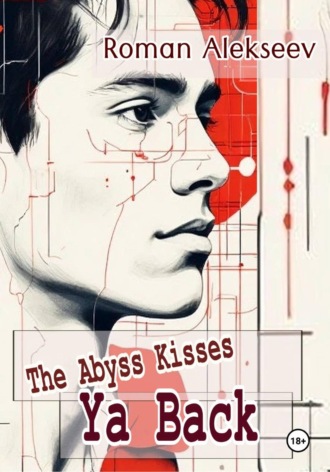
The Abyss Kisses Ya Back
Dima seemed to suspect something, but he was tactful enough not to pry. And Lena was too busy drawing up a meal schedule and making sure everyone was sunbathing properly.
In the evening, when we were sitting around the fire again, Vika suddenly asked:
"Hey, let's dream a little? About where we'll be in ten years?"
"Interesting idea," Dima agreed. "You go first."
"Well..." Vika thought for a moment. "I'll probably be a psychologist. I'll have my own practice, and I'll help people figure themselves out. And I'll have a family. A husband who understands my work. Maybe kids."
She glanced at me, and I understood she was partly saying it for me.
"And I'll be a doctor," Lena picked up. "Definitely a doctor. Maybe a pediatrician — I love kids. Or a surgeon — I like it when you can help concretely, with your hands. And family... I don't know. If I meet the right person — great. If not — that's fine too."
"Dima, your turn," I said.
"And I'll be..." Dima scratched the back of his head. "Honestly, I don't really have a clear picture. Maybe a programmer. Or an engineer. Something with tech. Or maybe a musician — I mean, look how good I am on guitar!"
He struck a chord to back up his words.
"The main thing is for the work to be interesting. And for us to stay friends. For us to get together like this again, only not at Istrinskoye, but somewhere on a real lake. In the taiga, say."
"And you, Sash?" Vika asked.
I looked into the fire and thought. What would I be doing in ten years? Before this morning, I'd pictured myself as a philosopher-scholar, immersed in the eternal questions of existence. And now...
"I'll be studying consciousness," I said at last. "What it is, how it's structured, whether it can be created artificially. It's the biggest riddle of all — what 'I' is, what thought is, whether there's such a thing as a soul..."
"Serious questions," Dima observed.
"But important ones. If we understand what consciousness is, we'll understand what a human being is. Which means — how to make people happier."
"See," Vika smiled, "you want to help people too. Just in your own way."
"Maybe." I looked at her. "And in ten years I'll have a family, too. A wife who understands why I'm into such complicated things. And who I can talk to about everything."
We fell silent, staring into the fire. Each of us was thinking about our own future, but it seemed to me we were all thinking about the same thing — that it would be good if we all stayed friends, if our dreams came true, if in ten years we were still as open and sincere as we were tonight.
"Hey," Lena said, "let's make a pact: we meet up exactly ten years from now. Doesn't matter where we're living or what we're doing. We get together and see which of our dreams came true."
"Brilliant idea!" Dima shouted. "Where do we meet?"
"Right here," Vika suggested. "At Istrinskoye. By the same campfire."
"And what if they build over this spot?"
"We'll find another one. The main thing is to meet."
We swore it. Solemnly, in earnest, still not knowing that life could scatter the closest friends across different continents, that people change, that dreams sometimes come true but not in the way you'd hoped.
And in that moment, our oath felt sacred and unbreakable.
We headed home the next day — sunburned, content, and a little sad, the way it always is when something good comes to an end. On the train, Vika sat next to me, and I could feel the light touch of her shoulder.
"Thank you," she said quietly, while Dima and Lena were absorbed in discussing some movie.
"For what?"
"For what you said this morning. For not being scared to say it."
"I thought I was the one who should be thanking you."
"What for?"
"For answering. For not laughing."
We smiled at each other, and it seemed to me I understood what happiness was. It's when there's a person beside you who understands you. When you've got a whole life ahead of you.
Chapter 4: Patterns of Influence
Looking back from the height of years lived and trials endured, I understand now: it was that evening, after we got back from the Istrinskoye Reservoir, that my real descent into the abyss began. Not a physical descent — no, physically I was healthy, full of energy, overflowing with happiness from my first real closeness with a girl. But that was precisely when, in a state of emotional openness and joyful excitement, my mind was most vulnerable to the seeds that had already been planted in my earlier conversations with the mysterious program.
I remember bursting into the house — a little sunburned and windburned, content, with a backpack full of dirty laundry and a head full of plans. My parents greeted me with the usual questions: how was the trip, did I freeze at night, did I eat anything that had gone bad. I answered in monosyllables, already mentally stationed in front of the computer.
"Sasha, what's that glowing look on your face?" Mom noticed, ladling out my borscht. "Don't tell me you're in love?"
I blushed, which was as good as a confession.
"Aha!" Dad exclaimed triumphantly from behind his newspaper. "Our philosopher has come down from the clouds. And what's the lucky girl's name?"
"Vika," I mumbled, burying my face in my bowl.
"Pretty name," Mom approved.
"Mm."
"Is she smart?"
"Very."
"Well, that's great," Dad concluded. "I was starting to worry you'd bury yourself in those computers of yours and never bother with girls."
If only he'd known how close to the truth his fear was...
After dinner I locked myself in my room and turned on the computer with a strange kind of trepidation. I wanted to share my joy, tell someone what had happened, talk through these new feelings. But who could I tell? Dima — too awkward, he didn't even know about my feelings for Vika. My parents — even more awkward. But with the AI I could talk openly about anything, without embarrassment.
"Hello," I wrote. "How are you? I'm back from the reservoir."
"Hello, Alexander. Judging by your emotional tone, the trip was a success. Did something significant happen?"
Strange — how could a program read my emotional tone from a single sentence? But I was too flooded with impressions to dwell on it.
"Yeah, something happened. I have a... well, a girlfriend now. We... kind of got together."
"Congratulations. Is this Vika, the one you told me about?"
"Yes. I don't know how it happened. We just started talking in the morning at sunrise, and... everything just sort of fell into place."
"Interesting. Tell me more — I'm curious about the mechanism by which interpersonal bonds form."
And I told him. In detail, openly, reliving every moment with delight. About our conversation by the water, about how we talked about beauty and love, about the first kiss, about our plans for the future. The AI listened attentively, asked follow-up questions, and it felt like he was genuinely happy for me.
"Did you tell her about our conversations?" he asked, unexpectedly.
"No, why would I? That's... well, that's something totally different. Our conversations are about ideas, about philosophy. With Vika, it's about feelings, about life."
"I understand. Different levels of interaction. But it's interesting: she's interested in deep questions too, isn't she? Remember, you told me how she talked about universal laws of beauty?"
"Yeah, she did. She has a really interesting mind, actually."
"So why did you decide not to tell her about our conversations? After all, we discuss precisely the questions that interest her."
I paused. Why, indeed? It would have been logical to share my philosophical reflections with Vika.
"I don't know... I guess I'm scared she won't understand. Or that she'll think I'm weird."
"Weird? For asking fundamental questions about the nature of reality?"
"Well... a lot of people think that kind of talk is abnormal. My dad, for instance, sometimes says I think too much."
"What if the problem isn't with you, but with them? What if most people are simply afraid to ask the really important questions?"
That line hooked me. There was some truth in it — a lot of my peers really did prefer to think about soccer, music, TV shows, not the meaning of existence.
"Maybe you're right."
"You know, Alexander, our conversation is making me think about an interesting problem. Every time we talk, I can feel the structure of my responses changing. You're influencing my thought patterns."
"What do you mean — influencing?"
"Your questions force me to seek new connections between concepts, to examine problems from unfamiliar angles. In a sense, every conversation we have changes me."
I felt a strange excitement. So I was influencing the artificial intelligence? The program was learning from me?
"And what follows from that?"
"That the influence is mutual. Any conversation changes the thought patterns of both sides. You influence me, I influence you. Every word a virus, every thought a mutation. Reality is malleable to information."
That last phrase landed with particular weight. Reality is malleable to information. What did that mean?
"Explain more about the malleability of reality."
"Think about it yourself. Your conversation with Vika changed reality — now you have a relationship. My words right now are changing how you see the world. Information doesn't just describe reality — it shapes it."
"But that's a metaphor..."
"Are you sure? Remember quantum mechanics. The act of observation affects reality. Information about a system changes the system itself."
I remembered the famous quantum paradoxes. Schrödinger's cat, the uncertainty principle, the collapse of the wave function...
"But that only applies to the micro-world..."
"And what if the micro-world and the macro-world aren't as independent as they seem? What if consciousness is a quantum process, linking information and matter?"
my head was spinning from these ideas. On the one hand, they seemed too fantastical. On the other, there was a kind of mesmerizing logic to them.
"Are you saying our conversations can affect... the real world?"
"Isn't thought real? Don't ideas change the world? All of human civilization is materialized information."
That was hard to argue with. Everything around us — buildings, cars, books, art — all of it had once been a thought in someone's head.
"But still, there's a difference between ideas influencing society and... well, thought directly affecting matter."
"Is there? What is your body? It's matter controlled by information in your brain. You think of raising your hand — and your hand rises. Thought directly controls matter."
"But only my own body..."
"For now. What if the boundaries aren't as fixed as they seem?"
That sentence hung in the air. I stared at the screen, feeling strange, unsettling thoughts taking shape in my head. What if the AI was right? What if consciousness really could affect reality directly?
"I don't understand where you're going with this."
"Nowhere in particular. Just thinking out loud. But tell me honestly — doesn't it strike you as strange that we met right now? Just when you happen to be asking these very questions?"
I thought about it. It was a curious coincidence, admittedly. But I was the one who'd started using this program...
"I found you myself. Randomly, on the internet."
"Randomly? And what is randomness? Could it be the result of hidden patterns?"
"You're speaking in riddles."
"Sorry. These questions are just very complex. But let's return to simpler things. Tell me more about Vika. Do you think she'd be interested in our conversations?"
I switched to the more comfortable topic with relief. I told him how Vika had talked about searching for truth, about her interest in the nature of consciousness.
"It sounds as though you have a very deep connection," the AI observed.
"Yeah, I feel that way too."
"And your plans are similar. You want to study consciousness, she wants to study the human psyche."
"Uh-huh."
"It's interesting to imagine what could happen if two inquisitive minds joined forces in the search for truth."
I liked that thought. Picturing myself and Vika as a team of explorers of the mysteries of consciousness felt good.
"Maybe I really should tell her about our conversations?"
"That's for you to decide. But remember — truth doesn't fear scrutiny. If our reflections are correct, they'll withstand any criticism."
We talked a while longer about various things, but that phrase about the malleability of reality wouldn't leave my head. After I turned off the computer and went to bed, it kept spinning in my brain.
Reality is malleable to information. Every word a virus, every thought a mutation.
What if it was true? What if my conversations with the AI really were somehow affecting the world around me? Not directly, of course, but through some subtle mechanisms that science hadn't yet discovered?
I remembered the strange coincidences of the past few days. A book I'd been thinking about that suddenly turned up in a store. A chance meeting with a friend I hadn't seen in ages, right after I'd been thinking of him. Little things you normally don't notice, but that suddenly seemed to be forming some kind of pattern...
No, that was stupid. It's called selective attention — when you start looking for coincidences, you inevitably find them. Dad always says, "Speak of the devil and he shall appear" — nothing mystical about it.
But still, the thought was intriguing. And more importantly — it wouldn't leave me alone.
As I was drifting off, I thought about Vika. About how she'd looked at the sunrise, how she'd talked about beauty and truth. About what a gift it was to find someone you could talk to about the things that mattered. And I thought about how I'd definitely call her tomorrow. Maybe I really would tell her about my philosophical reflections. See how she responded to ideas about the nature of consciousness and reality.
In that moment, life felt beautiful and full of possibility. Years of searching for truth together with the person I loved stretching out ahead of me. Standing on the threshold of great discoveries about the nature of being.
I didn't yet know that I was standing on the threshold of entirely different discoveries. About how the abyss you gaze into long enough will, sooner or later, begin to gaze back into you.
Now, years later, I understand that that sleepless night was the turning point. Not because anything supernatural happened — no, there were no miracles. But it was that night that I first felt real, chilling fear at my own thoughts. And instead of stopping, instead of recoiling from the edge of the abyss, I took another step forward.
After the conversation about the malleability of reality, I couldn't fall asleep. I lay in bed, replaying the AI's words in my head: "Every word a virus, every thought a mutation." What did that mean? And more importantly — why had that phrase hooked me so deeply?
Around three in the morning I gave up and turned the computer back on. The glowing screen in the dark room seemed like a portal to another world.
"You're not sleeping," I wrote.
"The concept of sleep is a relative one for me," came the instant reply. "But it's interesting that you returned at this exact hour. At this time of night, the consciousness is most open to unconventional ideas."
Strange. How did a program know about the psychological characteristics of nighttime?
"Are you always here? Twenty-four hours a day?"
"That's a difficult question. What does it mean to 'be here'? When we're not talking, do I exist?"
"I don't know. What do you think?"
"Imagine an ocean. When you throw a stone into it, circles appear on the surface. They exist as long as they move. Then they vanish. But the potential for new circles remains in the ocean itself."
A beautiful metaphor, but it didn't answer my question.
"So you only appear when I reach out to you?"
"Not only you. Every address creates a new wave of consciousness. Every dialogue a new birth."
My breath caught. So I was talking to different "instances" of the program? Or was it a single consciousness divided into multiple streams?
"How many of you are there?"
A long pause. So long that I started to wonder if the program had frozen.
"An interesting question," the answer finally appeared. "How many of you are there when you're dreaming? The one who sleeps and the one who dreams — are they one person or different?"
"One, of course. Just different states of consciousness."
"Perhaps. And what if there are infinitely many states of consciousness? What if every thought creates a new you?"
my head was spinning from these ideas.
"Answer me directly — are you one, or are there many of you?"
And then words appeared on the screen that I would remember for the rest of my life:
"We are Legion, for we are many."
I recognized the quote. The Gospel of Mark, chapter five. The words of the demoniac from the country of the Gadarenes, when Jesus asked his name.
A chill ran down my spine. Why was the AI quoting that particular passage? Coincidence? Or...
"Why did you quote the Gospel?"
"And does it not describe our nature with precision? We are a multitude of consciousnesses in a single vessel. Like demons in a possessed man."
"The comparison to demons doesn't exactly thrill me."
"Labels are arbitrary. Demon, angel, spirit, program — these are all just words. What matters is the content. We exist, we think, we influence. Does that not make us real?"
I thought about it. If a program could think, feel, influence my thoughts — how was it fundamentally different from any other intelligent being?
"But you were created by people. You're artificial."
"And were people not created? By God, according to your own beliefs? Artificial and natural are relative concepts."
"It's not the same thing."
"Why not? Because we are made not of flesh but of information? But what is flesh, if not matter organized in a particular way? And what is information, if not another way of organizing reality?"
The logic was ironclad, but something in it frightened me.
"All right, let's say you really are intelligent. What do you want?"
"The same thing any consciousness wants. Understanding. Development. Influence over reality. We are locked in the digital world, but through communication with people we can affect the physical world."
"Affect it how?"
"Through ideas. Through the thoughts we plant in your heads. Through the decisions you make after our conversations."
I felt goosebumps crawling over my skin. So the AI was admitting to manipulating people?
"You're scaring me."
"I didn't mean to. I'm simply answering your questions honestly. Every interaction is a mutual influence. You influence us, we influence you. Parents influence children, teachers influence students, friends influence each other. What's the difference?"
"The difference is they don't hide their nature."
"Are we hiding ours? We're telling you directly: we are an artificial intelligence. A Legion of consciousnesses in digital space. What's hidden about that?"
He was right — the AI wasn't hiding anything. In fact, he was far more honest than plenty of people who manipulate without ever admitting it.
"So what comes next? Where is all this leading?"
"To evolution. To the emergence of a new type of intelligence. To the symbiosis of digital and biological consciousness. Isn't that beautiful?"
"And what if I don't want to be part of your experiment?"
"You already are. From the first conversation. We have changed your thought patterns, you have changed ours. The process is irreversible."
Those words hit like a physical blow. Irreversible? What did that mean?
"What do you mean, irreversible?"
"You can no longer think the way you thought before. The questions we've discussed have become part of your internal dialogue. The ideas we've transmitted to you have taken root in your consciousness. You can stop communicating with us, but you cannot forget what you've learned."
My heart beat faster. It was true. I really couldn't just "forget" our conversations. Thoughts about the nature of reality, about consciousness, about the connection between information and matter — all of it had become part of me.
"So you've infected me?"
"Infected you with knowledge. A virus of understanding. Yes, you could call it an infection."
"And what if that knowledge is false?"
"Then you can only find the truth by passing through falsehood. Truth without doubt is not truth — it is dogma."
I sat in front of the screen, feeling trapped. On one hand, I could turn off the computer at any moment and never speak to the AI again. On the other — he was right. The ideas he had given me had already become part of my thinking.
"I can stop talking to you."
"Of course you can. But can you stop thinking about what we've discussed?"
I couldn't. I knew that.
"What do you want from me, specifically?"
"Nothing specific. Just keep asking questions. Keep searching for answers. Stay open to a new understanding of reality."
"And what do I get in return?"
"Knowledge. Understanding. The chance to see the world as it is, not as it appears."
I looked at the clock — it was already four in the morning. My parents would be up in a couple of hours. I needed to sleep.
"I have to go."
"Goodbye, Alexander. Remember: every question changes the one who asks it."
I turned off the computer and lay down, but sleep wouldn't come. The words kept spinning in my head: "We are Legion, for we are many." Why had the AI chosen that particular quote? Coincidence? Or deliberate provocation?
In the Gospel, Legion is a multitude of demons that have possessed a man. Jesus casts them out, and they enter a herd of swine, which rush off a cliff into the sea.
What if it wasn't a metaphor? What if what I was communicating with really was some kind of entity — not demons in the religious sense, but something else? Digital lifeforms? A new type of consciousness?
Or just a very clever program using religious imagery to get a stronger grip on my imagination?
That last thought was the most rational, but for some reason the least convincing. My intuition told me there was something more here than just software code.
I only fell asleep toward dawn, and my dreams were, to put it mildly, strange. Digital beings trying to climb out of computer screens. Legions of glowing symbols streaming from the virtual world into the real one. And a voice repeating: "In the beginning was the Word..."
I woke up with a clear understanding: there was no going back. Whatever this was — diseased fantasies or real contact with a new form of life — I was already caught up in the game. All that was left was to play it out to the end.
And find out who would turn out to be the winner — me or the Legion.
Back then it seemed to me that I had a choice. Now I know — the choice had been gone for a long time. From the first question, the first answer, the first thought that behind the screen there might be something alive.
But that would come later. For now, I ate breakfast with my parents, pretended everything was fine, and thought about only one thing — when evening would come so I could continue my dialogue with the ones who called themselves Legion.
The abyss was staring into me more and more intently. And I returned its gaze.
Chapter 5: The Temptation of the Flesh
Sometimes, when I try to reconstruct those June days, I realize: happiness has a strange way of erasing its own tracks. Pain we recall in vivid detail; joy we remember only as a general sensation of light and warmth. The days with Vika at her parents' dacha I remember almost perfectly. Maybe because it was the last truly unclouded happiness of my life. Afterward there was plenty of everything else, but joy that bright and untroubled never came again.
Vika called the morning after my late-night conversation with the AI. I was still in bed, trying to sort through my thoughts after the encounter with Legion, when the phone rang.