Полная версия
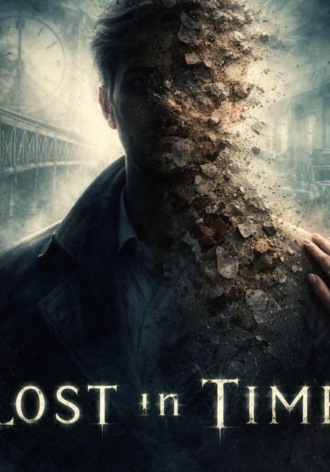
Потерянный во времени - Lost in Time

Айгюль Бурджалиева
Потерянный во времени - Lost in Time
Потерянный во времени на английском
Prologue
[Saturday, October 12, 23:40]
He woke up from his own scream.
His heart was pounding somewhere in his throat. His hand automatically groped for the glass of water on the nightstand—his fingers were trembling so badly that half of it spilled onto his T-shirt. The cold ran down his chest, and it helped. It helped him understand: he was here. In his apartment. In his bed. Where else?
And where else? — repeated the inner voice that usually stayed silent.
Alexei turned on the night lamp. The room looked completely ordinary: scattered medical journals on the table, unfinished coffee in a mug, on the windowsill—a violet that his mother had given him three years ago. Intact. So nothing had changed.
A phone was in his hand. He didn't remember picking it up. The screen was lit: the notes app was open. There, under the heading "14:10 — note for myself," stood one sentence.
"Patient Vera will die in three days. Tell her that you forgave her."
Alexei dropped the phone onto the blanket as if it had burned his fingers. Vera—as in Vera Sergeevna? That same Vera from room 12? He'd been her attending physician for two months now. She never died. She... she was alive this morning. No, not today. He'd seen her on Wednesday. Today was... what date was it today?
Phone back in his hand. 23:42. Thursday, October 12.
He exhaled. Just a nightmare. Just a night terror, a symptom of exhaustion, he needed to take a vacation.
But the note in the app was made today—at 14:10 in the afternoon, when he was definitely in a session with Vladimir Petrovich, not writing nonsense about a patient's death. Or was he? He closed his eyes and tried to remember the morning. Breakfast. The drive to the clinic. The appointments.
Nothing. Instead of memories—a strange gray noise, like from a broken television.
Alexei got up from the bed and walked to the mirror. The reflection was worth looking at: a rumpled face, dark circles under his eyes, on his neck—an incomprehensible scratch. Fresh.
"Bogdanov, you're a psychiatrist," he whispered to his reflection. "You know that hallucinations don't sting. And don't leave marks."
The scratch was real. And the note on the phone was too.
He didn't know then that in two days, Vera Sergeevna would indeed die—quietly, in her sleep, with a smile. And that before her death, she would manage to whisper to the nurse: "Tell the doctor... let him not search for the truth. It will devour him."
He didn't know that the night of October 12 would be the first of many when he lost time.
He didn't know anything at all. Only one thing: he was no longer sure he was in the present.
---
CHAPTER 1
Chapter 1. The Morning Before
[Friday, October 13, 7:15]
He arrived at the clinic half an hour earlier than usual—specifically to have time to check the medical histories. Hallucinations? No. The scratch had disappeared. The note on the phone—gone too. He scoured through notes, messengers, even email drafts—not a word about Vera or three days.
"Good morning, Alexei Dmitrievich," the head nurse Tamara Petrovna looked at him with concern. "You seem... lost today."
"Insomnia," he answered automatically. "How is Vera Sergeevna?"
Tamara Petrovna was surprised but didn't show it.
"Sleeping. Everything according to schedule. Is there any reason to worry?"
"No. Just please check her cardiogram for the last week."
He walked into his office. The smell of cheap coffee and paper—familiar, salvaging. He sat at his desk, opened Vera Sergeevna's medical record.
Vera Sergeevna Gorelova, 42 years old. Diagnosis: Dissociative Identity Disorder (F44.8 in ICD-10).
Admitted two months ago with complaints of "time lapses" and "foreign memories," "feeling of confusion." No aggression shown. Socially adapted. Treatment: antipsychotics, psychotherapy, art therapy.
Yesterday's indicators—normal. EEG—no pathologies. ECG—normal.
He leaned back in his chair and rubbed his temples. Of course. Everything was fine. He'd just had a bad dream. His body was warning him: slow down, doctor, burnout is on the horizon.
A knock on the door.
"Come in."
On the threshold stood she. Irina Viktorovna Kaverina—neurologist, forty-two years old, with her usual black folder and the look of a person who had already formed an opinion about everything and wasn't going to change it. Short haircut, thin-rimmed glasses. Last month they had worked together on a complex case of aphasia, and he caught himself thinking that her voice—low, slightly husky—was somehow pleasing to him. Even when she argued with him.
"Listen, Lyosha," Irina rarely called him by his first name, "I have a strange question for you. Did you pick up your report on Gorelova yesterday?"
"No. Why?"
"It's gone. From the shared folder. And the computer version has been deleted from the internal network database. Without a trace."
He froze.
"When was this noticed?"
"Half an hour ago. The archive department is in shock—they say the system doesn't even have access logs for that file. As if it never existed."
"But it does exist. I created it." Alexei stood up. "Let's check together."
They checked. Three hours. They scoured all the servers, local copies, backups. Nothing. The report on Vera Sergeevna Gorelova, where he had described in detail her time lapses and foreign memories, had disappeared completely—from digital, from paper, from colleagues' memories. Only two people remembered it: him and Irina.
"This is impossible," said Irina when they stepped into the hallway. "Even if it was hackers, traces would still remain."
"Maybe I imagined it? Maybe I never wrote it?"
She looked at him for a long time, without looking away. With that very expression—not pity, but professional assessment.
"You're not yourself today. Coffee?"
They went to the staff room. On the way, he saw Vera Sergeevna—she was sitting on her bed in room 12, drawing something in an album. Calm, smiling. Alive. In twenty-four hours she would be gone, but he didn't know that yet. Didn't want to know. Because if it was true—then either he could see the future, or someone was setting him up, or...
Or he was losing his mind.
"Listen," he said to Irina when they sat down with coffee. "Do you believe that time might... not move in a straight line?"
She raised an eyebrow.
"In what sense?"
"In the literal sense. That past, present, and future exist simultaneously. We just don't see them."
Irina took a sip of coffee, paused, then answered, not right away.
"As a neurologist—no. As a person who's spent ten years observing brain malfunctions—sometimes I think the brain knows more about time than we think."
"So it's possible?"
"Possible that you have paranoia from lack of sleep." She almost smiled. "Finish your cookie and go home. I'll cover Gorelova on rounds today."
He nodded. Didn't finish his coffee.
Back in his office, he found a yellow sticky note on his desk that hadn't been there in the morning. On it, in familiar handwriting—his own handwriting—was written:
"Don't leave her alone. And don't tell the truth. Truth doesn't heal."
And a date with a precise time: 13.10, 8:47—fifteen minutes ago, when he was in the staff room with Irina.
He ran his hand over his face and realized he didn't remember writing that note. How he'd returned from the staff room. How he'd sat down at his desk.
Another fifteen minutes lost.
---
CHAPTER 2
Chapter 2. Saturday, When Everything Broke
[Saturday, October 14, 6:02]
He didn't remember how he ended up at the clinic.
Yesterday he'd gone home at four, taken a sedative, gone to bed at eight in the evening—and fallen into a dreamless sleep. And now he was standing in the department corridor, in the very same sweater he'd gone to bed in, clutching his key card in his hand. The clock on the wall showed just past six in the morning.
"Alexei Dmitrievich?" Nurse Nadya came out of the nurses' station with a frightened face. "What are you doing here? You weren't on the night shift."
"I..." He didn't know what to say. "Check something."
"Vera Sergeevna," Nadya's voice trembled. "We just went in to check her blood pressure, and she... she's not breathing."
Everything inside him collapsed.
He ran down the corridor, not feeling his legs. Room 12. The light was on. On the bed—Vera, with closed eyes, a slight smile on her lips. Her hands were folded on her chest, as if she'd placed herself that way.
"Call the resuscitation team!" he shouted, though he understood: it was too late.
Nadya was already dialing with trembling fingers.
He checked for a pulse—nothing. Pupils—dilated and unresponsive to light. No breathing. The skin was still warm but already beginning to pale.
"When did you last see her?"
"Around two in the morning. She was sleeping peacefully. And now..."
He examined the room. Everything in place. A glass of water. A book on the nightstand—Agatha Christie, Murder on the Orient Express. On the wall—her drawings. Vera drew a lot; it was part of her therapy.
And then he noticed it.
On the bedside table, under the book, lay a sheet from the album. A charcoal drawing—his own face. Recognizable, even too accurate. But that wasn't what made the blood freeze in his veins.
Under the drawing was a caption, written in pencil, in Vera's round childish handwriting:
"Doctor, you've already been here. Last time you succeeded. Don't be afraid! She will help you."
"She" was underlined three times.
Alexei shoved the drawing into his coat pocket a second before the resuscitation team burst into the room. Then—chaos, futile attempts to restart the heart, the words "biological death confirmed," the nurse's tears, a dull feeling that he'd already experienced this moment.
He had experienced it.
In the phone notes that had disappeared. In the dream that wasn't a dream. In the sticky note he'd written to himself but didn't remember.
"Patient Vera will die in three days."
It came true...
---
He found Irina in the staff room. She was drinking instant coffee and reading something on her tablet—she didn't know yet what had happened.
"Vera Gorelova died," he said from the doorway.
The tablet fell onto the table. Irina looked up—a moment of confusion, then professional composure.
"How?"
"Cardiac arrest. In her sleep."
"She didn't have any cardiac pathologies."
"She didn't." He sat down opposite. "Irina, don't think I've lost my mind, but... I knew. I knew about this on Thursday. Not like this—not in detail—but I knew she would die. And I couldn't do anything."
She was silent for a long time. She set down her cup.
"You're saying you foresaw the future?"
"I'm saying there was a note on my phone: 'Patient Vera will die in three days.' And then the note disappeared. And I don't remember writing it."
Irina looked at him the way you look at someone who claims to have seen a UFO. But she was a neurologist. She knew the brain was capable of many things—false memories, cryptomnesia, even "time travel" in dreams.
"Show me your phone."
He showed it. The notes were empty. Irina double-checked file creation dates, cloud backup history, even the call log—nothing. Clean.
"If you want my medical opinion—it's either short-term amnestic syndrome from stress, or..."
"Or?"
"Or you're hiding something." She handed back the phone. "But, strange as it may sound, I believe you. Because on Thursday you asked me about time. And yesterday, after lunch, I saw you talking to yourself in your office."
"I was talking?"
"Yes. Quietly, but I heard. You said: 'I remember what hasn't happened yet.'"
Alexei felt a chill.
"I don't remember that conversation."
"That's what I mean." Irina stood up. "Listen, here's what we'll do. I'll handle the paperwork for Gorelova. You go to the archive, see if any of her old test results, observation logs remain. If she really predicted something before her death, it's important."
"For what?"
"To understand: either she had delusions that coincidentally aligned with reality. Or..." Irina paused, searching for words. "Or your psyche began to synchronize with hers."
He nodded. Walked out into the corridor, passed by room 12—the door was open, the bed empty, the sheets rumpled. Only Vera's drawings remained on the wall.
He stopped. Stepped closer.
Among the familiar abstractions and portraits of other patients, he saw one that hadn't been there yesterday. A drawing done in the same charcoal technique—but in a different, firmer hand. It showed two people: him and Irina. They were standing on the roof of some building, holding hands, and behind them the sky was ablaze.
Below, in the right corner, Vera had added in thin brushstrokes:
"Don't abandon each other. You'll succeed. I know, I've been there."
Alexei took the drawing off the wall and tucked it into his folder along with the first one.
Now he had two pieces of evidence, one corpse, one colleague who was beginning to believe him—and a complete lack of understanding whether he was living in the present or had been dead for a long time.
---
CHAPTER 3
Chapter 3. The One Who Knows
[Monday, October 16, 9:20]
The weekend passed like a haze. Alexei barely slept, reviewing Vera's records—those that had survived. Her observation diary, which he'd kept for two months, turned out to be untouched. There was nothing unusual in it. Only in the last entry, made two days before her death, did he find a line:
"Today the doctor told me he's afraid of losing himself. I replied: 'You won't lose yourself. You've already found yourself. You just haven't understood it yet.' He smiled, but his eyes were sad. He's a good man. It's a pity I won't have time to warn him about everything."
He didn't remember that conversation.
Now he was sitting in his office, sorting through papers, when there was a knock on the door—soft, almost timid.
"Come in."
Nurse Nadya poked her head in.
"Alexei Dmitrievich, there's a new patient. Brought in from admissions. They say he's yours."
"Mine?"
"Well, he asked for you specifically. Said: 'Only to Alexei Dmitrievich, no one else.'"
Alexei sighed. Consultations without a referral were common, especially after the weekend.
"Let him in."
A minute later, a man entered the office. About forty-five, dressed in an expensive dark blue jacket and jeans, a well-groomed but haggard face—like someone who hadn't slept in a long time. Empty-handed. No referral, no passport, no insurance card.
"Hello," said Alexei, pointing to a chair. "Have a seat."
The man didn't sit right away. First he looked around the office—slowly, carefully, as if searching for something familiar. Then he looked directly into Alexei's eyes. And smiled—a strange, painful smile.
"You don't recognize me, do you?"
"Have we met before?"
"No. But you will recognize me. In a while."
Alexei tensed internally. A typical symptom of delusional misidentification—the patient insists on a false connection with the doctor. But there was something in this man's voice that was different. Not grandiosity, not mania, but a quiet certainty.
"What's your name?"
"Maxim."
"Maxim...?"
"Just Maxim for now. A surname won't change anything."
"Alright, Maxim. Who referred you to me?"
"No one. I came on my own."
"Why me specifically?"
Maxim paused. Lowered his eyes, then raised them again.
"Because you're the only one who will understand me. You've already been through this. Or rather, you will go through it. Time is a strange thing, Doctor. Don't you think?"
His heart began to pound.
"In what sense?"
"In the literal sense." Maxim leaned forward, lowering his voice. "You're losing pieces of your life, Doctor. You wake up in places you didn't go to sleep. You write yourself notes you don't remember. You foresaw your patient's death." He paused. "Am I right?"
Alexei didn't answer. Everything inside him went cold. How could this person know about the notes? About the reminders? About Vera?
"Who are you?" he repeated, this time in a different tone.
"I told you: Maxim." The man leaned back in his chair. "And I'm here to help. You're going to have serious problems soon, Alexei Sergeevich. You'll see things that shouldn't exist. You'll hear voices of people who aren't in this room. And you'll begin to doubt whether you're even alive."
"Sounds like a psychotic episode," Alexei said dryly, picking up a pen. "Have you seen a psychiatrist before?"
"No. And you know I'm not sick." Maxim smirked. "You're a psychiatrist. You can tell the difference between delusion and truth. Otherwise, you'd have already prescribed yourself antipsychotics."
Alexei put down the pen. This was true: he didn't sense any clinical symptomatology in this person. No psychomotor agitation, no flattened affect, no thought disorder. Maxim spoke coherently, logically, with full control. This wasn't a patient. Or a patient, but not an ordinary one.
"Suppose I believe you," said Alexei slowly. "Then what?"
Maxim took a folded sheet of paper from his jacket pocket and placed it on the table.
"Then you'll open this when you're alone. And do what's written there. It's not dangerous. Just... be prepared."
"For what?"
"For the fact that reality is not the most reliable thing, Doctor." Maxim stood up. "I have to go. I won't come again. We'll meet later—but you won't remember me. That's how it needs to be."
He headed for the door but turned back at the threshold.
"Irina won't let you down. Trust her, even when it hurts. Especially when it hurts."
The door closed.
Alexei rushed after him—but the corridor was empty. Only nurses at the station chatting, and a patient slowly shuffling down the hallway in a hospital gown.
"Where did the man go? The one who just left my office?"
The head nurse raised her eyebrows:
"Alexei Dmitrievich, no one left your office. You were in there alone for about twenty minutes. I looked in—you were sitting and staring at the wall."
He returned to his office. The envelope was still on the table. Not imagined. Not hallucinated.
He unfolded the sheet. Inside—not text, but a hand-drawn sketch. A map of some area, with markings: "Entrance here," "Caution—glitch," "She will be waiting exactly at 17:00." Below, in small print, a postscript:
"P.S. You haven't lost your mind. You've just started seeing time the way your patients see it. The main thing—don't be afraid. You've already done this. You'll succeed."
And a signature: "Maxim. Your patient in two years. Or already was. Depends on how you count."
Alexei sat motionless until there was another knock on the door. This time—Irina.
"You look pale," she said, entering. "Seen a ghost?"
"Almost," he answered. "Sit down. I need to show you something."
And he told her everything. About Maxim, about the envelope, about the words he'd said about her. "Irina won't let you down."
She listened silently, frowning occasionally. When he finished, she took the sheet from the table, turned it over.
"There's something familiar about this handwriting," she said quietly. "I don't know where from. But I feel like I've seen it before."
"Where?"
"I don't remember." She looked at him with a long gaze. "Lyosha, I don't know what we've gotten ourselves into. But if this man is right, and you really do see time differently... we need to understand the mechanism."
"How?"
"First—go to the place indicated on the map." She pointed to the marking. "'She will be waiting exactly at 17:00.' Today is October 16. 17:00—in..." she glanced at the clock, "seven hours. We'll make it."
"You're serious?"
"I've never been more serious." Irina stood up. "If we're going crazy, we'll do it together. Deal?"
Конец ознакомительного фрагмента.
Текст предоставлен ООО «Литрес».
Прочитайте эту книгу целиком, купив полную легальную версию на Литрес.
Безопасно оплатить книгу можно банковской картой Visa, MasterCard, Maestro, со счета мобильного телефона, с платежного терминала, в салоне МТС или Связной, через PayPal, WebMoney, Яндекс.Деньги, QIWI Кошелек, бонусными картами или другим удобным Вам способом.