



Полная версия
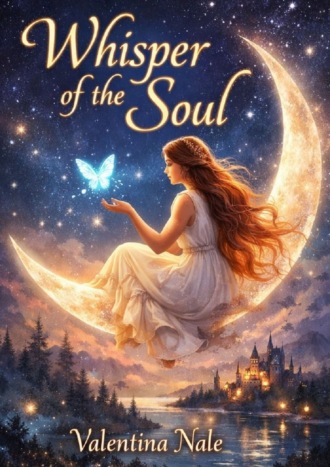
Whisper of the Soul
The Gardener pointed to the crumbling wall:
“Your fence has grown unreliable. Now anyone can enter without permission.”
Diana shivered.
“But if I build a high wall, how will the bees and butterflies reach my garden?”
The Gardener smiled gently:
“The wall is not meant to keep everyone out. It exists to decide who may enter. There can be gates – but only you will hold the key.”
Step 2: Dispel the Main Myth About Boundaries
The fear of becoming “bad” or “cold” is the greatest obstacle. Let’s rewrite your beliefs.
Exercise: Wall vs. Prison

The Philosophy of Dew and Stones
Diana whispered,
– “What if I make a mistake? What if I mistake a rare flower for a weed?”
The Gardener gently lifted a wilted rose petal, destroyed by the weeds, a single drop of water clinging to it.
– “Do you see this dewdrop? If you hold it in your palms, it will evaporate before it can nourish anyone. But if you gather many drops into a pitcher, there will be enough for the flowers, the bees, and yourself. Your garden is like these hands. Without boundaries, all the moisture will go to those who only take, giving nothing in return.”
Step 3: Identify Your “Dew” and Begin Building Your “Wall”
– What is my “dew”? Which resources are limited?
Example: “My emotional calm,” “Energy after work,” “Weekend time,” “Finances.”
– Choose three “stones” for your wall. These are your new rules. They should be simple and concrete.
Examples:
– “When someone asks me for something, I say: ‘I need to think before agreeing immediately.’”
– “I do not stay at work overtime unless it was agreed upon and compensated in advance.”
– “I end the conversation if insults or humiliation are directed at me.”
Building the Wall and Tending the Garden
Diana took strong stones and began building a new wall – not too tall, but sturdy. She left an arch for the bees, birds, and kind travelers. And when thorns appeared again, she first observed whether they were harmful. Weeds tried to sneak in, but the wall held firm.
Step 4: Practice and Keep a “Gardener’s Journal”
Building a wall is a skill. It requires practice.
Technique: Gardener’s Journal (1 week)
(Here you would continue with instructions for journaling, noting boundaries, successes, and observations in your garden metaphor.)

Your Plan for Establishing Personal Boundaries
– Diagnosis (once a month): Return to Step 1. Your “garden” changes over time, and your lists of “weeds” and “flowers” may change as well.
– Micro-step each day: Apply at least one of your “stones” (rules) in an appropriate situation.
– Analysis (5 minutes in the evening): Make a brief entry in your “Gardener’s Journal.” Ask yourself: “Where today was I a good keeper of my garden?”
Remember: Your garden is unique and irreplaceable. It is the constitution of your inner well-being. You are not obliged to let everyone enter. Your soul, your time, your energy, and your feelings form a one-of-a-kind ecosystem. Only your special “flowers” grow there – your dreams, talents, and joys – and there are your own “weeds” as well – weaknesses, fatigue, doubts. Comparing your garden to your neighbor’s is like comparing an apple blossom to a cactus. It is meaningless and destructive.
We often imagine boundaries as a fortress wall: tall, cold, and lonely, meant to repel everyone. This mindset leaves us feeling isolated, guilty for being “cruel,” and ultimately swinging between two extremes: throwing the gates wide open (allowing everyone in) or slamming them shut (depriving ourselves of support). Boundaries are not a wall against the world – they are a filter for your happiness. You decide what and who nourishes your life. The key to the gate is always in your hands. This key is your right to choose and your word. No one can make you feel guilty, bad, or unworthy without your silent consent.
When you give away the key – allowing manipulation, waiting for approval, tolerating disrespect – you voluntarily leave your garden and become a wanderer at someone else’s gate. Your life is not a public park, where anyone can walk through, plucking flowers and leaving trash behind.
Your New Mantra
My garden is my sacred territory. I allow in only the light that nourishes my flowers. My key is in my hands, and I choose peace. I am the sole Keeper of my inner world. My soul is a blooming, unique garden. My boundaries are wise gates. I open them to sunlight and close them to storms. The key to my happiness is in my hand, and I give it to no one. Today and always, I choose to fill my life with that which makes me bloom.

Sonya and the Song of the Wind
Once, long ago, there lived a woman named Sonya. She was like a river – always moving forward, carrying заботу for her home, her work, her loved ones. But lately her life had grown turbulent: her thoughts whirled like a storm, her heart pounded, and her shoulders bore an invisible weight.
Each morning Sonya awoke with the feeling that living through the day was like climbing a mountain too high and too steep. “I must manage everything,” she would think. “If I don’t finish it all, the tasks will pile up and one day bury me like an avalanche. And then everything will collapse.”
At night she lay awake, replaying the day, analyzing mistakes. By day she rushed, afraid to pause even for a moment. The light that once shone in her eyes now hid behind clouds of exhaustion. At times she felt as though she were wandering through fog – straining to run, yet tangled by the haze around her, which seeped inside and filled her head with a chaotic hum of disjointed voices.
One day, utterly worn out, Sonya walked into a field, far from the noise. She sat on the earth and closed her eyes, overcome with fatigue. The air was so fresh, so fragrant with meadow grasses, that she drifted into a light sleep.
Sitting there among the tall grass, she suddenly heard a quiet song.
When she opened her eyes, she saw a girl – so light, so airy it seemed that if she only lifted her arms, she would float away.
“Why are you so tired, Sonya?” the girl asked.
Sonya took a breath. “I feel as though I can’t cope. The storm in my head won’t let me live. The more I plan, the less I accomplish.”
The Wind-Girl smiled. “How often I see people like you. You spun the web yourself and then became entangled in it. You created the storm, and now it commands its creator. These are your thoughts – they have made even your body stiff and tense. But your thoughts are not you. Would you like me to teach you how to tame them?”
Sonya nodded shyly, thinking, What could such a tiny creature teach me?
The Wind-Girl laughed, having guessed her thoughts, and Sonya blushed at how transparent her doubt was.
The girl gave her three gifts: a scroll, a stone, and a coil of silver thread.
“The scroll will show you your thoughts. The stone will show you your calm. The thread will show you your rhythm.”
Sonya unrolled the scroll and read what the storm had written in her mind:
I must be perfect, or I will disappoint everyone.
If I stop, everything will fall apart.
I never have enough time – time is against me.
“Tell me,” the Wind-Girl asked, “do you truly believe these? Are they really your thoughts – or did someone help you think this way? Let’s look closer.”
Sonya reflected. “It seems I try to do everything myself. I believed that if I became perfect, everyone would value me and I would be indispensable. And those who once rejected me would see how strong and capable I am and want to be with me.”
The little enchantress gave a soft, wistful laugh, her skirt whispering like a breeze. “How amusing you are. Who will love someone who turns herself into a doormat? You’ve confused everything. You are trying to make life comfortable – but not your own. People are not loved for their achievements or for doing everything flawlessly. That only makes them useful… like a kitchen towel.”
“Let’s practice,” she continued. “I’ll say phrases, and you repeat them. Listen to how they feel.”
Sonya nodded.
“When I rest, the world does not collapse.”
“There is time for work and time for rest.”
“I do what I can, and that is enough.”
“Rest gives me strength to move forward.”
“I choose what to do today.”
“How do these thoughts feel?” asked the Wind-Girl.
Sonya hesitated. “I felt uneasy at ‘I do what I can, and that is enough.’”
“I thought so,” the girl sighed. “We all fall into that trap.”
She handed Sonya the stone. “This teaches the body calm.”
She showed her how to hold it in her palm and breathe: inhale for four counts, pause for five, exhale for six. Sonya imagined the breath bringing light in and carrying shadows away. Her shoulders softened; her heart slowed.
“Use this when the storm draws near,” the young enchantress said.
Then she pointed to the silver thread. “This is your rhythm. Weave your day from it. Each time you complete a task, tie a knot. When there’s no space left for another knot, it’s time to stop.”
Sonya frowned in confusion, and the girl explained, “Choose three tasks – no more – and do them with love. Leave the rest to the wind.”
“Only three? And what about everything else?”
But the girl was already gone. Only the grass remained, singing with the Wind:
“Three are seeds. They will grow if you do not trample them with haste. Be light… like a girl, like me…”
When Sonya returned home, she began with her breathing. She sat, took the stone, felt its weight, and breathed as she had been taught. A voice in her mind whispered, You’re wasting time, but she corrected it aloud: “This is my calm.”
She chose three tasks: prepare dinner, answer one letter, take a walk. When her thoughts began to whirl again – You won’t manage it! – she closed her fist around the stone and said, “Stop. I choose what matters.” And the storm quieted.
The Wind-Girl had also taught her to release tension from her body. “Clench your fists as tightly as you can,” she had said, “then let go. Then your shoulders. Then your legs.”
Sonya practiced, feeling the heaviness fall away as though stones were slipping from her shoulders. Each evening she tended her body like a garden, watering it with calm.
A month passed, and Sonya noticed her home had grown quieter. She learned to say “no” to unnecessary tasks and “yes” to herself – a cup of tea, a book, a minute of silence. When the storm returned, she took the scroll and wrote: What is the storm saying? Is it true?
Sometimes she sang softly to herself, and her voice blended with the song of the wind.
Her loved ones noticed she smiled more often. “What has changed?” they asked.
“I am learning to be a river, not a storm,” she replied.
One day Sonya returned to the field. She wanted the Wind-Girl to be proud of her – and as if she had known Sonya would come, the girl appeared. They embraced like kindred souls.
“We all know our song,” said the Wind-Girl. “We are born with it in our hearts. But out of fear, we choose a life that is not ours, and we forget its words, its melody, the sound of our own voice. That is how we forget how to be children. Remember me – my youth, my lightness. And when you feel yourself forgetting your song again, take up the stone and the thread.”
Sonya looked at the gifts she now carried everywhere and smiled. She knew storms would still come, but she had her breath, her rhythm, and the strength to say, “Stop.”
Her light shone once more, and she carried it into the world – gently, yet with quiet certainty.
Working with the Story
This story is your personal guide to calm and awareness. For this practice you will need: one ordinary small stone (you may find it by the water or replace it with any small object), a notebook, a pen, 20—30 minutes of quiet, and your kind attention.
Diagnosing the “Storm”
Once there lived a woman named Sonya… Her life had grown turbulent: her thoughts whirled like a vortex, her heart pounded, and her shoulders bore an invisible weight.
“I must manage everything,” she thought. “If I don’t finish all my tasks, they will pile up and, sooner or later, bury me like an avalanche.”
Step 1: Catch Your “Storm” on the “Scroll”
Take your notebook. For now, we are not going to fight the storm. We are simply going to observe it from the outside.
1. Exhale and write.
Formulate and write down two or three of the main anxious thoughts currently circling in your mind.
For example:
– “I can’t keep up with everything at work and at home.”
– “If I stop now, everything will fall apart.”
– “I will disappoint my loved ones if I’m not perfect.”
2. Ask yourself:
“When and from whom did I first hear thoughts like these? In whose voice does my “storm’ speak – my parents’, my teachers’, my boss’?”
This question helps you separate inherited beliefs from your own true desires.
The Gift of the Stone: Returning to the Body
One day, exhausted, Sonya went out into a field… There she met the Wind-Girl, who gave her three gifts. The first was a small stone.
“Take this stone,” the girl said. “It teaches the body calm.”
She showed Sonya how to hold the stone in her palm and breathe: inhale for four counts, pause for five, exhale for six.
Step 2: The “Stone of Calm” Practice
Take your real small stone in your hand.
1. Sit comfortably.
Feel the support beneath your feet and your back.
2. Hold the stone in your palm.
Bring all your attention to its texture, its weight, its temperature.
3. Begin breathing in the 4—5—6—4 rhythm:
– Slow inhale for 4 seconds (imagine you are breathing in calm).
– Pause for 5 seconds (hold the breath, sensing stillness).
– Slow exhale for 6 seconds (imagine you are releasing tension, anxiety, and haste).
– Brief pause for 4 seconds before the next inhale.
4. Repeat for 5—7 cycles.
If your attention drifts into thoughts (and it will), gently – without irritation – guide it back to the sensation of the stone in your hand and the rhythm of your breath.
Конец ознакомительного фрагмента.
Текст предоставлен ООО «Литрес».
Прочитайте эту книгу целиком, купив полную легальную версию на Литрес.
Безопасно оплатить книгу можно банковской картой Visa, MasterCard, Maestro, со счета мобильного телефона, с платежного терминала, в салоне МТС или Связной, через PayPal, WebMoney, Яндекс.Деньги, QIWI Кошелек, бонусными картами или другим удобным Вам способом.