



Полная версия
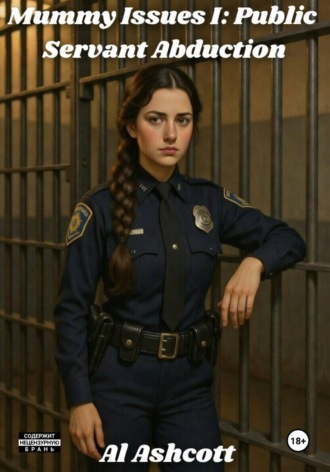
Mummy Issues I: Public Servant Abduction

Al Ashcott
Mummy Issues I: Public Servant Abduction
Mummy Issues I
Public Servant Abduction
Mummy Issues I
Public Servant Abduction
Al Ashcott
Copyright
Title book: Mummy Issues I: Public Servant Abduction
Author book: Al Ashcott
© 2024, Al Ashcott
Self-publishing
ALL RIGHTS RESERVED. This book contains material protected under International and Federal Copyright Laws and Treaties. Any unauthorised reprint or use of this material is prohibited. No part of this book may be reproduced or transmitted in any form or by any means, electronic or mechanical, including photocopying, recording, or by any information storage and retrieval system without express written permission from the author/ publisher.
1. PURPOSE
Everyone is supposed to have a purpose in life. I lost mine when I was twenty-five, right after graduating from college. Of course, there’s the purpose of being a daughter and sister to loved ones, but nothing personal, nothing that feels like my own. Now I’m thirty-three, and I still have no idea what the hell I’m doing as the clock ticks in the background, counting away my youth.
I once knew what my purpose was. I dreamed of becoming an architect. High school teachers killed that dream. Despite their efforts to break my spirit, I held my ground. I found purpose in studying languages instead. I finished school successfully and went to college. I think my disillusionment began there. I believed that once I graduated, things would improve and I would find my place in society. I was wrong. The pervasive feeling of having no direction only grew stronger.
I’m an immigrant living in Gaul. Gauls have made sure to remind me of that my entire life. At first, I was too young and inexperienced for a serious job. When I was finally old enough and hardened by disappointment, it turned out my experience – and my degree – still weren’t enough. The truth is my nationality was the real obstacle.
I was fired from my last job for being antisocial. Maybe I am. Gauls beat most social skills out of me long ago. As a child and teenager, I faced exclusion. As I grew older, I got used to it and stopped craving interaction. Frankly, now that I’m older, I don’t want anything in common with them. The only people I speak to are my parents and siblings. Still, only a Scythe living in the West could be sacked on such flimsy grounds. Firing someone for being antisocial is illegal in Gaul, but unions can turn a blind eye when it’s one of us. I fought the decision every way I could. It changed nothing. Now I carry that slur my ex-boss branded me with.
Thankfully, the long-awaited collapse of the United States of Gomora brought chaos across the West. The pristine haughtiness of the West took a serious hit. Local authorities became less picky about hiring because they had bigger problems: public disobedience, violence, strikes. They needed trustworthy people to keep administrations running, and such people were hard to find in the current climate. The collapse laid bare a brutal truth: the system had been brainwashing and exploiting people for generations. That realisation hit young people hardest, sparking riots, defiance, and refusal to obey authority. If you had no criminal record and weren’t on the domestic revolutionaries and terrorists list, you were hired. No experience, no degree, no social skills required. Even religion and ethnicity no longer mattered.
So, after long months of unemployment, I found work. As a police officer. No joke. I saw the vacancy, applied, was interviewed, and got the job – all within two days. I was the least qualified applicant: too small, too thin, too weak, too inexperienced. But I was the only one willing to work in that district and office for the salary they offered. At first, they hesitated, but when they learned I was a hyperglot, they told me to start the next day.
My job never extended beyond the walls of the police station. I handled reception, registered offenders, and doubled as janitor. I was the sole servant in a nearly abandoned office. Serious criminals and troublemakers stayed in bigger cities, so there was almost no flow of arrests. I saw colleagues once or twice a week when they brought in drunks arrested for public debauchery or young delinquents who had fought teachers or peers. That was why they needed me: I spoke languages and could communicate with foreign kids who didn’t trust Gauls or hadn’t mastered the local dialect.
Like real officers, I had a uniform, my own locker, and even a gun. I carried it mainly for the illusion of invincibility when walking home at night, though I knew it was false. After training I realised I would never use it – the potential for irreparable harm was too great, and my hands shake too much. That probably also explains why I still haven’t got over the psychological barrier to getting a driving licence.
Overall, the situation suited me. At least I no longer had a racist boss bullying me. Most days I studied or read, my mind drifting away while my body stayed behind, watching dust settle over my life layer by layer. Still, I clung to the dream of saving enough to leave and return to Scythia. My real life, I told myself, was waiting in the future, and my future was in Scythia.
I was convinced the years would slip by like that, each day blending into the next, every hour erased from memory because nothing meaningful happened. Until one day in December – just before Catholic Christmas – I was violently pulled out of my limbo.
Employers were eager to hire foreigners because we would work holidays while locals celebrated at home. My boss didn’t even ask if I wanted time off; he simply emailed my December schedule. I didn’t mind – they paid double for those days.
That day started like any other winter morning. I met no one on my walk to work; autumn and winter were the quietest months in villages like ours. The few young people left early for jobs elsewhere, while the elderly stayed indoors, nursing aching joints by the stove.
Nothing was supposed to happen. No one around to start trouble, no reason for it. Everything was peaceful until the main door slammed open, startling me out of my doze. I heard shouting and commotion in the entrance hall. A man yelled, “Resistance is a way of life!” Moments later Shaheed – my patrol colleague – shoved a handcuffed man through the office door.
I froze when I saw Shaheed’s face: red, blood streaming from his nose. Shaheed was a hot-tempered Musulman who hated Gauls more than I did. I had seen him abuse detainees before. Giving that man a gun always struck me as a bad idea. Sooner or later, something terrible would happen.
“Alex! Wake up! I have a visitor for you from Albion!” Shaheed grunted, wiping blood on his sleeve. He grabbed the arrested man by the shoulder and forced him into the chair in front of me.
“Register this Anglo-Saxon pig and lock him up. We’ve got free cells, don’t we?”
“Of course, we do,” I snorted, trying – and failing – to ease the tension. “They already transferred the guy you brought in last Friday. Are you okay?”
“Yeah, I’m fine. This idiot just walked up and punched me in the face. Nearly broke my nose. I think he’s mad.”
“Resistance is a way of life!” the Anglo-Saxon shouted again. Shaheed struck his shoulder, muttering something in Fârsi.
“Why bring him here then? What if he hurts himself – or me?” I exclaimed.
“Because the madhouse was closed,” Shaheed barked.
He tossed the man’s ID and wallet onto my desk, grabbed tissues from the counter, and stormed out, leaving me alone with the deranged Albion man.
As I looked up his file, I studied him carefully. Tall, slender, with reptilian features: sharp cheekbones, pointed chin, grey-green eyes whose pupils looked slightly elongated in the light. I shuddered when I caught him staring back – and when he smiled, his face reminded me of a satyr.
“Mister John Smith. Is that your real name?”
“Oh, you speak Anglo-Saxon? No one here understands more than a few phrases. It’s so nice to hear the mother tongue again – especially with such a cute accent,” he grinned, showing his teeth.
“You didn’t answer my question, Mister Smith,” I replied coolly.
“It’s the name Mummy and Daddy gave me, Officer … Yazarova,” he said, leaning forward to read my nameplate.
The way he lingered on Mummy made me uneasy – there was something lewd in the softness of his voice.
“I’m asking because it’s such a common name. Even outside Albion people know that. We don’t get many Anglo-Saxons here. Yet here you are, arrested for assaulting an officer. Your file says you’re a thief – one Gaul authorities have been trying to catch for years. So, either you took a false name because you’re on the run from Albion, or you’re a spy,” I concluded, watching him.
His clothes weren’t suited to the season: tight black trousers and a purple shirt, no jacket or coat.
“I don’t think you’re a local either, Officer Ya-za-ro-va,” he said, emphasising each syllable. “What are the odds we’re both spies?”
I couldn’t suppress a smile – then instantly regretted it and hardened my expression. He was a felon and had punched Shaheed without fear of consequences. I didn’t want him thinking I was on his side or an easy target.
“Okay, Mister Smith. Follow me to your cell – and don’t make me use the taser.”
“You don’t have to be afraid of me, Officer. I’m a good boy,” he said, those obscene undertones lingering in my mind longer than I wanted.
I led him to the cell block. It was freezing there. Gauls were stingy; if they could save on heating, they did – even at the cost of health. There was a radiator, but a plastic ring under the cap prevented it from being turned up. Smith was a conman, but he didn’t deserve to freeze just because Gauls wanted to shrink their ecological footprint.
In the locker room I grabbed a pillow, two blankets, and a coat. I apologised for the cold and explained I couldn’t fix it. I removed his handcuffs and passed the items through the bars. He deliberately brushed his bony fingers against my skin as he took them, thanking me.
Back at my desk I continued reading his file. It revealed little new. Smith had arrived in Gaul three years earlier. His background was unknown; his criminal activity seemed to begin upon arrival. His speciality: jewellery and art theft. His victims included many famous and influential names – though few deserved to be called victims.
The radio played old songs, occasionally interrupted by news. I usually turned down the volume when the anchor’s voice came on. This time I caught a report of a shooting in a nearby town, followed by a forecast of a sharp temperature drop that night. It prompted me to check on the detainee.
Smith was asleep on the bench, face to the wall, wrapped in the blankets I had given him. I fetched pliers from the utility room and pried the plastic ring off the radiator cap. After some effort I removed it, turned the heat up, and gathered the broken pieces. I would glue them back together and replace the ring before my boss noticed.
2. PURSUIT
“Officer! I’m hungry!”
After fixing the heating in the cell block, I returned to studying languages. The office was perfectly silent. Outside, snow fell steadily. The thin layer of frozen snow on the pavement reflected painful beams of light through my window, stinging my eyes whenever the sun broke through the clouds. I had almost forgotten about Smith when his voice echoed through the building, snapping me back to reality. It was past lunchtime, so I went to the kitchen to prepare something for my prisoner.
I found him fully awake, sitting on the bench. His face lit up when he saw me approaching with the tray.
“Hello, Officer! Is it me, or did it get warmer in here?” he asked, amused.
“I left the door open to let the heat in from the office,” I replied absently.
He said nothing more, thanked me politely for the food, and ate quietly. Before I left, he asked if I could turn on the radio. I saw no harm in it and obliged. For a good hour I heard nothing from him and assumed he had fallen asleep. Then, minutes after the two o’clock news bulletin, he called again.
“Officer! I need to use the bathroom!”
I hated this part. Everyone had the right to use the lavatory, but I would rather clean up after an accident than escort detainees. It was risky, embarrassing for both of us, and – in Smith’s case – I didn’t trust him. He seemed far more dangerous than the local drunks or troubled teenagers I usually dealt with.
“Okay, Mister Smith. Just like I said before: don’t make me use the taser,” I warned as I entered the cell block.
I unbolted his cell and motioned for him to walk ahead. Before stepping into the male restroom, he turned and looked at me with a peculiar glint in his eyes.
“You know, Officer, it was very sweet of you to remove the blockage on the heating. No one’s ever been so kind to me. But I’m afraid it could get you into trouble …” His voice dropped to a soft hiss at the end.
Smith knew. He hadn’t been asleep; he had watched me vandalise station property. I stared at him, trying to keep a poker face, but I felt the heat rising in my cheeks – not because he had caught me, but because I couldn’t stand the intensity of his gaze.
“My work issues don’t concern you, Mister Smith. We’re here. Make it quick.”
The thief smirked and disappeared behind the door.
When he finished and we headed back to his cell, he suddenly stopped halfway down the corridor, blocking my path. My hand instinctively reached for the taser, but before I could draw it, he stepped back and begged me to listen.
When I started this job, I knew empathy would be my biggest weakness. Every detainee claimed innocence, wrongful arrest, victimhood. Some were telling the truth, but even in his worst moods Shaheed only arrested actual lawbreakers to avoid trouble later. If I let every prisoner plead their case, I would end up a lawyer or a therapist. Yet something in Smith’s softened tone made me lower my guard.
“Please, Officer! Listen! Did you hear today’s news? The shooting this morning? Those people were after me! They tried to kill me, but I escaped. I needed somewhere to hide, so I saw your colleague and punched him on purpose – so he would arrest me and bring me to a police station where I would be safe. But I’m afraid they know where I am and they’re coming. You have to let me go!”
“I have to?! Is there anything else you’d like me to do, sir? Back to your cell, Smith!”
Smith dropped to his knees and wrapped his long arms around my waist, pressing his face against my stomach.
“Is there something you’d like me to do, Officer?”
The satyr had returned. His eyes gleamed with filthy intent. He caught the tip of my belt between his teeth and tugged playfully. I grabbed his face with both hands, trying to stop him. He released the belt instantly, caught my thumb in his mouth, and began sucking on it. The sight disgusted and paralysed me. In that moment of shock, Smith threw me to the floor and mounted me, trying to kiss me.
I managed to drive my knee into his groin. He clutched himself and rolled off. I shoved him away, scrambled to my feet, drew my gun, and ordered him back to his cell. Smith groaned in pain as he stood, but when our eyes met, he winked and started laughing. I locked him in and fled the block, face burning, while his chuckles echoed behind me.
It hit me that he could have knocked me out, raped me, or killed me – but he hadn’t. That realisation, combined with the helplessness I had felt when I couldn’t reach my gun or taser, made me feel sick. I had thought I could handle police work, dealing with harmless locals. John Smith showed me I didn’t belong here. My only power came from pointing a gun; in reality, I didn’t even have the mass to stop a teenager stealing chewing gum.
I went to the kitchen to calm down and make tea, then checked my phone for details on the morning’s shooting in the neighbouring town’s shopping district. Witnesses said armed men had stormed several shops searching for someone, firing shots into the ceiling. No one was killed. One woman claimed she had seen a man in a purple shirt run from a closed corporate building across from her flower shop before the chaos began.
It made me think. Maybe Smith wasn’t lying. Maybe he really was running from mobsters. I adjusted my belt out of habit and froze when I didn’t feel the electric cell key. I knew instantly: Smith had taken it when he groped me. I rushed to the cells. The door stood unlocked. He was gone. He could only have left through the main office door while I was in the kitchen.
I dashed outside and spotted him in the mini utility van parked on our property. He was trying to hot-wire it. I drew my gun, crossed the parking lot low to the ground so he wouldn’t see me, and yanked open the passenger door, jumping in and levelling the weapon at his face.
“Get out of the car, Smith!”
“I’m sorry, Officer. When this is over, you can punish me however you like – but right now I need this van to start and get the hell out of here!”
He held a small hammer; a screwdriver protruded from the ignition.
“I said, get out!” I shouted.
His expression changed as he looked past my shoulder. He ducked and hissed at me to do the same. I thought it was a trick, kept the gun trained on him, and glanced back.
Three black jeeps had pulled into the station driveway. Armed men poured out and ran inside.
“See? I wasn’t lying! Maybe they’ll leave when they realise I’m gone,” Smith whispered, tugging my shoulder to make me crouch.
“I don’t think so. I left your ID card on my desk!”
“No problem, Officer. I have another one.”
“Excuse me? What?!” I exclaimed.
“Quiet! They’re leaving – and I think we should, too. You’re coming with me, Officer!” He reached over and slammed the door shut.
One of the men spotted our van and alerted the others. Fortunately, Smith had got the engine running. He skilfully manoeuvred the van out of the lot and onto the highway before the hitmen could react. He floored the accelerator, trying to outrun them. But the jeeps soon caught up. One pulled alongside, trying to force us off the road. Its tinted passenger window slid down; a pale face appeared in the gloom, levelling a gun at us.
The man fired.
Three bullets struck the van; one shattered Smith’s window, making him swerve violently. Somehow, he kept control. We had just reached an exit and veered off sharply as the assassins got trapped between the central reservation and oncoming traffic.
“Who the hell are these people, and what did you do to piss them off so badly?!” I yelled as Smith hurtled along the sharply curving road.
“Oh, some Arnavut guys. A little misunderstanding. A language barrier,” he replied laconically, handling the wheel like a professional racer.
“You pissed off the Arnavut mob?!” My heart hammered; I fell back into the seat.
“Are you familiar with this area, Officer?” he asked, ignoring my panic.
The mobsters weren’t as reckless and slowed on the bends, falling behind.
“Yes. It’s an industrial zone,” I said shakily.
We entered a densely built-up area – factories, warehouses, sea containers, side roads offering cover. Smith parked between two white containers on a bathtub company’s lot. After several turns, we believed we had lost them, but we stayed cautious as we navigated the maze.
Most offices were closed, except for a second-hand store at the entrance to the zone. Reaching it unseen was tricky; it was only accessible from the main road. Just as we slipped inside, one of the jeeps pulled into the store’s car park. Two hitmen got out. They hadn’t seen us – yet – but I knew they would check the shop.
I was about to run upstairs to the manager’s office and alert the staff when Smith stopped me.
“Officer, I wouldn’t do that if I were you,” he whispered, dragging me behind a shelf of tableware.
“We need somewhere safe to hide so I can call for backup!” I hissed.
“You think a locked door or the manager can stop those men? They’ll shoot everyone until they find us!”
“What do you suggest? Play hide-and-seek among pots and kettles?!”
Before Smith could reply, I motioned for him to follow. I knew the layout. A warehouse at the back connected to the garage where delivery vans unloaded second-hand furniture. The warehouse doors were usually open for constant traffic. I thought we could escape through the loading gate.
We waited until the coast was clear and crossed the warehouse. At the gates we hit another problem: the black jeep was parked directly in the driveway. The driver sat inside; he would spot us immediately. Smith quickly found a solution. He nodded at the open moving van standing before the gates – empty except for cardboard boxes. He jumped onto the ramp and crouched to help me up. We hid behind the boxes, waiting for the driver to close the doors and drive away.
3. PERSISTENCE
After about twenty minutes the van stopped. We were now a good distance from the village where we had left the Arnavuts. We believed we were safe – at least for the time being – unless the mobsters had tracked the van. Smith waited a long time before forcing the door lock, listening carefully to every sound from outside.
It was already dark. We were somewhere deep in the countryside. My phone’s geolocation showed a tiny hamlet I had never heard of; the nearest proper town was about fifteen minutes’ walk away. As the forecast had warned, the temperature had plunged below zero and snow had begun to fall. Neither of us was dressed for the journey.
The van driver lived on what had once been a farm. The house itself looked decent – as far as we could see in the dark – but the outbuildings were in ruins. He used them to store broken furniture, hardware boxes, and anything the family didn’t want to clutter the house. Suddenly lights came on in the kitchen.
“I’d love to have a hot cup of tea with you by the fire, Officer,” Smith said pensively, watching the silhouettes move behind the curtain, “but I’m afraid we’ll have to make do with less tonight.”
He turned and headed towards one of the barns. I was cold, exhausted, and barely able to stand, so I followed the Anglo-Saxon in silence. There were no other options – except spending the night in a shed.
The barn door stood ajar. It was farther from the house, which was probably why the driver kept little inside except building materials. Surprisingly, the barn was dry compared to the damp sheds Gaul was notorious for. A ladder led to a mezzanine loft filled with hay. We climbed up and found a spot to wait out the night. But I couldn’t relax. I kept expecting the assassins to find us at any moment.
A few old chairs stood against the wall. I dragged one to the window overlooking the farmyard and sat, staring into the darkness, trying to spot predatory shadows creeping from behind trees or corners. Nothing. Then headlights appeared on the road. I gasped for air – which instantly alarmed Smith. He jumped up and joined me. It was just a passing car.
“Officer, I think you’re a little over-tense,” Smith chuckled.
“I must call someone and tell them what has happened,” I mumbled, unlocking my phone. The blue screen light cast a ghostly glow around us. The signal was weak, but I had enough battery for a day.
“I can’t let you do that, Officer.”
Smith covered the screen with his large hand, blocking the call. He withdrew it quickly when I looked up. In the dim light I could only make out the outline of his face and the gleam in his eyes – but he could clearly see my annoyance.
Конец ознакомительного фрагмента.
Текст предоставлен ООО «Литрес».
Прочитайте эту книгу целиком, купив полную легальную версию на Литрес.
Безопасно оплатить книгу можно банковской картой Visa, MasterCard, Maestro, со счета мобильного телефона, с платежного терминала, в салоне МТС или Связной, через PayPal, WebMoney, Яндекс.Деньги, QIWI Кошелек, бонусными картами или другим удобным Вам способом.