Полная версия
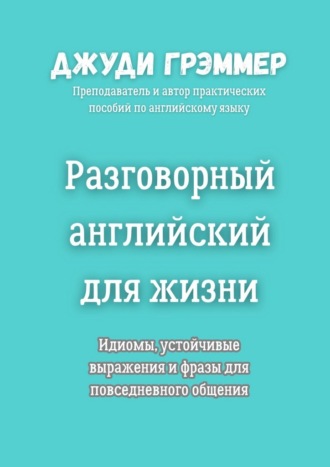
Разговорный английский для жизни. Идиомы, устойчивые выражения и фразы для повседневного общения
Olga believes that it is important to get along with people and try to see eye to eye. Life is easier when you know that someone is always there for you.
Check Your Understanding
Who does Olga get along well with?
What does she do when she has a lot on her plate?
Why are family and friends important for Olga?
Why is it not a problem that they do not always see eye to eye?
Do you usually see eye to eye with your family and friends? Why or why not?
Build Your Vocabulary
Exercise 1 — Multiple Choice
I really ______ with my older brother.
a) have a lot on my plate
b) get along
c) see eye to eye
She can’t go out tonight. She ______.
a) is there for you
b) sees eye to eye
c) has a lot on her plate
Good friends are always ______ you.
a) there for
b) get along
c) have on their plate
We don’t always ______, but we respect each other.
a) get along
b) see eye to eye
c) have a lot on our plate
Exercise 2 — Fill in the Gaps
I usually ______ well with my classmates.
My best friend is always ______ me.
This week I ______ at work.
We don’t always ______, but we try to understand each other.
Exercise 3 — Use It!
Finish the sentences with your own ideas.
I get along well with ______ because ______.
When I have a lot on my plate, I ______.
I don’t always see eye to eye with ______ about ______.
Answer Key
Check Your Understanding (sample answers)
She gets along well with her parents and her younger brother.
She talks to her family because they are there for her.
Because they support her and listen to her.
Because they respect each other’s opinions.
Sample answer: Yes, because we communicate openly and respect each other.
Exercise 1
b
c
a
b
Exercise 2
get along
there for
have a lot on my plate
see eye to eye
Exercise 3 (sample answers)
…my sister because we trust each other.
…make a list and ask for help.
…my parents about career choices.
Hobbies and Free Time
Word Power
1. take up — начать заниматься (новым хобби)
She decided to take up yoga.
Она решила начать заниматься йогой.
I want to take up photography.
Я хочу начать заниматься фотографией.
2. wind down — расслабляться после работы
I watch TV to wind down in the evening.
Я смотрю телевизор, чтобы расслабиться вечером.
He listens to music to wind down after work.
Он слушает музыку, чтобы расслабиться после работы.
3. be into — увлекаться чем-то (разговорное)
I am really into cooking.
Я очень увлекаюсь кулинарией.
She is into fitness and healthy food.
Она увлекается фитнесом и здоровым питанием.
4. kill time (idiom) — убивать время
I read a book to kill time.
Я читаю книгу, чтобы убить время.
He played games to kill time at the airport.
Он играл в игры, чтобы убить время в аэропорту.
Reading Text
Daniel works in finance, and his job can be stressful. In his free time, he tries to relax and enjoy his hobbies. Last year, he decided to take up painting. At first, it was difficult, but now he really enjoys it.
Daniel is also into running. He runs three times a week to stay healthy. After a long day at work, he listens to music to wind down. It helps him clear his mind.
Sometimes Daniel has to wait for meetings or travel for work. During this time, he reads articles or watches short videos to kill time. He believes it is better to do something useful than just scroll on his phone.
For Daniel, hobbies are not just entertainment. They help him grow, stay active, and wind down after busy days.
Check Your Understanding
What hobby did Daniel take up last year?
How often does he go running?
Why does he listen to music in the evening?
Why does Daniel prefer reading or watching videos to kill time?
What do you like to do in your free time and why?
Build Your Vocabulary
Exercise 1 — Multiple Choice
She decided to ______ dancing.
a) wind down
b) take up
c) kill time
I listen to podcasts to ______ after work.
a) take up
b) wind down
c) be into
He is really ______ video games.
a) into
b) kill
c) take
I read the news to ______ while waiting.
a) be into
b) wind down
c) kill time
Exercise 2 — Fill in the Gaps
I want to ______ a new sport this year.
After work, I watch a series to ______.
She is really ______ art and design.
He played games on his phone to ______.
Exercise 3 — Use It!
Finish the sentences with your own ideas.
This year I want to take up ______.
I usually wind down by ______.
I am really into ______ because ______.
Answer Key
Check Your Understanding (sample answers)
He took up painting.
He runs three times a week.
To wind down and clear his mind.
Because he thinks it is more useful than scrolling on his phone.
Sample answer: I like reading and going to the gym because it helps me relax.
Exercise 1
b
b
a
c
Exercise 2
take up
wind down
into
kill time
Exercise 3 (sample answers)
…photography.
…watching movies or walking outside.
…learning languages because I enjoy communication.
Food and Eating Out
Word Power
1. eat out — есть вне дома, ходить в ресторан
We usually eat out on Fridays.
Мы обычно ужинаем вне дома по пятницам.
They ate out to celebrate her birthday.
Они пошли в ресторан, чтобы отметить её день рождения.
2. try something new — попробовать что-то новое
I want to try something new today.
Я хочу попробовать что-то новое сегодня.
She tried something new at the restaurant.
Она попробовала что-то новое в ресторане.
3. book a table — забронировать столик
We need to book a table for tonight.
Нам нужно забронировать столик на сегодня.
He booked a table for two.
Он забронировал столик на двоих.
4. have a sweet tooth (idiom) — любить сладкое
I have a sweet tooth.
Я люблю сладкое.
She has a sweet tooth and always orders dessert.
Она любит сладкое и всегда заказывает десерт.
Reading Text
Emma enjoys cooking at home, but sometimes she likes to eat out with friends. Last Saturday, her friends suggested trying a new Italian restaurant in the city center. Emma agreed because she likes to try something new.
They decided to book a table in advance because the restaurant is popular on weekends. When they arrived, the place was full, and Emma was happy they booked a table.
Emma usually orders healthy dishes, but she has a sweet tooth. After dinner, she could not resist dessert. She said that when you eat out, it is okay to enjoy yourself.
The evening was fun and relaxed. They talked, laughed, and tried something new together. Emma thinks that eating out is not only about food. It is also about spending time with people you like.
Check Your Understanding
Why did Emma and her friends book a table?
What kind of restaurant did they visit?
Why did Emma order dessert?
Why does Emma think eating out is important?
Do you prefer to eat out or cook at home? Why?
Build Your Vocabulary
Exercise 1 — Multiple Choice
We decided to ______ for Saturday night.
a) eat out
b) have a sweet tooth
c) try something
It’s better to ______ at popular restaurants.
a) try something new
b) book a table
c) eat out
She always orders cake because she ______.
a) eats out
b) books a table
c) has a sweet tooth
I like to ______ when I travel.
a) try something new
b) have a sweet tooth
c) book a table
Exercise 2 — Fill in the Gaps
We usually ______ on special occasions.
Let’s ______ at that new café.
Don’t forget to ______ before Friday evening.
He loves chocolate because he ______.
Exercise 3 — Use It!
Finish the sentences with your own ideas.
I like to eat out when ______.
I want to try something new, for example ______.
I have a sweet tooth, so I usually ______.
Answer Key
Check Your Understanding (sample answers)
Because the restaurant is popular on weekends.
They visited a new Italian restaurant.
Because she has a sweet tooth.
Because it is about spending time with people you like, not only food.
Sample answer: I prefer cooking at home because it is healthier and cheaper.
Exercise 1
a
b
c
a
Exercise 2
eat out
try something new
book a table
has a sweet tooth
Exercise 3 (sample answers)
…I meet my friends.
…Thai food or sushi.
…order dessert.
Shopping
Word Power
1. go shopping — ходить по магазинам
I usually go shopping on weekends.
Я обычно хожу по магазинам по выходным.
She went shopping for new shoes.
Она ходила по магазинам за новой обувью.
2. try on — примерять (одежду, обувь)
I want to try on this jacket.
Я хочу примерить эту куртку.
She tried on three dresses before choosing one.
Она примерила три платья, прежде чем выбрать одно.
3. be on sale — быть на распродаже
These shoes are on sale this week.
Эти туфли на распродаже на этой неделе.
Many items are on sale during Black Friday.
Многие товары на распродаже во время Черной пятницы.
4. shop till you drop (idiom) — делать покупки до усталости
On Saturday, we shopped till we dropped.
В субботу мы делали покупки до усталости.
She loves to shop till she drops in the city center.
Она любит ходить по магазинам до усталости в центре города.
Reading Text
Tom enjoys going shopping, especially on weekends. Last Saturday, he went shopping with his sister. They wanted to buy clothes for a party. Tom tried on several jackets before choosing one that fit perfectly.
Many items in the store were on sale, so they saved some money. Tom’s sister was happy because she could buy a dress for less. They walked around different shops and compared prices. At one point, Tom said they could shop till they drop, but they decided to rest for a coffee break.
Shopping is not only about buying things for Tom. It is also about spending time with family and enjoying the experience. He likes to try on new clothes, look for sales, and sometimes just watch people in the mall.
Check Your Understanding
Who did Tom go shopping with?
Why did Tom try on several jackets?
What does it mean if an item is on sale?
Why did Tom say «shop till you drop»?
How do you usually feel when you go shopping?
Build Your Vocabulary
Exercise 1 — Multiple Choice
I want to ______ for new shoes.
a) go shopping
b) try on
c) be on sale
I need to ______ this coat before buying it.
a) go shopping
b) try on
c) shop till you drop
These shirts are cheaper because they ______.
a) try on
b) be on sale
c) go shopping
On weekends, we often ______ at the mall.
a) go shopping
b) shop till you drop
c) be on sale
Exercise 2 — Fill in the Gaps
Let’s ______ for some groceries.
She wanted to ______ the shoes before buying them.
Many items are ______ this week.
They shopped so much that they could ______.
Exercise 3 — Use It!
Finish the sentences with your own ideas.
I like to go shopping when ______.
I usually try on ______ before buying them.
I would shop till I drop if ______.
Answer Key
Check Your Understanding (sample answers)
With his sister.
To find one that fit perfectly.
It is cheaper than usual because of a sale.
He meant they shopped a lot and felt tired.
Sample answer: I feel happy when I buy something I like.
Exercise 1
a
b
b
a
Exercise 2
go shopping
try on
be on sale
shop till you drop
Exercise 3 (sample answers)
…I have free time and want to relax.
…jackets or shoes.
…I found a huge sale with my friends.
Getting Around Town
Word Power
1. get on / get off — садиться / выходить (из транспорта)
Конец ознакомительного фрагмента.
Текст предоставлен ООО «Литрес».
Прочитайте эту книгу целиком, купив полную легальную версию на Литрес.
Безопасно оплатить книгу можно банковской картой Visa, MasterCard, Maestro, со счета мобильного телефона, с платежного терминала, в салоне МТС или Связной, через PayPal, WebMoney, Яндекс.Деньги, QIWI Кошелек, бонусными картами или другим удобным Вам способом.