Полная версия
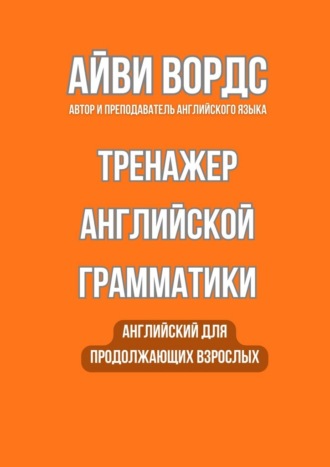
Тренажер английской грамматики. Английский для продолжающих взрослых
start a course – начать курс
improve – улучшать
help – помогать
share – делиться
create memories – создавать воспоминания
probably – вероятно
look good – выглядит хорошо
next weekend / next month – на следующих выходных / в следующем месяце
Exercises
Exercise 1: Fill in the blanks
I _______ (call) my friend tomorrow.
She _______ (visit) her grandparents next week.
They _______ (not forget) to take photos.
Look at the sky! It _______ (rain).
We _______ (start) a new project next month.
Exercise 2: Multiple Choice
Choose the correct form:
John _______ (will / is going to) buy some vegetables.
Alex _______ (will / is going to) join if he finishes work early.
I think it _______ (will / is going to) be sunny tomorrow.
She _______ (won’t / isn’t going to) forget her keys.
We _______ (are going to / will) travel to Italy next summer.
Exercise 3: Personal Questions
Answer 2—3 sentences for each:
What are you going to do next weekend?
Will you travel somewhere this year? Where?
What plans do you have for tomorrow?
Have you ever promised someone that you would do something?
What do you think will happen next in your city (weather, events, etc.)?
Answer Key
Exercise 1:
will call
is going to visit
will not forget / won’t forget
is going to rain
are going to start
Exercise 2:
is going to
will
will
won’t
are going to
Exercise 3:
Next weekend, I am going to visit my friend. We plan to go hiking and have lunch together.
Yes, I will travel to the seaside this summer. I am looking forward to relaxing on the beach.
Tomorrow, I am going to clean my apartment and study English in the afternoon.
Yes, I promised my brother that I would help him with his project. I will spend time helping him this weekend.
I think it will rain tomorrow, and many people will stay at home. Next month, there will probably be a local festival.
Mini-Tips
Используйте will для спонтанных решений и обещаний.
Используйте going to для заранее запланированных действий и предсказаний.
Обращайте внимание на признаки будущих событий.
Modals (Can, Could, Must, Should) – Abilities, Necessity, and Advice
Grammar Focus: Modals
Модальные глаголы (can, could, must, should) выражают умения, возможности, необходимость и советы.
Основные значения и правила:
Can – умение, возможность.
I can speak English. – Я умею говорить по-английски.
She can come to the meeting. – Она может прийти на встречу.
Could – вежливая просьба или возможность в прошлом.
Could you help me? – Не могли бы вы мне помочь?
When I was young, I could swim very well. – Когда я был молод, я хорошо плавал.
Must – необходимость, обязательство.
You must wear a helmet when riding a bike. – Ты должен носить шлем, когда катаешься на велосипеде.
I must finish this report today. – Я должен закончить этот отчёт сегодня.
Should – совет, рекомендация.
You should eat more vegetables. – Тебе следует есть больше овощей.
He should study more for the exam. – Ему следует больше учиться к экзамену.
Правила:
После модальных глаголов всегда используется инфинитив без to: can/should/must/could + V1.
Модальные глаголы не изменяются по лицам.
В отрицаниях добавляем not: can’t, mustn’t, shouldn’t, couldn’t.
В вопросах модальный глагол ставится перед подлежащим: Can you …? Should I …?
Советы по запоминанию:
Can → способность / возможность
Could → прошлое или вежливая просьба
Must → необходимость / обязанность
Should → совет / рекомендация
Story
Lena is a busy professional. She can speak three languages: English, Spanish, and French. She can cook well, but she often orders food when she is tired.
Yesterday, Lena’s colleague asked her: «Could you help me with this report?» Lena agreed because she knew it was important. In the evening, Lena must finish her own project before the deadline. She thinks: «I must not forget to send it to my manager.»
Lena also cares about her health. She knows she should eat more vegetables and exercise regularly. Last week, she couldn’t go to the gym because she was very busy, but today she can take an hour for a workout.
Her friend Anna is visiting tomorrow. Lena tells her: «You should try my new salad recipe. You can cook it easily, and it tastes great!» Lena believes that following simple advice can improve life and make work easier.
Useful Words and Expressions
speak languages – говорить на языках
cook – готовить
order food – заказывать еду
colleague – коллега
help – помогать
report – отчёт
finish – закончить
deadline – крайний срок
forget – забывать
manager – руководитель
care about – заботиться о
health – здоровье
eat vegetables – есть овощи
exercise – заниматься спортом
busy – занятой
try – пробовать
recipe – рецепт
easily – легко
improve – улучшать
advice – совет
Exercises
Exercise 1: Fill in the blanks
I _______ (can) play the piano.
You _______ (should) drink more water.
She _______ (must) wear a uniform at work.
When I was young, I _______ (could) run very fast.
You _______ (must not) forget your passport.
Exercise 2: Multiple Choice
Choose the correct form:
He _______ (can / must / should) speak three languages.
You _______ (should / could / must) take a rest if you are tired.
I _______ (could / must / can’t) find my keys yesterday.
Students _______ (must / should / can) submit homework on time.
She _______ (could / can / should) help you with your project.
Exercise 3: Personal Questions
Answer 2—3 sentences for each:
What can you do well?
What should you do to improve your daily routine?
Have you ever been asked for help by a friend or colleague?
What must you do before going to work or school?
Could you do something as a child that you can’t do now?
Answer Key
Exercise 1:
can
should
must
could
must not / mustn’t
Exercise 2:
can
should
couldn’t
must
can
Exercise 3:
I can cook simple meals and speak English well. I can also ride a bicycle.
I should wake up earlier and exercise more regularly. I should also plan my day in advance.
Yes, my friend asked me to help with a school project last week. I spent a few hours helping them.
I must prepare my clothes and breakfast before going to work. I must also check my emails.
When I was a child, I could climb trees easily. Now I cannot climb them as well as before.
Mini-Tips
Модальные глаголы не меняются по лицам, но всегда требуют инфинитив без to.
Различайте must (обязанность) и should (совет).
Используйте can / could для выражения способностей и возможностей.
Comparatives and Superlatives – Comparisons
Grammar Focus: Comparatives and Superlatives
Сравнительные и превосходные степени используются для сравнения людей, предметов или явлений.
1. Comparative (Сравнительная степень)
Используется, чтобы сравнивать два объекта.
Для коротких прилагательных (1 слог): adjective + -er + than
tall → taller than
fast → faster than
Для прилагательных из 2+ слогов: more + adjective + than
expensive → more expensive than
comfortable → more comfortable than
Примеры:
This book is more interesting than that one. – Эта книга интереснее той.
My car is faster than yours. – Моя машина быстрее твоей.
2. Superlative (Превосходная степень)
Используется, чтобы выделить один объект среди группы.
Для коротких прилагательных: the + adjective + -est
tall → the tallest
fast → the fastest
Для длинных прилагательных: the most + adjective
expensive → the most expensive
comfortable → the most comfortable
Примеры:
This is the most beautiful city in the country. – Это самый красивый город в стране.
He is the fastest runner in our team. – Он самый быстрый бегун в нашей команде.
Правила и советы:
После comparative часто идёт than, после superlative – the.
Неправильные формы: good → better → the best, bad → worse → the worst
Используйте comparatives для сравнений, superlatives для выделения лучшего или худшего.
Story
Anna loves traveling. She recently visited three cities: Paris, Rome, and London. She thinks Paris is more beautiful than Rome because of the Eiffel Tower and the streets. London, in her opinion, is bigger than Paris and more modern than Rome.
During her trip, Anna stayed in three hotels. The first hotel was comfortable, but the second one was more comfortable. The third hotel, however, was the most comfortable of all. She also tried local food. The pizza in Rome was better than the sandwiches in London, but the pastries in Paris were the best she had ever tasted.
Anna enjoyed walking in the parks and streets. The weather in London was worse than in Paris, but she found the people friendlier than she expected. At the end of her trip, Anna realized that every city had something special, but Paris was the most memorable for her.
Useful Words and Expressions
beautiful – красивый
more beautiful – красивее
the most beautiful – самый красивый
big – большой
bigger – больше
modern – современный
more modern – более современный
comfortable – комфортный
more comfortable – более комфортный
the most comfortable – самый комфортный
good – хороший
better – лучше
the best – лучший
bad – плохой
worse – хуже
the worst – худший
friendly – дружелюбный
more friendly – дружелюбнее
memorable – запоминающийся
more memorable – более запоминающийся
Exercises
Exercise 1: Fill in the blanks
This hotel is _______ (comfortable) than the one we stayed in last time.
London is _______ (big) than Paris.
The weather in Rome was _______ (bad) than in London.
Paris was _______ (memorable) city of all.
The pizza in Rome was _______ (good) than the sandwiches in London.
Exercise 2: Multiple Choice
Choose the correct form:
This book is _______ (more interesting / most interesting) than that one.
He is _______ (the tallest / taller) in the class.
This hotel is _______ (more expensive / the most expensive) of all.
My car is _______ (better / the best) than yours.
The weather yesterday was _______ (worse / worst) than today.
Exercise 3: Personal Questions
Answer 2—3 sentences for each:
Which city is bigger: your hometown or the capital city?
Which food do you like better: pizza or pasta?
What is the most comfortable place you have ever stayed?
Who is better at sports in your family or friends?
Which experience was the most memorable for you recently?
Answer Key
Exercise 1:
more comfortable
bigger
worse
the most memorable
better
Exercise 2:
more interesting
the tallest
the most expensive
better
worse
Exercise 3:
My hometown is smaller than the capital city. The capital has more people and buildings.
I like pizza better than pasta because it has more variety.
The most comfortable place I stayed was a hotel by the sea. The room had a big bed and a nice view.
My brother is better at sports than I am. He plays football and tennis very well.
The most memorable experience recently was a hiking trip. The mountains were beautiful, and I enjoyed the fresh air.
Mini-Tips
Используйте comparatives для сравнения двух объектов.
Используйте superlatives для выделения лучшего или худшего в группе.
Неправильные формы (good → better → the best, bad → worse → the worst) нужно запомнить отдельно.
Countable and Uncountable Nouns – Quantity and Measurement
Grammar Focus: Countable and Uncountable Nouns
Существительные в английском языке бывают исчисляемыми (countable) и неисчисляемыми (uncountable).
1. Countable Nouns (исчисляемые):
Можно посчитать (one, two, three …)
Имеют форму множественного числа: apple → apples
Используются с a / an / many / few
I have an apple.
She bought three books.
There are few chairs in the room.
2. Uncountable Nouns (неисчисляемые):
Нельзя посчитать отдельно (обычно вещества, абстрактные понятия)
Нет формы множественного числа
Используются с some / much / a little / a lot of
I need some water.
How much sugar do you want?
There is a little milk in the fridge.
Особенности:
Некоторые существительные могут быть и исчисляемыми, и неисчисляемыми, меняя значение:
chicken (неисчисляемое – мясо; исчисляемое – живая курица)
coffee (неисчисляемое – напиток; исчисляемое – чашка кофе)
Советы:
Countable → можно поставить число или a/an.
Uncountable → используйте слова для измерения: a bottle of, a piece of, a cup of.
Story
David is a food blogger. Every morning, he buys some fruits and vegetables from the local market. He likes to buy apples, bananas, and tomatoes because they are fresh and healthy. He also buys a loaf of bread and a bottle of milk.
In his kitchen, David keeps some sugar and a little salt for cooking. He never uses too much sugar because he wants to stay healthy. For breakfast, he usually drinks coffee and eats an egg with toast.
Sometimes, David experiments with recipes. He uses a piece of cheese, some butter, and a few spices to make his dishes more delicious. He also drinks a lot of water during the day.
David always plans his meals carefully. He believes that understanding countable and uncountable nouns helps him buy the right quantity of ingredients and cook efficiently.
Конец ознакомительного фрагмента.
Текст предоставлен ООО «Литрес».
Прочитайте эту книгу целиком, купив полную легальную версию на Литрес.
Безопасно оплатить книгу можно банковской картой Visa, MasterCard, Maestro, со счета мобильного телефона, с платежного терминала, в салоне МТС или Связной, через PayPal, WebMoney, Яндекс.Деньги, QIWI Кошелек, бонусными картами или другим удобным Вам способом.