Полная версия
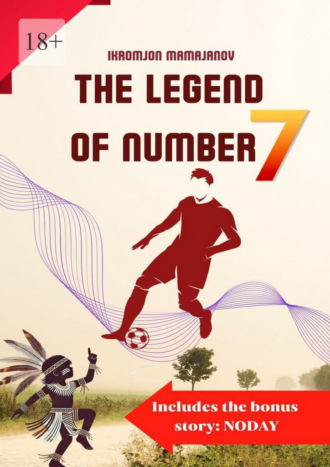
The Legend of number 7

The Legend of number 7
Ikromjon Mamajanov
© Ikromjon Mamajanov, 2026
ISBN 978-5-0069-3800-7
Created with Ridero smart publishing system
Part I: The Legend of Number 7
Chapter I: Ancestral Heritage and the Chieftain’s Unease
The African sun set upon the horizon, casting an amber and orange glow across the land. In these vast expanses, the domain of the Vax-Ru, the wind blew with a peculiar dignity. Kax, the aged and powerful chieftain, stood on the ridge, watching his people gather around the fires below. The deep wrinkles on his face marked a long life of experience, while the sharpness in his eyes showed that strength still coursed through him. At that moment, a suspicious rustle came from the tall grass behind him. The chieftain did not flinch. Following the rustling, the low, menacing growl of a lion — the true ruler of the savannah — echoed in the air. While such a sound would surely freeze the heart of any ordinary man, not a trace of fear appeared in Kax’s gaze. He fixed his eyes for a moment on the shadow moving swiftly through the grass, almost invisible, and a faint smile touched his lips. Then, in a calm voice, as if calling to a loved one at home, he spoke:
“Iru, that is enough… You are still too young to deceive your grandfather, my little leopard.”
From the tall grass emerged Iru, a nimble boy of about thirteen with bright, sparkling eyes. Although his lip curled slightly in a pout, his face betrayed a mix of wonder and a hint of defeat. He approached his grandfather, hands on his hips, and spoke with a touch of a complaint:
“Grandfather, how did you know? The whole tribe believes my lion’s roar — even the real lions answer back! But you… you always find me, as if you can see right through the grass.”
Kax turned slowly to look at his grandson. His gaze held both infinite affection and a quiet, hidden pride. Placing his hand on the boy’s shoulder, the old chieftain replied in a steady voice:
“My child, if I could not sense the fire in our blood, how could I call myself your grandfather? You do not just live among the grass, Iru; you move within the wind itself. I do not feel your presence with my eyes, but with my spirit.”
They watched the valley and their home below in silence for a moment. Kax’s next words seemed to hint at a vast responsibility that Iru had yet to grasp:
“The breath of our ancestors is in your every step. Not everyone understands this, but the time will come when your strength will astonish the world.”
A heavy silence fell between them. Iru was puzzled to see his grandfather staring mournfully at the tribe below. He stepped closer to the elder.
“Grandfather, why did you come up here? Is something wrong?”
Kax exhaled a heavy sigh and turned to his grandson.
“Ah, my child, I fear for the future of our tribe,” he said, his voice trembling slightly.
To Iru, everything seemed fine.
“Why do you worry, Grandfather?” Iru asked. “The kind people in red clothes came only recently. They healed our sick and taught me English and how to read. Everything is improving, isn’t it?”
His grandfather looked into Iru’s innocent eyes and began to speak softly.
“Iru… the truth is, while those people can teach you their language and their books, they cannot understand our spirit. I fear that the glittering trinkets and new words they bring will distance you from us — from the land of your ancestors. Moreover, my child, five of the six wells in our village have run dry. Only one remains, and its water is receding; it may soon vanish altogether.”
Iru looked at his grandfather with hopeful eyes and asked quietly, “But Grandfather, did the city people not want to help us? Is that not so?”
Kax gripped his grandson’s shoulder and took a long, heavy breath.
“My son, in this world, no one helps for free. In exchange for water, electricity, and machinery, they demand our land. I can never agree to this. We are the last ancient tribe on this sacred soil. I cannot trade our freedom and ancestral heritage for glittering trinkets!”
“Then we need another way…” Iru whispered.
Chapter II: A Spark of Hope in an Old Magazine
Iru strode down from the ridge toward the village. Reaching his small hut, he collapsed onto his straw mat and lay staring at the ceiling. His thoughts drifted far away, led by the fears his grandfather had shared. Suddenly, a flash of an idea struck him, and he scrambled to his feet.
From beneath the straw of his bed, he pulled out an old, tattered magazine left behind by the doctors. Its pages were frayed and the colours faded, but to Iru, it was more than just paper — it was a window into a magical world. He had read every page so many times he knew them by heart. His fingers flicked through the pages until, at last, he found what he was looking for.
On that page was an article about a world football star, the legendary number 7 of the famous “Royal Club” — Crio Ron. Iru’s eyes remained fixed on the photographs. They told the story of how Crio had risen from an ordinary boy to a global icon. He, too, had known poverty and hunger in his youth, yet through relentless toil and an iron will, he had overcome every obstacle.
As Iru reread the article, he realised that Crio Ron was not only a great athlete but also a man of immense heart. The text spoke of his aid to sick children and the millions of dollars he gave to charity. In that moment, a spark of hope ignited in Iru’s mind: “If Crio has helped so many people, perhaps he could save our tribe too?”
But how could he reach him? Iru searched beneath the straw again, pulling out other magazines. In one, he found a mention that the “Royal Club” was based in Madrid, Spain. Then, on a torn page, he discovered a world map. Fortuitously, the doctors had taught him how to use a map and the basics of global travel. Yet, the reality was harsh and unforgiving. Iru was still a minor, a mere boy of thirteen. Furthermore, he existed on no official register; he was a member of an “unnamed” tribe that lived solely by ancient traditions. He possessed neither a passport nor any document to prove his identity. As for finances, it went without saying — his entire world consisted of a few old magazines and the simple cloth upon his back.
Iru gazed at the vast distance between distant Spain and the African expanse where he stood. To his small steps, the journey felt like an endless desert. However, whenever he recalled the drying well in the village and the mournful look in his grandfather’s eyes, his hesitation faded, replaced by a firm resolve.
Even so, Kax had strictly forbidden his grandson from approaching the city. For the tribe, this was an unwritten yet sacred law. Kax viewed any contact with the outside world as a betrayal of their identity and holy values. For several days, Iru scavenged around the village, gathering every scrap of paper, fragment of newspaper, and torn book page left behind by the doctors like a hoard of treasure. With his small hands, he was sketching the grandest and most perilous plan of his life.
Chapter III: The Perilous Plan and the Chieftain’s Decree
The straw walls of the hut had taken on a strange, almost mystical appearance. Like a seasoned investigator, Iru had pinned his gathered information across the surface. On one side hung a hand-drawn map of Madrid; on the other, a photograph of Crio Ron and his legendary number “7”. Iru had connected them with lengths of red twine found from an unknown source. These threads were more than mere fabric; they were the strands of fate and the lifeline of his tribe’s hope. Gazing at this tangled yet meaningful display, Iru felt the crushing weight of defying his grandfather’s sacred prohibition. Yet, the daily receding water in the well left him no choice. His small room was no longer just a hut; it had become a gateway to the other side of the world.
A few days passed. At the edge of the village, several lorries pulled to a halt, kicking up clouds of dust. The Vax-Ru had always been a hospitable people; they did not mind the arrival of travellers, provided one condition was met: outsiders must not disturb their ancient way of life. Unable to curb his curiosity, Iru approached a massive lorry. He drew near the open window of the driver’s cab and asked boldly:
“What are you carrying in your machine?”
Without even turning to look at him, the driver replied in a cold tone:
“Lion, giraffe, and zebra.”
Iru began to circle the lorry like a serious inspector. Although the cargo area was tightly covered with heavy green canvas, the low, terrifying growls emanating from the iron cages inside told the whole story. The free rulers of the savannah were now captives. Iru returned to the driver’s side and continued his interrogation:
“Why are you taking them away?”
The driver looked at Iru with irritation, as if dealing with a child asking a nonsensical question. “So that people can see them.”
“Can’t people just come here and see the animals in their own home?” Iru asked in wonder.
This question exhausted the driver’s patience. His boredom sharpened into open anger. “Because they live far away, do you understand? Very far away!” he shouted. “Do you have any idea how difficult it is to get here from Spain? Ugh, how could you possibly understand…”
The heavy thud of the lorry door echoed in Iru’s ears alongside the word “Spain.” The boy stood frozen, staring at the thick dust rising from beneath the wheels. The spark of hope in his heart flared into a flame: this massive machine was headed for that distant, magical land — Madrid!
Iru turned slowly. The village remained drowsy and quiet as usual, though the queue at the well was longer than ever. He entered his hut one last time. He gazed with both sorrow and resolve at the “investigator’s map” on the wall and the image of Crio Ron connected by red threads.
“Forgive me, Grandfather…” he whispered, his eyes filling with tears.
Chapter IV: Leaving the Savannah
Iru took very little with him. He carefully tucked the old magazine into his waistband and packed a day’s worth of water and a few pieces of dried meat. His greatest wealth was the knowledge in his mind, the boundless hope in his heart, and the extraordinary agility in his feet. Iru smiled grimly in the darkness. For the first time in his life, he had used his unique talent to overcome a major obstacle. Yet, the real adventure lay ahead — the steel bird was to carry him through the clouds toward Spain, a land of a million glowing lights.
The aircraft touched down softly at Madrid Airport. As the heavy steel doors of the cargo hold groaned open, airport ground staff began unloading the freight. Here, the security was ten times tighter than in the savannah; every cage had to pass under specialized sensors, infrared beams, and scanners. Peering through a gap in the cage at the gleaming modern machinery and the stern officers in blue uniforms, a cold fear crept into Iru’s heart. His instincts whispered that here, no deception would go undetected.
Yet, at that very moment, fate itself intervened to protect his unwavering intent and pure purpose. As the animals were being unloaded, the enormous giraffe in the cage beside Iru’s grew unexpectedly agitated. It struck the side of its enclosure with immense force. This sudden blow triggered a chain reaction; one of the cranes lost its balance, slamming into the central unit of the scanning electronics.
A short circuit followed, producing acrid smoke and a small fire. Immediately, the emergency alarms — a deafening siren — wailed throughout the airport, sparking sudden panic among the staff.
“¡Rápido! (Quickly!) The giraffe might injure itself! Move all the animals to the secure zone at once!” the supervisor shouted in Spanish.
Iru realised he had to make the most of this chaos; for him, the gates of freedom were opening within this very disorder. Amidst the confusion and panic at the airport, the staff found neither the time nor the nerve to inspect every cage thoroughly. Iru’s cage, from which terrifying roars still emanated, was dragged toward the secure zone without being scanned. The massive iron-barred crates were hurriedly loaded onto a transport vehicle destined for a veterinary centre outside the airport.
Iru did not miss his chance. When the vehicle cleared the high airport gates and stopped at a brightly lit intersection on the outskirts of the city, held by the prohibiting glow of a red light, he acted. He tore through the green canvas and leapt nimbly to the ground. With his extraordinary, wind-like speed, he vanished instantly into the thick shrubbery by the roadside. Before him lay Madrid — a crowning jewel of a city, shimmering with millions of night lights and skyscrapers that seemed to pierce the sky. With fingers trembling from excitement, Iru pulled the crumpled, cherished magazine from his pocket and whispered to the proud image of Crio Ron:
“I have arrived, my hero…”
Chapter V: Adventures in the “Stone Jungle”
Iru sat precariously in the shadows of a dead-end street, huddled behind massive bins between towering buildings. He carefully leaned his cherished, polished staff against the wall, but the exhaustion and excitement of the past days finally overcame him, and his eyes drifted shut. The unfamiliar clatter of metal, the hum of passing cars, and the cold, lifeless asphalt did not embrace him with the warmth of his home’s soft sands and straw. Even the air here was different — it bore no scent of the free savannah, only the smell of smoke and cold metal.
The following morning, a woman arrived to dispose of her rubbish and froze in astonishment. Beside the bin lay a boy — Iru — dressed in strange, wild clothing, his face and body adorned with mysterious tribal markings. Startled by the unexpected sight, the woman let out a piercing scream. At the sound of her cry, Iru bolted awake like a flash of lightning, instinctively seizing his staff for protection. This only frightened the woman further. Backing away in a panic, she began calling for the police officers at the end of the street.
Iru panicked: one end of the street was a dead end, and from the other, police officers were charging toward him, their heavy boots thudding against the pavement. He became as alert as a cornered wild animal. Gathering all his strength into his legs, he leapt onto the high wall in a single bound and vaulted over to the other side with the grace of a cat. The officers, weighed down by heavy gear and shields, could not match such supernatural acrobatics and remained beneath the wall, mouths agape in astonishment.
As Iru ran through the broad, alien streets of Madrid, he felt the stunned and fearful gazes of the citizens fixed upon him. In his tribal cloth and half-naked state, he appeared to the modern, civilised world like a ghost lost from a millennium past. Suddenly, at an intersection, he spotted the same officers again. Recognizing the “wild” boy, they resumed their pursuit.
Iru raced like the wind through narrow, tangled alleys, up steep staircases, and over iron railings. The tribal agility he had mastered in the rocky wilderness of the savannah served him well even here, in this “stone jungle.” As he bypassed various obstacles with the speed of lightning, the thudding footsteps and shrill whistles of his pursuers finally faded into the distance.
Breathing heavily, Iru realised he could no longer afford to stand out; to survive, he had to “blend” into this world. Changing his clothes had become a matter of life and death. He scavenged through a clothing donation bin by the roadside, finding discarded garments. From the pile, he pulled out an oversized T-shirt and a pair of faded trousers. It was the first time in his life wearing such artificial fabrics; without even glancing at the buttons, he threw them on however they would fit. Now, on the streets of Madrid, he looked like just another homeless, neglected boy. Yet, the wild intensity in his eyes and the proud fire inherited from his grandfather remained unextinguished.
Iru carefully hid the cherished, tattered magazine beneath the alien clothes as if it were a sacred treasure. Now, he faced his single most daunting task: to find the world-famous football sanctuary standing in the heart of the city. He showed the crumpled magazine to every passerby he encountered in the unfamiliar streets, pointing with hope and longing at the image of the great building. Finally, he caught sight of it in the distance — the modern, majestic arena towering toward the clouds, the beating heart of the football world.
Whether by luck or misfortune, on this very day, the “Royal Club” was facing its ancient and uncompromising rival, the Catalan club. Around the stadium, fiery chants filled the air, colourful flags fluttered, and the excitement of thousands created a powerful roar. Iru tried to press forward with the crowd, but at the steel gates, he was stopped as if hitting an impassable cliff. A burly, cold-eyed steward reached out, demanding a ticket. Iru stood bewildered, understanding nothing. He tried to explain in his native tongue, his face contorted as if to say, “What is that? I have no such thing.” But here, there were none who understood the language of the soul; the rules stood far above any emotion.
Though he could not find a way inside, Iru did not lose hope. He sat precariously upon the hard, sun-baked asphalt near the outer wall of the arena, beginning a long, hourly vigil for the match to end. In truth, Iru cared neither for this game that entertained millions, nor for football itself. Before his eyes stood only the cracked earth of the parched desert, his tribespeople wilting from thirst, and that alluring article about the “star” player’s generosity. He simply wished to beg for salvation for his people, to convey their pain and sorrow to this great man.
Chapter VI: A Bitter Encounter with the Saviour
A few hours later, the massive stadium gates creaked open, and the crowd surged out like a flood. The atmosphere was incredibly bleak; everyone was locked in heated debate, shouting in dissatisfied tones. Just then, the team’s imposing bus with tinted windows emerged from a private gate. Amidst the flashing cameras of journalists and a swarm of fans, that familiar face from the magazine appeared — the global football icon. Iru’s eyes ignited with joy. He hurled himself into the crowd, colliding with shoulders and enduring shoves and blows, until he finally managed to reach the athlete’s side.
“Crio Ron! My tribe needs your help!” Iru cried out with all his soul.
However, this encounter was far from the heartfelt meeting Iru had imagined. Furious over a painful and unexpected home defeat, and exhausted by the stinging questions of journalists, the athlete stopped. Seeing a boy before him with clothes worn backward and a face caked in dust, he mistook him for a rival fan who had come to mock him.
“Get out of my way,” he hissed through gritted teeth with cold indifference. The footballer shoved the boy aside and stepped abruptly onto the bus. The heavy doors slammed shut, and behind the dark glass, the figure he had envisioned as his saviour vanished.
Iru stood frozen, as motionless as a statue. Passers-by glanced at him, some with mocking laughter, others with fleeting pity. In an instant, everything in his heart shattered. The image of the “saviour” he had so precariously trusted disintegrated like shards of broken glass. The answer he received in exchange for thousands of perilous kilometres and the boundless terrors of the night was nothing more than a cold, insulting shove. The innocent joy in Iru’s eyes was replaced by icy resentment and a bottomless despair.
As Iru wandered aimlessly through the city streets like a soulless corpse, his strange behaviour and backward clothes quickly drew the attention of the authorities. This time, he could not escape — his famed agility and speed had knelt before profound psychological collapse and physical exhaustion. As the cold iron of the handcuffs touched his wrists, Iru felt the true cruelty of the world with every fibre of his being.
Chapter VII: The Cold Room of the Police Station
The monotonous ticking of the wall clock was the only thing breaking the heavy silence of the station. Behind the desk, a police officer sat staring at his computer screen, his brow furrowed as if the weight of the entire world rested upon his shoulders. Without so much as a glance at Iru, he began the interrogation in a cold, clinical tone.
“What is your name, boy?” he asked, the keys of his keyboard clicking sharply.
Drowning in a whirlpool of despair and confusion, Iru initially did not want to answer; his gaze remained fixed on his handcuffed wrists. However, shivering from the chill in the room, he whispered softly:
“Iru.”
The officer continued typing as if entering some vital secret code. “And your surname?” This time, the officer looked up, staring with irritation at Iru’s strange, backward T-shirt.
“Surname? What does that mean? I am of the Vax-Ru tribe.”
“Vax-Ru?” The officer rubbed his forehead and let out a heavy sigh. “Is that some new brand? A clothing store, perhaps? Look, stop spinning tales and give me your address. Which district of Madrid do you live in?”
“I live in a hut. At the very edge, by the sixth well, where the water level recedes more each day,” Iru said with complete sincerity.
The officer began to type “Sixth Well Street” into the computer, but his fingers suddenly froze mid-air. He tapped his pen irritably against the desk.
“Don’t play games with me, boy!” he barked, raising his voice. “Now, who are your parents? Their names? Where are they right now?”
Iru reflected for a moment. In his heart, the concept of “parents” represented something as grand and sacred as human bonds — it meant his homeland.
“My father is the Great Desert, and my mother is the sacred soil of the Vax-Ru,” he said, straightening his back with pride.
A second of silence fell over the room. The officer buried his face in his hands and groaned.
“Right… so, your mother is the dirt and your father is the wandering desert. Tell me then, how do we contact ‘Mrs Soil’ and ‘Mr Desert’? Do they have a phone number? Or at least an email address?”
Iru blinked in confusion. “A phone? Email? We only have the great drum. If I beat it loudly enough, my grandfather — the tribal elder — might hear it.”
“A drum?” The officer smirked, winking at his colleague, Jose, who sat nearby. “Did you hear that, Jose? We’re about to establish international diplomatic relations via drumbeat, right here in the heart of Madrid.”
At that moment, the station door swung open, and a man stepped inside. Although he was not wearing a white coat this time, Iru’s eyes lit up instantly. It was him — the man who had treated the sick in the dusty streets of his village, taught him the secrets of maps, and placed that fateful magazine in his hands. It was Doctor Miguel.
When Doctor Miguel saw Iru in handcuffs, he froze, unable to believe his eyes.
“Iru? Is that you? What on earth are you doing here?” he asked, clutching his chest in disbelief. “How did you manage to cross half the world?”
Iru looked at the doctor and gave only a faint, weary smile. In his eyes, there was a poignant mixture of longing and the deep disillusionment of someone whose heart had been broken by the very “great world” he had fought so hard to reach.
The atmosphere in the station shifted in an instant. With great emotion, Doctor Miguel began to explain to the officers that Iru lived in a remote African tribe, and that he was a boy of extraordinary talent and spirit, as untamed as nature itself. The officer stood agape; he finally realised that the small “troublemaker” before him was, in truth, an intercontinental miracle — a symbol of a will that knew no oceans or borders.