Полная версия
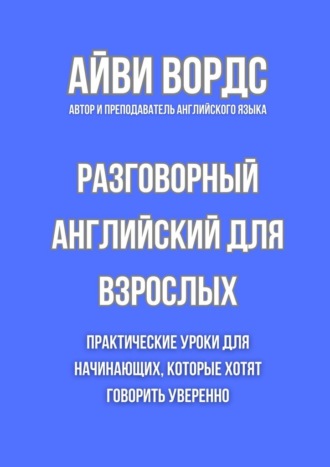
Разговорный английский для взрослых. Практические уроки для начинающих, которые хотят говорить уверенно
They go to work at 8 a.m.
I watch TV in the evening.
He takes a shower at 7 a.m.
Exercise 3 (Sample Answers)
I usually wake up at 7 a.m.
I eat eggs and toast for breakfast.
I go to work.
After work, I usually walk or read.
I usually go to bed at 11 p.m.
Learning Tips
Используй frequency words каждый день: always, usually, sometimes
Проговаривай свою ежедневную рутину вслух
Старайся использовать Present Simple при рассказе о себе
Chapter 7: Time and Days of the Week
Grammar Focus: Telling Time and Using Days
Чтобы говорить о времени, нужно знать:
часы и минуты
утро / день / вечер
дни недели
Telling Time (Часы)
Формула:
hour + minutes + (a.m./p.m.)
Например:
7:00 a.m. – seven o’clock in the morning
1:15 p.m. – one fifteen in the afternoon
6:30 p.m. – six thirty in the evening
Полезные выражения:
half past seven – половина восьмого (7:30)
quarter past two – четверть третьего (2:15)
quarter to five – без четверти пять (4:45)
Days of the Week (Дни недели)
Monday – понедельник
Tuesday – вторник
Wednesday – среда
Thursday – четверг
Friday – пятница
Saturday – суббота
Sunday – воскресенье
Важно:
Дни недели с заглавной буквы
В вопросах о времени часто используют: What time is it? / When do you…?
Model Text / Story
My name is Anna. I live in Moscow. I like to know the time and days of the week.
I wake up at 7:00 a.m. on weekdays. I go to work at 9:00 a.m. On Mondays, I have meetings. On Wednesdays, I visit my colleagues. On Fridays, I finish work early.
At the weekend, I usually sleep longer. On Saturday, I go shopping. On Sunday, I relax at home. I always check the time: Is it half past ten? I like to be on time. Time and days help me organize my week.
Useful Words and Expressions
time – время
hour – час
minute – минута
o’clock – ровно (час)
half past – половина
quarter past – четверть после
quarter to – без четверти
morning – утро
afternoon – день
evening – вечер
night – ночь
weekday – будний день
weekend – выходные
Monday, Tuesday… – дни недели
on Monday – в понедельник
schedule – расписание
meeting – встреча
visit – навещать, посещать
organize – организовывать
Exercises
Exercise 1. Fill in the blanks
I wake up at ___ a.m.
My meeting is at ___ p.m.
Today is ___ (day of the week)
On ___ I visit my friends.
The weekend is ___ and ___.
Exercise 2. Choose the correct answer
7:30 = (half past seven / quarter past seven)
2:15 = (quarter past two / quarter to three)
4:45 = (quarter to five / quarter past five)
On weekdays, I (sleep / work)
Saturday and Sunday are (weekdays / weekend)
Exercise 3. Speaking Practice – Personal Questions
Answer with time and days.
What time do you wake up?
What day is today?
When do you go to work or school?
What do you do on weekends?
What time do you usually go to bed?
Answer Key
Exercise 1
I wake up at 7:00 a.m.
My meeting is at 1:15 p.m.
Today is Monday
On Wednesday I visit my friends.
The weekend is Saturday and Sunday
Exercise 2
half past seven
quarter past two
quarter to five
work
weekend
Exercise 3 (Sample Answers)
I wake up at 7:00 a.m.
Today is Monday.
I go to work at 9:00 a.m.
On weekends, I usually rest or go shopping.
I usually go to bed at 11:00 p.m.
Learning Tips
Практикуйте время вслух, особенно half past и quarter to
Говорите о своей неделе, используя дни недели и время
Chapter 8: Free Time and Hobbies
Grammar Focus: Talking About Hobbies and Free Time (Present Simple)
Мы используем Present Simple, чтобы говорить о привычках, увлечениях и свободном времени.
Основные правила:
I / You / We / They + base verb
I read books in my free time.
They play football on weekends.
He / She / It + verb + s
She listens to music every evening.
He watches TV on Sundays.
Частотные слова (frequency words):
always – всегда
usually – обычно
often – часто
sometimes – иногда
never – никогда
Model Text / Story
My name is Anna. I live in Moscow. I have free time after work.
In my free time, I like to read books and listen to music. I usually read in the evening. I often watch TV on weekends. Sometimes I go to the cinema with my friends.
I like sports too. I play tennis once a week. I never play football, but I enjoy watching it on TV. My hobbies help me relax and feel happy.
Talking about free time and hobbies is important. I can tell my friends what I like to do and ask about their hobbies.
Useful Words and Expressions
free time – свободное время
hobby – хобби, увлечение
read – читать
listen to music – слушать музыку
watch TV – смотреть телевизор
go to the cinema – ходить в кино
play sports – заниматься спортом
play tennis – играть в теннис
play football – играть в футбол
swim – плавать
dance – танцевать
cook – готовить
draw – рисовать
usually – обычно
often – часто
sometimes – иногда
never – никогда
relax – отдыхать
enjoy – наслаждаться
friend – друг
Exercises
Exercise 1. Fill in the blanks
I ___ books in my free time. (read)
She ___ TV every evening. (watch)
We ___ tennis on weekends. (play)
He ___ music sometimes. (listen to)
I ___ football. (never/play)
Exercise 2. Choose the correct answer
I (play / plays) football on Sundays.
She (listen / listens) to music every day.
They (go / goes) to the cinema sometimes.
He (watch / watches) TV in the evening.
Exercise 3. Speaking Practice – Personal Questions
Answer with 1—2 short sentences.
What do you like to do in your free time?
Do you like reading books?
What sports do you play?
Do you go to the cinema? How often?
What hobby makes you happy?
Answer Key
Exercise 1
I read books in my free time.
She watches TV every evening.
We play tennis on weekends.
He listens to music sometimes.
I never play football.
Exercise 2
I play football on Sundays.
She listens to music every day.
They go to the cinema sometimes.
He watches TV in the evening.
Exercise 3 (Sample Answers)
I like to read books in my free time.
Yes, I like reading books.
I play tennis and swim.
Yes, I go to the cinema sometimes.
Painting makes me happy.
Learning Tips
Говорите о своих хобби вслух каждый день
Используйте frequency words: always, usually, sometimes, never
Составьте список своих хобби и спрашивайте друзей: What do you like to do in your free time?
Chapter 9: Family and Relationships
Grammar Focus: Talking About Family (Present Simple)
Мы используем Present Simple, чтобы говорить о семье и привычках родственников.
Основные правила:
I / You / We / They + base verb
I live with my parents.
They visit their grandparents.
He / She / It + verb + s
She has two sisters.
He likes his brother.
Полезные слова для отношений:
mother – мать
father – отец
parents – родители
brother – брат
sister – сестра
grandmother / grandfather – бабушка / дедушка
aunt / uncle – тётя / дядя
cousin – двоюродный брат / сестра
husband / wife – муж / жена
son / daughter – сын / дочь
Model Text / Story
My name is Anna. I live in Russia. I have a small family.
I have a mother and a father. My mother is a teacher. My father works in an office. I have one brother and one sister. My brother is 30 years old. He works in a bank. My sister is 25 years old. She is a nurse.
I often visit my grandparents. They live in the countryside. I like spending time with my family. We eat dinner together and talk about our day. Family is very important. It helps me feel happy and safe.
Useful Words and Expressions
family – семья
mother – мать
father – отец
parents – родители
brother – брат
sister – сестра
grandmother – бабушка
grandfather – дедушка
aunt – тётя
uncle – дядя
cousin – двоюродный брат / сестра
husband – муж
wife – жена
son – сын
daughter – дочь
live – жить
visit – навещать
important – важный
together – вместе
safe – в безопасности
Exercises
Exercise 1. Fill in the blanks
I have a ___ and a ___. (brother / sister)
My ___ works in an office. (father / mother)
I often visit my ___. (grandparents)
My cousin is my ___. (relative)
Family is very ___. (important)
Exercise 2. Choose the correct answer
She (has / have) two brothers.
I (live / lives) with my parents.
He (like / likes) his family.
They (visit / visits) their grandparents on weekends.
My father (work / works) in an office.
Exercise 3. Speaking Practice – Personal Questions
Answer with 1—2 short sentences.
Who is in your family?
Do you have any brothers or sisters?
Do you live with your parents?
Do you often visit your grandparents?
Who is your favorite family member and why?
Answer Key
Exercise 1
I have a brother and a sister.
My father works in an office.
I often visit my grandparents.
My cousin is my relative.
Family is very important.
Exercise 2
She has two brothers.
I live with my parents.
He likes his family.
They visit their grandparents on weekends.
My father works in an office.
Exercise 3 (Sample Answers)
My family has four people: mother, father, brother, and me.
Yes, I have one brother and one sister.
Yes, I live with my parents.
I visit my grandparents every weekend.
My mother is my favorite family member because she is kind and helpful.
Learning Tips
Говорите о своей семье вслух, используя Present Simple
Учите слова для родственников наизусть
Составьте маленький рассказ о своей семье и практикуйтесь с друзьями
Chapter 10: Home and Household
Grammar Focus: Talking About Your Home (Present Simple)
Мы используем Present Simple, чтобы описывать жильё, комнаты и действия дома.
Основные правила:
I / You / We / They + base verb
I live in an apartment.
We clean the house every week.
He / She / It + verb + s
She cooks dinner every evening.
He washes the dishes after lunch.
Часто используемые слова:
house – дом
apartment – квартира
room – комната
kitchen – кухня
bedroom – спальня
living room – гостиная
bathroom – ванная
furniture – мебель
bed – кровать
table – стол
chair – стул
sofa – диван
clean – убирать, чистить
cook – готовить
wash – мыть
do the dishes – мыть посуду
Model Text / Story
My name is Anna. I live in a small apartment in Moscow.
I have a living room, a kitchen, a bedroom, and a bathroom. I like my apartment because it is comfortable. I usually clean my home on weekends. I wash the dishes, sweep the floor, and make my bed.
In the kitchen, I cook dinner every evening. I often drink tea in the living room. My brother sometimes helps me with cleaning. We like spending time together at home.
A home is a place where I feel safe and happy. I like to keep it clean and organized.
Useful Words and Expressions
home – дом, квартира
apartment – квартира
house – дом
room – комната
kitchen – кухня
bedroom – спальня
living room – гостиная
bathroom – ванная
furniture – мебель
bed – кровать
table – стол
chair – стул
sofa – диван
clean – убирать, чистить
cook – готовить
wash – мыть
do the dishes – мыть посуду
sweep the floor – подметать пол
comfortable – комфортный
organized – организованный
Exercises
Exercise 1. Fill in the blanks
I live in a ___. (house / apartment)
I have a ___ and a ___. (bedroom / kitchen)
I usually ___ my home on weekends. (clean)
I ___ dinner in the kitchen. (cook)
I ___ the dishes after meals. (wash / do)
Exercise 2. Choose the correct answer
She (cook / cooks) dinner every evening.
We (clean / cleans) the house on Saturdays.
He (wash / washes) the dishes after lunch.
I (like / likes) my living room.
My bedroom is (comfortable / comfort)
Exercise 3. Speaking Practice – Personal Questions
Answer with 1—2 short sentences.
Do you live in a house or an apartment?
How many rooms are in your home?
What do you do at home on weekends?
Who helps you with household chores?
What is your favorite room and why?
Answer Key
Exercise 1
I live in an apartment.
I have a bedroom and a kitchen.
I usually clean my home on weekends.
I cook dinner in the kitchen.
I wash the dishes after meals.
Exercise 2
She cooks dinner every evening.
We clean the house on Saturdays.
He washes the dishes after lunch.
I like my living room.
My bedroom is comfortable.
Exercise 3 (Sample Answers)
I live in an apartment.
My home has three rooms: a bedroom, a kitchen, and a living room.
On weekends, I clean my apartment and cook dinner.
My brother sometimes helps me with cleaning.
My favorite room is the living room because it is comfortable.
Learning Tips
Проговаривайте названия комнат и мебели вслух
Составьте список своих ежедневных домашних дел
Практикуйте Present Simple, рассказывая о том, что вы делаете дома
Chapter 11: Places in the City
Grammar Focus: Talking About Places in the City (There is / There are)
Чтобы описывать, что есть в городе, мы используем there is / there are:
Основные правила
There is + singular noun (единственное число)
There is a bank in my street. – На моей улице есть банк.
There are + plural noun (множественное число)
There are many shops in the city centre. – В центре города много магазинов.
Вопросы:
Is there a post office near here? – Здесь рядом есть почта?
Are there any restaurants in this street? – На этой улице есть рестораны?
Отрицание:
There isn’t a school near my home. – Рядом со мной нет школы.
There aren’t any parks in this area. – В этом районе нет парков.
Useful Words / Places
city – город
town – город, небольшой
street – улица
road – дорога
park – парк
school – школа
university – университет
bank – банк
shop / store – магазин
restaurant – ресторан
cinema – кинотеатр
hospital – больница
post office – почта
library – библиотека
supermarket – супермаркет
church – церковь
museum – музей
near – рядом
far – далеко
centre – центр
Model Text / Story
My name is Anna. I live in Moscow. I like my city because there are many interesting places.
There is a big park near my home. I often go there for a walk. There are two supermarkets on my street. There is also a post office and a bank.
In the city centre, there are many shops, restaurants, and cinemas. I like going to the library and museums. My favourite place is the park because I can relax there.
I can ask: Is there a restaurant near here? and Are there any shops on this street? Knowing these phrases helps me find places in the city easily.
Exercises
Exercise 1. Fill in the blanks
There ___ a park near my home. (is / are)
There ___ two banks in the city centre. (is / are)
There ___ a hospital on my street. (is / are)
There ___ any cinemas in my neighbourhood. (is / are)
There ___ a post office near here. (is / are)
Exercise 2. Choose the correct answer
There (is / are) a supermarket in my street.
There (is / are) many restaurants in the city centre.
There (is / are) a library near my house.
There (is / are) two churches in this town.
There (is / are) a cinema near the park.
Exercise 3. Speaking Practice – Personal Questions
Answer with 1—2 short sentences.
Is there a park near your home?
Are there any supermarkets in your street?
What is your favourite place in your city?
Is there a library near your school or work?
Are there many restaurants in your city?
Answer Key
Exercise 1
There is a park near my home.
There are two banks in the city centre.
There is a hospital on my street.
There aren’t any cinemas in my neighbourhood.
There is a post office near here.
Exercise 2
There is a supermarket in my street.
There are many restaurants in the city centre.
There is a library near my house.
There are two churches in this town.
There is a cinema near the park.
Exercise 3 (Sample Answers)
Yes, there is a park near my home.
Yes, there are two supermarkets in my street.
My favourite place in my city is the park because it is quiet.
Yes, there is a library near my school.
Yes, there are many restaurants in my city.
Learning Tips
Практикуйте there is / there are с разными местами в своём городе
Составьте список своего района: что есть рядом, что далеко
Используйте вопросы: Is there…? / Are there…?, чтобы ориентироваться в городе
Chapter 12: Directions and Transport
Grammar Focus: Asking and Giving Directions / Using Transport Vocabulary
1. Asking for Directions
Excuse me, where is…? – Извините, где находится…?
How can I get to…? – Как мне добраться до…?
Is it far from here? – Это далеко отсюда?
2. Giving Directions
Go straight – Идите прямо
Turn left / Turn right – Поверните налево / направо
It’s on the left / on the right – Это слева / справа
Next to / near / opposite – Рядом с / возле / напротив
3. Talking About Transport
I go to work by bus. – Я езжу на работу на автобусе.
He takes the metro to school. – Он ездит в школу на метро.
We walk to the park. – Мы идём в парк пешком.
Useful Words and Expressions
directions – направление, указания
transport – транспорт
bus – автобус
metro / subway – метро
train – поезд
taxi – такси
car – машина
bike – велосипед
walk – идти пешком
street – улица
road – дорога
square – площадь
park – парк
bridge – мост
next to – рядом с
near – недалеко
opposite – напротив
left – налево
right – направо
straight – прямо
Model Text / Story
My name is Anna. I live in Moscow. I like to explore the city.
When I go to a new place, I ask for directions. I usually say: Excuse me, where is the park? The people tell me: Go straight and turn left. It’s next to the library.
I often use transport. I go to work by bus. Sometimes I take the metro. On weekends, I walk to the park or ride my bike. I like to know the streets, squares, and bridges in my city. Directions and transport are important. They help me move around the city easily and safely.
Exercises
Exercise 1. Fill in the blanks
I usually go to work by ___. (bus / car)
She takes the ___ to school. (metro / train)
We walk ___ to the park. (straight / left)
Turn ___ at the corner. (left / right)
The library is ___ the park. (next to / opposite)
Exercise 2. Choose the correct answer
Go (straight / left) and turn right.
The museum is (next to / far from) the cinema.
I go to work (by bus / on foot).
He takes the (train / taxi) to school.
The square is (near / behind) the bridge.
Exercise 3. Speaking Practice – Personal Questions
Answer with 1—2 short sentences.
How do you go to work or school?
Is there a park near your home?
How can you get to the nearest shop?
Do you prefer walking, bus, or taxi? Why?
Can you give directions from your home to the nearest library or school?
Answer Key
Exercise 1
I usually go to work by bus.
She takes the metro to school.
We walk straight to the park.
Turn left at the corner.
The library is next to the park.
Exercise 2
Go straight and turn right.
The museum is next to the cinema.
I go to work by bus.
He takes the train to school.
The square is near the bridge.
Exercise 3 (Sample Answers)
I go to work by bus.
Yes, there is a park near my home.
Go straight and turn left. The shop is next to the bank.
I prefer walking because it is healthy.
From my home, go straight, turn right, and the library is on the left.