Полная версия
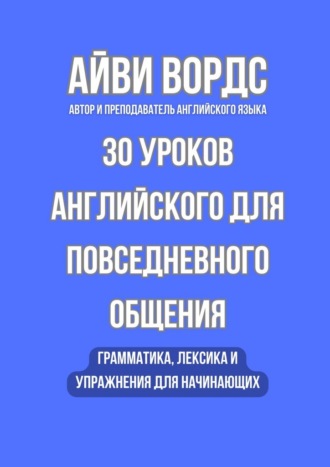
30 уроков английского для повседневного общения. Грамматика, лексика и упражнения для начинающих
sister – сестра
job – работа
student – студент
house – дом
room – комната
personal things – личные вещи
favorite place – любимое место
take care of – заботиться о
close to home – рядом с домом
routine – распорядок
living room – гостиная
visit – навещать
feel proud – гордиться
welcoming – уютный
family time – время с семьёй
Exercises
Exercise 1. Fill in the blanks
___ name is Daniel.
She likes ___ job.
They live in ___ house.
This is my ___ room.
That is Emma___ school.
Exercise 2. Multiple Choice
This is ___ phone.
a) my
b) me
c) mine
That is my friend___ bag.
a) s
b) ’s
c) is
The cat___ food is in the bowl.
a) its
b) it’s
c) it
Exercise 3. Questions about the story
What is the person’s name and where does he live?
What do the parents do?
Who is Emma?
What is special about the house?
Why does the person feel proud?
Answer Key
Exercise 1
My
her
their
sister’s
Emma’s
Exercise 2
a) my
b) ’s
a) its
Exercise 3 (Sample Answers)
The person’s name is Daniel, and he lives in a small town. It is a calm place.
The parents work hard and take care of their home. Their jobs keep them busy.
Emma is the person’s sister. She is a student.
The house feels warm and welcoming. Its living room is bright.
The person feels proud because friends like the home. Family support is important to him.
Mini Tips
Учите притяжательные формы вместе с лексикой о семье.
Чаще задавайте вопрос: Whose is this?
Повторяйте притяжательные формы в коротких описаниях.
Lesson 5. Countable and Uncountable Nouns
Grammar Focus: Countable and Uncountable Nouns
В английском языке существительные бывают двух типов: исчисляемые (countable) и неисчисляемые (uncountable).
1. Countable Nouns (исчисляемые существительные)
Countable nouns обозначают предметы, которые можно посчитать.
Их можно использовать в единственном и множественном числе.
Примеры:
one apple – одно яблоко
two apples – два яблока
a book – книга
three books – три книги
С исчисляемыми существительными часто используются слова a / an / many / few.
I have an apple. – У меня есть яблоко.
There are many books on the table. – На столе много книг.
2. Uncountable Nouns (неисчисляемые существительные)
Uncountable nouns обозначают вещества, абстрактные понятия или предметы, которые нельзя посчитать.
Примеры:
water – вода
sugar – сахар
money – деньги
advice – совет
С неисчисляемыми существительными используются слова some / any / much / little.
There is some water in the bottle. – В бутылке есть вода.
I don’t have much money. – У меня немного денег.
3. Слова-маркеры и различия
Countable nouns: many, few, a few, several, one, two, three.
Uncountable nouns: much, little, a little, some, any.
Примеры вопросов и отрицаний:
Are there any apples? – Есть яблоки?
I don’t have much sugar. – У меня мало сахара.
How many books do you have? – Сколько у тебя книг?
Если можно поставить число перед существительным, оно исчисляемое.
Если нельзя посчитать предмет, оно неисчисляемое.
Для начинающих: учите слова вместе с маркерами: many books, much water, a few apples, a little milk.
Story
Shopping at the Market
Today, I am going to the market. I need some vegetables and fruits for dinner. There are many apples and bananas. I choose two apples and three bananas. I also buy some carrots and a little rice. The market is busy, and many people are shopping at the same time.
I look at the cheese section. There is a lot of cheese, but I take only a small piece. I also need some milk and a few eggs. The shopkeeper asks, «Do you want any bread?» I say yes and take a loaf.
After buying everything, I feel happy. I have many fresh products for dinner, and I am ready to cook. Shopping at the market shows me how important it is to know the difference between countable and uncountable nouns. It helps me buy the right amount of food.
Useful Words and Expressions
market – рынок
vegetables – овощи
fruits – фрукты
apple – яблоко
banana – банан
carrot – морковь
rice – рис
cheese – сыр
milk – молоко
eggs – яйца
bread – хлеб
a lot of – много
a few – несколько (исчисляемое)
a little – немного (неисчисляемое)
many – много (исчисляемое)
much – много (неисчисляемое)
loaf – буханка
shopkeeper – продавец
Exercises
Exercise 1. Fill in the blanks
Вставьте правильное слово: some / any / many / much / a few / a little.
I need ___ apples for the pie.
There isn’t ___ milk in the fridge.
How ___ oranges do you want?
I bought ___ rice for dinner.
Are there ___ bananas on the table?
Exercise 2. Multiple Choice
Выберите правильный вариант.
I have ___ books in my bag.
a) much
b) many
c) a little
There is ___ sugar in the jar.
a) many
b) much
c) few
Can I have ___ water, please?
a) a few
b) a little
c) many
Exercise 3. Questions about the story
Ответьте на вопросы (2—3 предложения).
What fruits did the person buy?
How much rice and cheese did they take?
Did they buy any bread?
Why is the market busy?
How does knowing countable and uncountable nouns help?
Answer Key
Exercise 1
a few
much
many
a little
any
Exercise 2
b) many
b) much
b) a little
Exercise 3 (Sample Answers)
The person bought two apples and three bananas. They also bought some carrots.
They took a little rice and a small piece of cheese.
Yes, they bought a loaf of bread.
The market is busy because many people are shopping at the same time.
Knowing countable and uncountable nouns helps to buy the right amount of food.
Mini Tips
Повторяйте фразы: a few apples, a little rice, many bananas, much milk.
Представляйте продукты или вещи и пытайтесь сами назвать их как countable или uncountable.
Учите маркеры вместе с существительными.
Lesson 6. Talking About the Past: Past Simple (Regular Verbs)
Grammar Focus: Past Simple (Regular Verbs)
Past Simple используется, чтобы говорить о действиях, которые произошли в прошлом и закончились.
1. Как образуется Past Simple у правильных глаголов
Для правильных глаголов форма прошедшего времени создаётся с помощью окончания -ed.
Примеры:
I worked yesterday. – Я работал вчера.
She played football last weekend. – Она играла в футбол на прошлых выходных.
We visited our friends last week. – Мы навестили друзей на прошлой неделе.
Обратите внимание на произношение окончания -ed: оно может звучать как /t/, /d/ или /ɪd/ в зависимости от глагола, но на начальном уровне можно просто читать «-ed».
2. Отрицательные предложения
Для отрицаний используется вспомогательный глагол did not (didn’t) + основной глагол.
Примеры:
I didn’t work yesterday. – Я не работал вчера.
She didn’t play football last weekend. – Она не играла в футбол на прошлых выходных.
Важно: основной глагол всегда остаётся в инфинитиве, без окончания -ed в отрицаниях.
3. Вопросительные предложения
Для вопросов используется Did + подлежащее + основной глагол:
Примеры:
Did you work yesterday? – Ты работал вчера?
Did they visit their friends last week? – Они навестили друзей на прошлой неделе?
Краткие ответы:
Yes, I did. / No, I didn’t.
4. Слова-маркеры Past Simple
Обычно Past Simple сопровождается словами, которые указывают на прошлое:
yesterday – вчера
last week / month / year – на прошлой неделе / в прошлом месяце / в прошлом году
ago – назад (two days ago – два дня назад)
in 2020 / in July – в 2020 году / в июле
Примеры:
I visited London last year.
She cleaned her room yesterday.
Сначала учите только правильные глаголы.
Используйте слова-маркеры, чтобы сразу понять, что действие в прошлом.
Для отрицаний и вопросов не добавляйте -ed к глаголу после did/didn’t.
Story
A Day at the Beach
Last Saturday, I went to the beach with my friends. We arrived early in the morning. I played volleyball, and my friends swam in the sea. We listened to music and talked about our school and hobbies.
I walked along the shore and collected some shells. The sun was warm, and the sea was calm. Later, we ate sandwiches and drank cold juice. We laughed a lot and took many photos.
In the afternoon, we played frisbee and ran along the sand. Some people watched us and smiled. I felt happy because the day was full of fun and fresh air. We left the beach in the evening and returned home tired but satisfied.
Useful Words and Expressions
last Saturday – в прошлую субботу
morning – утро
beach – пляж
friends – друзья
play volleyball – играть в волейбол
swim – плавать
listen to music – слушать музыку
talk – разговаривать
walk along the shore – гулять по берегу
collect shells – собирать ракушки
sun – солнце
calm – спокойный
eat sandwiches – есть сэндвичи
drink juice – пить сок
laugh – смеяться
take photos – фотографировать
play frisbee – играть в фрисби
return home – возвращаться домой
Exercises
Exercise 1. Fill in the blanks
Вставьте правильную форму глагола в Past Simple.
I ___ (play) volleyball yesterday.
My friends ___ (swim) in the sea.
We ___ (talk) about school and hobbies.
I ___ (collect) some shells.
We ___ (eat) sandwiches and ___ (drink) juice.
Exercise 2. Multiple Choice
Did you ___ to the beach last Saturday?
a) go
b) went
c) going
She ___ photos in the afternoon.
a) take
b) took
c) taken
We ___ a lot and laughed.
a) play
b) played
c) playing
Exercise 3. Questions about the story
When did the person go to the beach?
What activities did they do at the beach?
What did the person collect?
How did they feel at the end of the day?
What did they eat and drink?
Answer Key
Exercise 1
played
swam
talked
collected
ate / drank
Exercise 2
a) go
b) took
b) played
Exercise 3 (Sample Answers)
The person went to the beach last Saturday. It was in the morning.
They played volleyball, swam, walked along the shore, and played frisbee.
The person collected some shells while walking along the shore.
They felt happy and satisfied at the end of the day.
They ate sandwiches and drank cold juice.
Mini Tips
Слова-маркеры помогают сразу понять, что нужно Past Simple.
Повторяйте форму -ed для правильных глаголов вслух.
Сначала учите положительные предложения, затем отрицания и вопросы.
Lesson 7. Past Simple: Irregular Verbs in Daily Life
Grammar Focus: Past Simple (Irregular Verbs)
В английском языке есть группа глаголов, которая не образует Past Simple с окончанием -ed. Это неправильные глаголы (irregular verbs). Их формы нужно запоминать, так как они часто встречаются в повседневной речи.
1. Утвердительные предложения
Форма прошедшего времени неправильного глагола не подчиняется правилу -ed. Примеры часто используемых глаголов:
go → went – идти / ехать → пошёл, поехал
have → had – иметь → имел
eat → ate – есть → ел
see → saw – видеть → видел
do → did – делать → делал
Примеры предложений:
I went to the park yesterday. – Я пошёл в парк вчера.
She had breakfast at 7 a.m. – Она позавтракала в 7 утра.
We saw a good movie last night. – Мы посмотрели хороший фильм вчера вечером.
He did his homework after school. – Он сделал домашнее задание после школы.
2. Отрицательные предложения
Для отрицаний используется did not (didn’t) + основной глагол в инфинитиве.
Примеры:
I didn’t go to the park yesterday. – Я не пошёл в парк вчера.
She didn’t eat lunch at school. – Она не обедала в школе.
We didn’t see the new movie. – Мы не видели новый фильм.
Важно: после did/didn’t глагол всегда в форме инфинитива без изменения.
3. Вопросительные предложения
Для вопросов используется Did + подлежащее + основной глагол:
Did you go to the park yesterday? – Ты ходил в парк вчера?
Did they eat breakfast at home? – Они позавтракали дома?
Did he do his homework? – Он сделал домашнее задание?
Краткие ответы:
Yes, I did. / No, I didn’t.
4. Слова-маркеры Past Simple
Слова, которые обычно указывают на прошлое:
yesterday – вчера
last night / week / month – прошлой ночью / неделе / месяце
ago – назад (two days ago – два дня назад)
in 2020 / in July – в 2020 году / в июле
Примеры:
I saw my friend two days ago.
We went to the zoo last weekend.
Начните с самых употребительных неправильных глаголов.
Запоминайте их вместе с простыми предложениями.
Для отрицаний и вопросов не изменяйте глагол – используйте did/didn’t.
Story
Yesterday’s Routine
Yesterday was a busy day. I woke up early and had breakfast at 7 a.m. Then I went to school. On the way, I saw my friend Sarah. We talked for a few minutes.
At school, we did our homework and studied English. I didn’t understand one question, so I asked the teacher. After classes, I went to the park with my brother. We played football and ate sandwiches.
In the evening, I watched a movie and had dinner with my family. We talked about our day and laughed a lot. Finally, I went to bed at 10 p.m. I felt tired but happy because yesterday was full of activities and fun.
Useful Words and Expressions
yesterday – вчера
wake up – просыпаться
have breakfast – завтракать
go to school – идти в школу
see – видеть
talk – разговаривать
do homework – делать домашнее задание
study – учить / изучать
ask – спрашивать
play football – играть в футбол
eat sandwiches – есть сэндвичи
watch a movie – смотреть фильм
have dinner – ужинать
laugh – смеяться
go to bed – ложиться спать
busy day – занятой день
full of activities – полный дел
feel happy – чувствовать себя счастливым
Exercises
Exercise 1. Fill in the blanks
Используйте Past Simple правильный или неправильный глагол.
I ___ (wake up) early yesterday.
She ___ (have) breakfast at 7 a.m.
We ___ (go) to the park in the afternoon.
He ___ (see) his friend on the street.
I ___ (do) my homework after school.
Exercise 2. Multiple Choice
Did you ___ a movie last night?
a) watch
b) watched
c) watching
He ___ football with his brother.
a) play
b) played
c) plays
I didn’t ___ breakfast in the morning.
a) have
b) had
c) having
Exercise 3. Questions about the story
What time did the person wake up?
Who did they see on the way to school?
What did they do at school?
How did they spend the afternoon?
When did they go to bed, and how did they feel?
Answer Key
Exercise 1
woke up
had
went
saw
did
Exercise 2
a) watch
b) played
a) have
Exercise 3 (Sample Answers)
The person woke up early at 7 a.m.
They saw their friend Sarah on the way to school.
At school, they did homework and studied English.
They went to the park, played football, and ate sandwiches.
They went to bed at 10 p.m. and felt tired but happy.
Mini Tips
Начинайте с 10—15 самых популярных неправильных глаголов и используйте их каждый день.
Повторяйте их в коротких рассказах о своём дне.
Запоминайте вместе с конкретными ситуациями: I went to school, I saw a friend, I had breakfast.
Lesson 8. When Things Happened
Grammar Focus: Talking About the Past with Time Expressions
Чтобы рассказать о прошлом, важно связывать действия с временем. В английском языке для этого используются слова и выражения времени вместе с Past Simple (как с правильными, так и с неправильными глаголами).
1. Важные слова-маркеры для прошлого
yesterday – вчера
last week / month / year – на прошлой неделе / месяце / году
two days ago / three weeks ago – два дня назад / три недели назад
in 2020 / in July / in June – в 2020 году / в июле / в июне
this morning / yesterday morning – этим утром / вчера утром
Примеры:
I went to the park yesterday. – Я ходил в парк вчера.
She visited her grandparents last week. – Она навестила бабушку и дедушку на прошлой неделе.
We saw a movie two days ago. – Мы посмотрели фильм два дня назад.
2. Как строить предложения
Порядок слов обычно такой:
[Подлежащее] + [глагол в Past Simple] + [объект / действие] + [время].
Примеры:
I ate breakfast this morning. – Я позавтракал этим утром.
He played football last Sunday. – Он играл в футбол в прошлое воскресенье.
They watched a film in June. – Они смотрели фильм в июне.
Совет: всегда добавляйте слова-маркеры времени, чтобы слушатель понимал, что речь о прошлом.
Конец ознакомительного фрагмента.
Текст предоставлен ООО «Литрес».
Прочитайте эту книгу целиком, купив полную легальную версию на Литрес.
Безопасно оплатить книгу можно банковской картой Visa, MasterCard, Maestro, со счета мобильного телефона, с платежного терминала, в салоне МТС или Связной, через PayPal, WebMoney, Яндекс.Деньги, QIWI Кошелек, бонусными картами или другим удобным Вам способом.