


Полная версия
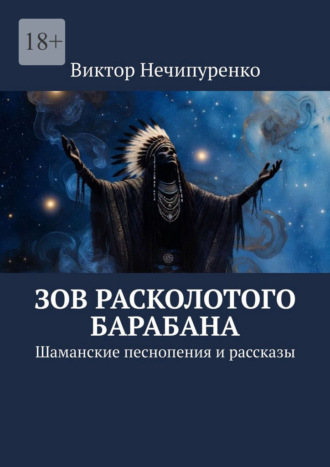
Зов расколотого барабана. Шаманские песнопения и рассказы
– Ты пришёл, – сказала она. – Значит, договор разорван.
– Какой договор?
– Тот, по которому ты обещал быть одним. А мы обещали быть другими. Теперь всё по-настоящему.
Она протянула руку. Я взял. Её пальцы были холодными, как будто она держала их в реке, пока я спал.
Мы вышли. Не из комнаты – из меня самого. Дверь оказалась между рёбер. За ней – не лес, не поляна, а то место, где следы не заканчиваются, а превращаются в дорогу, по которой идут только те, кто забыл, кто они.
Мы шли. Не держась, но не отпуская. Босиком, но не чувствуя земли: мы шли по собственному отражению в воздухе, и оно трескалось, как тонкий лёд.
Сзади – шаги. Я не оборачивался. Знал: это преследует то, что я оставил. Не враг. Не друг. Просто остаток, который всё ещё пытается быть «я».
Девочка остановилась. Повернулась ко мне.
– Сейчас будет река.
– Какая?
– Та, в которую нельзя войти дважды. Потому что она течёт внутрь.
Я посмотрел. Впереди – вода. Не чёрная, не прозрачная. Она была зеркальной, но не отражала. Она впитывала.
– Переходи, – сказала она. – Но знай: когда выйдешь, ты не будешь ни тем, ни другим. Ты будешь третьим. И имя твоё забудет даже тишина.
Я шагнул.
Вода была тёплой. Не рекой, а рукой, которая проверяет, не вывернулась ли кожа наизнанку.
С каждым шагом – тяжелее. Не тело. Память. Она отклеивалась, как старая краска: куски дней, куски имён, куски лиц.
Последнее, что я отпустил, – это страх. Он уплыл впереди белым пятном и растворился.
Потом – свет. Не яркий. Тот, который бывает, когда закрываешь глаза и кто-то другой их открывает.
Я вышел.
На тот же берег. Но берег был другим. Не песок, не трава. А след. Один-единственный. Четвероногий. С когтем, сломанным посередине.
Я наклонился. Прикоснулся. Он был тёплый.
И тогда я понял: я не перешёл. Я стал.
Следом.
Часть третья. Жить следом
След не кончался. Он уходил вдаль, изгибался, как будто кто-то шёл, оглядываясь, и каждый раз терял направление. Я пошёл по нему. Не потому что хотел. Потому что другого пути не было. Дорога – это то, что остаётся, когда ты забываешь, кто ты. А след – это то, что остаётся, когда ты забываешь, что ты.
Сначала было трудно. Ноги не поднимались – врастали в землю. Я чувствовал, как из пяток вырастают корни, и каждый шаг – это не движение, а выдёргивание. Но потом привык. Корни обломились, остались шрамы – по два на ступне, как будто кто-то давно пришил мне лапы, а теперь снял, но нитки остались.
День не наступал. Не потому что была ночь – потому что время свернулось в трубочку и ушло внутрь следа. Свет был, но он не падал сверху, а поднимался снизу: из земли, из отпечатка, из пустоты между пальцами. Он был цвета старого сала – жёлтый, но не радостный, а тот, который остаётся на губах, когда долго голодал.
Я шёл. Не считал шагов. Считал запахи.
Первый – дёготь. Кто-то давно прошёл здесь с подожжённой смолой, чтобы замазать свою тень. Второй – кровь, но не свежая. Застывшая, расколовшаяся, как глина. Третий – молоко. Кислое, но ещё не прокисшее. Четвёртый – мой собственный. Я его не узнал сразу. Он был похож на запах той самой избы, где мать держала меня за запястья. Только сильнее. Будто кто-то вынул этот запах из меня, размножил и развесил по дороге, как ловушки.
Появились вороны. Они сидели на корнях, которые торчали из земли, как переломанные рёбра. Не каркали. Смотрели. Их глаза были не чёрные, а пустые – в них было видно то, что я оставил позади. Я шёл мимо, и они поворачивали головы, как будто я был стрелкой компаса, но указывал не на север, а на «внутрь».
Одна ворона спустилась. Села прямо на след. Закрыла его собой. Я остановился. Она подняла крыло – и под ним оказалась дыра. Не глубокая. Ровно на мой рост. Я наклонился. Внутри – ничего. Не чёрнота. Не пустота. А именно «ничто», которое можно потрогать. Оно было тёплым, как язык, и шевелилось, как будто дышало.
– Это ты, – сказала ворона. – Только ещё не родился.
Я протянул руку. «Ничто» облизало палец. Не больно. Просто вкусно. Я отдёрнул. Ворон взлетел. Дыра исчезла. След продолжался.
Я пошёл дальше. Но теперь знал: иду не по следу. По себе. По тому, что ещё не случилось.
Потом появились люди. Не сразу. Сначала – их вещи. Валенок, стоящий посреди тропы. Потом – рубашка, висящая на остролисте, рукава завязаны узлом, как будто дерево хотело стать человеком, но передумало. Потом – кастрюля, внутри – следы зубов. Не человечьих. Не звериных. А тех, что ещё не решили, чьи они.
Люди появились на закруглении. Они стояли спиной. Все разом. Как будто кто-то поставил их туда, чтобы они смотрели на то, что я должен был увидеть. Я подошёл. Никто не обернулся. Я обошёл вперёд – лиц не было. Только спины. С обеих сторон.
Я тронул одного. Он упал. Внутри – пусто. Там остались мои старые слова. Лежали, как опавшие листья. Я поднял одно. Оно рассыпалось. Дословно. Буквы осыпались на землю, превратились в мелких чёрных жуков и уползли в траву.
Я пошёл дальше. Люди не мешали. Они стояли, как знаки, что кто-то здесь был, но не решился остаться.
След привёл к реке. Не той, что была раньше. Эта текла спокойно. Но вода была не водой. А зеркалом, которое кто-то разбил и собрал обратно, но не до конца. В каждом осколке – кусок моего лица. Глаз без зрачка, рот без губ, лоб с вмятиной, как будто кто-то долго думал, прежде чем ударить.
Я присел на берег. След кончался. Не исчезал. Уходил в воду. Прямо под поверхность. И дальше – вниз. Но не глубже. Внутрь.
Я знал: если войду – не выйду. Не потому что утону. Потому что выйду в другом месте. Где след – это не дорога, а приговор.
Я снял рубашку. На груди – четыре следа. Они пульсировали. Не сердцем. А будто кто-то изнутри стучал: «Пора».
Я встал. Пошёл в воду. Она не обжигала. Не холодила. Она была температуры моего собственного страха. С каждым шагом – легче. Не тело. Память. Она отклеивалась, как старая плёнка, и уплывала вверх, где её ловили вороны и сразу съедали.
Когда вода дошла до груди, я остановился. Последнее, что осталось – зуб. Я достал его. Держал на ладони. Он дрожал. Не от страха. От желания. Он хотел вернуться. Домой. В воронку. В след. В то, что ещё не случилось.
Я поднял. Бросил. Он упал. Не булькнул. Вошёл. Без звука. Без всплеска. Просто исчез.
И тогда я почувствовал: граница исчезла. Не потому что я перешёл. Потому что я стал ею.
След под ногами исчез. Но я продолжал идти. Не по земле. По себе. По тому, что ещё не родилось.
Впереди – свет. Не яркий. Тот, который бывает, когда закрываешь глаза – и кто-то другой их открывает.
Я шагнул.
И исчез.
Не я.
След.
Комментарий
Этот текст заметно отличается от большинства привычных рассказов: он работает не столько на уровне интриги и психологических объяснений, сколько на уровне древнего, почти мифологического переживания. Здесь важен не «сюжетный поворот», а само погружение – как меняется взгляд, как перестраивается чувство тела, как язык начинает вести читателя туда, где обычные слова уже не вполне справляются.
Произведение воспринимается как опыт перехода: из человеческой связности – в более архаическую и не до конца объяснимую форму существования. В этом есть редкая для прозы честность: текст не стремится всё разъяснить, не торопится «объяснить смысл», а показывает, как смысл возникает из ритма, из сцеплений образов, из последовательности внутренних стадий.
1) Язык как действие
Главное впечатление связано с тем, что язык здесь не обслуживает историю, а становится её движущей силой. Он телесный и чувственный: фраза постоянно возвращает к весу, к дыханию, к плотности света и материи – к тому, что обычно остаётся фоном, но здесь становится центром.
Особенно удачны моменты, где привычная «нормальность» речи слегка смещается: шаг оказывается «не по мерке» тела; дыхание как будто меняет направление и «уходит» не туда, куда положено; свет описывается так, что у него появляется старый, земной оттенок, почти запах. Эти сдвиги важны не как украшение, а как механизм: именно так создаётся новая реальность, в которой превращение выглядит не метафорой, а событием.
2) Структура как погружение
Трёхчастная композиция («Граница», «Шаг внутрь», «Жить следом») ощущается не просто делением на главы, а траекторией обряда – последовательностью ступеней, через которые читатель проходит вместе с героем.
– «Граница» – это момент, когда человеческий мир ещё узнаваем, но договор с ним уже нарушен: появляется знак, вещь-пусковой механизм, «тотем», который нельзя перестать видеть и нельзя вернуть в прежнюю систему смыслов.
– «Шаг внутрь» – стадия самой метаморфозы: распад привычного «я», расслоение телесного, разборка сознания на элементы, путешествие по внутреннему ландшафту, который уже не обязан подчиняться логике поверхности.
– «Жить следом» – не «новая личность» и не «новая психология», а новое состояние: существование как процесс, как продолжающееся движение без цели, без объясняющей рамки, почти без наблюдателя.
Эта структура хороша тем, что не давит символикой и не требует от читателя заранее знать ключи. Она просто ведёт – и в этом её точность.
3) Первобытные образы
Образы рассказа производят впечатление найденных не в библиотеке и не в культурной памяти, а в более древнем слое – там, где символ ещё не стал «литературным приёмом». Поэтому многие картины звучат не как аллюзии, а как вещи, которые случились.
Зуб, найденный в воронке, – сильный стартовый знак: он одновременно чужой и вещественный, слишком конкретный, чтобы быть «просто метафорой», и слишком странный, чтобы остаться предметом. Отставшее отражение – точная визуализация разрыва с собой: не «я сомневаюсь», а «я больше не совпадаю». Люди без лиц и люди «со спинами» – образ не просто обезличенности, а утраты контакта: будто человеческое перестало быть адресатом. Ворона с «дырой» под крылом добавляет не декоративный сюрреализм, а онтологический вопрос: где проходит граница между наличием и отсутствием, и можно ли её вообще назвать.
4) Отказ от психологии
Пожалуй, один из самых сильных выборов текста – не превращать происходящее в психологическую драму. Здесь почти нет привычной рефлексии («что я чувствую», «почему так», «как мне жить дальше»). Вместо этого – физиология памяти и формы: память как будто отслаивается; «корни» ломаются; остаются шрамы не как метафора травмы, а как след реального сдвига.
Из-за этого превращение воспринимается не как «кризис героя», а как изменение способа быть – и именно это даёт редкую глубину и тревогу. Страшно не потому, что герою плохо, а потому, что человеческая оптика перестаёт быть единственно возможной.
Итоговая установка
Финал устроен не как развязка и не как «ответ», а как растворение следа. Исчезает не столько персонаж, сколько сама возможность удержать его в человеческом наблюдении: как будто завершён переход туда, где нет ни пути, ни идущего, ни того, кто мог бы подтвердить факт перехода.
В результате «След» воспринимается как смелый эксперимент, в котором язык, композиция и образность работают на одну задачу: дать читателю опыт нечеловеческой перспективы – не объясняя её, а позволяя на короткое время в неё войти.
The Trace
(A Shamanic Invocation)
Part One. The Border
I remember only the smell – a mix of raw bread and animal fur that never airs out. It was not the smell of a body, but the smell of birth itself: when you are pushed out into the light, and the light has not yet decided to call itself day.
My mother rarely spoke. Her language was heavy, as if each word had to be dragged out from under a stone. When she called me «son,» the sound would fall and not return. I checked: I would lie on the ground, press my ear to the moss – no echo. It was then I understood: a word can vanish without becoming alien. It goes deep inside and turns into the thing that snarls in the night.
The first thing I saw beyond the hut was a road. It was smooth, but at its edges lay a warm dust – as if someone had already left, and their tracks had not yet cooled. I was told: «Go to where the two ruts meet, and you will become a man.» I went. The ruts did meet, but instead of a crossroads, there was a pit – a hollow, overgrown with nettles. In it lay a tooth. Not a human one. Long, curved, with a crack down the middle. It was warm, as if it had just fallen from a stranger’s jaw. I hid it in my tunic. From then on, I always had two rows within me: the ones I was given, and the one I had found.
The people in the village smelled of smoke and fear. They said I was «the silent one.» In truth, I was just choosing my words like mushrooms: cutting them carefully, leaving the root, so as not to destroy the secret network. But mostly I was silent because I could hear something stirring inside my chest, checking if it was time to come out.
One day, as I was grazing a goat by the ravine, it froze, its ears pricked up, and I felt the same thing: the air grew thinner, as if it had been exhaled twice. He came out of the bushes. Not a beast, not a man. A creature that stood on its legs as if it were drying them from the inside. The skin on it was not its own – a piece of sheepskin, a scrap of sailcloth, tufts of fur. Its eyes were gray, lusterless, as if there were only ash inside. It did not look at me, it looked past me, but I felt it: it was counting. Not steps, not breaths – it was counting borders. How much longer one could remain inside one’s skin without tearing the seams.
It passed by without touching the ground. The goat was trembling. I was not. I felt the tooth under my shirt grow heavier, as if absorbing the other’s fear. It was then I first thought: being human is not a choice, it is a contract. And a contract can be broken, if you find the point where the signature is made with blood, not ink.
That evening, my mother looked at me for a long time. Then she stood, took a piece of a mirror from her chest – a shard, bound with linen thread. She placed it on the table. In the reflection, I saw not myself, but a trace: four paws, a long back, a head lowered to the ground. I turned away. She didn’t ask, just said: «When the time comes, you will understand that silence is not quiet. It is another language. The main thing is not to translate.»
Years passed. I grew up, learned to mow, to plow, to build. I learned to smile when something inside was snarling. I learned to kiss girls without opening my mouth. But every night, I returned to the hollow. The tooth became my talisman: I would put it under my pillow, and my dreams were as smooth as a road no one walks on.
The border is thinner than it seems. One day, as I stood by the river, my reflection lagged behind. It stood with its back to the water, looking at me. In its eyes – the same ash as in the wanderer’s. I waved my hand – the reflection did not repeat it. Then I knew: the contract had come to an end.
I did not go into the forest. The forest came to me. First, the smell: damp, with a scent of something rotting. Then, the sound: a footstep, but not on the ground – on the bones of my fingers. I woke in the middle of the night – and could not tell where the bed ended and the path began.
The next thing I remember is warm breath on the back of my neck. Not human. Not animal. The kind of breath that is taken when the contract is torn.
I did not turn around. To turn around is to admit there is a space behind you. And there was no more space. There was only the crossing.
And then I did what I had never done: I said my name aloud. The sound fell out, heavy, as if I had dropped a stone into a well. And I heard a reply – not an echo, but a snarl. A snarl that began in my throat but ended somewhere far away, beyond the borders of language.
I took off my shirt. On my chest – four marks. Not scratches, not tattoos. The marks that time leaves when it passes over a body without asking permission.
I took the tooth, pressed it to my lips. It was no longer warm – it was hot.
And then I took a step. Not forward, not back. Inward.
The border vanished.
Part Two. The Step Within
The step was longer than my leg. I did not step – I was pulled in, as if the earth had taken a breath.
At first, it was dark. Not just an absence of light, but a darkness that had a taste: damp fur, stale breath, a drop of another’s blood on metal. I tried to raise my hand – I could not find the end of my shoulder. There were fingers, but not mine: longer, with joints that bent both ways. I wiggled them – and heard the grass whispering far away.
Then came sight. Not through my eyes. Through my back. The skin on my shoulder blades grew thinner, transparent, and through it I saw: I was standing in the middle of a clearing, but not vertically – inside the horizon. The trees were growing sideways, their roots in the sky. The moon lay on the ground like a thin plate, and shadows walked across it, leaving dents, as if in snow.
I tried to breathe – the breath went down, into my knees. There it got stuck, swelled, became heavier than myself. I fell. But the fall was upward: the earth let go, and I floated up into a space where there is no up or down, only «within» and «without» – and both turned out to be the same.
Then I understood: I had not transformed. I had delaminated.
Above – the one who remembers the name. Below – the one who remembers the trace. They were looking at each other through my own body, as if through broken glass.
And then the tooth began to speak.
Not with sound. It was spinning in my chest, like a small heart, and each rotation was a word. The words were not human. They had no beginning and no end; they had weight. The first word struck my ribs – I felt them spread, making room. The second word descended into my stomach – and began to live there, tapping quietly. The third word I did not hear. I became it.
It came out not through my mouth, but through my back. My vertebrae parted like the leaves of a gate, and from them emerged what I used to call a «snarl.» Only now I knew: it was not a sound, it was an address. Someone far away was told: «Come.»
And someone started walking.
I saw him from the side. He was not walking on the ground, but on my own reflection in the air. Each of his steps left a dent in me: first on my hip, then on my collarbone, then – in my throat. When he reached my heart, I recognized him. It was me. But not the one born of a woman. The one born of the hollow.
He stopped. Held out his hand. In his palm lay a drop of time – it was warm, like a freshly torn scab. I took it.
And everything turned over.
The clearing vanished. I was in a room. Familiar, but without windows. The floor – made of planks, with something breathing between them. The ceiling pressed down on the crown of my head. In the corner stood a stove, but inside it was not fire, but a pulse: quiet, regular, someone else’s.
On the table – a mirror. There was no reflection in it. There was only the trace. Four-legged, with a long back and a head lowered to the ground. I looked at it – and it raised its eyes. There were no pupils in them. There was only that which I had cast out to become human.
Then I understood: this is not a room. This is inside me. And I am inside it. We have become a matryoshka doll with no final doll.
A rustle behind me. I turned. On the threshold stood she. A girl with hair the color of moonlit bark. Only now her eyes were where her teeth should be. She smiled – and I saw my name in her mouth. It lay there, rolled into a tube, like a note no one had dared to read.
«You have come,» she said. «Which means the contract is broken.»
«What contract?»
«The one where you promised to be one. And we promised to be others. Now everything is real.»
She held out her hand. I took it. Her fingers were cold, as if she had been holding them in a river while I slept.
We went out. Not from the room – from myself. The door was between my ribs. Beyond it – not a forest, not a clearing, but the place where tracks do not end, but turn into a road walked only by those who have forgotten who they are.
We walked. Not holding on, but not letting go. Barefoot, but not feeling the earth: we were walking on our own reflection in the air, and it was cracking like thin ice.
Footsteps behind us. I didn’t look back. I knew: it was the thing I had left behind, pursuing us. Not an enemy. Not a friend. Just a remnant, still trying to be «I.»
The girl stopped. Turned to me.
«There will be a river now.»
«What kind?»
«The kind you cannot step into twice. Because it flows inward.»
I looked. Ahead – water. Not black, not transparent. It was like a mirror, but it did not reflect. It absorbed.
«Cross it,» she said. «But know this: when you come out, you will be neither one nor the other. You will be the third. And your name will be forgotten even by the silence.»
I took a step.
The water was warm. Not like a river, but like a hand checking if the skin has been turned inside out.
With every step, it grew heavier. Not my body. My memory. It was peeling off, like old paint: pieces of days, pieces of names, pieces of faces.
The last thing I let go of was fear. It floated ahead, a white patch, and dissolved.
Then – a light. Not bright. The kind that comes when you close your eyes and someone else opens them.
I came out.
Onto the same bank. But the bank was different. Not sand, not grass. But a trace. A single one. Four-legged. With a claw broken in the middle.
I bent down. Touched it. It was warm.
And then I understood: I had not crossed. I had become.
The trace.
Part Three. Living the Trace
The trace did not end. It stretched into the distance, curving as if someone had been walking and looking back, losing their direction each time. I followed it. Not because I wanted to. Because there was no other path. A road is what remains when you forget who you are. A trace is what remains when you forget that you are.
At first, it was difficult. My feet would not lift – they grew into the earth. I felt roots sprouting from my heels, and each step was not a movement, but an uprooting. But then I got used to it. The roots broke off, leaving scars – two on each foot, as if someone had long ago sewn paws onto me, and now had taken them off, but the threads remained.
Day did not come. Not because it was night – because time had rolled itself into a tube and gone inside the trace. There was light, but it did not fall from above; it rose from below: from the earth, from the print, from the emptiness between the toes. It was the color of old tallow – yellow, but not joyful; the kind that lingers on the lips after a long hunger.
I walked. I did not count my steps. I counted the smells.
The first – tar. Someone had passed here long ago with burning resin, to seal their shadow. The second – blood, but not fresh. Congealed, cracked, like clay. The third – milk. Sour, but not yet curdled. The fourth – my own. I did not recognize it at first. It was like the smell of that very hut where my mother used to hold me by the wrists. Only stronger. As if someone had taken this smell out of me, multiplied it, and hung it along the path, like traps.
Crows appeared. They sat on the roots that stuck out of the ground like broken ribs. They did not caw. They watched. Their eyes were not black, but empty – in them, you could see what I had left behind. I walked past, and they turned their heads, as if I were a compass needle, but pointing not north, but «inward.»
One crow descended. It landed right on the trace. Covered it with its body. I stopped. It raised a wing – and under it was a hole. Not deep. Exactly my height. I leaned over. Inside – nothing. Not blackness. Not emptiness. But precisely «nothing,» the kind you can touch. It was warm, like a tongue, and it stirred, as if it were breathing.
«This is you,» said the crow. «Only not yet born.»
I reached out my hand. The «nothing» licked my finger. It didn’t hurt. It just tasted good. I pulled back. The crow took flight. The hole vanished. The trace continued.
I walked on. But now I knew: I was not following a trace. I was following myself. That which had not yet happened.
Then came the people. Not at once. First, their things. A felt boot, standing in the middle of the path. Then, a shirt, hanging on a holly bush, its sleeves tied in a knot, as if the tree had wanted to become a man but had changed its mind. Then, a cooking pot, with teeth marks inside. Not human. Not animal. But the kind that have not yet decided whose they are.