Полная версия
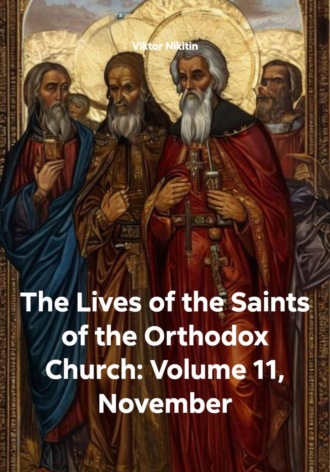
The Lives of the Saints of the Orthodox Church: Volume 11, November
Saints John, Stephen, and Isaiah of Georgia: 6th–7th centuries
These three saints were key figures in the early Christian Church of Georgia, known for their zeal in spreading the Gospel and defending orthodoxy against heresies. John was a bishop and preacher, Stephen a monk and teacher, and Isaiah a confessor who endured persecution for his faith. Together, they strengthened the Georgian Church’s foundations, fostering spiritual growth and unity. Their lives are celebrated for courage, learning, and pastoral dedication during formative centuries of Georgian Christianity.
Saint Clether, Hermit of Cornwall: 6th century
Saint Clether was a hermit who lived in seclusion in Cornwall, dedicating his life to prayer, fasting, and penance. His holiness attracted local people seeking spiritual advice and healing. Despite his reclusive lifestyle, Clether became a spiritual father to many and helped establish the Christian faith in the region during its early missionary period. His legacy remains in the numerous dedications and traditions that honor his memory.
Saint Birnstan, Bishop of Winchester: 10th century
Birnstan was a bishop known for his pastoral zeal, learning, and efforts to reform the Church in southern England. He worked to restore discipline among the clergy and promote monastic renewal. Birnstan was beloved by both clergy and laity for his gentle yet firm leadership. His episcopate contributed significantly to the spiritual and administrative strengthening of the English Church before the Norman Conquest.
Saint George (Karslidis) of Drama: 20th century
Saint George Karslidis was a Greek Orthodox elder and ascetic known for his humility, spiritual gifts, and deep compassion. Living during turbulent times in the 20th century, including wars and political upheaval, he remained a steadfast spiritual guide. George was renowned for his gifts of healing and prophecy, as well as his patience and love for all who sought his counsel. His life demonstrated the endurance of Christian holiness amid modern trials and continues to inspire many faithful.
Repose of Schemamonk Mark of Sarov Monastery: 20th century
Schemamonk Mark was a monk of the Sarov Monastery who lived a life of profound asceticism, prayer, and silence. He embraced the harsh monastic schema, dedicating himself fully to the spiritual struggle against passions. Mark’s life was marked by humility and a deep experience of God’s grace. His repose is commemorated as a reminder of the power of monastic discipline and the transformative potential of sincere repentance.
* * *
Lives of the Saints Celebrated on November 5
Apostles Patrobas, Hermas, Linus, Gaius, and Philologos of the Seventy: 1st century
Patrobas, Hermas, Linus, Gaius, and Philologos were among the Seventy Apostles sent forth by Christ to preach the Gospel and establish the early Church. These men were faithful companions and workers of the Apostle Paul and other early evangelists. Linus, notably, is traditionally considered the first Bishop of Rome after Peter, guiding the fledgling Church with wisdom and courage amid persecution. Patrobas, Hermas, Gaius, and Philologos spread the Christian faith across various regions, founding churches and nurturing new believers. They faced opposition and hardship but remained steadfast in their mission. Their lives exemplify dedication to apostolic ministry and tireless evangelism, laying foundations that would sustain Christianity through the ages.
Martyrs Galacteon and his wife Episteme at Emesa: 3rd century
Galacteon and Episteme were a devout Christian couple living in Emesa (modern-day Homs, Syria) who openly confessed their faith during a time of fierce persecution under Roman rule. Both were arrested for refusing to sacrifice to the pagan gods. They endured brutal tortures together, encouraging one another in faith and love. Their martyrdom by the sword became a powerful witness to Christian marital unity and shared commitment to Christ. Their example inspired many believers to stand firm, demonstrating that faith can unite spouses in even the most extreme trials.
Saint Jonah, Archbishop of Novgorod: late 15th century
Saint Jonah served as Archbishop of Novgorod during the late 1400s, a time of political unrest and spiritual challenge in Russia. Known for his deep humility, prayerfulness, and pastoral wisdom, he was a beloved shepherd of his flock. Jonah worked tirelessly to combat heresy, reform clerical life, and encourage the growth of monasticism. His leadership helped maintain the spiritual vitality of Novgorod amid social upheavals. Saint Jonah is remembered for his gentle yet firm guidance, and his life continues to inspire Russian Orthodox Christians seeking faithful episcopal leadership.
Saint Gregory, Archbishop of Alexandria: 7th century
Saint Gregory led the Church of Alexandria during the early 7th century, a period marked by theological disputes and external threats, including the rise of Islam. He was a learned theologian, defender of orthodoxy, and a compassionate pastor to his people. Gregory sought to maintain unity among Christians in Egypt, emphasizing charity and liturgical devotion. His tenure was marked by efforts to preserve the faith through teaching and personal holiness. Despite the challenges, he remained steadfast, leaving a legacy of theological clarity and pastoral care that influenced the Alexandrian Church for generations.
Martyrs Domninus, Timothy, Theophilus, Theotimus, Dorotheus, Eupsychius, Carterius, Pamphilius, Agathangelus, and Castorus of Palestine: 4th century
These ten martyrs from Palestine suffered under Roman persecution for their unwavering confession of Christ. They belonged to various walks of life, united by their faith and willingness to face death rather than deny Christ. Subjected to imprisonment, torture, and public execution, they witnessed to the power of faith over fear. Their collective martyrdom strengthened the Christian community in Palestine, encouraging perseverance amid adversity. Their courage and unity remain an inspiring example of steadfastness and brotherhood in the face of oppression.
Hieromartyr Silvanus, Bishop of Gaza: early 4th century
Bishop Silvanus was a courageous shepherd of the Christian flock in Gaza during the reign of Emperor Diocletian. Known for his pastoral zeal and deep faith, he boldly opposed pagan practices and encouraged Christians to stand firm. Silvanus was arrested and martyred for refusing to offer sacrifice to idols. His martyrdom underlined the role of bishops as both spiritual leaders and defenders of the faith. Silvanus’s example inspired many in the region to remain true to Christ, even in the face of deadly persecution.
Saint Kea, Bishop of Devon and Cornwall: 5th–6th centuries
Saint Kea was a Celtic bishop and missionary who evangelized the peoples of Devon and Cornwall during the early medieval period. Known for his miracles and gentle character, Kea traveled extensively, establishing churches and monastic communities. His work helped spread Christianity in southwestern Britain, blending local traditions with the wider Christian faith. Kea’s legacy endures in numerous dedications and the folklore surrounding his holy life. His example highlights the missionary zeal and cultural integration characteristic of early British Christianity.
Saint Odrada, Nun: 7th century
Saint Odrada was a nun renowned for her deep spirituality and asceticism. She lived a life of prayer, fasting, and service in a monastic community, becoming a model of holiness for her sisters. Odrada was known for her humility, wisdom, and compassion toward the poor and sick. Her peaceful death was marked by signs of divine favor, and her memory continues to inspire those pursuing the monastic calling. She is venerated for her quiet strength and dedication to a life wholly given to God.
Repose of Blessed Hilarion, Recluse of Troekurovo: 20th century
Blessed Hilarion lived as a recluse in Troekurovo, dedicating himself to solitary prayer, fasting, and ascetic struggle amid the challenges of the modern world. His life was a testimony to the power of quiet holiness and spiritual discipline. Hilarion bore the burdens of loneliness and temptation with steadfast faith, becoming a source of inspiration for many seeking deeper union with God. His repose is commemorated as a reminder that even in solitude, the grace of God can flourish, illuminating the path for others in contemporary monasticism.
* * *
Lives of the Saints Celebrated on November 6
Saint Paul the Confessor, Archbishop of Constantinople: 4th century
Saint Paul the Confessor was a towering figure in the early Church, serving as Archbishop of Constantinople during one of the most turbulent theological and political periods of the 4th century. He was a zealous defender of Nicene Christianity, standing firmly against the widespread Arian heresy that denied the full divinity of Christ. His leadership was marked by intense conflict with imperial authorities who favored Arianism, leading to multiple exiles and sufferings for the faith. Despite these trials, Paul’s unwavering commitment to orthodox doctrine strengthened the Church in Constantinople and beyond. He was also deeply pastoral, caring tenderly for his flock, encouraging unity, and working tirelessly to preserve the purity of Christian teaching. His example as a confessor, enduring hardship rather than compromise, remains a beacon for all who face opposition for their faith.
Saint Barlaam, Abbot of Chutin (Novgorod): 15th century
Saint Barlaam was a revered monastic leader and abbot in the Chutin Monastery near Novgorod during the 15th century, a period of spiritual revival and monastic flourishing in Russia. Known for his strict asceticism and deep prayer life, Barlaam instilled in his community a spirit of humility, obedience, and charity. He balanced rigorous discipline with profound compassion, ensuring that his monks grew in holiness without losing their love for neighbor. Under his guidance, the monastery became renowned as a center of spiritual enlightenment and pilgrimage. Barlaam’s influence extended beyond the monastery walls as he advised local rulers and laity alike, encouraging them to live in accordance with Christian virtues. His holiness and leadership left a lasting mark on Russian monasticism, inspiring generations to pursue a life dedicated to God in community.
Saint Luke, Monk of Sicily: 10th century
Saint Luke was a humble monk who lived in Sicily during the 10th century, a time when Byzantine influence permeated the island’s Christian life. Known for his steadfast commitment to asceticism, Luke sought to live a life of simplicity and prayer, withdrawing often into solitude to cultivate union with God. Despite his desire for solitude, he was deeply involved in the monastic community, serving as a spiritual guide and comforter to those around him. Luke was especially noted for his charity, tending to the sick and poor with gentleness and patience. His life exemplified the synthesis of contemplative solitude and active compassion, showing that true holiness involves both intimate prayer and selfless service. His memory continues to inspire those seeking a balanced monastic path grounded in love and devotion.
Martyrs Tecusa, Alexandra, Claudia, Matrona, Polactia, Euphrosyne, and Athanasia of Ancyra: 3rd century
These seven women martyrs of Ancyra were extraordinary examples of faith, courage, and sisterly love during the brutal Roman persecutions of the 3rd century. Each was renowned not only for her personal holiness but also for her charitable works, often caring for imprisoned Christians and the needy. Their arrest came when they refused to renounce Christ or participate in pagan sacrifices, demonstrating extraordinary bravery. Despite facing horrific tortures, including scourging and imprisonment, they encouraged one another and witnessed with unwavering conviction. Their execution by the sword was a profound testimony to the power of faith and community among early Christian women. Their lives inspired many to embrace the Gospel courageously, and their shared martyrdom became a powerful symbol of unity and steadfastness in the face of death.
Saint Luke, Steward of the Kiev Caves: 12th century
Saint Luke was entrusted with the critical role of steward at the Kiev Pechersk Lavra, the great monastery that became a spiritual center for the Slavic world. Serving in the 12th century, he was responsible for managing the monastery’s resources with great prudence, ensuring that the monks could devote themselves fully to prayer and ascetic struggle without worldly distractions. Luke’s humility and practical wisdom made him beloved among the brethren, as he combined meticulous care for material needs with a deep spiritual sensitivity. Beyond his administrative role, he was known for his personal holiness, spending hours in prayer and fasting. Saint Luke’s life highlights the often-overlooked virtue of service as a path to sanctity, showing how even practical duties can be sanctified when done with love and dedication to God.
Saint Barlaam of Keret Lake: 15th century
Living in the harsh and remote wilderness near Keret Lake, Saint Barlaam embraced a life of extreme asceticism and solitude in the 15th century. He sought to transcend the distractions of the world through rigorous prayer, fasting, and vigil. His hermitage became a place where God’s presence was deeply felt, attracting pilgrims and disciples who sought his spiritual counsel. Barlaam battled fierce temptations and spiritual warfare, exemplifying the monastic ideal of struggle for purity of heart. His holiness was marked by humility and a profound love for all creatures, reflecting the Byzantine hesychastic tradition that valued inner stillness. His life remains a shining example of the transformative power of solitude and the spiritual heights attainable through uncompromising devotion.
New-Martyr Gregory the Cross-bearer: 20th century
New-Martyr Gregory is remembered as a courageous witness of faith during the brutal persecutions that followed the Russian Revolution. Known as the Cross-bearer for his public and unyielding confession of Christ, Gregory endured arrest, torture, and imprisonment with unwavering courage. His suffering was not only physical but spiritual, as he bore the shame and mockery of his captors with the humility of Christ Himself. Gregory’s steadfastness inspired fellow prisoners and strengthened the underground Church during a dark era of suppression. His martyrdom is a vivid reminder that the ancient call to “take up your cross and follow Me” continues to echo in every age, encouraging believers to remain faithful even unto death.
Monk-martyr Nicander: 20th century
Monk Nicander, like many other monastic martyrs of the 20th century, represents the continuation of the ancient monastic tradition in the face of modern tyranny. Living a life of prayer, fasting, and humility, Nicander was arrested during anti-religious purges. Despite the horrors of imprisonment and torture, he remained spiritually unbroken, offering his sufferings for the salvation of others. His martyrdom was a powerful testimony to the enduring strength of Orthodox monasticism and its vital role in preserving the faith in times of great trial. Nicander’s life inspires contemporary believers to hold fast to the spiritual treasures of the past amid the challenges of the present.
Saint Paul, Fool-for-Christ: 16th century
Saint Paul chose the path of the Holy Fool, deliberately embracing a life of apparent madness and eccentricity in the 16th century to conceal his deep holiness. His feigned folly challenged societal norms, exposing vanity, hypocrisy, and spiritual complacency. Though misunderstood and often mocked, Paul’s actions were a radical form of spiritual warfare, inviting repentance through humility and self-emptying. His example calls Christians to seek true wisdom beyond worldly appearances and to embrace the paradox of divine foolishness that conquers worldly pride. His life challenges believers to look beyond the surface and to value holiness even when it appears strange or unsettling.
Saint Herman (Germanus), Archbishop of Kazan: 17th century
As Archbishop of Kazan in the 17th century, Saint Herman was a dynamic church leader who shepherded a diverse and often challenging flock. He worked tirelessly to root out pagan practices and heresies, emphasizing catechesis, liturgical life, and monastic reform. Herman’s pastoral approach combined firm orthodoxy with genuine compassion, striving to unite various ethnic and cultural groups under the banner of the Orthodox faith. His missionary zeal contributed to the growth and consolidation of Christianity in the Volga region, and his legacy includes numerous churches and monasteries. He is remembered as a courageous defender of the faith and a caring shepherd who prioritized the spiritual welfare of all.
Saint Winnoc, Abbot of St. Omer: 7th century
Saint Winnoc was a Celtic monk who became the abbot of the monastery at St. Omer in northern France during the 7th century. Renowned for his deep piety and miraculous works, he fostered a vibrant monastic community that combined strict asceticism with active charity. Winnoc’s leadership was marked by a commitment to learning, prayer, and service to the poor. His reputation for holiness spread widely, and pilgrims often sought his intercession. Under his guidance, St. Omer became a beacon of Christian spirituality in the region, influencing the spread of monastic ideals throughout northern Europe. Winnoc’s life stands as a testament to the power of faith lived in both contemplation and action.
Saint Illtud, Abbot of Llantwit Major: 5th–6th centuries
Saint Illtud was one of the foremost Celtic saints and educators of the early medieval British Isles. Living in the 5th and 6th centuries, he founded the monastery at Llantwit Major in Wales, which became a renowned center of Christian learning and missionary activity. Illtud was revered for his wisdom, teaching many future saints and bishops who carried the Gospel throughout Britain and beyond. He skillfully blended the Christian message with local traditions, helping to shape the unique Celtic Christian culture. His emphasis on education, holiness, and community life profoundly influenced the development of Western monasticism. Illtud’s legacy endures in the spiritual and cultural foundations he helped establish.
Saint Leontius the Great: 6th century
Saint Leontius served as a bishop and theologian during the 6th century, a time when the Church faced both internal and external challenges. Known for his eloquent preaching and deep theological insight, Leontius defended orthodox doctrine with courage and clarity. He was deeply involved in pastoral care, emphasizing charity and liturgical devotion, encouraging renewal among both clergy and laity. Leontius’s writings and sermons inspired many to live more holy and devoted lives. He also supported monastic communities, recognizing their vital role in the spiritual health of the Church. His life exemplifies the harmonious blend of intellect, pastoral love, and ascetic discipline.
Saint Abraham of Chotine: 10th century
Saint Abraham was a pioneering monastic figure in the region of Chotine during the 10th century, dedicated to spreading Christian faith in a land marked by paganism and conflict. He founded monasteries and missionary outposts, tirelessly working to evangelize and educate local populations. Known for his asceticism and miraculous deeds, Abraham inspired many to conversion and deeper faith. His spiritual leadership helped establish a strong Christian presence in a difficult environment, laying the groundwork for future ecclesiastical growth. Abraham’s life is a vivid example of missionary zeal combined with personal holiness.
Saint Melaine, Bishop of Rennes: 6th century
Saint Melaine was a beloved bishop in Brittany during the 6th century, revered for his deep compassion, pastoral dedication, and miraculous intercessions. He tirelessly evangelized the region, strengthening the Church’s foundations and reforming clerical life. Melaine was especially known for his care of the poor and sick, often personally ministering to those in need. His humility and piety earned him great respect, and numerous miracles were attributed to his prayers. He remains the patron saint of Rennes, with his feast day celebrated as a time of thanksgiving and spiritual renewal.
Synaxis of New-Martyrs of Sarov: Anatole, Basil, Hierotheus, Isaac, and Rufinus: 20th century
These New-Martyrs from Sarov suffered martyrdom during the violent anti-religious persecutions of the 20th century. Each, in their own way, exemplified steadfast faith under duress—whether through pastoral ministry, monastic life, or lay witness. Despite facing imprisonment, torture, and death, they remained unwavering, inspiring countless others to hold fast to their faith. Their collective commemoration highlights the continuity of martyrdom in modern times and affirms the power of grace amid persecution. The Synaxis serves as a reminder of the Church’s living witness and the triumph of faith over oppression.
Commemoration of the Sarov Monastery Elders: Pachomius, Pitirim, Matthew, Joseph, and Joachim: 19th–20th centuries
The Elders of Sarov Monastery were revered spiritual fathers who lived in the 19th and early 20th centuries, guiding countless monks and pilgrims toward deeper communion with God. Pachomius, Pitirim, Matthew, Joseph, and Joachim cultivated a rich tradition of prayer, asceticism, and spiritual wisdom that made Sarov a renowned center of Orthodox spirituality. Their teachings emphasized humility, love, and unceasing prayer, offering practical and mystical guidance to all who sought their counsel. The Elders’ legacies continue to influence Orthodox monasticism, embodying the fruits of holiness and elderhood that nourish the wider Church.
* * *
Lives of the Saints Celebrated on November 7
Holy 33 Martyrs of Melitene: Hieron, Hesychius, Nicander, Athanasius, Mamas, Barachius, Callinicus, Theogenes, Nicon, Longinus, Theodore, Valerius, Xanthius, Theodulus, Callimachus, Eugene, Theodochus, Ostrychius, Epiphanius, Maximian, Ducitius, Claudian, Theophilus, Gigantius, Dorotheus, Theodotus, Castrychius, Anicletus, Theomelius, Eutychius, Hilarion, Diodotus, and Amonitus: ca. 4th century
The Holy 33 Martyrs of Melitene were a group of courageous Christians who lived during the turbulent 4th century in the city of Melitene, located in what is now eastern Turkey. These men, many of whom held various roles in society, were united by their steadfast confession of Christ during a period of intense persecution under Roman authorities. When called upon to renounce their faith and offer sacrifice to pagan gods, they resolutely refused, demonstrating exceptional courage and conviction. Their collective martyrdom came through various means, including imprisonment, torture, and execution, yet they remained unwavering to the end. The solidarity they showed in suffering and faith served as a powerful witness to the early Christian community. Their story was preserved as a testament to the strength that faith can grant when faced with overwhelming opposition.
Saint Lazarus the Wonder-worker of Mount Galesius near Ephesus: 9th century
Saint Lazarus, known as the Wonder-worker, was a revered ascetic and spiritual figure who lived on Mount Galesius near Ephesus during the 9th century. From an early age, he pursued a life of prayer, fasting, and solitude, dedicating himself wholly to God in the monastic tradition. Renowned for his deep humility and mystical gifts, Lazarus became a beacon of holiness for many monks and laypeople alike. Numerous miracles were attributed to his prayers, healing the sick and comforting the troubled. His life was marked by strict asceticism yet balanced with profound compassion and wisdom. Saint Lazarus exemplified the power of grace working in a humble servant, and his legacy continues to inspire those seeking deeper spiritual communion.
Martyrs Melasippus, Carina, their son Antoninus, and 40 children converted by their martyrdom at Ancyra: 3rd century
Melasippus and Carina were devout Christians living in Ancyra during the 3rd century who faced persecution with extraordinary faith. Their son Antoninus and a large group of children, many of whom were converted through witnessing their parents’ courageous witness, were martyred alongside them. This extended family and their followers showed remarkable strength and unity, enduring torture and death rather than renounce their belief in Christ. Their martyrdom was not only a personal sacrifice but a source of conversion and inspiration for many others in Ancyra and surrounding regions. The story of their sacrifice highlights the power of witness and the profound impact of familial faith, passing from generation to generation even through the ultimate trial of death.