bannerbanner
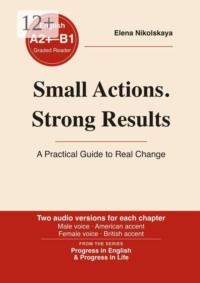
Small actions, strong results. Learn English and Build Life Skills

Полная версия

Small actions, strong results. Learn English and Build Life Skills

Язык: Английский
Год издания: 2025
Добавлена:
Настройки чтения
Размер шрифта
Высота строк
Поля

Small actions, strong results

Learn English and Build Life Skills


Elena Nikolskaya

© Elena Nikolskaya, 2025


ISBN 978-5-0068-7351-3

Created with Ridero smart publishing system

INTRODUCTION

Welcome!


This book is simple.

This book is honest.

This book is for busy adults who want progress, not drama.


Let’s be direct. Many people want a better life. But they wait for a “perfect moment.” They plan big steps. They dream about big change. And then… nothing happens. The plan is too big. The day is too busy. The mind is too tired.


Small steps work better.

Small steps are realistic.

Small steps fit into a normal day.

You do not need a new life.

You need one clear move today.


This book helps you make these small moves. You will take short actions. You will think in a clean and simple way. You will stop fighting with yourself. You will start living with more calm and more focus.


Let’s be honest. You do not need more motivation. You do not need a secret trick. You do not need a perfect plan. You need clarity. You need one easy habit. You need one simple thought that helps you act.


Big change is slow.

Small change starts now.


This book is not here to impress you. It is here to help you. It speaks to you like a real person. Calm. Clear. Direct.


You will read short chapters.

You will get a small vocabulary list.

You will answer a few questions.

You will do one small task.

These tasks are simple. They do not take much time. They help you move. One step today. One step tomorrow. This is enough.


Life will not get easier in one week. Work will stay busy. People will stay loud. Problems will come and go. But you can get stronger. You can get calmer. You can choose what matters.


Small steps build trust in yourself.

Small actions build a better life.

And you can start now.


Let’s go!

PART 1 – Small Changes

CHAPTER 1 – One SMALL STEP EVERY DAY

Let’s be clear. Many people want fast change. They want a new life, a new body, a new mind. But big change needs time, and life is already full. Your day has work, tasks, calls, stress, and noise. A big plan looks strong, but it is too heavy for a normal day. This is why small steps matter.

1. Idea of Small Steps

A small step is simple. It does not need much time. It does not need much energy. You can do a small step even when you feel tired. You can do it when you feel busy. You can do it when you feel stressed. A small step fits into almost any moment.


Small steps may look unimportant, but they are not. A small step is a signal. It tells your mind, “I can do this.” When you repeat this message many days in a row, you build quiet trust. And trust is stronger than motivation. Motivation comes and goes. Trust stays.


Think of a long walk. You do not jump to the end. You move step by step. Each step is small, but each step counts. Real change works the same way.

2. Why Big Plans Fail

Big plans usually start with high energy:

“I will wake up at 5.”

“I will run every day.”

“I will read two hours.”

“I will eat only healthy food.”


This looks good on paper. But life is not paper.


You wake up tired.

The day starts late.

Work needs more time.

A problem appears.

Someone calls you.

You feel stress.

Your plan breaks.


People blame themselves. They say, “I failed again.” But the truth is simple: the plan was too big. Not you. Big plans fail because they need perfect days. And perfect days are rare.


Your brain also hates big pressure. When something looks too hard, your brain stops you. A small step feels safe. A big plan feels dangerous. So you avoid it.


This is how big plans die and how guilt grows. But guilt does not help you change. A small step does.

3. One Simple Action

A small action starts real change. It is not heavy. It is not dramatic. It is clear and easy.


Here are simple examples:


Drink one glass of water.

Take one calm breath.

Clean one small corner.

Stretch for thirty seconds.

Write one short line in a notebook.

Walk for three minutes.

Turn off one loud app.


These actions are tiny. But tiny actions open the door. After one small step, the next step is easier. After one minute today, two minutes tomorrow feel possible.


Your action must be simple enough that you cannot say “no.” When the step is small, your brain says, “Fine, let’s do it.” This is how progress begins.


Do not try to change ten things at once. Choose one action. Repeat it every day. Let it grow slowly. Let it become part of your life. Slow is fine. Slow is strong.

4. Key Takeaway

Small steps work because they meet you where you are. They fit real life, not a perfect fantasy. A small step builds trust. Trust builds action. Action builds real change.


Big plans fall.

Small steps stay.


Your job is simple:

Show up every day.

Just a little.

Just enough.

This is how you win long term.


VOCABULARY

step – small move forward

plan – idea for future actions

easy – not difficult

tired – low energy

start – begin something

change – make something different

move – go forward

safe – without danger

signal – small message or sign

QUESTIONS

1. Why do big plans often fail?


2. What small step feels easy for you today?


3. How do small steps build trust?


4. What happens after one tiny action?

MINI TASK

✓ Choose one tiny step for today.


✓ Make it so simple you can do it in one minute.


✓ Do it now.


✓ Say quietly: “I can do this again tomorrow.”

CHAPTER 2 – MAKE GOOD HABITS EASY

Here is the truth. Good habits are not about strength. They are not about willpower. They are about simple choices and easy steps. Your day is busy. Your mind is full. A good habit must fit your real life, not a perfect version of it.


Big change needs energy. But small habits can grow even on a tired day. The key is your environment. When your space supports you, the habit becomes light. When your space fights you, the habit becomes hard.

1. Environment Helps

Your environment is the place around you. It can help you or block you. Willpower changes every day, but your environment stays the same. This is why environment matters more.


If you want to drink more water, keep the bottle near you.

If you want to read more, put the book where you see it.

If you want to move more, keep your shoes close to the door.

If you want to learn something, place your tools in a clear spot.


When something is easy to see, it becomes easy to start. The environment gives you a quiet push. It says, “Do it now. It’s simple.”


Many people try to build a habit with strong motivation. But motivation is like weather – it changes fast. Your environment is like the ground – stable, calm, always there. So change the ground first.


A friendly space grows friendly habits. A crowded or messy space grows stress.


2. Remove Barriers

Small barriers stop good habits. A barrier is anything that makes the first step hard. It can be physical or mental.


A closed door.

A messy desk.

A loud TV.

A cold room.

A phone full of apps.

A bag in another corner.


These small things look simple, but they block action. They make you think, “Later.” And “later” often becomes “never.”


Imagine this: you want to stretch for two minutes. But the mat is behind a chair. You need to move things, find space, make time. This feels big. So you stop before you start.


You are not lazy.

The barrier was bigger than the habit.


So remove one barrier. Just one.

Move the mat to an open place.

Turn off the TV.

Clear your desk.

Charge your device in another room.

Open the window for fresh air.


When the barrier disappears, the habit becomes light. You begin faster. You finish easier. One tiny change can help you again and again.

3. Small Setups

A setup is a small plan that makes tomorrow easier. It takes one minute now but saves ten minutes later. A setup is a gift to your future self.


Lay out your clothes at night.

Prepare a small list for the morning.

Put healthy food at eye level in the fridge.

Keep your notebook open on your desk.

Turn off noisy apps before sleep.

Place needed items in one simple spot.


These setups look simple. They are simple. But they remove thinking. They remove stress. They remove the “Where do I start?” moment that kills habits.


When the next step is clear, your brain relaxes. You feel ready. You act without pressure.


Small setups save energy.

Saved energy builds good habits.

Good habits build a better day.

4. Key Takeaway

Do not push yourself harder.

Shape your environment instead.


Make good habits easy.

Make bad habits hard.


A tiny change in your space can change your day. One small setup. One removed barrier. One friendly place for a good action.


Your job is not to fight.

Your job is to prepare.

One small change at a time.

VOCABULARY

environment – place around you

barrier – something that stops you

clear – clean and simple

prepare – get ready

energy – power to act

setup – small plan for the next step

choice – a thing you decide

messy – not clean, not in order

QUESTIONS

1. Why is environment more stable than willpower?


2. What is one barrier that stops you during the day?


3. How can a small setup make tomorrow easier?


4. What can you change in your space right now?

MINI TASK

✓ Choose one habit you want to grow.


✓ Remove one tiny barrier.


✓ Or create one tiny setup.


✓ Do it now.

CHAPTER 3 – BREAK BAD HABITS SLOWLY

Let’s keep it simple. Bad habits do not break in one day. They grow slowly, and they also change slowly. Many people try to stop a bad habit with strong pressure: “I will never do this again.” But pressure creates stress, and stress brings the habit back. There is a calmer way. A slower way. A smarter way.

1. Why “Stop Now” Fails

The idea “just stop” sounds strong. It feels like a clean decision. But real life does not work like this. Your day has stress, tasks, noise, and emotions. A bad habit often helps you escape stress for a short moment. This is why it feels powerful.


When you try to stop fast, your mind fights back. It says:

“I need this.”

“I want this.”

“Not now.”


The habit becomes even stronger. You feel guilt, and guilt makes the habit heavier.


For example:

You want to stop scrolling your phone at night. But the habit calms you after a long day. So your brain says, “Just a few minutes.” And a few minutes turn into one hour.


You did not fail.

The “stop now” idea failed.


Fast change is too sharp. Slow change is kinder. And kindness works better.

2. Reduce, Don’t Fight

Instead of cutting a habit fast, reduce it slowly. Make the habit smaller, lighter, softer.


If you drink five cups of coffee, drink four this week.

If you scroll for an hour, scroll for forty minutes.

Конец ознакомительного фрагмента.

Текст предоставлен ООО «Литрес».

Прочитайте эту книгу целиком, купив полную легальную версию на Литрес.

Безопасно оплатить книгу можно банковской картой Visa, MasterCard, Maestro, со счета мобильного телефона, с платежного терминала, в салоне МТС или Связной, через PayPal, WebMoney, Яндекс.Деньги, QIWI Кошелек, бонусными картами или другим удобным Вам способом.

Конец ознакомительного фрагмента
Купить и скачать всю книгу