



Полная версия
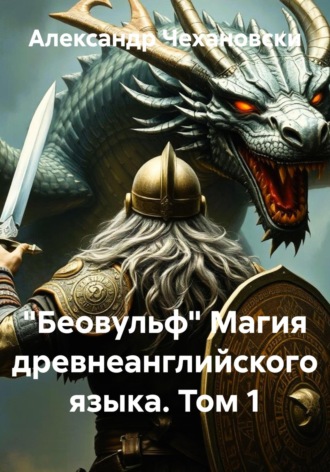
"Беовульф" Магия древнеанглийского языка. Том 1
and entered in. At the awful sight
tottered that guest, and terror seized him;
yet the wretched fugitive rallied anon
from fright and fear ere he fled away,
and took the cup from that treasure-hoard.
Of such besides there was store enough,
heirlooms old, the earth below,
which some earl forgotten, in ancient years,
left the last of his lofty race,
heedfully there had hidden away,
dearest treasure. For death of yore
had hurried all hence; and he alone
left to live, the last of the clan,
weeping his friends, yet wished to bide
warding the treasure, his one delight,
though brief his respite. The barrow, new-ready,
to strand and sea-waves stood anear,
hard by the headland, hidden and closed;
there laid within it his lordly heirlooms
and heaped hoard of heavy gold
that warden of rings. Few words he spake:
«Now hold thou, earth, since heroes may not,
what earls have owned! Lo, erst from thee
brave men brought it! But battle-death seized
and cruel killing my clansmen all,
robbed them of life and a liegeman’s joys.
None have I left to lift the sword,
or to cleanse the carven cup of price,
beaker bright. My brave are gone.
And the helmet hard, all haughty with gold,
shall part from its plating. Polishers sleep
who could brighten and burnish the battle-mask;
and those weeds of war that were wont to brave
over bicker of shields the bite of steel
rust with their bearer. The ringed mail
fares not far with famous chieftain,
at side of hero! No harp’s delight,
no glee-wood’s gladness! No good hawk now
flies through the hall! Nor horses fleet
stamp in the burgstead! Battle and death
the flower of my race have reft away.»
Mournful of mood, thus he moaned his woe,
alone, for them all, and unblithe wept
by day and by night, till death’s fell wave
o’erwhelmed his heart. His hoard-of-bliss
that old ill-doer open found,
who, blazing at twilight the barrows haunteth,
naked foe-dragon flying by night
folded in fire: the folk of earth
dread him sore. «Tis his doom to seek
hoard in the graves, and heathen gold
to watch, many-wintered: nor wins he thereby!
Powerful this plague-of-the-people thus
held the house of the hoard in earth
three hundred winters; till One aroused
wrath in his breast, to the ruler bearing
that costly cup, and the king implored
for bond of peace. So the barrow was plundered,
borne off was booty. His boon was granted
that wretched man; and his ruler saw
first time what was fashioned in far-off days.
When the dragon awoke, new woe was kindled.
O’er the stone he snuffed. The stark-heart found
footprint of foe who so far had gone
in his hidden craft by the creature’s head. —
So may the undoomed easily flee
evils and exile, if only he gain
the grace of The Wielder! – That warden of gold
o’er the ground went seeking, greedy to find
the man who wrought him such wrong in sleep.
Savage and burning, the barrow he circled
all without; nor was any there,
none in the waste… Yet war he desired,
was eager for battle. The barrow he entered,
sought the cup, and discovered soon
that some one of mortals had searched his treasure,
his lordly gold. The guardian waited
ill-enduring till evening came;
boiling with wrath was the barrow’s keeper,
and fain with flame the foe to pay
for the dear cup’s loss. – Now day was fled
as the worm had wished. By its wall no more
was it glad to bide, but burning flew
folded in flame: a fearful beginning
for sons of the soil; and soon it came,
in the doom of their lord, to a dreadful end.
THEN the baleful fiend its fire belched out,
and bright homes burned. The blaze stood high
all landsfolk frighting. No living thing
would that loathly one leave as aloft it flew.
Wide was the dragon’s warring seen,
its fiendish fury far and near,
as the grim destroyer those Geatish people
hated and hounded. To hidden lair,
to its hoard it hastened at hint of dawn.
Folk of the land it had lapped in flame,
with bale and brand. In its barrow it trusted,
its battling and bulwarks: that boast was vain!
To Beowulf then the bale was told
quickly and truly: the king’s own home,
of buildings the best, in brand-waves melted,
that gift-throne of Geats. To the good old man
sad in heart, «twas heaviest sorrow.
The sage assumed that his sovran God
he had angered, breaking ancient law,
and embittered the Lord. His breast within
with black thoughts welled, as his wont was never.
The folk’s own fastness that fiery dragon
with flame had destroyed, and the stronghold all
washed by waves; but the warlike king,
prince of the Weders, plotted vengeance.
Warriors’-bulwark, he bade them work
all of iron – the earl’s commander —
a war-shield wondrous: well he knew
that forest-wood against fire were worthless,
linden could aid not. – Atheling brave,
he was fated to finish this fleeting life,
his days on earth, and the dragon with him,
though long it had watched o’er the wealth of the hoard! —
Shame he reckoned it, sharer-of-rings,
to follow the flyer-afar with a host,
a broad-flung band; nor the battle feared he,
nor deemed he dreadful the dragon’s warring,
its vigor and valor: ventures desperate
he had passed a-plenty, and perils of war,
contest-crash, since, conqueror proud,
Hrothgar’s hall he had wholly purged,
and in grapple had killed the kin of Grendel,
loathsome breed! Not least was that
of hand-to-hand fights where Hygelac fell,
when the ruler of Geats in rush of battle,
lord of his folk, in the Frisian land,
son of Hrethel, by sword-draughts died,
by brands down-beaten. Thence Beowulf fled
through strength of himself and his swimming power,
though alone, and his arms were laden with thirty
coats of mail, when he came to the sea!
Nor yet might Hetwaras haughtily boast
their craft of contest, who carried against him
shields to the fight: but few escaped
from strife with the hero to seek their homes!
Then swam over ocean Ecgtheow’s son
lonely and sorrowful, seeking his land,
where Hygd made him offer of hoard and realm,
rings and royal-seat, reckoning naught
the strength of her son to save their kingdom
from hostile hordes, after Hygelac’s death.
No sooner for this could the stricken ones
in any wise move that atheling’s mind
over young Heardred’s head as lord
and ruler of all the realm to be:
yet the hero upheld him with helpful words,
aided in honor, till, older grown,
he wielded the Weder-Geats. – Wandering exiles
sought him o’er seas, the sons of Ohtere,
who had spurned the sway of the Scylfings’-helmet,
the bravest and best that broke the rings,
in Swedish land, of the sea-kings’ line,
haughty hero. Hence Heardred’s end.
For shelter he gave them, sword-death came,
the blade’s fell blow, to bairn of Hygelac;
but the son of Ongentheow sought again
house and home when Heardred fell,
leaving Beowulf lord of Geats
and gift-seat’s master. – A good king he!
THE fall of his lord he was fain to requite
in after days; and to Eadgils he proved
friend to the friendless, and forces sent
over the sea to the son of Ohtere,
weapons and warriors: well repaid he
those care-paths cold when the king he slew.
Thus safe through struggles the son of Ecgtheow
had passed a plenty, through perils dire,
with daring deeds, till this day was come
that doomed him now with the dragon to strive.
With comrades eleven the lord of Geats
swollen in rage went seeking the dragon.
He had heard whence all the harm arose
and the killing of clansmen; that cup of price
on the lap of the lord had been laid by the finder.
In the throng was this one thirteenth man,
starter of all the strife and ill,
care-laden captive; cringing thence
forced and reluctant, he led them on
till he came in ken of that cavern-hall,
the barrow delved near billowy surges,
flood of ocean. Within «twas full
of wire-gold and jewels; a jealous warden,
warrior trusty, the treasures held,
lurked in his lair. Not light the task
of entrance for any of earth-born men!
Sat on the headland the hero king,
spake words of hail to his hearth-companions,
gold-friend of Geats. All gloomy his soul,
wavering, death-bound. Wyrd full nigh
stood ready to greet the gray-haired man,
to seize his soul-hoard, sunder apart
life and body. Not long would be
the warrior’s spirit enwound with flesh.
Beowulf spake, the bairn of Ecgtheow:—
«Through store of struggles I strove in youth,
mighty feuds; I mind them all.
I was seven years old when the sovran of rings,
friend-of-his-folk, from my father took me,
had me, and held me, Hrethel the king,
with food and fee, faithful in kinship.
Ne’er, while I lived there, he loathlier found me,
bairn in the burg, than his birthright sons,
Herebeald and Haethcyn and Hygelac mine.
For the eldest of these, by unmeet chance,
by kinsman’s deed, was the death-bed strewn,
when Haethcyn killed him with horny bow,
his own dear liege laid low with an arrow,
missed the mark and his mate shot down,
one brother the other, with bloody shaft.
A feeless fight, and a fearful sin,
horror to Hrethel; yet, hard as it was,
unavenged must the atheling die!
Too awful it is for an aged man
to bide and bear, that his bairn so young
rides on the gallows. A rime he makes,
sorrow-song for his son there hanging
as rapture of ravens; no rescue now
can come from the old, disabled man!
Still is he minded, as morning breaks,
of the heir gone elsewhere; another he hopes not
he will bide to see his burg within
as ward for his wealth, now the one has found
doom of death that the deed incurred.
Forlorn he looks on the lodge of his son,
wine-hall waste and wind-swept chambers
reft of revel. The rider sleepeth,
the hero, far-hidden; no harp resounds,
in the courts no wassail, as once was heard.
«THEN he goes to his chamber, a grief-song chants
alone for his lost. Too large all seems,
homestead and house. So the helmet-of-Weders
hid in his heart for Herebeald
waves of woe. No way could he take
to avenge on the slayer slaughter so foul;
nor e’en could he harass that hero at all
with loathing deed, though he loved him not.
And so for the sorrow his soul endured,
men’s gladness he gave up and God’s light chose.
Lands and cities he left his sons
(as the wealthy do) when he went from earth.
There was strife and struggle «twixt Swede and Geat
o’er the width of waters; war arose,
hard battle-horror, when Hrethel died,
and Ongentheow’s offspring grew
strife-keen, bold, nor brooked o’er the seas
pact of peace, but pushed their hosts
to harass in hatred by Hreosnabeorh.
Men of my folk for that feud had vengeance,
for woful war («tis widely known),
though one of them bought it with blood of his heart,
a bargain hard: for Haethcyn proved
fatal that fray, for the first-of-Geats.
At morn, I heard, was the murderer killed
by kinsman for kinsman, with clash of sword,
when Ongentheow met Eofor there.
Wide split the war-helm: wan he fell,
hoary Scylfing; the hand that smote him
of feud was mindful, nor flinched from the death-blow.
– «For all that he gave me, my gleaming sword
repaid him at war, – such power I wielded, —
for lordly treasure: with land he entrusted me,
homestead and house. He had no need
from Swedish realm, or from Spear-Dane folk,
or from men of the Gifths, to get him help, —
some warrior worse for wage to buy!
Ever I fought in the front of all,
sole to the fore; and so shall I fight
while I bide in life and this blade shall last
that early and late hath loyal proved
since for my doughtiness Daeghrefn fell,
slain by my hand, the Hugas’ champion.
Nor fared he thence to the Frisian king
with the booty back, and breast-adornments;
but, slain in struggle, that standard-bearer
fell, atheling brave. Not with blade was he slain,
but his bones were broken by brawny gripe,
his heart-waves stilled. – The sword-edge now,
hard blade and my hand, for the hoard shall strive.»
Beowulf spake, and a battle-vow made
his last of all: «I have lived through many
wars in my youth; now once again,
old folk-defender, feud will I seek,
do doughty deeds, if the dark destroyer
forth from his cavern come to fight me!»
Then hailed he the helmeted heroes all,
for the last time greeting his liegemen dear,
comrades of war: «I should carry no weapon,
no sword to the serpent, if sure I knew
how, with such enemy, else my vows
I could gain as I did in Grendel’s day.
But fire in this fight I must fear me now,
and poisonous breath; so I bring with me
breastplate and board. From the barrow’s keeper
no footbreadth flee I. One fight shall end
our war by the wall, as Wyrd allots,
all mankind’s master. My mood is bold
but forbears to boast o’er this battling-flyer.
– Now abide by the barrow, ye breastplate-mailed,
ye heroes in harness, which of us twain
better from battle-rush bear his wounds.
Wait ye the finish. The fight is not yours,
nor meet for any but me alone
to measure might with this monster here
and play the hero. Hardily I
shall win that wealth, or war shall seize,
cruel killing, your king and lord!»
Up stood then with shield the sturdy champion,
stayed by the strength of his single manhood,
and hardy «neath helmet his harness bore
under cleft of the cliffs: no coward’s path!
Soon spied by the wall that warrior chief,
survivor of many a victory-field
where foemen fought with furious clashings,
an arch of stone; and within, a stream
that broke from the barrow. The brooklet’s wave
was hot with fire. The hoard that way
he never could hope unharmed to near,
or endure those deeps, for the dragon’s flame.
Then let from his breast, for he burst with rage,
the Weder-Geat prince a word outgo;
stormed the stark-heart; stern went ringing
and clear his cry «neath the cliff-rocks gray.
The hoard-guard heard a human voice;
his rage was enkindled. No respite now
for pact of peace! The poison-breath
of that foul worm first came forth from the cave,
hot reek-of-fight: the rocks resounded.
Stout by the stone-way his shield he raised,
lord of the Geats, against the loathed-one;
while with courage keen that coiled foe
came seeking strife. The sturdy king
had drawn his sword, not dull of edge,
heirloom old; and each of the two
felt fear of his foe, though fierce their mood.
Stoutly stood with his shield high-raised
the warrior king, as the worm now coiled
together amain: the mailed-one waited.
Now, spire by spire, fast sped and glided
that blazing serpent. The shield protected,
soul and body a shorter while
for the hero-king than his heart desired,
could his will have wielded the welcome respite
but once in his life! But Wyrd denied it,
and victory’s honors. – His arm he lifted
lord of the Geats, the grim foe smote
with atheling’s heirloom. Its edge was turned
brown blade, on the bone, and bit more feebly
than its noble master had need of then
in his baleful stress. – Then the barrow’s keeper
waxed full wild for that weighty blow,
cast deadly flames; wide drove and far
those vicious fires. No victor’s glory
the Geats’ lord boasted; his brand had failed,
naked in battle, as never it should,
excellent iron! – «Twas no easy path
that Ecgtheow’s honored heir must tread
over the plain to the place of the foe;
for against his will he must win a home
elsewhere far, as must all men, leaving
this lapsing life! – Not long it was
ere those champions grimly closed again.
The hoard-guard was heartened; high heaved his breast
once more; and by peril was pressed again,
enfolded in flames, the folk-commander!
Nor yet about him his band of comrades,
sons of athelings, armed stood
with warlike front: to the woods they bent them,
their lives to save. But the soul of one
with care was cumbered. Kinship true
can never be marred in a noble mind!
WIGLAF his name was, Weohstan’s son,
linden-thane loved, the lord of Scylfings,
Aelfhere’s kinsman. His king he now saw
with heat under helmet hard oppressed.
He minded the prizes his prince had given him,
wealthy seat of the Waegmunding line,
and folk-rights that his father owned
Not long he lingered. The linden yellow,
his shield, he seized; the old sword he drew: —
as heirloom of Eanmund earth-dwellers knew it,
who was slain by the sword-edge, son of Ohtere,
friendless exile, erst in fray
killed by Weohstan, who won for his kin
brown-bright helmet, breastplate ringed,
old sword of Eotens, Onela’s gift,
weeds of war of the warrior-thane,
battle-gear brave: though a brother’s child
had been felled, the feud was unfelt by Onela.
For winters this war-gear Weohstan kept,
breastplate and board, till his bairn had grown
earlship to earn as the old sire did:
then he gave him, mid Geats, the gear of battle,
portion huge, when he passed from life,
fared aged forth. For the first time now
with his leader-lord the liegeman young
was bidden to share the shock of battle.
Neither softened his soul, nor the sire’s bequest
weakened in war. So the worm found out
when once in fight the foes had met!
Wiglaf spake, – and his words were sage;
sad in spirit, he said to his comrades:—
«I remember the time, when mead we took,
what promise we made to this prince of ours
in the banquet-hall, to our breaker-of-rings,
for gear of combat to give him requital,
for hard-sword and helmet, if hap should bring
stress of this sort! Himself who chose us
from all his army to aid him now,
urged us to glory, and gave these treasures,
because he counted us keen with the spear
and hardy «neath helm, though this hero-work
our leader hoped unhelped and alone
to finish for us, – folk-defender
who hath got him glory greater than all men
for daring deeds! Now the day is come
that our noble master has need of the might
of warriors stout. Let us stride along
the hero to help while the heat is about him
glowing and grim! For God is my witness
I am far more fain the fire should seize
along with my lord these limbs of mine!
Unsuiting it seems our shields to bear
homeward hence, save here we essay
to fell the foe and defend the life
of the Weders’ lord. I wot «twere shame
on the law of our land if alone the king
out of Geatish warriors woe endured
and sank in the struggle! My sword and helmet,
breastplate and board, for us both shall serve!»
Through slaughter-reek strode he to succor his chieftain,
his battle-helm bore, and brief words spake:—
«Beowulf dearest, do all bravely,
as in youthful days of yore thou vowedst
that while life should last thou wouldst let no wise
thy glory droop! Now, great in deeds,
atheling steadfast, with all thy strength
shield thy life! I will stand to help thee.»
At the words the worm came once again,
murderous monster mad with rage,
with fire-billows flaming, its foes to seek,
the hated men. In heat-waves burned
that board to the boss, and the breastplate failed
to shelter at all the spear-thane young.
Yet quickly under his kinsman’s shield
went eager the earl, since his own was now
all burned by the blaze. The bold king again
had mind of his glory: with might his glaive
was driven into the dragon’s head, —
blow nerved by hate. But Naegling was shivered,
broken in battle was Beowulf’s sword,
old and gray. «Twas granted him not
that ever the edge of iron at all
could help him at strife: too strong was his hand,
so the tale is told, and he tried too far
with strength of stroke all swords he wielded,
though sturdy their steel: they steaded him nought.
Then for the third time thought on its feud
that folk-destroyer, fire-dread dragon,
and rushed on the hero, where room allowed,
battle-grim, burning; its bitter teeth
closed on his neck, and covered him
with waves of blood from his breast that welled.
«Twas now, men say, in his sovran’s need
that the earl made known his noble strain,