


Полная версия
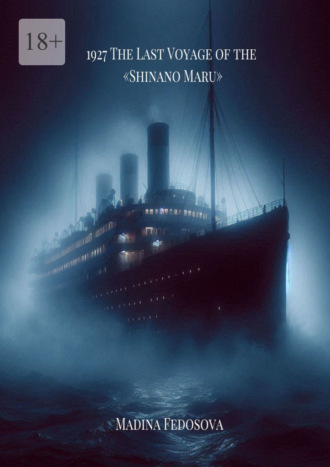
1927. The Last Voyage of the “Shinano-maru”
“TODAY: ‘TOKYO ROMANCE’ (USA, 1945). SPECIAL SCREENING FOR OUR JAPANESE FRIENDS!”
“ — Only five yen for a ticket!” — a young Japanese man in a cowboy hat (a gift from a sergeant in the 11th Airborne Division) pranced on a C-ration crate. “After the show — a draw for real Levi’s! The winner will get the jeans that General MacArthur himself wears!”
In the crowd stood 72-year-old O-Tama, the widow of a fisherman from Okinawa. Her kimono made of homespun silk (the last roll that survived the Naha bombing) was worn thin, but washed with such care that the folds shone like blades.
“ — Five yen… — » her fingers, scarred from fishing nets, clutched a small knot with three copper coins. “Last year, you could buy for this money:
10 sheets of nori (enough for a month of rice balls)
3 small bags of salt (to salt the fish for the winter)
A visit to the public bathhouse for the whole family (the last luxury before the coal furnaces destroyed the sento)
Next to her, 19-year-old Michiko, a former student of a girls’ high school, was fixing her “Veronica Lake” hairstyle — which was worn by the heroines in the American Life magazines, which were now sold on every corner. Her lips, painted with mascara (the only cosmetic available after the war), curled into a mocking smile:
“ — But now we have democracy, grandmother. Isn’t that more valuable than nori?”
Michiko’s thoughts: “Grandmother doesn’t understand. These jeans are a ticket to a new world. In a world where girls can watch movies without their father’s permission. Where the words ‘duty’ and ‘honor’ are not written in blood-drawn hieroglyphs.”
O-Tama slowly unfolded the knot with three roasted soybeans — her daily ration.
O-Tama’s thoughts: “As a child, I saw Commodore Perry arrive in Edo. Then our grandfathers said: ‘They will bring locomotives and telegraphs’. Now they have brought cowboy hats and gum that sticks to your hair. What will they bring tomorrow? And what will be left of us?”
“ — Democracy will not fill the stomach, my child. When I was little, my grandfather, a samurai from the Satsuma clan, said: ‘When new gods come, they first demand songs, then bread, and in the end — souls. But true gods never ask — they give’.”
Around the corner, in an alleyway between stalls with American cigarettes and canned goods, a group of children were playing a new game.
“ — I will be MacArthur!” —12-year-old Kenta, in glasses made of wire and foil (imitating those worn by the general), stood on a box with the inscription “US ARMY PROPERTY”. “I order everyone to forget kokutai! Now you will eat hamburgers and watch baseball!”
Seven-year-old Haruko, the daughter of a fallen kamikaze pilot, in a dress remade from parachute silk (her mother had found it in a bombed-out warehouse), timidly raised her hand:
“ — But what if we don’t want to forget?”
The “General” took a piece of Spearmint chewing gum out of his mouth (it lasted for three days of chewing) and stuck it to her forehead:
“ — Then you won’t get Hershey’s!”
“The victors always come with gifts in one hand and scissors for memory — in the other. First, they allow you to speak in your own language. Then — they forbid you to speak in yours. And when the last word disappears — the people disappear.” (Inscription in charcoal on the wall of a destroyed school in Shinagawa, found among the fragments of the textbook “Bushido Code”)
On the Nagasaki Waterfront
Former technical director of the Mitsubishi shipyard, Okawa Tetsuo, sat on a fragment of a concrete bunker, remaining from the destroyed military factory. His palms, covered in scars from burns and ingrained fuel oil, trembled as he ran his fingers over a wooden model of the destroyer “Yukikaze” — a precise copy of the ship he had built in 1939.
“See these seams?” his voice sounded hoarsely, like the squeak of ungreased hinges. “We called it the ‘Empress method’. Every steel sheet was fastened by hand, with copper rivets. No more than three millimeters between the seams — so that the waves would not tear the hull apart, even in a typhoon.”
He pointed to the American transport ship “SS Liberty Star,” at whose pier Japanese workers in tattered jinbei were unloading crates labeled “Made in USA.”
“Now our shipyards will build fishing boats. For their canneries in Hokkaido. Twenty years ago, we were creating ships that challenged the Pacific Ocean. Today — wooden boats for catching herring.”
Okawa’s thoughts: “In 1941, when the Yukikaze returned after the Battle of Midway without a single scratch, Admiral Yamamoto told me: ‘Your seams are stronger than samurai swords’. Now these seams are falling apart, like everything else…”
The water in the bay reflected the sky, split in two:
To the west — black clouds of smoke from the Mitsubishi factories, where tractors were now being assembled according to American blueprints.
To the east — the first spring clouds, resembling the sails of a squadron that had sailed on its last voyage from Yamato.
Between them, barely touching the rusty cables of the sunken cruiser “Takao,” flew a Japanese crane. Its wings, spread against the wind, resembled the last salute of a departing era.
“ — Look!” suddenly exclaimed an old worker standing nearby.
The model slipped from Okawa’s hands and fell into the water. But the wood, soaked in fuel oil during the bombings, did not sink — it only slowly swirled on the surface, until the current carried it to the rusty hull of a disassembled destroyer.
“When an empire dies, its ships disappear first. Then — those who knew how to build them. In the end, only the waves remain, which still crash against the shore, but can no longer tell whose flags they were.”
(Inscription on a piece of board found in the Yokosuka dock, 1945)
Dialogue with a Worker:
“ — Okawa-san,” the old man held out a bottle of moonshine, distilled from American aviation fuel. “Remember when we launched the Shinano?”
Okawa took the bottle, but didn’t drink: “ — I remember. Back then, there was a poster at the shipyard: “Every riveted strike is a strike against the enemy’. Now there’s a new one: “Quality is the path to democracy’.”
“ — And the vodka is still the same,” the worker laughed hoarsely. “Only before, it was given for exceeding the plan, and now — for not stealing a nail.”
The wind carried the sounds of American jazz from the newly opened “Blue Bird” club. Okawa closed his eyes. In his memory surfaced the words spoken to him in 1938 by an old master:
“A ship is not steel and not guns. It is the last island where one can take refuge when everything around becomes alien.”
The Yukikaze model, meanwhile, disappeared around the bend of the canal, where the best destroyers of the Empire had once been built.
Chapter 5 Ink ShadowsTokyo, May 1946.The ruins of the Waseda University Library.
The fog, as thick as the gauze on an old kimono, rose from the Kanda River, mingling with the acrid smoke that stretched across Kanda-Sarugakucho. The last traces of pre-war Japan dissolved in this stifling haze:
Конец ознакомительного фрагмента.
Текст предоставлен ООО «Литрес».
Прочитайте эту книгу целиком, купив полную легальную версию на Литрес.
Безопасно оплатить книгу можно банковской картой Visa, MasterCard, Maestro, со счета мобильного телефона, с платежного терминала, в салоне МТС или Связной, через PayPal, WebMoney, Яндекс.Деньги, QIWI Кошелек, бонусными картами или другим удобным Вам способом.